U-boats in Swansea Bay and Bristol Channel

Starting the new book project. I initially looked at the war diaries of Bristol Channel U-boats back in the 1990s. Research is now easier as more primary records have been released by US archives, at least until the latest President Trump directives close everything down. Modern technology in GIS and GPS has made map research much easier, and I am busy tracking down the original locations of magnetic mines originally planted in Swansea Bay and around the Scarweather Lightship. There have already been a few surprises as the mapping throws up all sorts of questions and new insights into the highly technical war of minelaying and minesweeping in the Bristol Channel.

Starting the new book project. I initially looked at the war diaries of Bristol Channel U-boats back in the 1990s. Research is now easier as more primary records have been released by US archives, at least until the latest President Trump directives close everything down. Modern technology in GIS and GPS has made map research much easier, and I am busy tracking down the original locations of magnetic mines originally planted in Swansea Bay and around the Scarweather Lightship. There have already been a few surprises as the mapping throws up all sorts of questions and new insights into the highly technical war of minelaying and minesweeping in the Bristol Channel.

The war against the U-boats is a complex subject to research thoroughly. There was considerable secrecy on both sides, and very often, the knowledge gap has been filled with wild speculation and inaccurate writing. This means I’ve had to reject a lot of secondary sources that continue to repeat what I’ve learned to call the ‘BBC History’ approach of ruthlessly clever Germans versus plucky eccentric Englishmen. There is also a surprising amount of rivalry and bias between British and US naval sources, both in the 1940s and in the present day. Again, I’ve learned to be scrupulous in testing opinions by viewing primary sources rather than derived history, often from writers who have not worked in the original German language sources.
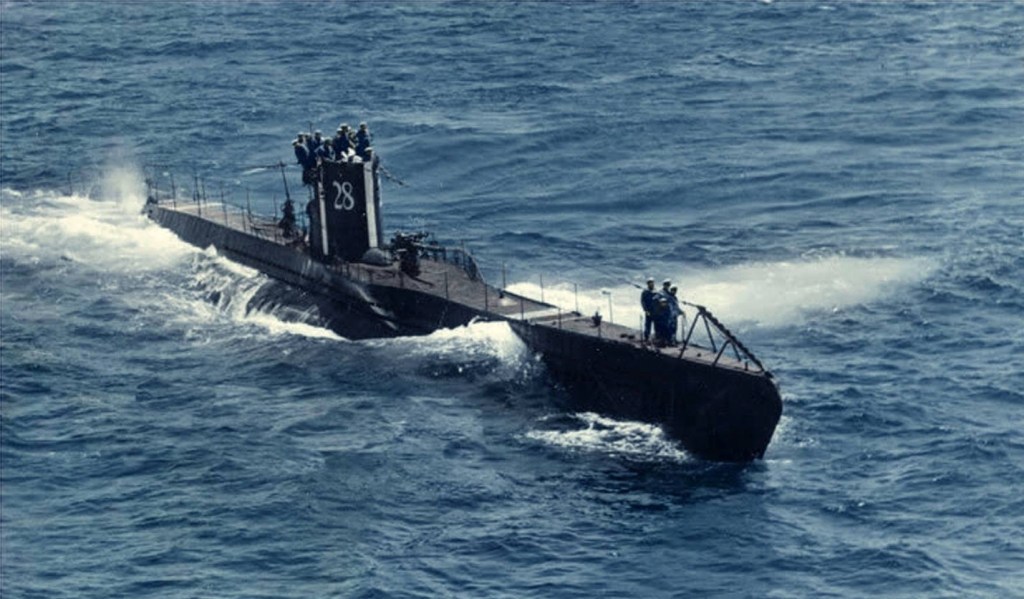
Above: U28 was one of the Bristol Channel U-boats. This is the boat as she looked just before the war began in September 1939.

Some initial work was included as an Annexe in ‘Eye of the Eagle’ where I looked at the war diary of U32 as it laid magnetic mines near the Scarweather Lightship in 1939. The new work looks at all the other U-boats that came into Swansea Bay in the early years of the war. Again, it reinforces the crucial role Swansea had in the minds of the German naval staff.
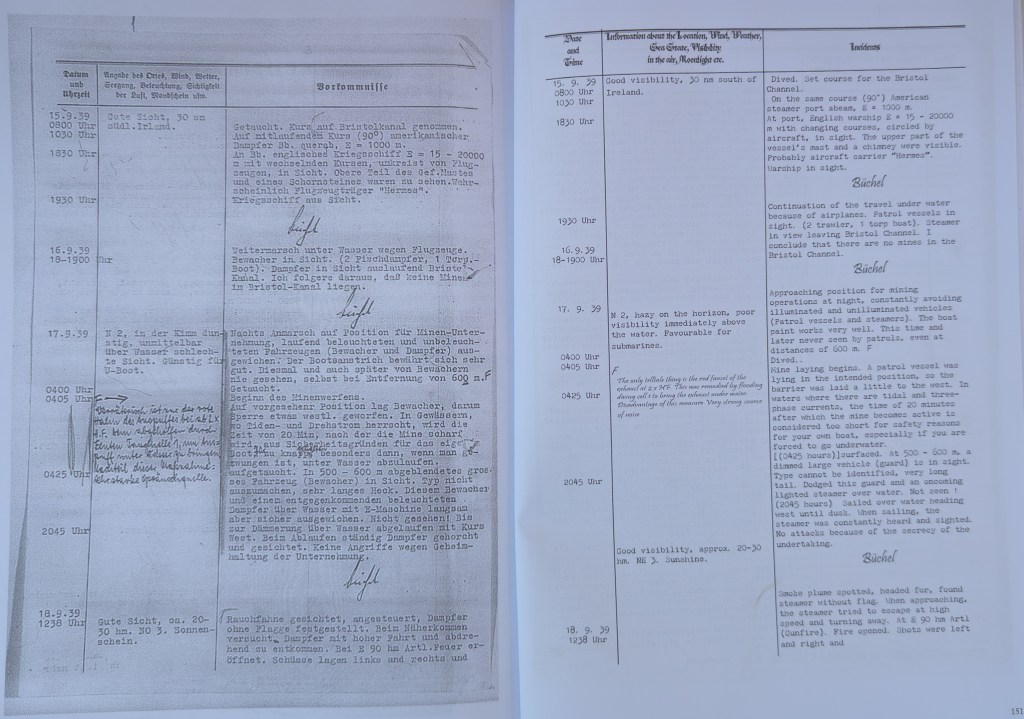
Above: An extract from a U-boat war diary, with my translation. From the Eye of the Eagle book.

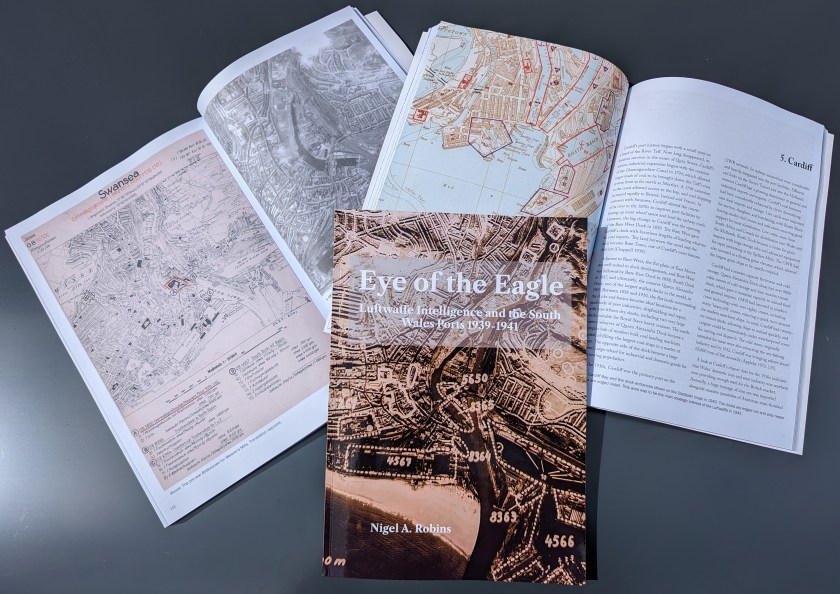
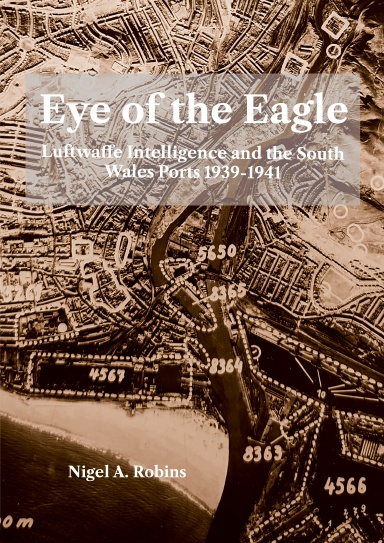
Eye of the Eagle: Luftwaffe Intelligence and the South Wales Ports 1939-1941 ISBN 978-1-7393533-3-9

This has now been reissued as a 2025 Second Edition. I’ve also updated the copyright and EU product compliance details.

The first version of Eye of the Eagle was published in 1993. At that time, the research was to look at local landscape history, and British government aerial photographs were prohibitively expensive for such research, whereas, with a bit of effort, the Luftwaffe aerial surveys were freely available albeit via the record offices of the USA. As a geographer, my first instinct was to look for photographs and maps that give a first impression of a landscape before experiencing the land by walking. Since those days, a revolution in information sciences has changed so much. British record offices are far easier to engage with, and online and digital sources provide a wealth of resources and historical riches that were undreamed of in the 1990s. Combining the images with appropriate GIS/GPS systems has provided spectacular insights into ancient woodland and post-industrial recovery of land.

However, what has not changed is the research and writing techniques that underpin our discipline. This book has been written several times, only to be rewritten when new sources become available or are revealed in the improved access or digitisation of various records. Some of the many images and sources you will see here were rescued from rubbish dumps as organisations sought to ‘become digital’ in the early 2000s by throwing away ‘old’ records. Which explains their rather ‘worn’ looks.

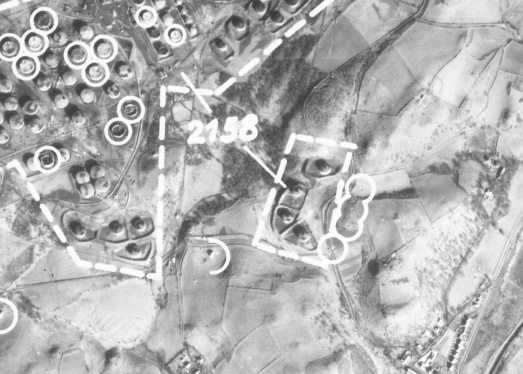
Llandarcy showing destroyed oil tanks and near misses after the 1940 bombing raids.
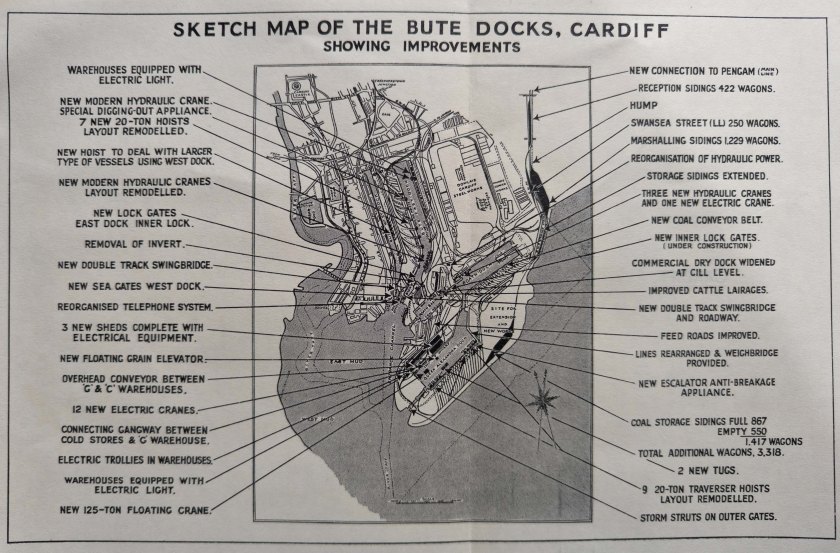
One of the GWR plans of Cardiff used by thew Luftwaffe to plan their air attacks in September 1939.

Bombs on Llandarcy, 1940

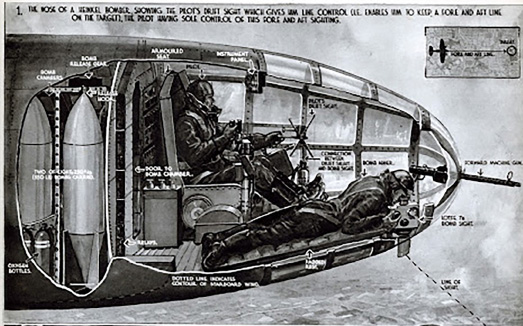
The technical problems of bomb aiming were massive for all air forces. The Luftwaffe began the war with an ambition of pinpoint accuracy for key targets and expected electronic systems to guide their attacks.

The Heinkel He 111 aircraft was an interim bomber that carried a light bomb load and had a cramped crew cabin making space for the bomb aimer challenging, as can be seen from this early illustration. The main Luftwaffe bomb sight was technically advanced for the 1930s but less effective in the more demanding flying conditions over wartime Britain.

The early attacks on the ports were daylight raids and allowed for accurate bombing. This near miss of four bombs at Llandarcy oil storage (below) was from a daylight raid in 1940. The switch to night time bombing and the need to bomb from higher altitudes led to more inaccuracy and error. Pinpoint targets such as grain mills, lock gates and warehouses, or ships in the docks were missed but the surrounding streets of the Welsh ports suffered badly from the inaccurate bombs.

P24-25 Eye of the Eagle: Luftwaffe Intelligence and the South Wales Ports 1939-1941.

A near miss. Bombs dropped on Llandarcy in 1940.

Incendiary bombs and the Welsh Ports

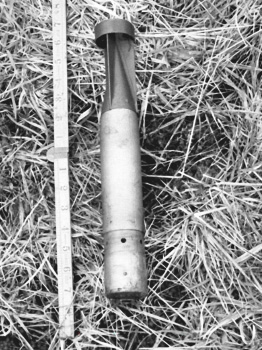
The Luftwaffe had a wide range of weapons available to drop on urban areas in the early years of the war. Lock gates, coal mines, and food storage all had buildings with varying levels of resilience and required different tactics to destroy them. The ports were susceptible to damage in some aspects such as power stations or cranes but generally quite hardy in the face of attack. Larger bombs over five hundred kilogrammes in weight with hardened steel noses were need for the power stations and lock gates. The Luftwaffe was always short of these types of bombs. However, the real terror weapon was the incendiary bomb shown below.

Page 20 of Eye of the Eagle: Luftwaffe Intelligence and the South Wales Ports 1939-1941.

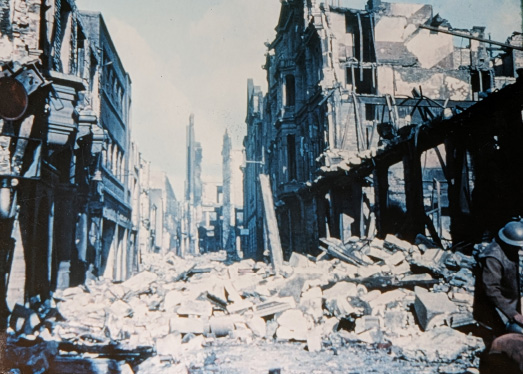
This one kilogramme bomb (the ‘Elektron’) was dropped in thousands on the Welsh ports but it was only ever effective in destroying houses and shops. Creating a firestorm to kill civilians was eventually developed by the RAF and perfected by the US Army Air Forces. The Luftwaffe were experimenting in firestorm tactics in late-1940 and the raid on Swansea in February 1941 shows the early firestorm approach with early arrival of incendiary bombing followed up by high explosive bombs to kill firemen and civil defence staff. The damage to Swansea (shown below) was typical of intensive firestorms which could not be extinguished because firemen were killed and their pumps destroyed. Burning buildings collapse and obliterate the streets with rubble.
The RAF intensively investigated these early Luftwaffe raids and based their own strategic campaign against Germany on the nature of these early raids.

Above: Fire damage in Swansea immediately after the attacks of February 1941.

The Luftwaffe attacking Welsh steel

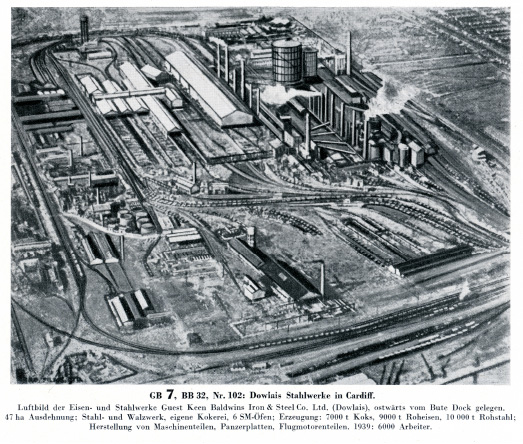
The steelworks of the Welsh ports were of obvious interest to the early Luftwaffe investigators. Iron and steel were strategic materials for all sides. The Dowlais steelworks in Cardiff was a huge target. In fact it was so big that it was difficult to work out exactly where to hit it to cause most damage. The largest high quality bombs were reserved for targets like this (500kg or more), with hard steel noses to penetrate concrete roofs. Incediary bombs were not very effective against industrial targets.

I cover Cardiff as a Luftwaffe target in Chapter 5 of Eye of the Eagle: Luftwaffe Intelligence and the South Wales Ports 1939-1941.

Above: The Dowlais steelworks as depicted in the Militärgeographische Einzelangaben from 1940. A difficult target to attack which required special bombs of larger size and hardened casings to penetrate concrete walls and floors. Incendiaries were practically pointless against a steelworks. There was also a need to attack at a lower altitude to increase accuracy. The presence of a couple of barrage balloons would frequently discourage crews from flying al lower altitudes.

Eye of the Eagle: Luftwaffe Intelligence and the South Wales Ports 1939-1941

My new book on the history of the Blitz bombing of Swansea and the other South Wales ports is now available from me.

This is the second edition of Eye of the Eagle, the first edition was published in 1993!

I’ve completely rewritten the history based on years of research in German Air Force sources and I’ve looked at the other ports the Luftwaffe attacked in 1940 and 1941. Over the years I’ve collected a large range of intelligence materials which are rarely seen because they were often destroyed at the end of the war.

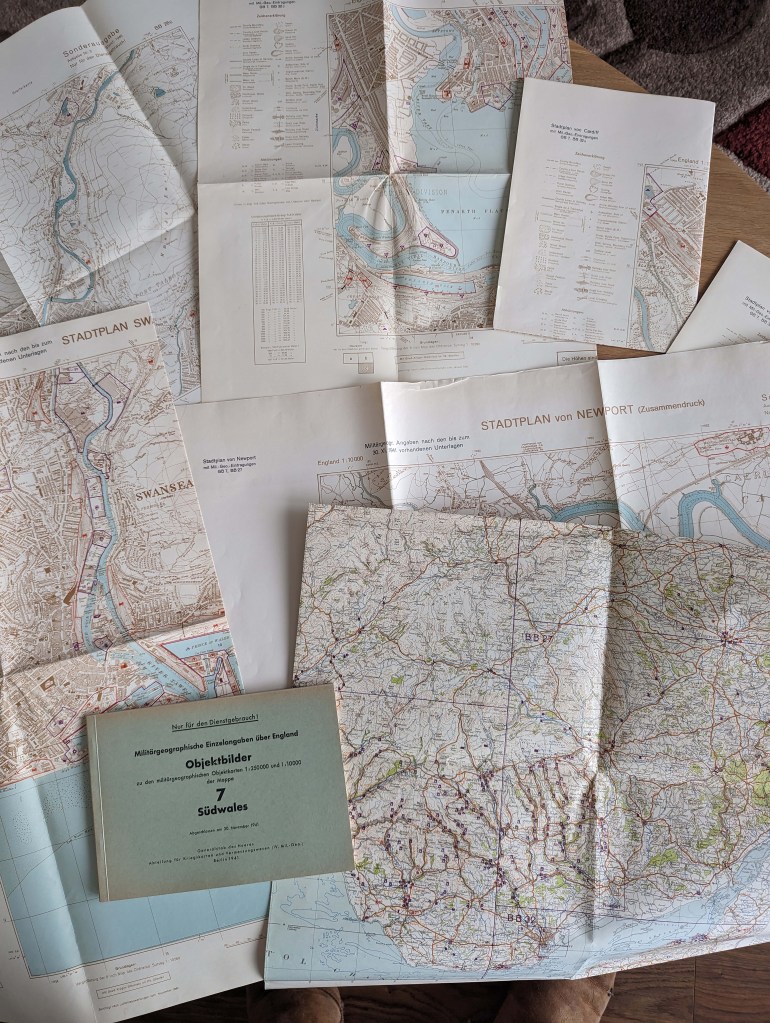
In this history I have concentrated on Luftwaffe intelligence maps, photographs and other sources to give the real reasons why Swansea and the other ports were attacked and dispell some of the rumours from the past. I’ve also looked at the U-boat campaign against Swansea and Cardiff and included translations of key German war diaries and Luftwaffe intelligence records. I’ve described in detail the U-boat mining of the Scarweather lightship and the U-boat attack on Swansea.

Intelligence records are often difficult to understand so I’ve added a detailed examination of how photographs were taken in the preparation for invasion and the Blitz attacks on the ports.

I’ve made this book a big A4 size to take full advantage of the many maps and images that show Swansea and the ports as seen from the German point of view. Over 130 illustrations, many in colour.

Chapters: 1. Understanding Intelligence and Reconnaissance (The Munich Crisis, The decision to bomb Swansea, the bombs and the aftermath as seen by the Luftwaffe cameramen), 2. The history of the South Wales ports between 1933 and 1941 (The ports as targets, how they were selected, and how they fought their war). 3. Reconnaissance over Wales (the Units and aircraft), Detailed illustrated chapters on 4. Newport, 5. Cardiff, 6. Penarth, 7. Barry, 8. Port Talbot, 9. Llandarcy Oil Refineries, 10. Briton Ferry, and 11. Swansea, With Annexes on the U-boat mining of the Scarweather Lightship, Descriptions of the Luftwaffe intelligence records, and other information on the bombs that were dropped on the ports.

Eye of the Eagle: Luftwaffe Intelligence and the South Wales Ports 1939-1941, Nigel A. Robins, Size: A4, Paperback, 170 pages. Price £16.99.

Available from Nyddfwch Publishing, Swansea, or contact the author on nrcontact30@gmail.com. Or you can contact me here.

Available online in mid May.

#SwanseaHistory, #CardiffHistory, #Luftwaffe, #SwanseaBlitz, #CardiffBlitz, #U-boats, #PortTalbotHistory, #Barry, #Great WesternRailway, #MilitaryIntelligence, #LandscapeHistory