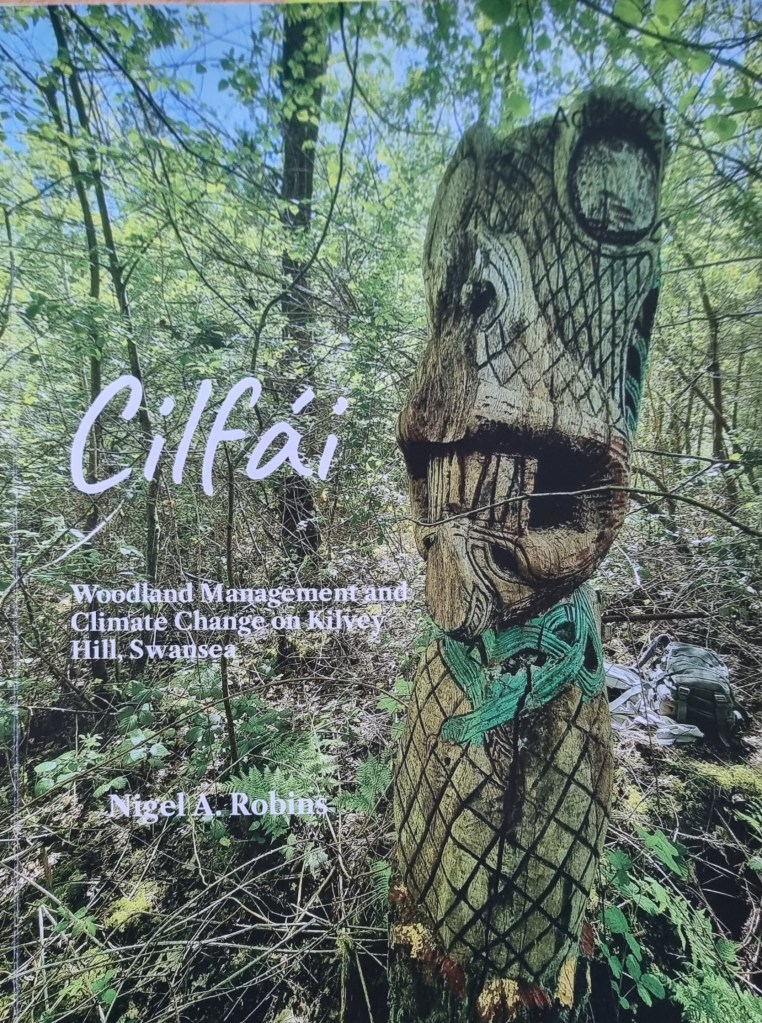
Cilfái: Woodland Management and Climate Change on Kilvey Hill, Swansea ISBN 978-1-7393533-1-5

This has now been reprinted as a 2025 Second Edition with some updates I’ve also updated the copyright for AI constraints, and EU product compliance details.

This book started out as a collection of notes made over more than a decade of surveys in Welsh woodlands. What started out as a historical investigation into industrial archaeology in woodlands transformed into a catalogue of what climate change, government policy and local politics is doing to our landscape. As I write this Cilfái is threatened once more with proposed transformation that increasingly looks like destruction.


This is a companion volume to Cilfái: Historical Geography on Kilvey Hill, Swansea. But this one is more about the environment of the woods and the climate change that is already changing the nature of the land. Climate change is now part of life and the next generation will be challenged with adaptation to what is happening. This book is my chronicle of what some of that means for Cilfái (Kilvey), this most special part of Swansea’s character that has been abused, ignored and loved…depending on where you live and what your politics are. Some of this work is based on my government experience as a programme reviewer of many environmental and cultural projects across the UK where I experienced the good, the bad, and the ugly of politicians, the Civil Service and successive government policies or the lack of them.

Authors always have inspiration from somewhere and I am no different. My inspiration has been in the conversations and actions of many colleagues in my time working in UK Government in Defra, MOD, Cabinet Office, and Parliament. They all contributed, sometimes unwittingly. You can often learn a lot about a topic by listening to people who know very little about it but who never feel restricted in holding an opinion. Climate change is one of those topics.
I have been privileged to have had the company of experts in many conversations about the topics covered here. But notably, the Forestry Commission was laid bare to me by veteran forestry man David Connick. Equally, the passion of my friend Keith Clement in worrying about where we are going has constantly coloured my sense of urgency.
The commitment and enduring engagement of the Kilvey Woodland Volunteers never ceases to amaze and inspire, and I regularly see incredible generous acts of sharing and care for the Hill that should be an example to all volunteer groups.
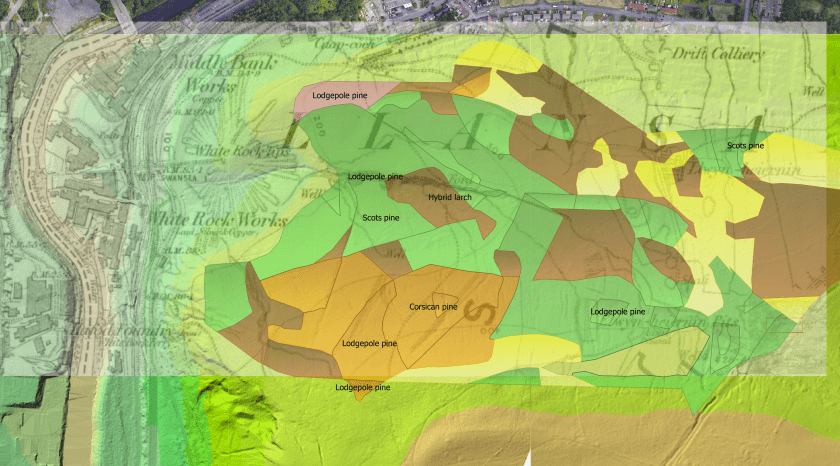
I produced or maspped a lot of data (both historical and current) using QGIS. Here you can see the 1980s woodland compartments and their relationship with the original industrial waste tips.

Woodland Resilience

I talk about ‘Resilience’ in Chapter Three of the second Cilfái volume.

The term ‘resilience’has become a key concept in our landscape management. Resilience in woodland is becoming a broader and more important topic as climate change starts to bite.

In its current form, Cilfái is resilient. Yes, people burn it every year, but that results in more biodiversity hotspots as the burnt patches grow back with local species of trees and vegetation that are much more resilient to fire and drought.

Anything done to the woodland should be to enhance resilience…not knock it back with imported plants, plastic tree tubes and high maintenance planting schemes.

Diversity in the Cilfái woodlands can range froim genes and species to habitats and landscapes. The complexity of the Cilfái woodlands ecosystem will always be limited compared to a woodland that is older or has not been polluted. Still, the pollution history of the hill makes the ecosystem special and probably even unique.

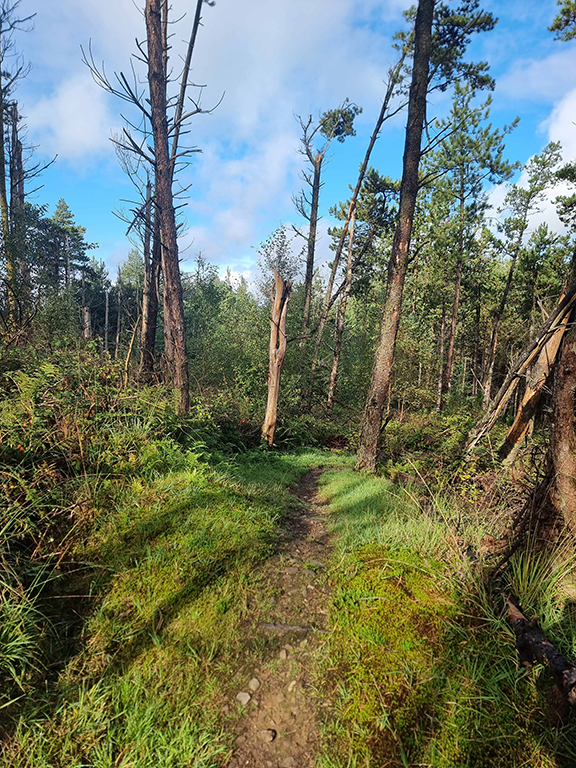
Above: The seaward slopes of Cilfái are increasingly susceptible to windstorms which easily topple the trees that often have poor anchorage because of the soil conditions. The resulting deadwood (both prone and standing) provides useful food and shelter for many animals and insects. The natural regeneration quickly takes over a windblown space and colonises fast with the ‘Cilfái mix’ of local species. Incredibly, this site on the proposed tourism development is a bat hotspot. (Author’s collection).

Cilfái and Habitat Fragmentation

One of the big threats to a recovering woodland is habitat fragmentation. This is a huge problem for wildlife in Wales. I covered this in the second Cilfái book (Cilfái: Woodland Management and Climate Change on Kilvey Hill, Swansea). It is reasonable to assume that a big woodland is better for biodiversity and the environment than a small one. After two thousand years of habitat destruction in Wales we are left with one of the poorest environments in Europe. The woodlands we have are constantly being threatened with further subdivision as roads and houses are built in ever remote or pictureesque areas.

The woodland that has recovered since 1970 will now be fragmented further by the foreign tourism development which will cut through the centre of the biodiversity area. The impact on the recovering wildlife will be immense. The impact will be change and a reduction in opportunities for wildlife and plants on the vital central area of the hill. Fewer opportunities to live will result in fewer species and reduced biodiversity. That is habitat fragmentation.

In numbers, the 102 hectares of woodland and open access space we now have on Cilfái will be reduced to about 29 hectares of woodland. As a comparison, the country park of Penllergare (near Junction 47 on the M4), has about 67 hectares of mixed woodland and Singleton Park has about 11 hectares of (badly fragmented) woodland. So, yes, the loss of Cilfái woodlands is significant.

It may not necessarily be all doom and gloom. Swansea Council and the tourism developers will hopefully be obliged to produce a series of habitat recovery and restoration plans for various tracts of land that may be leased to the Company but will not be built upon. I assume pressure will be put on Welsh Government to provide a large sum of money for ‘native’ woodland restoration. As everybody who has a say is committed to cable cars and adventure tourism, I’m sure the money will come…it has to.

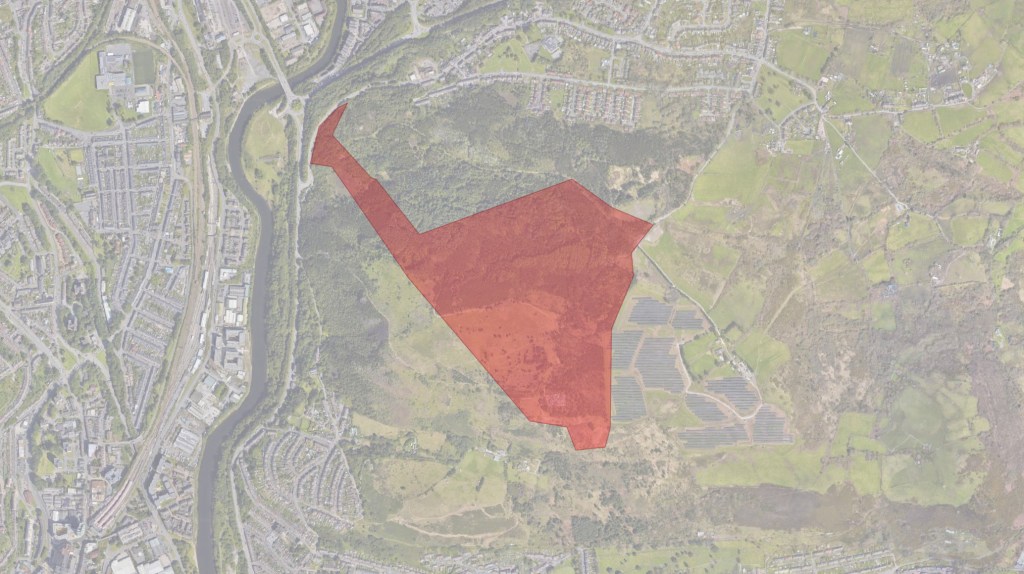
Below: The area of concern on Cilfái is coloured red here. A large chunk of this is the original Forestry Commission land (now NRW). A mixture of coniferous forest, fire damage and fantastic natural regeneration. Full of bats and birds. The contract ecologists bought in by the tourism firm will seek to devalue the quality of the environment and frame it as a place that is worthless and ripe for redevelopment.