Cilfái: Copper Smoke

I write about the copper smoke in Chapter Four of Cilfái: Historical Geography on Kilvey Hill, Swansea.

The copper smoke from White Rock was horrendous. Black, acrid, greasy and opaque. It killed everything it touched. The chemical composition of the Cornish copper ore meant that once burnt with Kilvey’s bituminous coal, released vast quantities of sulphur dioxide, hydreogen fluoride, sulphrous and sulphuric acids. in the 1840s, the Vivian’s Hafod Works were releasing 188 tons of Sulphuric Acid daily into the Swansea Valley.
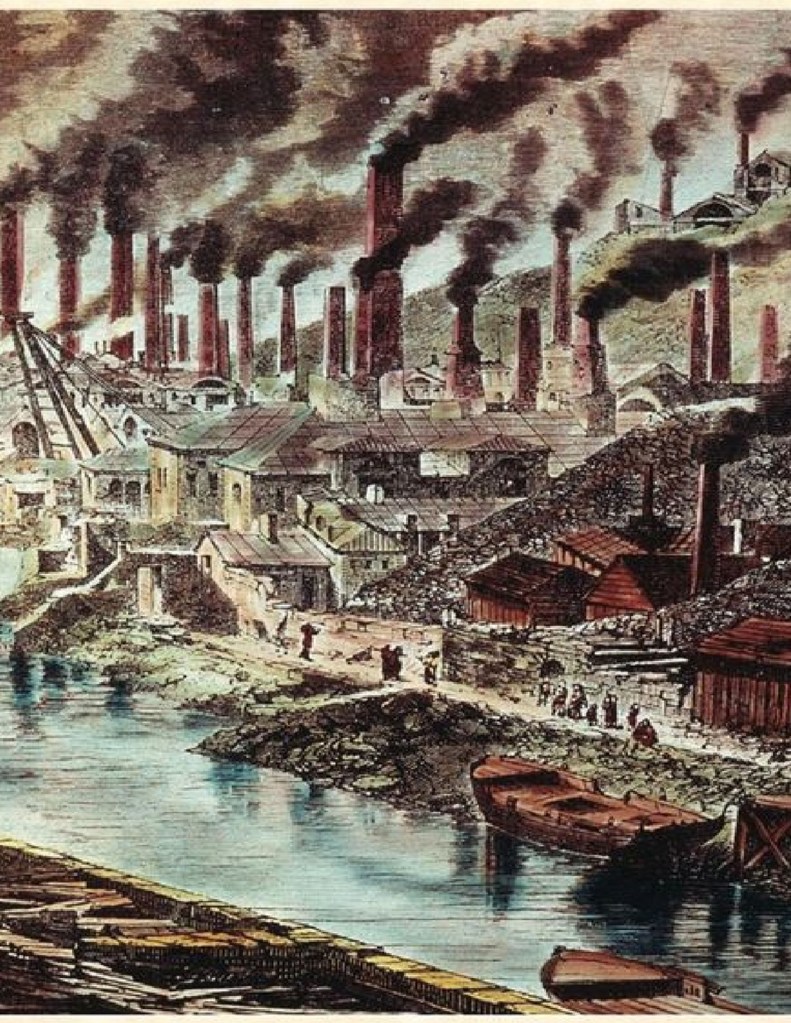
Above: An extract from a rare coloured version of an image commonly used to show the forest of chimneys at White Rock in the 1860s The toe of the Cae Morfa Carw slag tip is left of centre and the mass of chimneys of Middle Bank is to the left. The drawing was commissioned by the French travel journal ‘Le Tour du Monde ‘ and the artist was Jean-Baptiste Henri Durand-Brager (Le Tour du Monde) 1865) (Author’s collection).

Copper Industry Heritage on Cilfái

The waste tips and pollution on the hill are the obvious legacy remains of the copper industry. However, there are several other copper-related features on the hill. In Cilfái: The History and Heritage Features, I listed 16 features of Swansea copper heritage. One of them appears to have been completely missed by the several archaeologists that apparently surveyed the area. The Copper 14 Feature (listed on page 57) White Rock Hammer Pond Tunnel is an incredible survivor of a water course that supplied water to the water wheels of the original watermill that was on the White Rock site before the building of the works in 1737. It still works today carrying the Nant Llwynheiernin under the Pentrechwyth Road and into the White Rock site before running out to the river south of White Rock near the original White Rock coal yard.

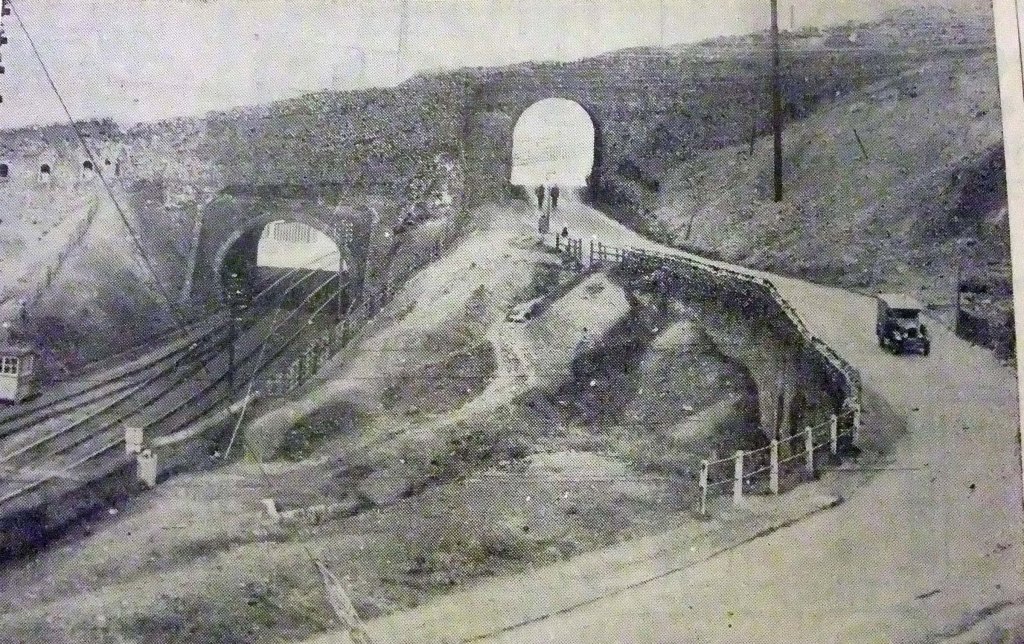
Below: The White Rock incline and site of Nant Llwyheiernin bridge and tunnel in the early 1930s. The bridge and tunnel still survive buried in the new road.

Below: The tunnel entrance as it survives today.