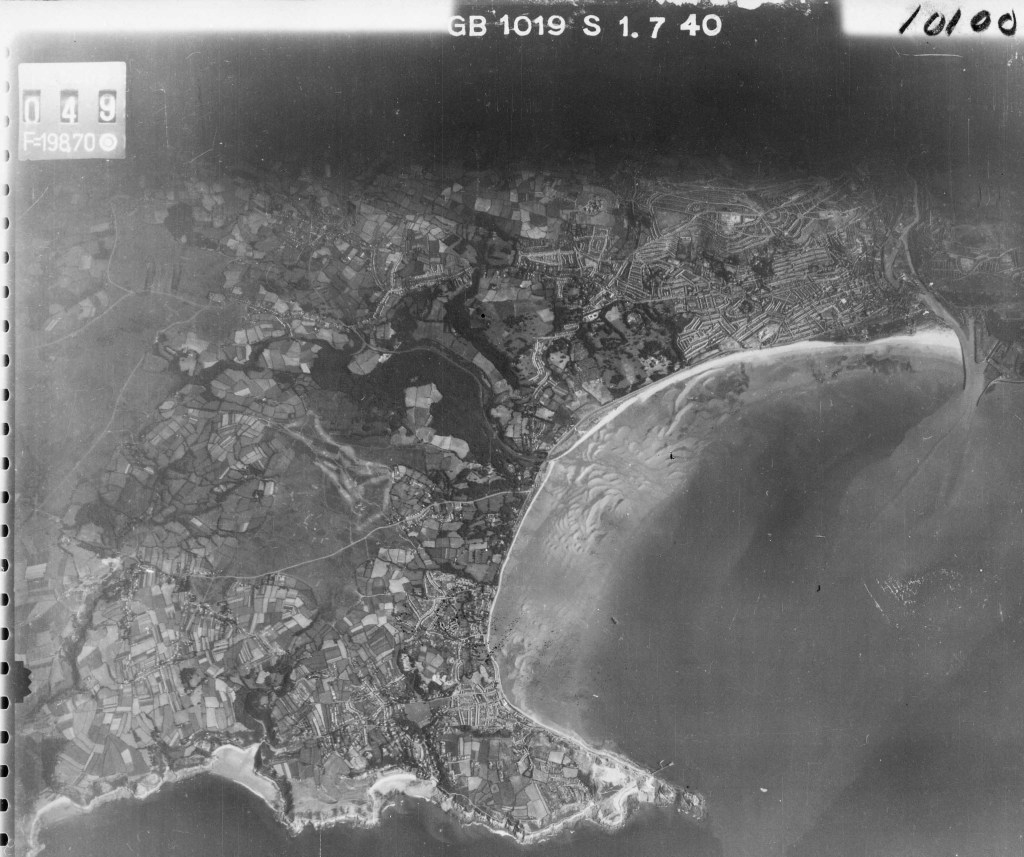
The aircraft was a Do 17P from second Staffel of Fernaufklärungsgruppe 123 Der Adler mit dem Fernrohr,(The Eagle with the Telescope). This image is from that initial mission. The open fields of Mumbles are seen in the fine summer of 1940 with the open lands of the commons on the left side. The wreck of the SS Protesilaus can be seen on the sands at West Cross in the Bay.
Clyne Valley is still intensely wooded and the fields and gardens of western Swansea are still free from the urban density that we see today.
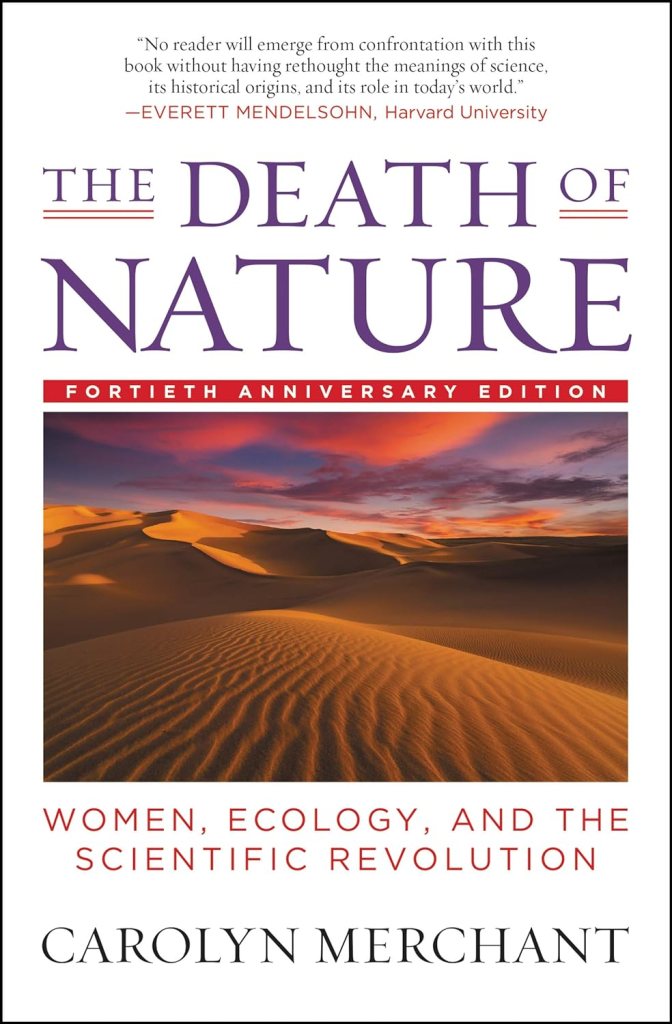
When I wrote the first Cilfái book, on the history of the hill, my views were strongly coloured by the work of American ecofeminist Carolyn Merchant. Merchant has many talents, but one of her earliest books was titled ‘The Death of Nature’ (The Death of Nature: Women, Ecology and the Scientific Revolution )A strong title, and I can recall being quite challenged by it when I first read it in the early 1980s. Merchant is a formidable historian of science and her book explored the importance of gender in early writing on nature. Her grasp on European industrial history was superb and her interpretation of how the understanding of nature changed in the Industrial Revolution from an organic or female conception through to the mechanistic model of coalfields and resources.
Alongside this, the destruction of people’s rights and freedoms throughout the medieval period by greedy landlords had a profound impact on the perception of land and property. The medieval economy of Cilfái was based on organic and renewable energy sources (wood, water, and wind), the emerging capitalist economy of the Mansel family was based on coal and metals which transformed the nature of the hill. The changes on Cilfái over the past few centuries are confirmation of Merchant’s theories.
In one of her most famous statements…
The female earth was central to organic cosmology that was undermined by the Scientific Revolution and the rise of a market-oriented culture … for sixteenth-century Europeans the root metaphor binding together the self, society and the cosmos was that of an organism … organismic theory emphasized interdependence among the parts of the human body, subordination of individual to communal purposes in family, community, and state, and vital life permeate the cosmos to the lowliest stone
Swansea was bombed about forty times during World War Two. Many of the bombs dropped didn’t explode and many are still out there under the ground on Cilfái.
The most imfamous bombing event was Swansea’s Three Nights’ Blitz of 19-21 February 1941. People assume that Cilfái’s bombs came from that event, but the main damage to the Hill was caused by the heavy bombing raid of 17 January 1941. On this night the Luftwaffe dropped a lot of heavy bombs. Many of which missed the Docks and ended up on the hill.
Bombs that landed on the marshy ground on the town side of the hill sank into the ground and never exploded. They are still there, but a long way underground (maybe five metres or more). Others did explode when they hit the hill leaving large craters, some of which have filled with water and are now biodiversity hotspots.
The Skyline development raises the risk that some of the unexploded bombs will be disturbed by excavators and diggers. This is a common ocurrence in areas that were heavily bombed. When I worked in construction in London, we all had to be trained in recognition and procedures if one of the diggers brought a bomb up in a bucket. The risk on the hill is real and has already been recognised in planning documents, and precautions will be essential.
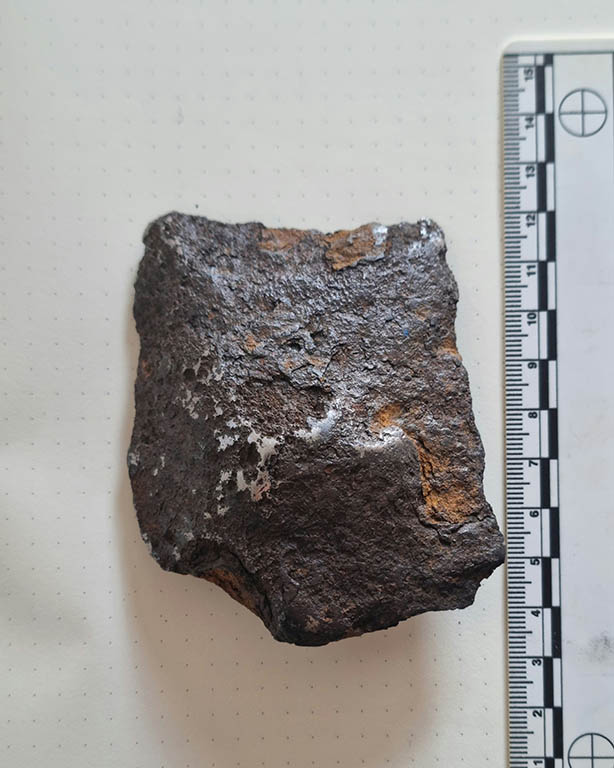
The bombs that did explode produced a lot of metal fragments of all sizes. In some places bomb fragments have become part of Cilfái’s archaeology. Fragments were incredibly dangerous. A piece of a bomb weighing about half a gramme (a fiftieth of an ounce) would be enough to smash through an arm or leg destroying the bones. The bigger fragments could kill instantly or easily destroy a vehicle.
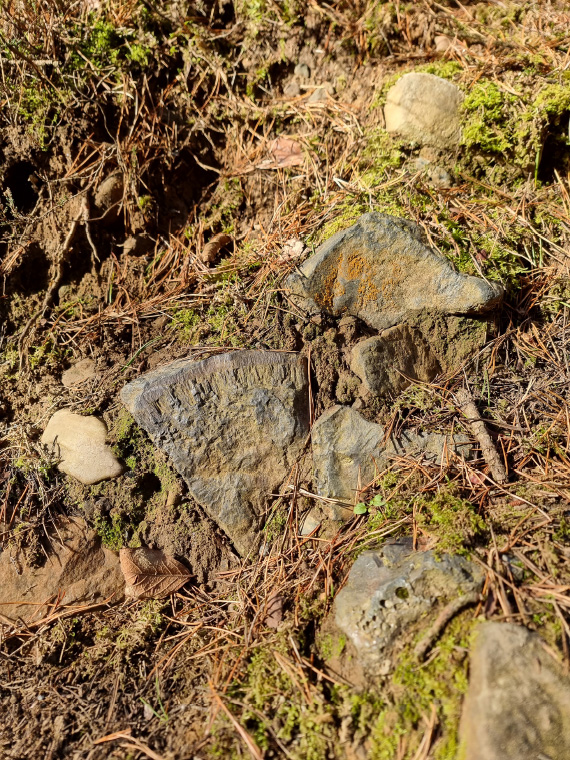
Some parts of the hill were peppered with this kind of shrapnel. The photo below is of a big piece (aqbout 9 cm) I found. The sides of this fragment are still as sharp as a Stanley knife.
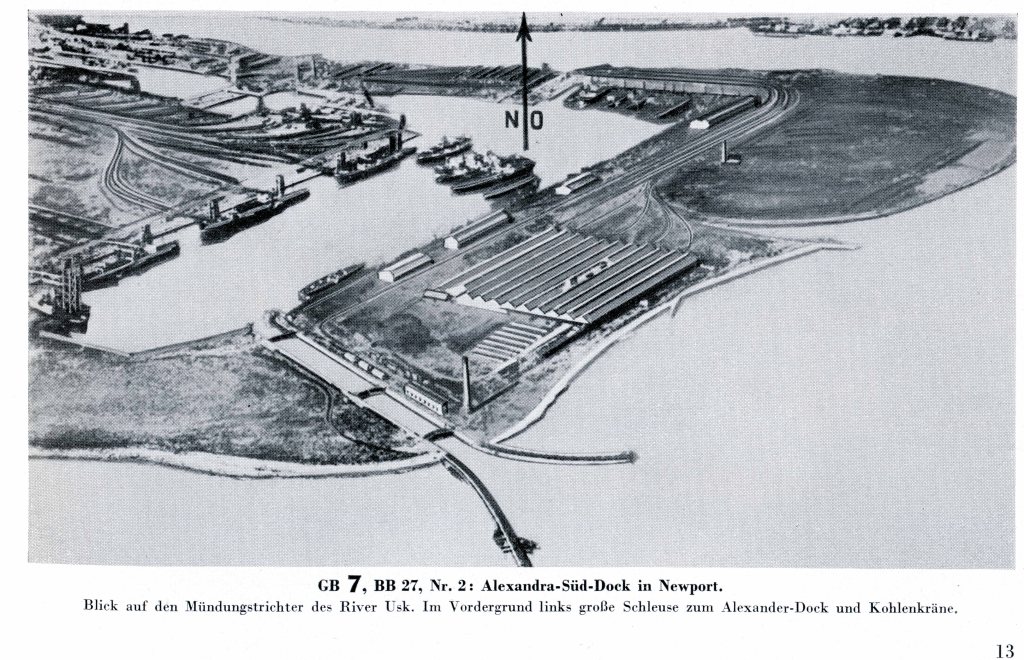
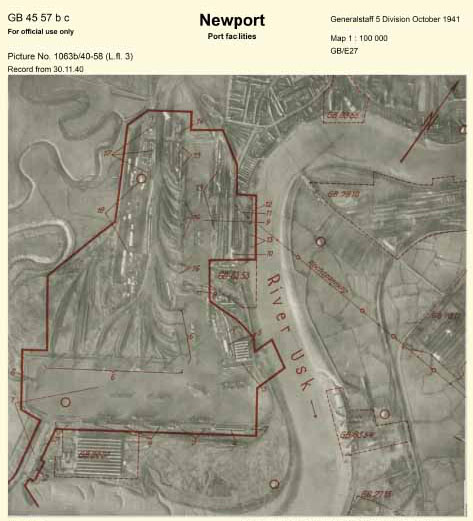
Newport’s port is old, and its original town centre dock was a busy port from medieval times. The take-off point for Newport’s prosperity was the creation of the Monmouthshire and Brecon Canal, allowing coal to come down straight into the port. The fact that Monmouthshire did not have much of a large-scale iron industry meant that coal was exported straight out of Newport instead of being channelled off into other industries as happened at Swansea and Cardiff. The canal and its associated network of tramways meant that Newport was a vigorous coal exporter, rivalling nearby Cardiff for annual tonnage until the 1850s. Some of the best Welsh steam coal collieries were within ten miles of the port, which provided a lucrative trade up to 1945.
The high level of metalworking and engineering skills in the local population made Newport attractive for ship repair businesses. Newport had five dry docks, two of them (the Tredegar and Eastern No. 2) being particularly large. These larger dry docks were big enough to handle Royal Navy Light Cruisers, particularly effective vessels with large calibre guns. The Luftwaffe was particularly interested in these docks.
The industrial pollution phase of Cilfái’s history has left a permanent mark in the nature of the landscape. Industrial smelting waste forms a large part of the soil for over twenty percent of the woodlands around The Glade, Roundhouse, and up to Martin’s Pond. Slag takes its place amongst the native sandstone and the glacial debris from the last ice age. The structure and chemical profile of the soil is permanently altered and many trees eventually succumb to the toxicity. This is a good reason why natural regeneration should be favoured over massive new plantation of native species. Natural regeneration allows plants that are resilient to the poisons to develop. I explain more in the second Cilfái book.
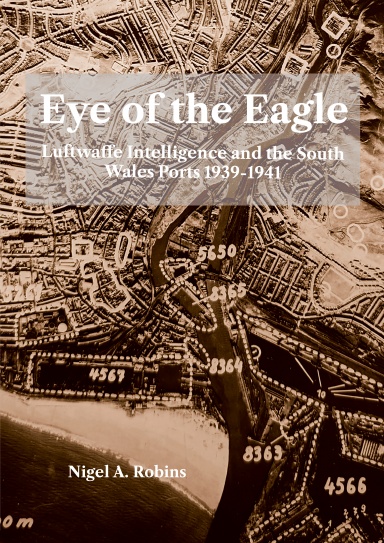
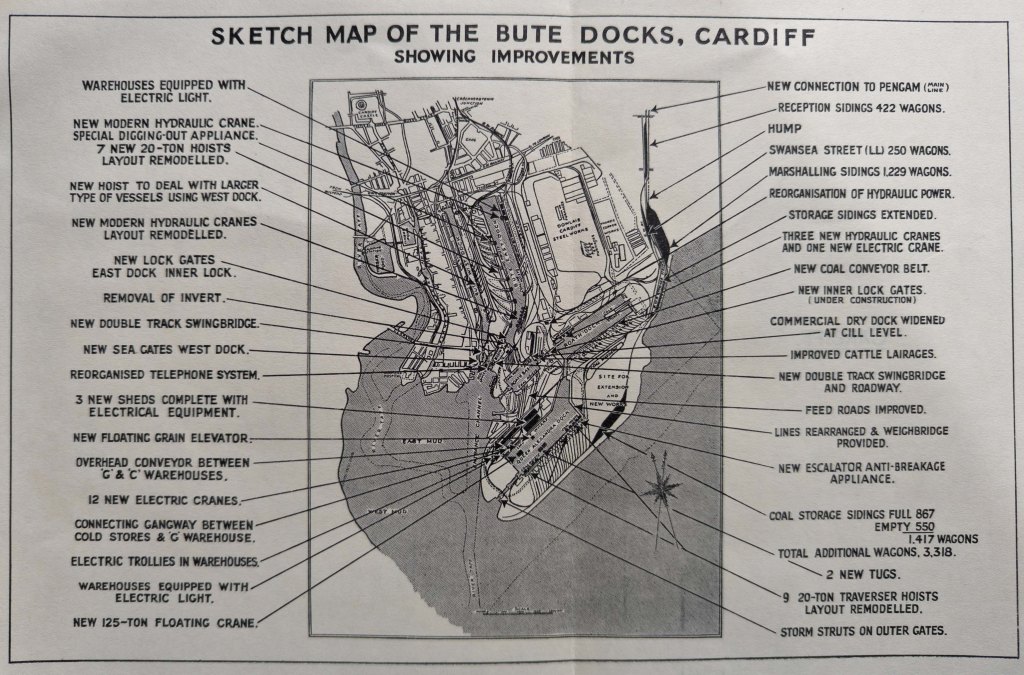
The Great Western Railway (GWR) ports of Souh Wales were vitally important in both world wars for the defence of Britain and hadling imports to support the war effort. Although the ports were mostly designed to export coal before World War One, the GWR invested a lot of money in the 1920s to redevelop some of the ports into general cargo import and export. So, Cardiff, Swansea, and Newport were all given better cranes and storage facilities which enabled a mioxed economy develop as coal exports slowly declined. Eventually, Penarth closed as it was too heavily engineered for coal handling to be of much use. Swansea ans Cardiff became important food import ports with good rail links and plenty of power for large grain and frozen food storage. The full story is covered in Eye of the Eagle: Luftwaffe Intelligence and the South Wales ports 1939-1941.
Below: A GWR plan from 1933 showing the improvements made to Cardiff Docks before the war.
Below: The GWR coal export rail network in 1933. An incredibly dense network of railways allowing bulk transport of coal from every part of the Glamorgan coalfield.
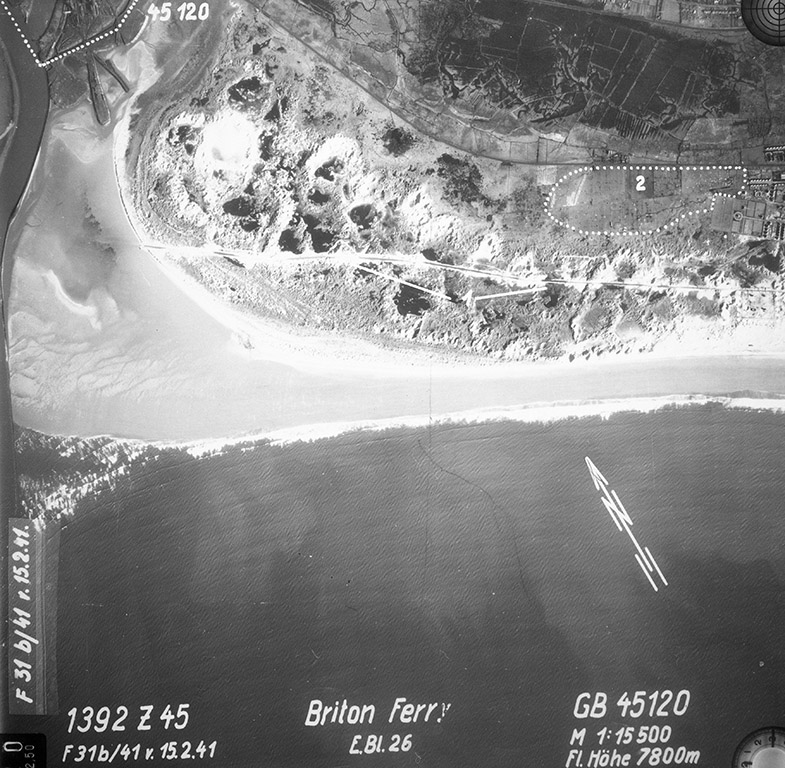
The Luftwaffe surveys of the Welsh ports are an incredible record of past landscapes that have now changed. Although the intent of the reconnaissance missions was to prepare for the bombing of the South Wales ports in 1940 and 1941, they also recorded some of the earliest and finest detail if the coastal landscape. Many of the best surviving images are explained and interpreted in Eye of the Eagle: Luftwaffe Intelligence and the South Wales Ports 1939-1941.
Below: The river mouth of the Afon Nedd and Briton Ferry in February 1941. The burrows had a road used since medieval times to allow travellers to cross the sands at low tides.
We don’t have any ancient woodland on Cilfái. The last of it was killed off in the 1750s by industrial pollution. The coal industry on the hill probably removed most of the bigger trees before that as coal mining consumed massive quantities of timber. Both Cilfái and Townhill were cleared of their natural woodland by the 1300s (Robins 1990: 4–8).
1970 marked the new beginning of woodland on the Cilfái woodland site. We know that the Scots and Monterey pines on the western side were planted alongside efforts by the Forestry Commission to reestablish forestry on the upper slopes of the west side (Robins 2023a: 62–77, 2023b: 55–58).
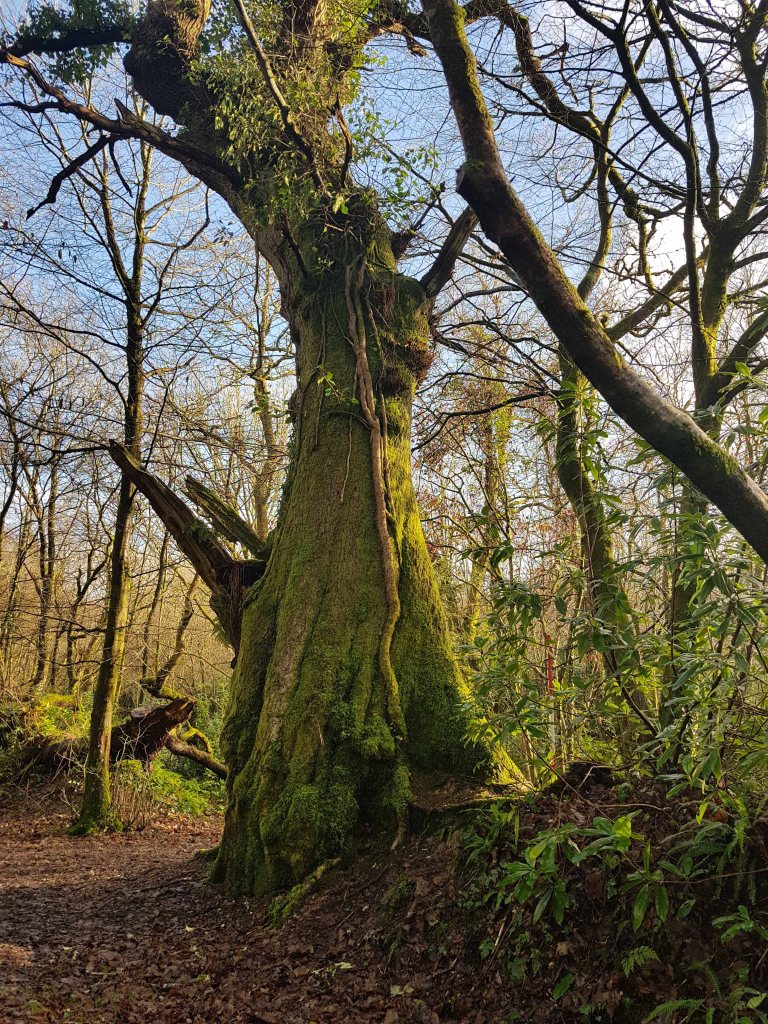
Although the landscape of ancient woodland has disappeared, Swansea does have some incredible surviving old trees in Singleton Park and Penllergaer (Penllergare) Country Park. The trees in Singleton survived being part of farmland in the 1600s and were incorporated into the estate of the Vivian family in the 1800s (Morris 1995: 5–26).
The Penllergaer Country Park has some incredible survivors who survived the devastation of the coal mining period between 1500 and 1790 and became incorporated into the private parklands of the Dillwyn Llewelyn family. I wrote about some of the trees in Swansea History Journal a while back (Robins 2021).
The trees of Cilfái are special because we know how old they are and what they have gone through to survive today. The trees of Nyddfwch are special because they are far older but have also survived the ravages of industrialisation and human interference.
Morris, Bernard. 1995. The Houses of Singleton: A Swansea Landscape and Its History (Swansea: West Glamorgan Archive Service)
Robins, Nigel A. 1990. The Enclosure of Townhill: An Illustrated Guide (Swansea: City of Swansea)
These days we are often in a situation where we are forced to rely on the opinions of staff in various organisations to tell us what ‘history’ or ‘ecology’ or ‘biodiversity’ are. In and around Swansea, we have Cadw to judge what is ‘significant’ for heritage, an Archaeological Trust to tell us what is important under the ground, and a host of private companies employed by building developers to tell us what plants and animals are important. Unfortunately all these organisations can be flawed when it comes to understanding what matters to local communities. It is a deeply unsatisfactory situation. You’d expect local politicians to be more in tune with their communities, after all they were elected to do just that. However, the strong whipping of Swansea Labour Councillors over the Cilfái developments shows how impotent local politics actually is in the face of corporate ambitions.
The identification of heritage and cultural features on Cilfái is clearly inconvenient to politicians and tourism developers. The neat packages of the Hafod-Morfa tourist attraction are predictable, grant-friendly, and a big hit with local builders. Not so much the ‘informal’ heritage of Cilfái. The hill is packed with history above and below ground but that won’t matter to Councillors. Features with the unfortunate characteristic of ‘being in the way’ will be dug up, destroyed or removed. It is ironic that a tourism firm from New Zealand (a country that is barely 100 years old) is leading the destruction of our heritage, much older than that little country.
What tends to get lost first are the little things, the things that people enjoy. They often get thrown away because we as residents are told they aren’t significant by the organisations that ironically are there to serve us.
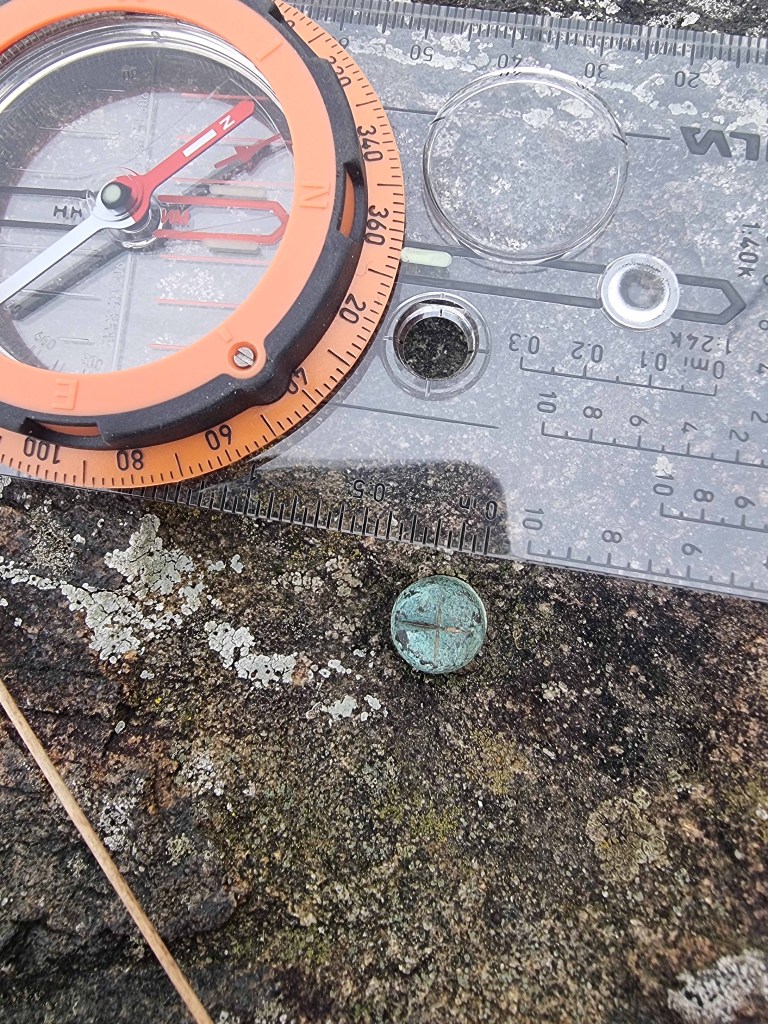
Here’s one that will probably be brushed away by a careless Skyline bulldozer. A little copper nail hammered into a rock in the danger zone. It was probably put there by William Logan as part of the early exploration of coal seams on the hill in the 1820s. I found his notebooks that told me about it. It remains as a little memorial to all the hard work and industry from pioneers in the past. The story is covered in Cilfái: History and Geography and Cilfái: Heritage Features
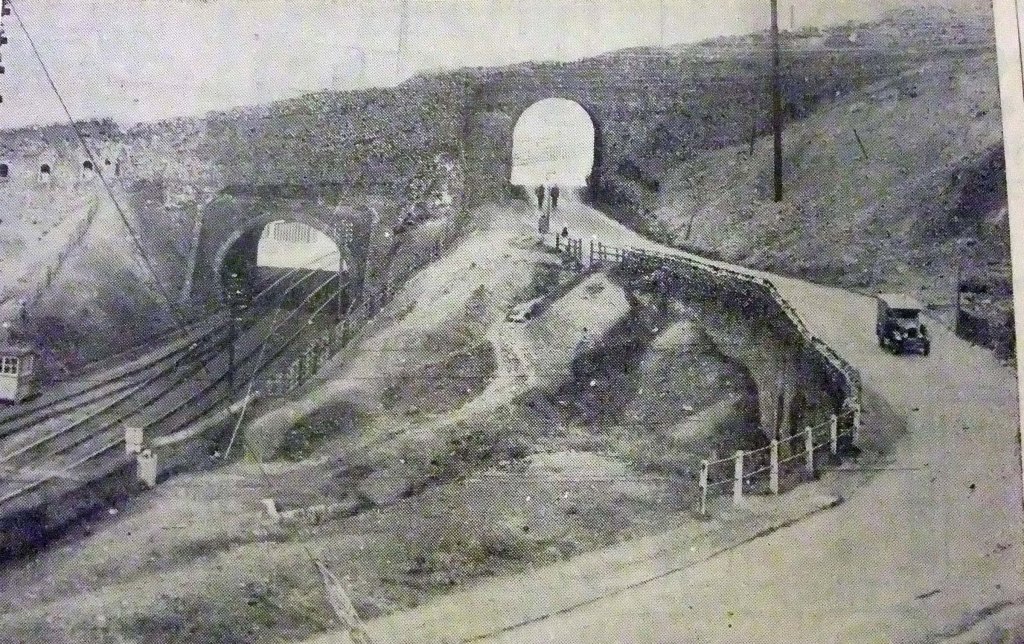
The waste tips and pollution on the hill are the obvious legacy remains of the copper industry. However, there are several other copper-related features on the hill. In Cilfái: The History and Heritage Features, I listed 16 features of Swansea copper heritage. One of them appears to have been completely missed by the several archaeologists that apparently surveyed the area. The Copper 14 Feature (listed on page 57) White Rock Hammer Pond Tunnel is an incredible survivor of a water course that supplied water to the water wheels of the original watermill that was on the White Rock site before the building of the works in 1737. It still works today carrying the Nant Llwynheiernin under the Pentrechwyth Road and into the White Rock site before running out to the river south of White Rock near the original White Rock coal yard.
Below: The White Rock incline and site of Nant Llwyheiernin bridge and tunnel in the early 1930s. The bridge and tunnel still survive buried in the new road.


 Nigel Robins