Penllergare: The Ancient Trees

The latest press release from Welsh Government about the National Forest for Wales confirmed that Swansea’s Penllergare Valley Woods has been confirmed as a National Forest site. I think this makes it one of the hundred announced sites so far.

It is a clever bit of policy from Welsh Labour and throws a bit of recognition and identity branding the way of some struggling woodland sites. Creating a Welsh ‘network’, however fragmented, can only be a good idea.

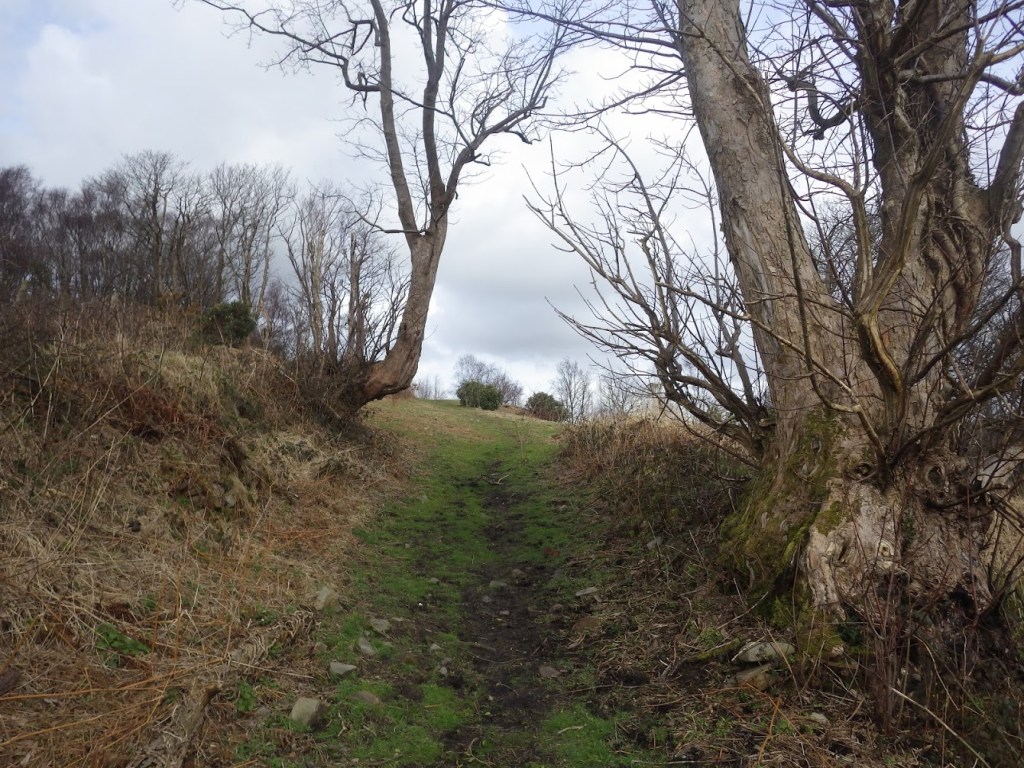
The pre-medieval road to Nyddfwch in the Penllergare Valley Woods in 2018.

The name of Penllergare is as confusing as its location. It is probably an anglicisation of nearby Penllergaer. The lottery-funded restoration project adopted the name from the long-gone mansion owned by the Llewelyn family. The awkward anglicisation always makes me uncomfortable and I tend to refer to the area as the Llan Valley or Nyddfwch which were earlier locality names and are far more in keeping with modern sensibilities.

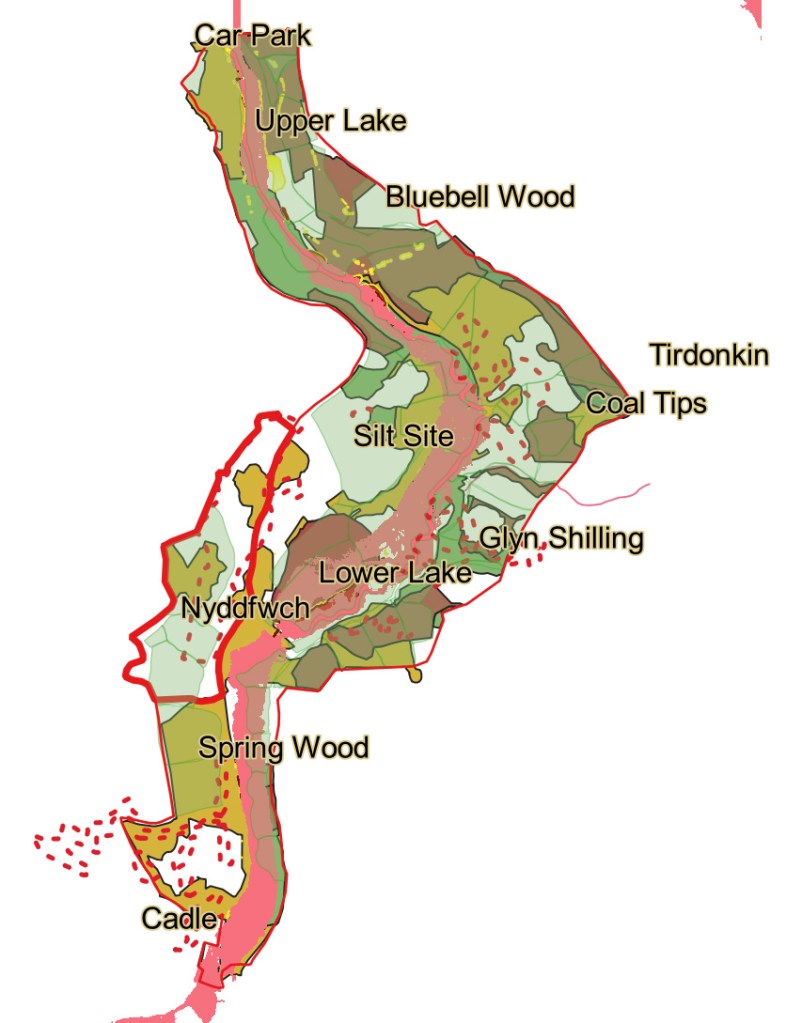
Above: The Penllergare woodlands are a complex mix of ancient woodland, garden planting, invasive non-natives and coal mining archaeology. An incredibly rich mix of history and environmment.

The valley woodlands thoroughly deserve inclusion in the National Forest list. I spent nearly ten wonderful years surveying and researching the landscape and woodlands until I felt compelled to leave in the face of the ugly politics and personalities that run the charity. Some of the staff and volunteers I worked with were some of the finest people I ever experienced in conservation circles, although all have been hounded out by the organisation, which is such a shame.

The original mission of the lottery-funded project was to recreate the nineteenth-century estate gardens of the Llewelyn family. It was centred on making something of the remaining walled garden and the paths and planting of the Llewelyns, a wonderful collection of exotic trees, native (1800s) planting, and a collection of Rhododendrons. The premise was ambitious in the early 2000s, and many of us were surprised that it got funding, as we knew the concept was challenging because of climate change and the lack of surviving substantive features. I think the charity running the place is now pressing for more money to keep the place going. Some of you who came to my Environment Centre lectures may remember I compared the limited effectiveness of money invested in Penllergare with the far better return on investment of money spent on Cilfái.

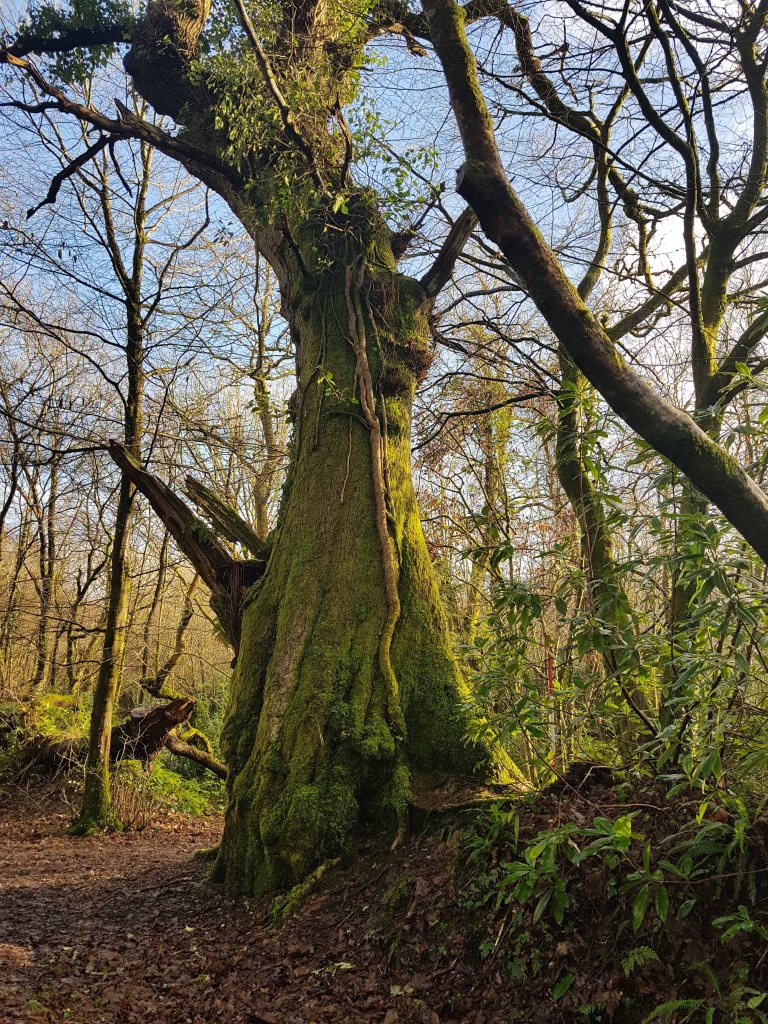
Above: The Nyddfwch Oak in Penllergare.

The wider area of woodland contains significant ancient trees, 1950s Forestry Commission planting and a spectacular collection of unusual and exotic tree species (the remnants of the nineteenth-century garden). Much is made of the links to the Llewelyn family, although they abandoned the site for a nicer house elsewhere. I imagine the family’s estate managers will be unhappy at this latest National Forest status as they were hell-bent on selling for housing; the land is on a short lease for the charity.

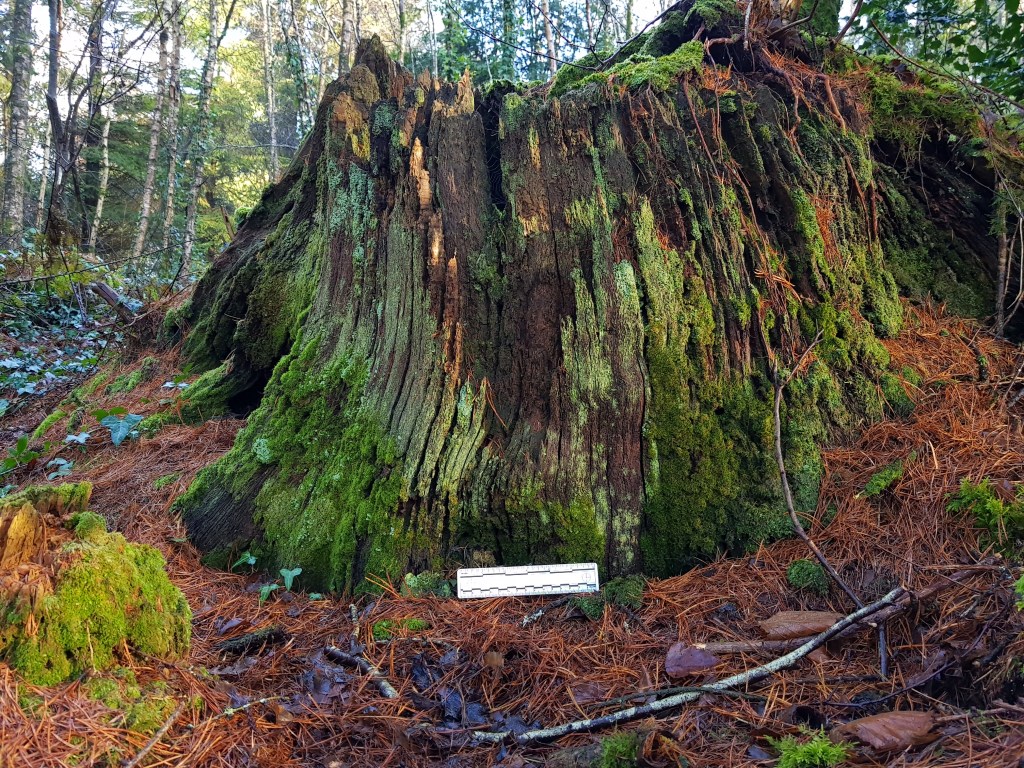
Above: Ancient tree stumps from the Penllergare valley. The area was cleared for timber in the 1940s although many trees and ther carcasses survive providing an excellent reservoir of dead wood. At one time the management wanted to sell the wood for firewood LOL.

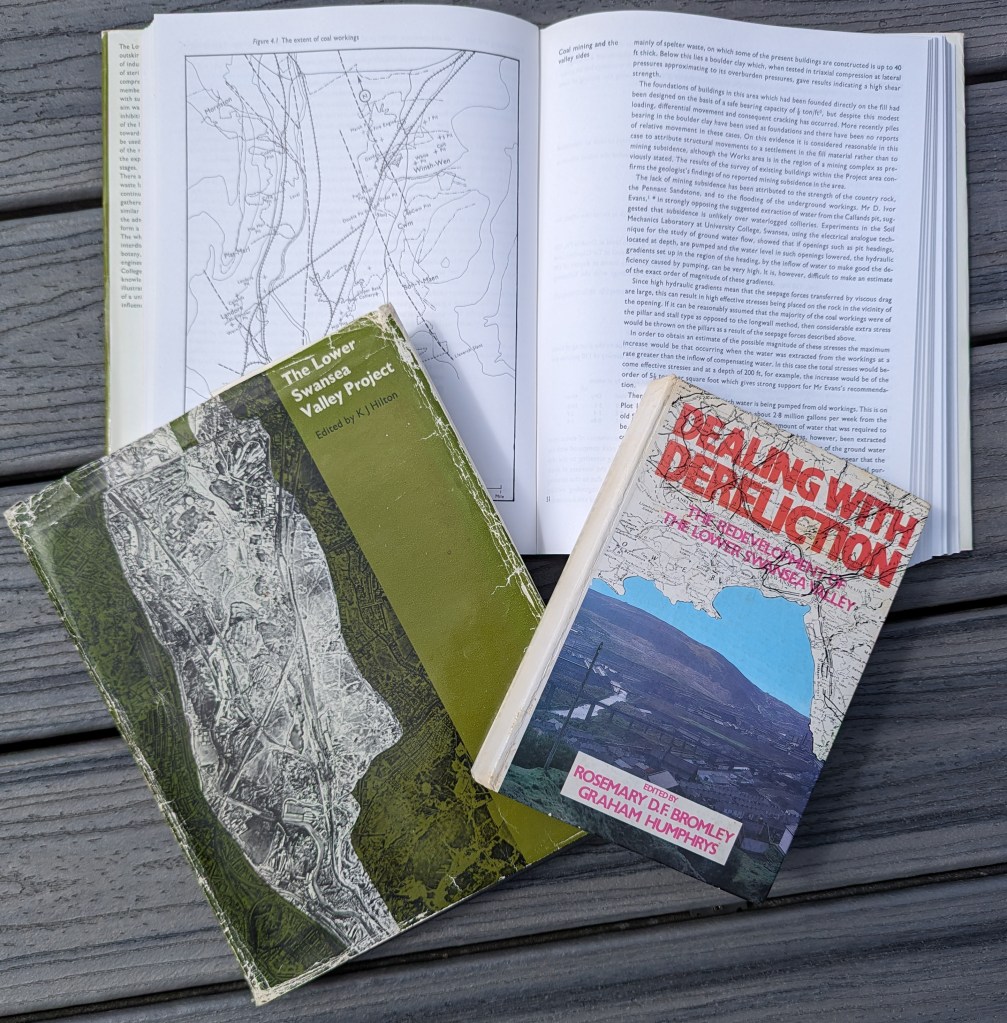
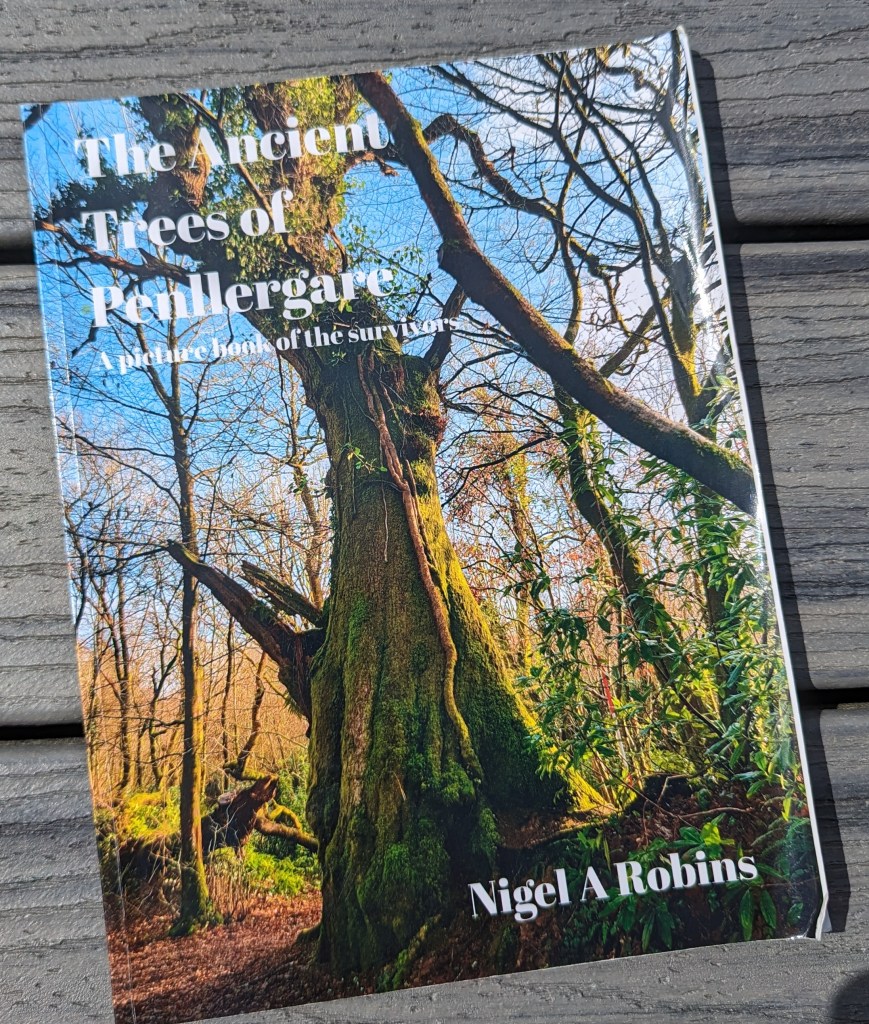
The history of the nineteenth century is only of limited significance. Far more interesting is the history of the valley in the early 1700s, when it was devastated by coal mining. So, the land is a good example of early Welsh industrialisation and the recovery after that, when the coal was worked out in the 1790s. The ancient trees are an incredible survival from the coal mining devastation of the 1700s and were probably rejected for harvesting as timber because of their shape. I prepared a draft book on the woodlands a few years ago, and now may be the time to turn it into a real entity.

I used to take many groups into the woods to explore the woodland, let me know if you’re interested and I’ll put together a walk.

Above: My original manuscript. Maybe I’ll make it real.

Swansea: Looking at Castle Gardens, Ben Evans and the Blitz fires

Castle Gardens appears to be unlovely and unloved. I know it is the target of a proposed refurbishment ‘after consultation’. The plan I saw promises small (cheap) changes.

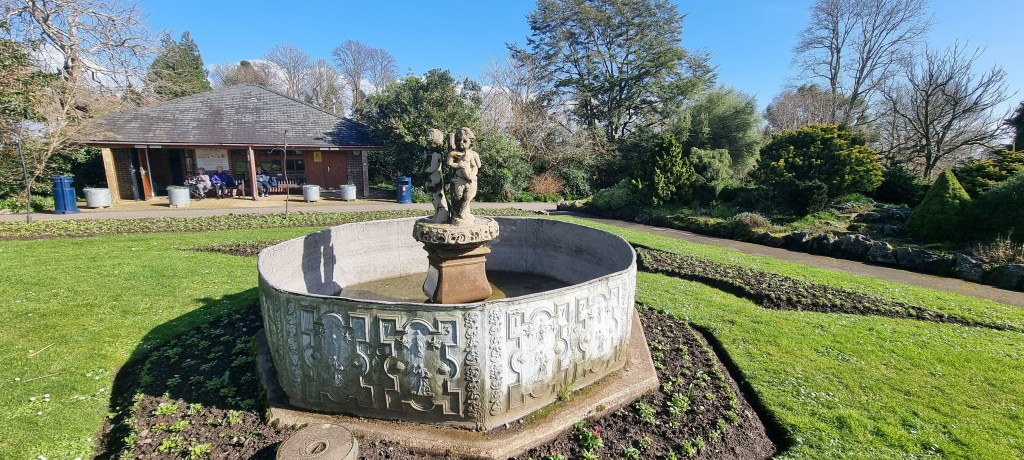
I grew up wandering around the original Castle Gardens in the 1960s. Chasing the army of pigeons that lived on the roofs of the Sidney Heath’s buildings. It was full of green spaces and the Sidney Heath fountain, and the covered area was always full of (to me) old men sitting and drinking. The fountain seems to now be in the gardens in Singleton.

I think this is the remains of the Castle Gardens Fountain ?

The open space originated as a ‘Garden of Rest’ site after the Blitz. (Evans 2019). It eventually (after the inevitable Swansea Council arguments!) became the open space of some grass, some paths and the fountain, which stayed until 1990 when it was obliterated for the ghastly makeover we see today.

The plot of land is fascinating. It was the site of the famous Ben Evans store and, before that, the Plas manor house. As one of the most significant urban areas of the medieval town, it may be that significant archaeology lies underneath the northern side close to where the Plas and Temple Street were.

In my latest research on the Blitz, the plot is helpful to study the impact of incendiaries on the wider town and it’s become a case study in my next book.

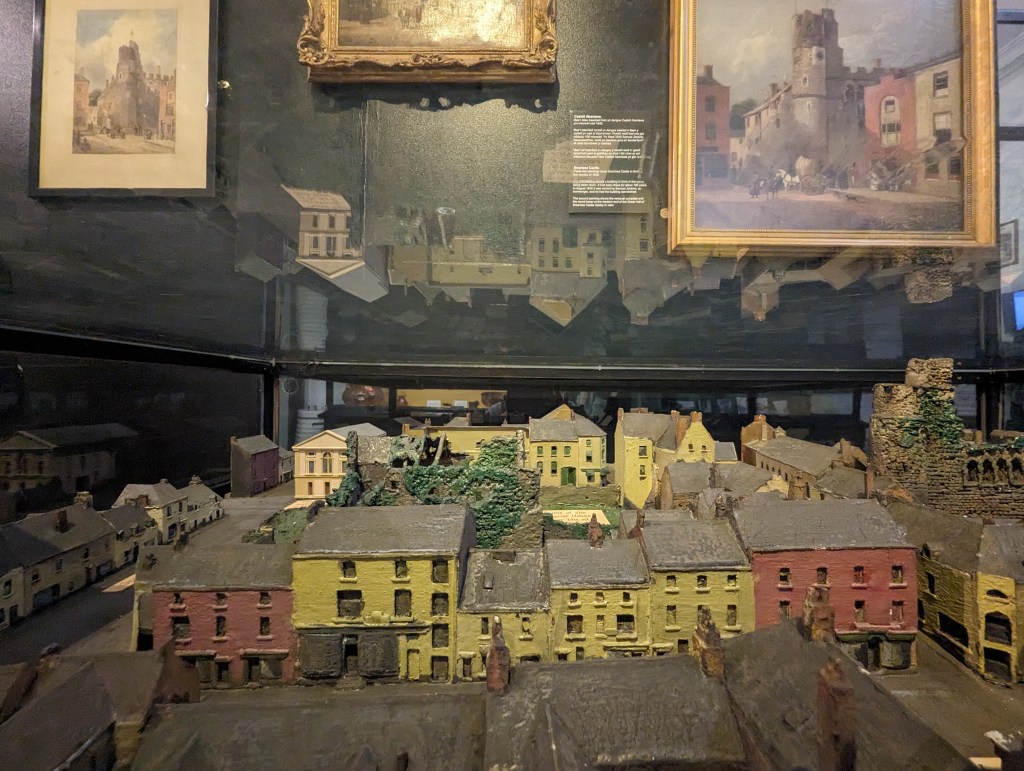
Understanding the site that once held Ben Evans entails delving back into the past to look for the Plas manor house and the rebuilding of Cae Bailey Street between 1840 and 1850. The maps are poor, but we do have a fantastic model of the area made in the 1840s, which is now in Swansea Museum, and Gerald Gabb has examined all the paintings and prints in his books (Gabb 2019: 199–207).

The model of the centre of Swansea made in the 1840s. Damaged in the Blitz and repaired by Bernard Morris. Now in Swansea Museum.

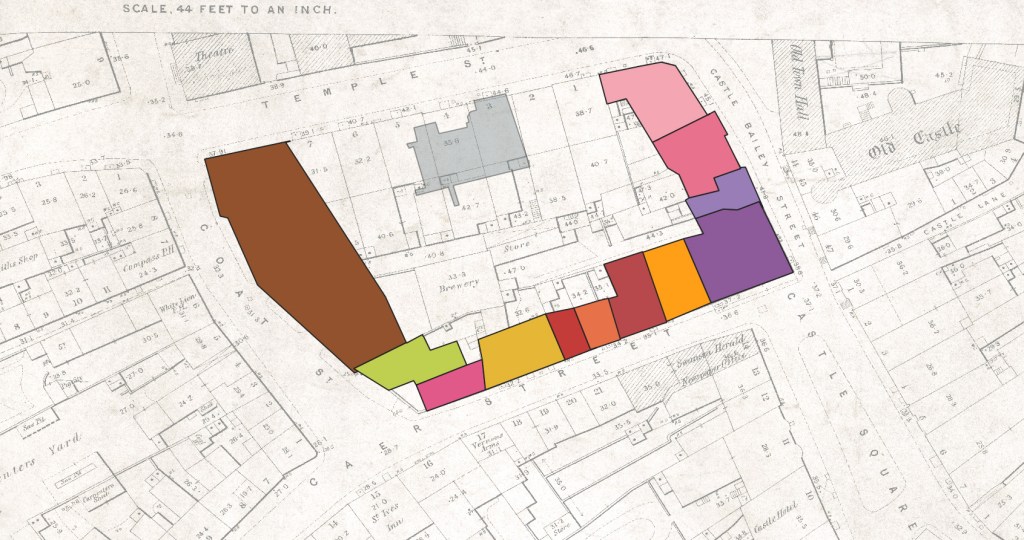
I’m digitising the various stages of buildings in the Castle Gardens site as part of the background for understanding the Swansea fire catastrophe of February 1941 (Alban 1994). I’m lucky in that there is a detailed survey of the area from 1852, which is the basis for establishing the area that eventually became Ben Evans in the 1890s.

Alban, J.R. 1994. The Three Nights’ Blitz: Select Contemporary Reports Relating to Swansea’s Air Raids of February 1941, Studies in Swansea’s History, 3 (Swansea: City of Swansea)

Evans, Dinah. 2019. A New, Even Better, Abertawe: Rebuilding Swansea 1941-1961 (Swansea: West Glamorgan Archive Service)

Gabb, Gerald. 2019. Swansea and Its History Volume II: The Riverside Town (Swansea: Privately published)

Above: My digitising of 1840 to 1852 properties that were Castle Gardens. The grey block at the top of the image is the location of the Plas manor house. The area was heavily resculpted after 1945 to create Princess Way and the David Evans shops.

Bombs on Llandarcy, 1940

The technical problems of bomb aiming were massive for all air forces. The Luftwaffe began the war with an ambition of pinpoint accuracy for key targets and expected electronic systems to guide their attacks.

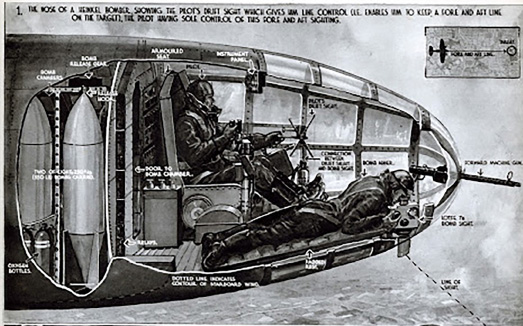
The Heinkel He 111 aircraft was an interim bomber that carried a light bomb load and had a cramped crew cabin making space for the bomb aimer challenging, as can be seen from this early illustration. The main Luftwaffe bomb sight was technically advanced for the 1930s but less effective in the more demanding flying conditions over wartime Britain.

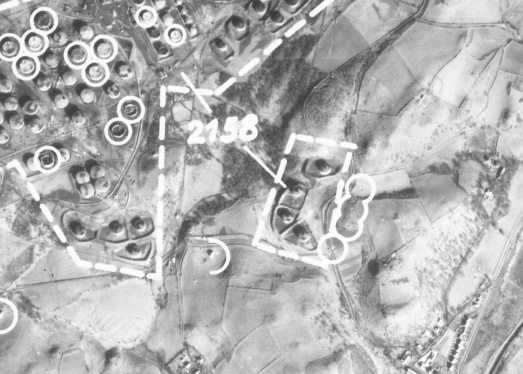
The early attacks on the ports were daylight raids and allowed for accurate bombing. This near miss of four bombs at Llandarcy oil storage (below) was from a daylight raid in 1940. The switch to night time bombing and the need to bomb from higher altitudes led to more inaccuracy and error. Pinpoint targets such as grain mills, lock gates and warehouses, or ships in the docks were missed but the surrounding streets of the Welsh ports suffered badly from the inaccurate bombs.

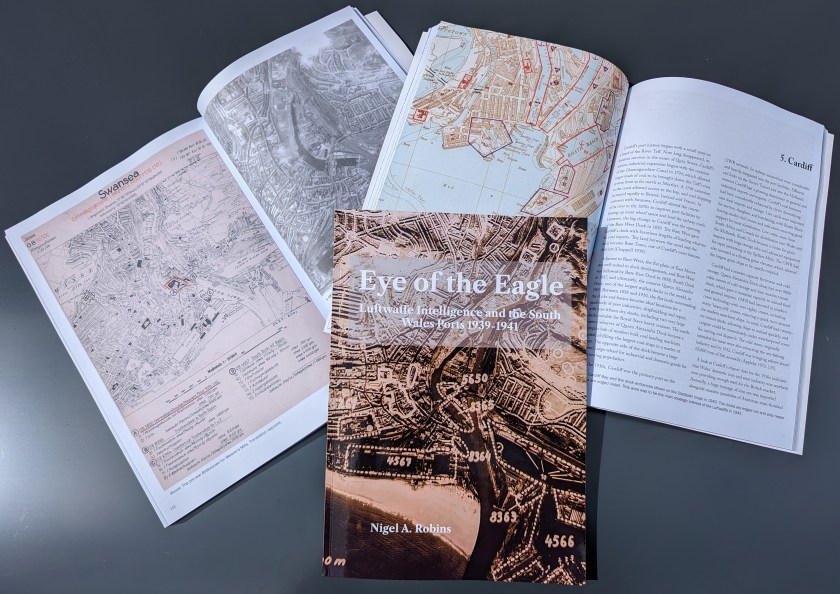
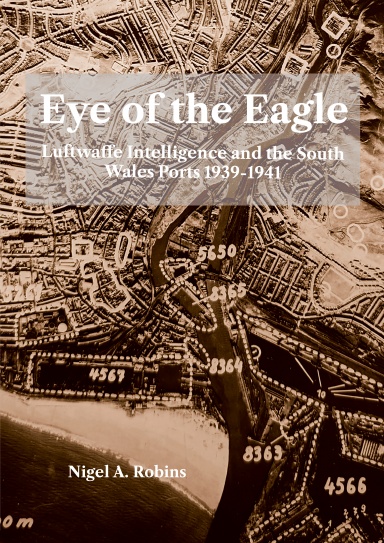
P24-25 Eye of the Eagle: Luftwaffe Intelligence and the South Wales Ports 1939-1941.

A near miss. Bombs dropped on Llandarcy in 1940.

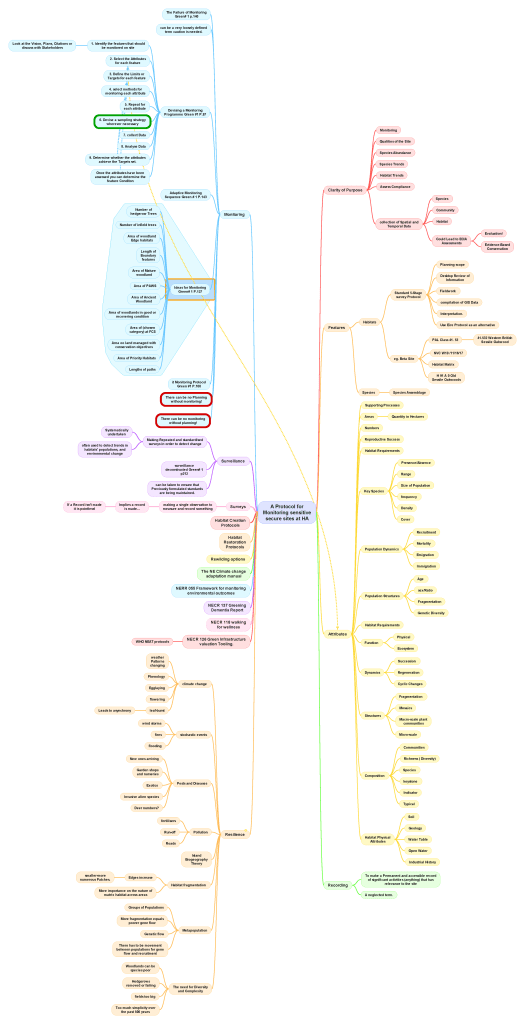
Ecological Monitoring: My complete protocol

This is my protocol from my civil service days. I used this (in whole or part) to educate, plan, or review monitoring programmes. Monitoring is hard to plan and very hard to do. In the UK, funding is often rewarded for a ‘project’ but the concept of understanding whole life costs is rarely appreciated. The money wasted on community lottery funding schemes is heartbreaking as projects are devised, money spent, and then there is no conception of maintenance or longer-term costs. Locally, I know of over £3m in lottery funding that has been wasted in ill conceived schemes with no oversight and unqualified charities signing cheques with no regard for quality or care.

As a Gateway Reviewer I was often brought in too late in a failing scheme, and my role then was merely to record the errors and failures. If we had been brought in at strategic planning or business case, it was better.

This plan was my basic script for programme oversight and I found I could frequently reverse engineer it to interpret what had gone wrong or explain how a programme failed.

I experienced three types of monitoring:

  1. Curiosity or passive monitoring. As I often undertake on Cilfái, and became the output in Cilfái: Woodland Management and Climate Change.
  2. Mandated monitoring. Imposing a requirement on a programme as part of their funding and appraisal system.
  3. Question-driven monitoring. The dreaded ‘research question’ approach of many academic bodies, often a waste of talent and time and merely to get a tick in a box. This is the stuff that is funded, completed, and locked away for ever. The best use of resources is through good quality research questions. However, I used to read questions that were long and incomprehensible…so how do you answer them…or better yet learn from them?

As a reviewer for government, I saw monitoring programmes that were ineffective or failed completely. It doesn’t help that many in the biodiversity sector see monitoring as a ‘management activity’ which is unrelated to scientific research.

The failures I saw

  1. Short-term funding preventing planning. Question-driven monitoring pushed staff to plan backwards…data first, question later. Also, data management was often dreadful with no structure or futureproofing for reviewers. A monitoring timescale can be a decade…who stays around for ten years on a program in biodiversity? Nobody…which makes succession planning vital, but never done. Loss of key personnel and the corporate amnesia that follows was harmful for staff and quality, but often treasured by politicians and managers who want a predecessor to own mistakes.
  2. The Shopping List approach. An impossibly long list of monitoring topics instead of a sharp defined monitoring objective. It is backlog planning in programme speak.
  3. Failure to agree on what to monitor. Often politicians and managers want career-enhancing metrics…not realities.
  4. Flawed assumptions. A very human desire to compare one set of data to something elso or associate with something else that looks good, but has incompatible data. The temptation to ‘salt’ data on key metrics (e.g. bats, reptiles, invasive speciers) was overpowering. An overclaim is more likely to get published etc.

It is a big graphic, so you may need to enlarge it.

Incendiary bombs and the Welsh Ports

The Luftwaffe had a wide range of weapons available to drop on urban areas in the early years of the war. Lock gates, coal mines, and food storage all had buildings with varying levels of resilience and required different tactics to destroy them. The ports were susceptible to damage in some aspects such as power stations or cranes but generally quite hardy in the face of attack. Larger bombs over five hundred kilogrammes in weight with hardened steel noses were need for the power stations and lock gates. The Luftwaffe was always short of these types of bombs. However, the real terror weapon was the incendiary bomb shown below.

Page 20 of Eye of the Eagle: Luftwaffe Intelligence and the South Wales Ports 1939-1941.

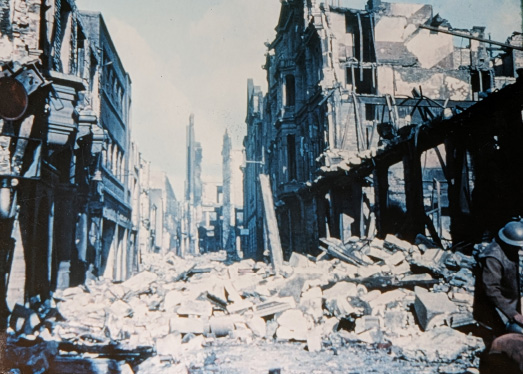
This one kilogramme bomb (the ‘Elektron’) was dropped in thousands on the Welsh ports but it was only ever effective in destroying houses and shops. Creating a firestorm to kill civilians was eventually developed by the RAF and perfected by the US Army Air Forces. The Luftwaffe were experimenting in firestorm tactics in late-1940 and the raid on Swansea in February 1941 shows the early firestorm approach with early arrival of incendiary bombing followed up by high explosive bombs to kill firemen and civil defence staff. The damage to Swansea (shown below) was typical of intensive firestorms which could not be extinguished because firemen were killed and their pumps destroyed. Burning buildings collapse and obliterate the streets with rubble.
The RAF intensively investigated these early Luftwaffe raids and based their own strategic campaign against Germany on the nature of these early raids.

Above: Fire damage in Swansea immediately after the attacks of February 1941.

Cilfái: The Principles of Diversity and Resilience

Cilfái’s connectivity to other wildlife and natural habitats is not just a concern, it’s a massive issue. The dangerous main roads dominate the wider extent, west towards the river and north towards what was the Enterprise Zone. Within the woodlands, further development for bike paths, walking trails and cable car routes are all immediate risks for ruinous fragmentation. The width of paths and firebreaks and cableways and how we manage the woodland edge habitats are crucial. Cilfái’s wider nature network must be urgently mapped and managed using the ten well-known best practice principles (Crick and others 2020a: 91–101).

1. Understand the Place. Understanding the community and the natural networks that are in place.

2. Create a Vision. Create a future that is understandable and engages the biggest stakeholders, usually the local communities, animals and plants, and those responsible for caring for and maintaining the land.

 3. Involve People. Communication, engagement and consultation are tremendously important. Do we see that commitment from local politicians?

4. Create Core Sites. The central Cilfái woodland is our core site.

5. Build Resilience. This is protection against climate change-related events such as drought, torrential rain, wildfires, and temperature extremes. I describe some of these in the book.

6. Embrace Dynamism. Nature changes constantly. Change can happen in a matter of minutes: a tree blows down, a stream bursts its banks, or a rockfall changes the shape of the land. We can’t keep spending money on keeping things ‘as they are’. Is expensively recreating a nineteenth-century landscape that relies on money, gardening, water and stable weather and climate  (as they do at Penllergare Country Park) even possible in the modern world? We must accept and adapt to our situation, not the situation we would like to be in.

7. Encourage Diversity. There is genetic variabilityspecies diversityecosystem diversity and phylogenetic diversity. Diversity is not distributed evenly on Cilfái. The ecosystem we see building on the hill results from 50 years of growth and change.It should be allowed to develop naturally. The notion that a local Council or a private tourism company can care for the land is an outrageous conceit.

8. Think ‘Networks!’ Plants, animals, and people move and live in connected networks.

9. Start Now, but Plan Long-term. Short-term is about 3 years, long-term is about 50 or more. Nobody knows what the world will be like in 50 years.

10. Monitor Progress. We can’t understand change if we don’t observe it constantly. A 3-day ecological survey by a non-local contract ecology firm on behalf of a foreign tourist company doesn’t cut it.

However, there will always be uncertainty about what Cilfái can contain because it is always prone to extreme disturbance.

Crick, H.Q.P., I.E. Crosher, C.P. Mainstone, S.D. Taylor, A Wharton, and others. 2020. Nature Networks: A Summary for Practitioners (York: Natural England)

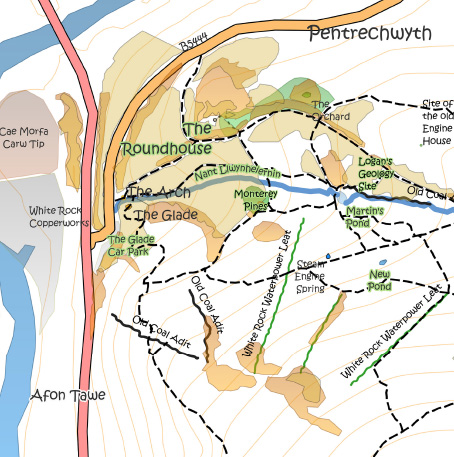
Above: The western part of the woodland with areas of particular attraction to birds and wildlife highlighted in shades of Brown. These areas are open or semi open and also show strong characteristics of ‘woodland edge’ or ‘Stand A’ structures (see Annex 7). These areas have their origin in polluted soils from slag tips or fire damage from wildfire attacks. The old coal adits and leats provide damper cover than the surrounding woodland and frequently act as biodiversity hotspots because they retain moisture in drought conditions. These Brown areas are the current centres of natural regeneration. The woodland cover in these areas will not be necessarily native species, it is far more likely to be the ‘Cilfái mix’ of coniferous, native and invasive non-native. These areas are rapidly becoming reptile hotspots and also very strong presences of foraging bats.
 

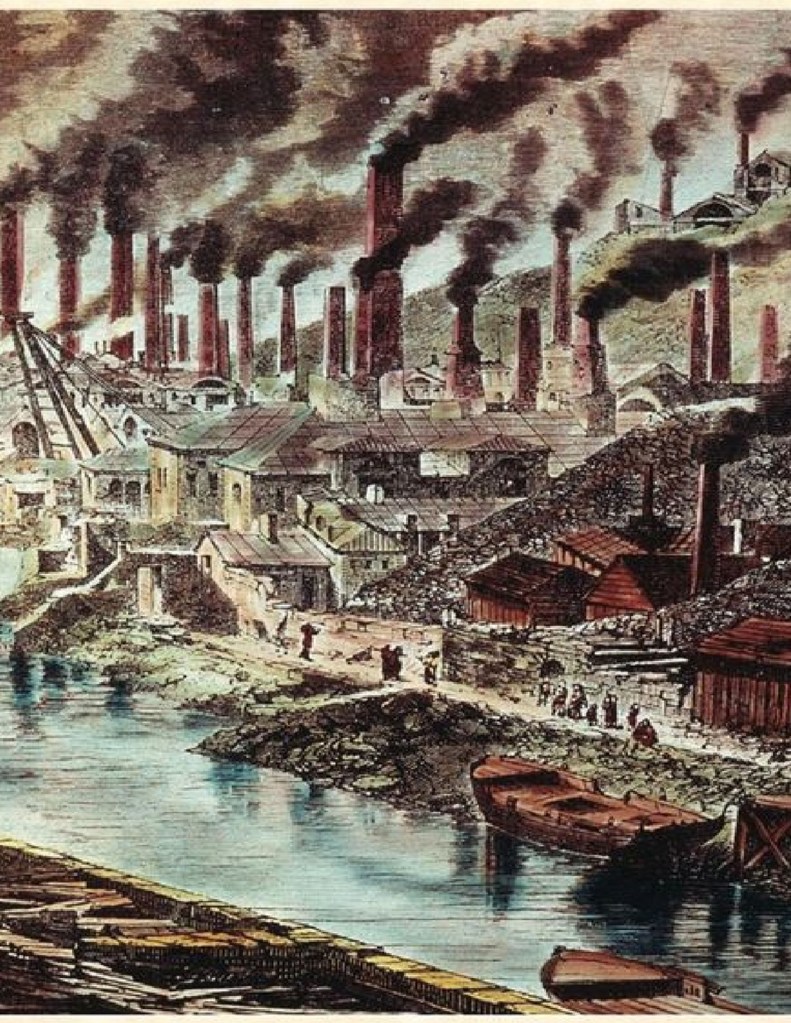
Cilfái: Copper Smoke

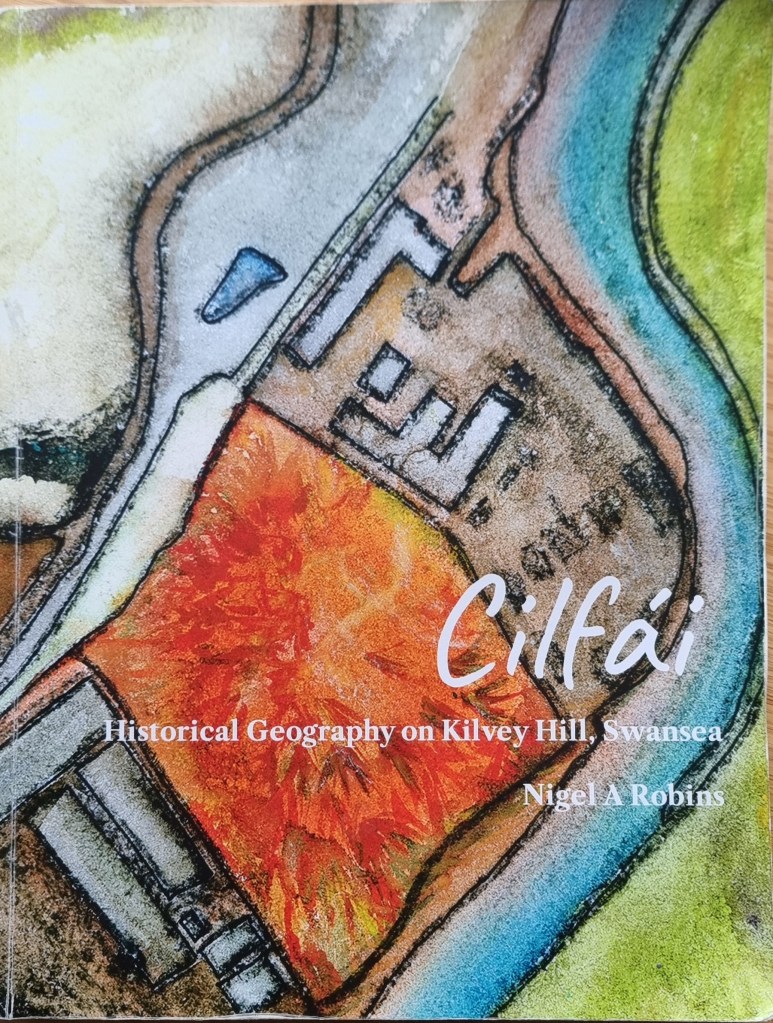
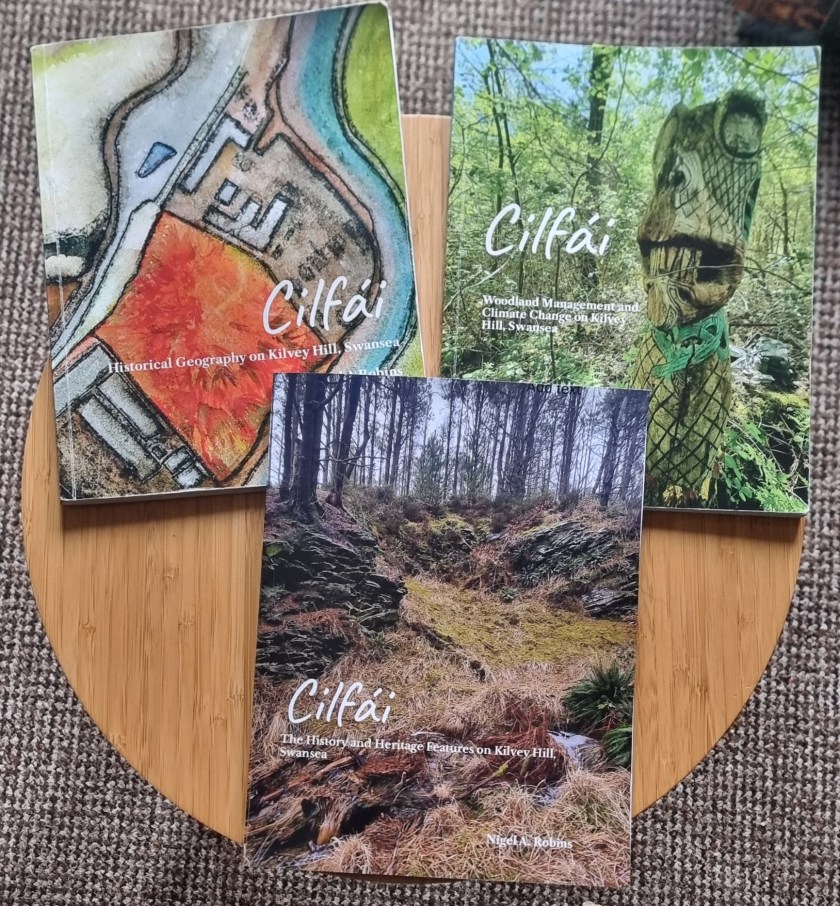
I write about the copper smoke in Chapter Four of Cilfái: Historical Geography on Kilvey Hill, Swansea.

The copper smoke from White Rock was horrendous. Black, acrid, greasy and opaque. It killed everything it touched. The chemical composition of the Cornish copper ore meant that once burnt with Kilvey’s bituminous coal, released vast quantities of sulphur dioxide, hydreogen fluoride, sulphrous and sulphuric acids. in the 1840s, the Vivian’s Hafod Works were releasing 188 tons of Sulphuric Acid daily into the Swansea Valley.

Above: An extract from a rare coloured version of an image commonly used to show the forest of chimneys at White Rock in the 1860s The toe of the Cae Morfa Carw slag tip is left of centre and the mass of chimneys of Middle Bank is to the left. The drawing was commissioned by the French travel journal ‘Le Tour du Monde ‘ and the artist was Jean-Baptiste Henri Durand-Brager (Le Tour du Monde) 1865) (Author’s collection).

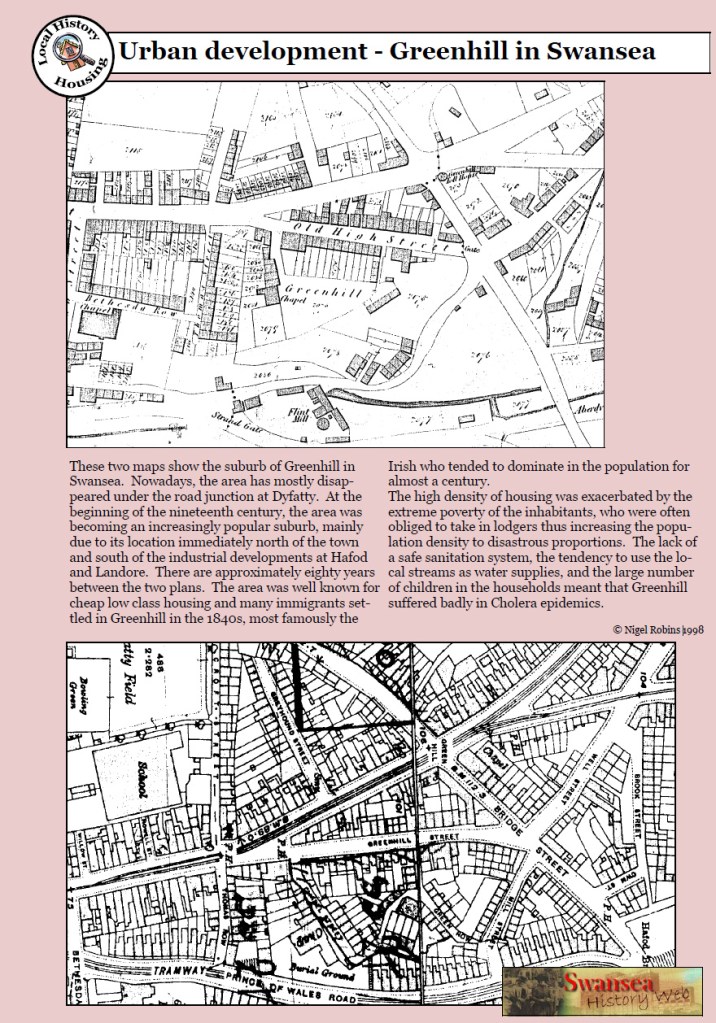
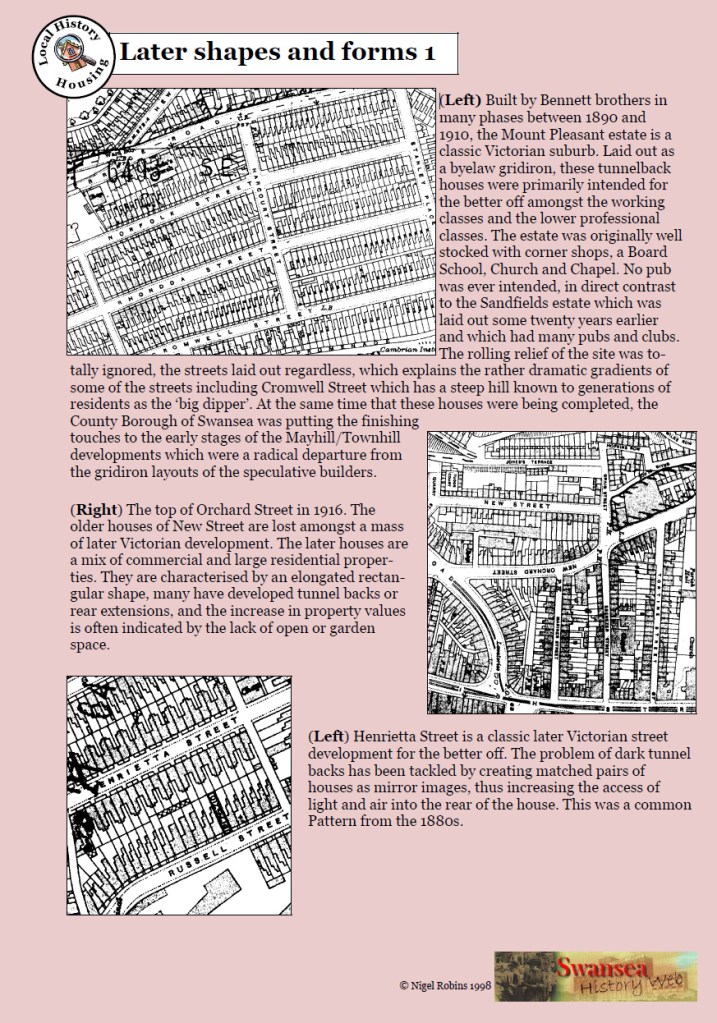
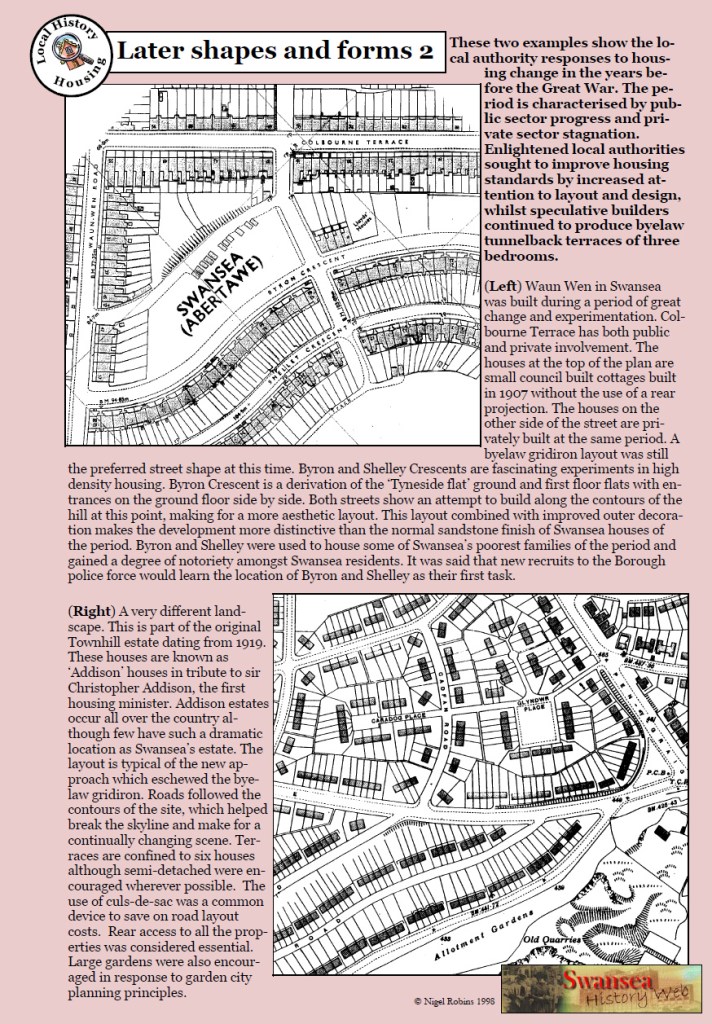
Housing history in Swansea

I’m taking a University class out tomorrow to look at some industrial housing history around Hafod and Landore. Housing history was the central theme of my research in the 1990s amd I must have surveyed and mapped hundreds of Glamorgan houses as I worked to understand industry, landscape and the housing needs of the early coal and metal industries.

Shape is one of the most important features of early (pre-1919) houses and it became a bit of a party trick when I could guess for other people the decade in which their original house was built. Although many of Swansea’s earliest industrial houses were swept away in the 1920s as part of slum clearance, quite a few of the classic examples still remain. Beyong the boundary of the original County Borough of Swansea, neighbouring local authorities did not clear their older houses and many survive in villages, cwms, and valleys near the pits and factories they served.

These are the handouts fr0m ‘Housing History 101’ from my teaching days. I suppose these types of documents (and clip art!) are history themselves now LOL.

Cilfái and unexploded bombs

Swansea was bombed about forty times during World War Two. Many of the bombs dropped didn’t explode and many are still out there under the ground on Cilfái.

The most imfamous bombing event was Swansea’s Three Nights’ Blitz of 19-21 February 1941. People assume that Cilfái’s bombs came from that event, but the main damage to the Hill was caused by the heavy bombing raid of 17 January 1941. On this night the Luftwaffe dropped a lot of heavy bombs. Many of which missed the Docks and ended up on the hill.

Bombs that landed on the marshy ground on the town side of the hill sank into the ground and never exploded. They are still there, but a long way underground (maybe five metres or more). Others did explode when they hit the hill leaving large craters, some of which have filled with water and are now biodiversity hotspots.

The Skyline development raises the risk that some of the unexploded bombs will be disturbed by excavators and diggers. This is a common ocurrence in areas that were heavily bombed. When I worked in construction in London, we all had to be trained in recognition and procedures if one of the diggers brought a bomb up in a bucket. The risk on the hill is real and has already been recognised in planning documents, and precautions will be essential.

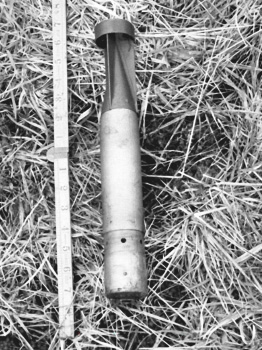
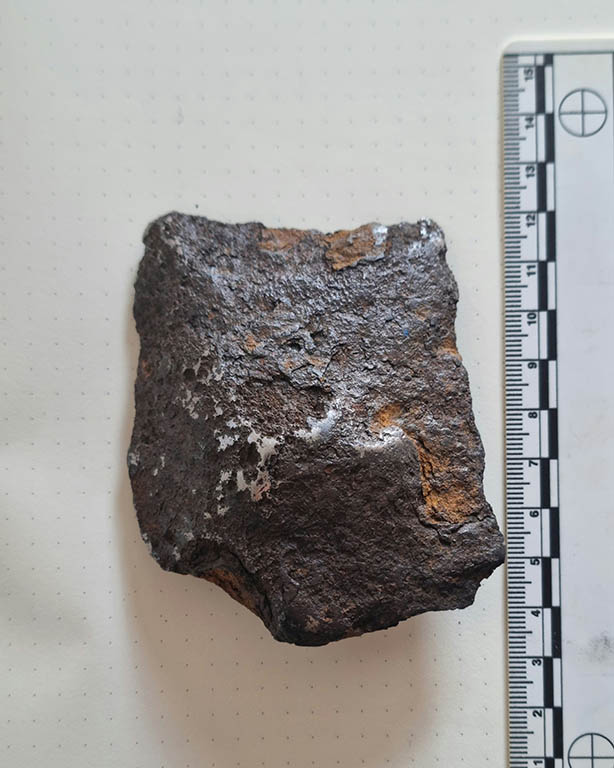
The bombs that did explode produced a lot of metal fragments of all sizes. In some places bomb fragments have become part of Cilfái’s archaeology. Fragments were incredibly dangerous. A piece of a bomb weighing about half a gramme (a fiftieth of an ounce) would be enough to smash through an arm or leg destroying the bones. The bigger fragments could kill instantly or easily destroy a vehicle.

Some parts of the hill were peppered with this kind of shrapnel. The photo below is of a big piece (aqbout 9 cm) I found. The sides of this fragment are still as sharp as a Stanley knife.

The World War Two remains are part of the wider collectiion of heritage and archaeology remains listed in the third Cilfái book Cilfái: History and Heritage Features on Kilvey Hill Swansea.

No matter how old they are or how rusty they look, bombs will still explode and kill.

Above: Bomb shrapnel from bombs dropped on Swansea in 1940.

Cilfái: The legacy in the soil

The industrial pollution phase of Cilfái’s history has left a permanent mark in the nature of the landscape. Industrial smelting waste forms a large part of the soil for over twenty percent of the woodlands around The Glade, Roundhouse, and up to Martin’s Pond. Slag takes its place amongst the native sandstone and the glacial debris from the last ice age. The structure and chemical profile of the soil is permanently altered and many trees eventually succumb to the toxicity. This is a good reason why natural regeneration should be favoured over massive new plantation of native species. Natural regeneration allows plants that are resilient to the poisons to develop. I explain more in the second Cilfái book.

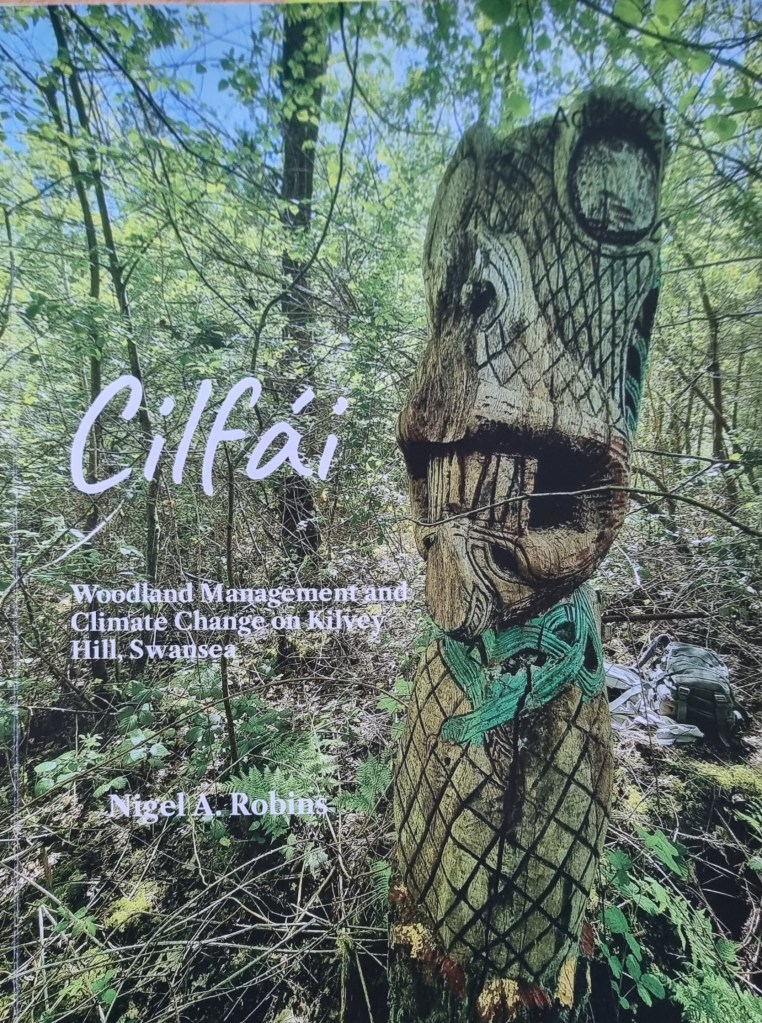
P.50 Cilfái: Woodland Management and Climate Change

Copper slag in the soil at Martin’s Pond 2022.