Swansea and Coal
This has now been reprinted as a 2025 Second Edition with some updates. I’ve also updated the copyright for AI constraints and EU product compliance details.
The first edition was an incredible success and I’d like to thank everyone who attended the illustrated talks and came on the blitz tours in 2024. I’ll be doing more walks and talks in 2025.
This book started with me trying to make sense of a part of my family’s history, so in many ways it is a work of years. I grew up as a child of the inner city of Swansea, a point that came home to me when I eventually realised that both my mother’s and father’s families lost relatives in the bombing.
The story of the loss of Jack Bowers was something I grew up with but the true significance didn’t really hit me until I became a parent myself and I lost the older members of the family. I heard stories of the war from Florence and Ethel (my grandmothers), but they were never overly keen to talk about those years. I’m grateful for the things they shared with me.
I am so grateful to my friend Dr John Alban for his expert knowledge of the period and the many discussions we have had over the years. John’s generosity and support has been significant for so many of us as Swansea historians. I gained a deeper understanding of fire whilst working on the restoration of the Palace of Westminster (which has a unique relationship with fire itself), and I learned much from working with fire engineers on the Parliament restoration, although none of my colleagues realised I was busy applying what I was learning to the destruction of Swansea in the blitz. My lifelong friend John Andrew was particularly supportive and our long conversations so productive.
I was very privileged to be able to talk with Tony Kilmister about the courageous exploits of his mother and father, who were central to the Teilo Crescent tragedy. The Royal Engineers Association were incredibly helpful and friendly and I remember with great affection spending evenings in the Drill Hall listening to the old soldiers’ stories that put faces and personalities into the painful history of the time.
Also the wonderful support of my wife Alison who does so much to inspire and improve my writing and provide background knowledge on so many things.
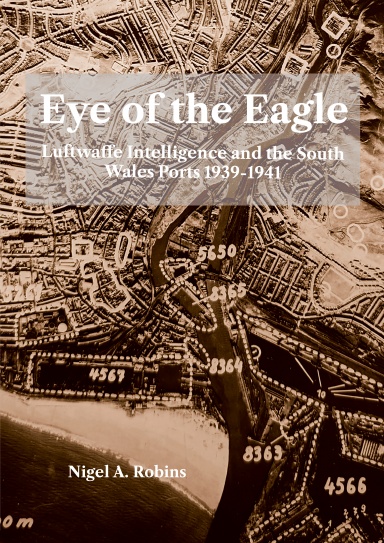
This has now been reissued as a 2025 Second Edition. I’ve also updated the copyright and EU product compliance details.
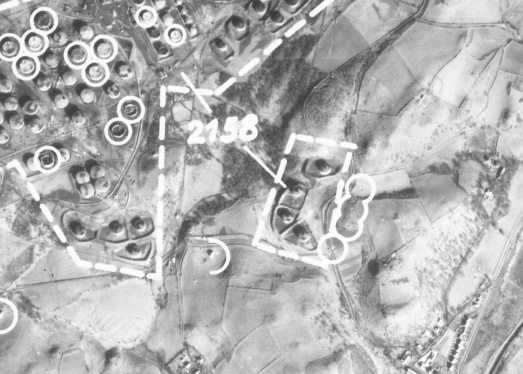
The first version of Eye of the Eagle was published in 1993. At that time, the research was to look at local landscape history, and British government aerial photographs were prohibitively expensive for such research, whereas, with a bit of effort, the Luftwaffe aerial surveys were freely available albeit via the record offices of the USA. As a geographer, my first instinct was to look for photographs and maps that give a first impression of a landscape before experiencing the land by walking. Since those days, a revolution in information sciences has changed so much. British record offices are far easier to engage with, and online and digital sources provide a wealth of resources and historical riches that were undreamed of in the 1990s. Combining the images with appropriate GIS/GPS systems has provided spectacular insights into ancient woodland and post-industrial recovery of land.
However, what has not changed is the research and writing techniques that underpin our discipline. This book has been written several times, only to be rewritten when new sources become available or are revealed in the improved access or digitisation of various records. Some of the many images and sources you will see here were rescued from rubbish dumps as organisations sought to ‘become digital’ in the early 2000s by throwing away ‘old’ records. Which explains their rather ‘worn’ looks.
This has now been reprinted as a 2025 Second Edition with some updates I’ve also updated the copyright for AI constraints, and EU product compliance details.
This book started out as a collection of notes made over more than a decade of surveys in Welsh woodlands. What started out as a historical investigation into industrial archaeology in woodlands transformed into a catalogue of what climate change, government policy and local politics is doing to our landscape. As I write this Cilfái is threatened once more with proposed transformation that increasingly looks like destruction.
This is a companion volume to Cilfái: Historical Geography on Kilvey Hill, Swansea. But this one is more about the environment of the woods and the climate change that is already changing the nature of the land. Climate change is now part of life and the next generation will be challenged with adaptation to what is happening. This book is my chronicle of what some of that means for Cilfái (Kilvey), this most special part of Swansea’s character that has been abused, ignored and loved…depending on where you live and what your politics are. Some of this work is based on my government experience as a programme reviewer of many environmental and cultural projects across the UK where I experienced the good, the bad, and the ugly of politicians, the Civil Service and successive government policies or the lack of them.
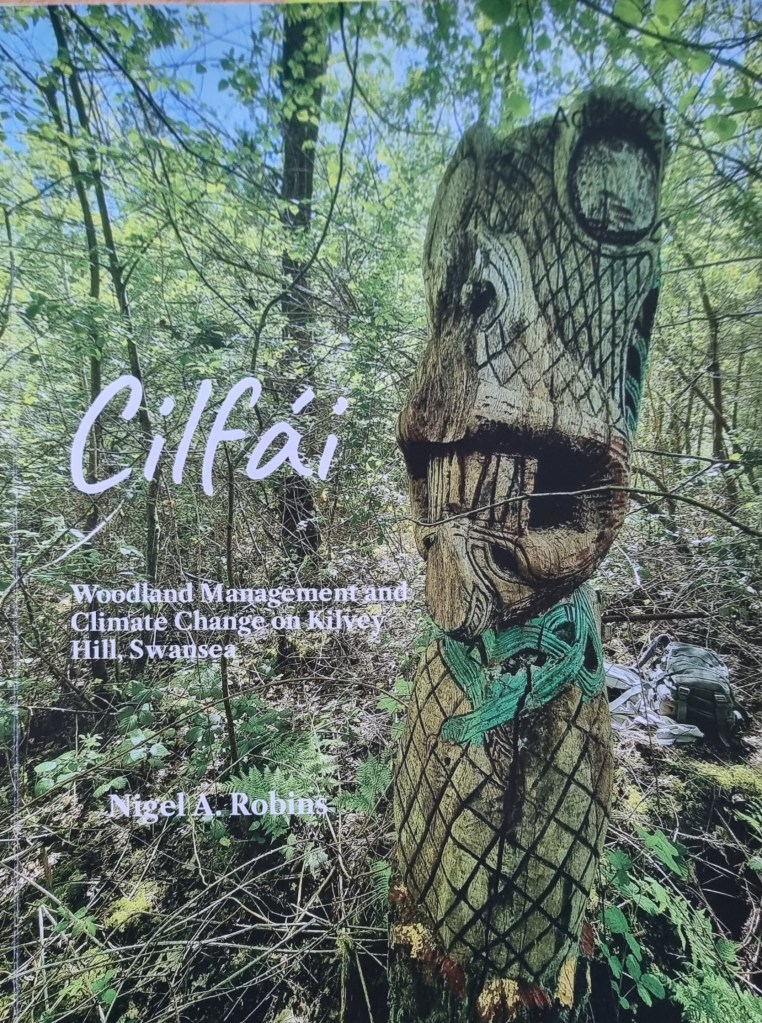
Authors always have inspiration from somewhere and I am no different. My inspiration has been in the conversations and actions of many colleagues in my time working in UK Government in Defra, MOD, Cabinet Office, and Parliament. They all contributed, sometimes unwittingly. You can often learn a lot about a topic by listening to people who know very little about it but who never feel restricted in holding an opinion. Climate change is one of those topics.
I have been privileged to have had the company of experts in many conversations about the topics covered here. But notably, the Forestry Commission was laid bare to me by veteran forestry man David Connick. Equally, the passion of my friend Keith Clement in worrying about where we are going has constantly coloured my sense of urgency.
The commitment and enduring engagement of the Kilvey Woodland Volunteers never ceases to amaze and inspire, and I regularly see incredible generous acts of sharing and care for the Hill that should be an example to all volunteer groups.
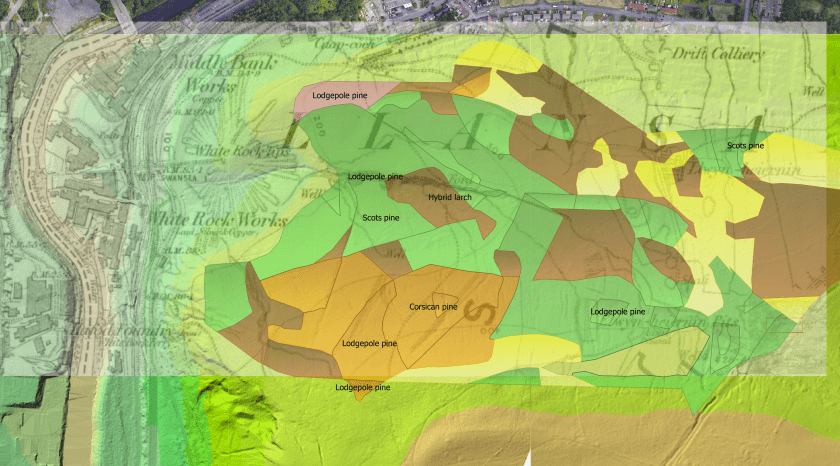
I’ve now completed the information project for the Cilfái/Kilvey Hill landscape and surrounding area. The three books covering history, environment, climate change and heritage have all done phenomenally well. I’m sure that almost everyone who wanted copies of any or all of the books in the trilogy now has them. I remain amazed at the level of interest from the USA, Canada, and Australia!
I’ll be teaching Cilfái in several local places in 2025 alongside my World War Two books on South Wales and Swansea Blitz. I will also be offering open-air classroom sessions up on the Hill when the weather allows me to! I’ll post those details in the New Year.
I still have no idea about the future of the Hill, and I guess Swansea Council’s threatened destruction of the environment is about to enter the next phase in 2025. Meanwhile, I’ll continue to use the Hill and/or what survives of the woodlands as my outdoor classroom. A wonderful environment to examine heritage, climate change, woodland biodiversity and geology.
Interest in the history and geography of Cilfái continues to rise, and I’d like to thank the many educational (FE and HE) establishments and organisations for their continued support and engagement with me (and the outstanding Kilvey Woodland Volunteers) in seeking to understand the hill’s value for our local communities and as an educational and wellbeing resource.
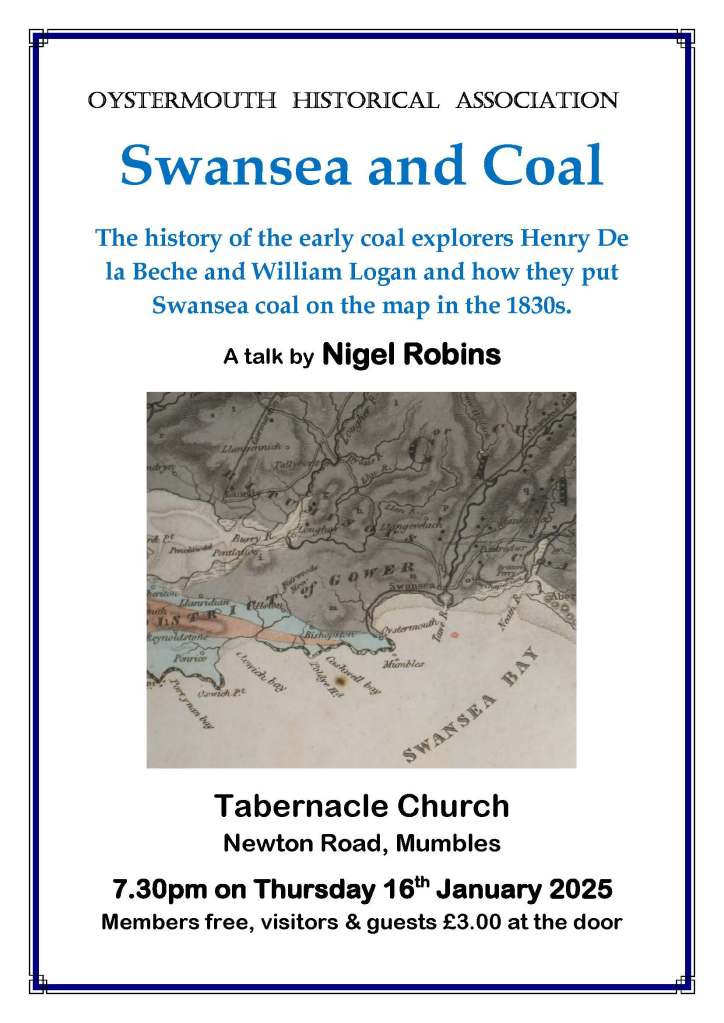
One of the fascinating backstories of Cilfái has been the significance of the Hill in the history of coal exploration. Swansea has a particularly special place in the history of the British coal industry. Much of that rich history has been forgotten or discarded, but my next book will be about bringing that fantastic history back to life.
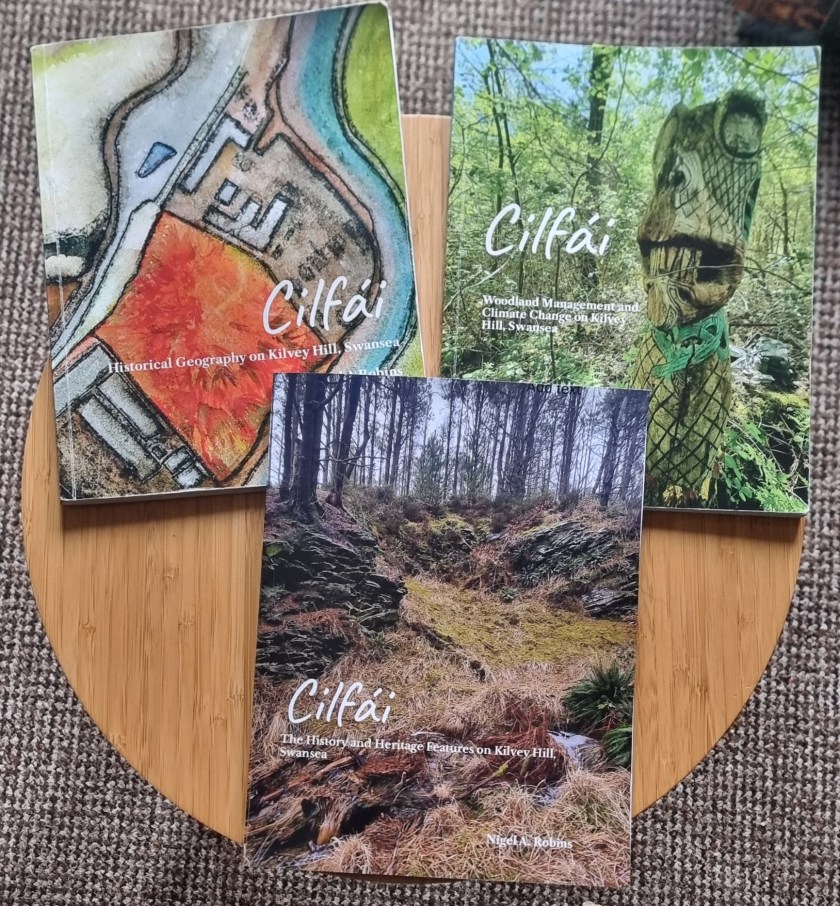
The Cilfái Trilogy. Bringing the uniqueness of the Hill to a wider audience!
Most of the documents and other evidence about how Swansea coped during the war have not survived. As I said earlier, we have a lot of photographs, but understanding how people managed is harder to explore. My earlier post discussed the role of the ARP Controller Hywel Lang Lang-Coath. I looked through the available evidence to reconstruct the communication processes people needed to work through the awful problems the bombing caused.
One of the most important roles was the Air Raid Warden, who was expected to act as first-line help, assess the problems a bomb or fire had caused and ensure both the police and the ARP control knew about the problem. Wardens had to be special people, confident, capable, and able to prioritise problems on the spot. Nearly twenty per cent of wardens were women.
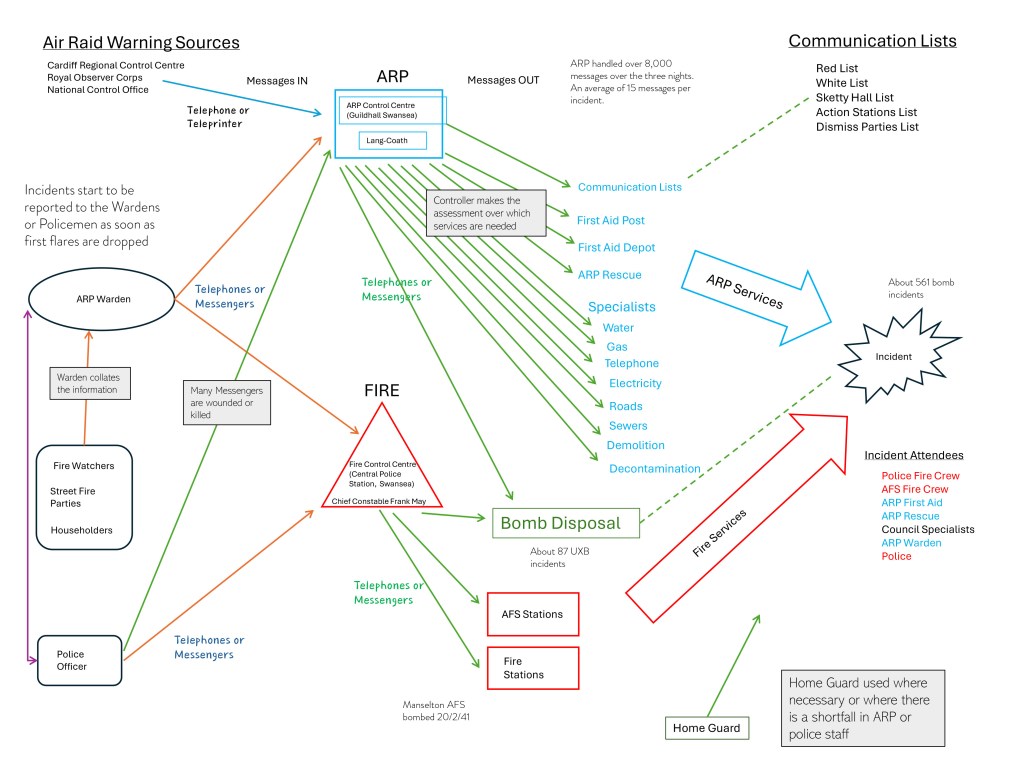
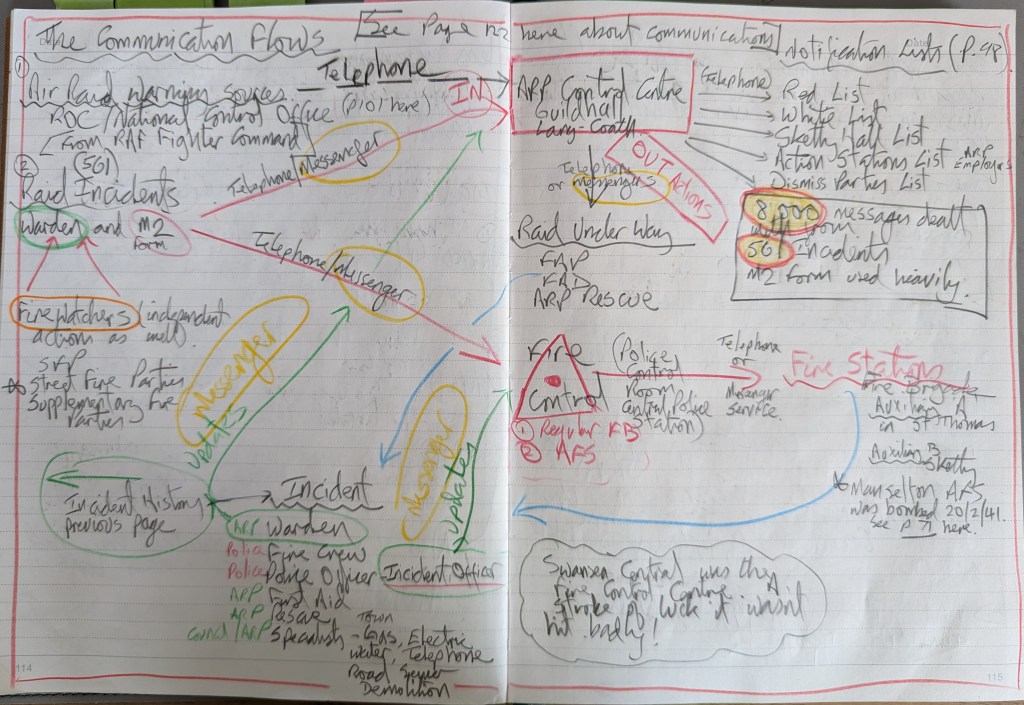
Below is my reconstruction of the communication flows between the warden and the fire control at Swansea Central Police Station and ARP Control in the Guildhall. You can see how complex the ARP role was and how many decisions Lang-Coath had to make. Once the telephone lines were destroyed, all messages were carried by teenagers on bikes or motorbikes, or even just running through the bombs and fires. A number of Messengers died trying to get their messages to the Guildhall.
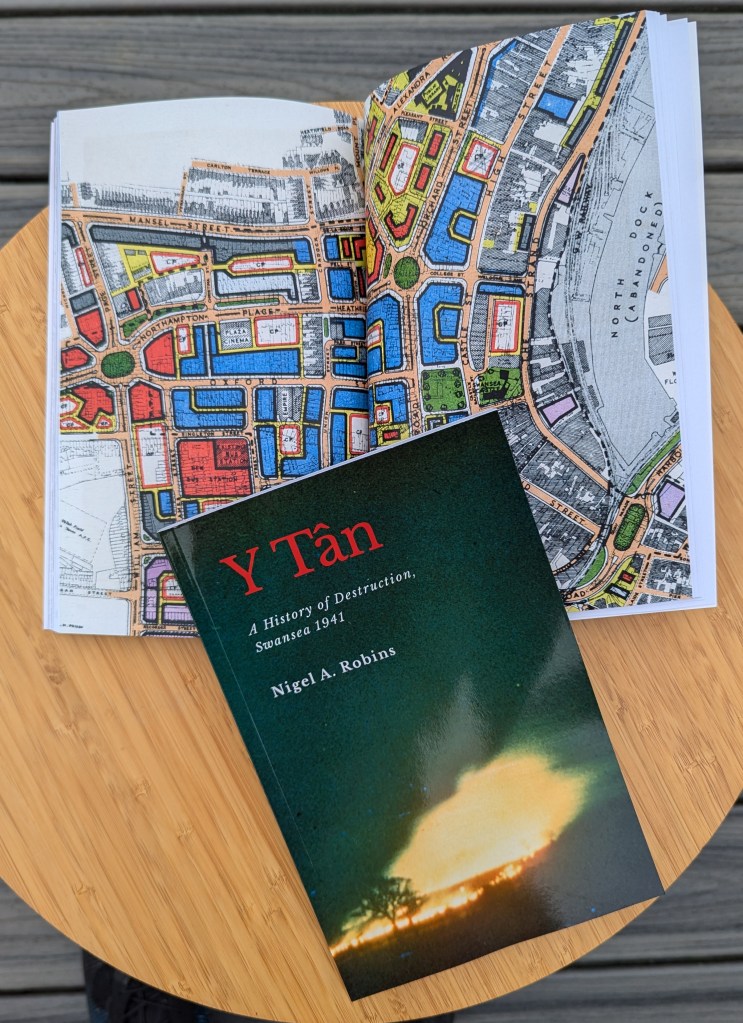
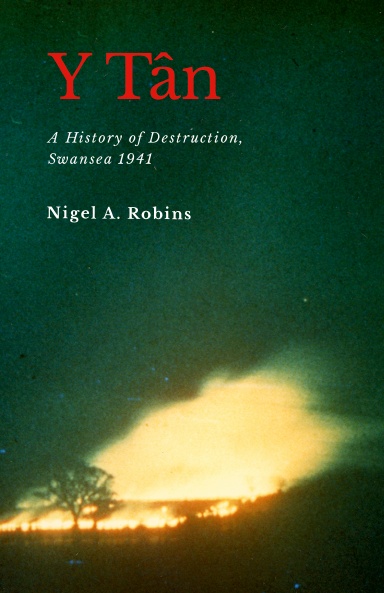
You can buy the book here: Y Tân (lulu.com)
Various social media pages regularly post pictures of the Swansea Blitz damage. What is less well-known is how Swansea Council dealt with the disaster. As the local authority, it fell to the Council to lead the town’s civil defence. Whereas the police and fire brigade were already recognised in their duties, the new type of war on civilians needed a new set of approaches and a new organisation…Air Raid Precautions (or ARP).
Traditionally, the local authority’s head of administration, often called the Town Clerk, was appointed as the Controller of ARP. In Swansea, this esteemed role was held by the renowned Hywel Lang Lang-Coath. With over thirty years of experience and an intimate knowledge of Swansea, Lang-Coath, originally from Bridgend, wielded significant influence over the County Borough’s administration.
When the bombing came, Swansea’s Chief Constable dealt with the policing and fires, but Lang-Coath had to oversee everything else. This meant that he had to make the decisions on water supply, gas mains, telephone repairs, electricity cables, roads, sewers, demolition of bomb-damaged buildings, decontamination of food supplies, feeding bombed-out families, issuing emergency ration books and sending ambulances and first aid to bombed areas of Swansea. Many Swansea councillors didn’t like him and were jealous of his control and power. They wanted to be part of the process. Lang-Coath refused and focussed on saving lives and looking after the bomb victims and prioritised the emergency services to support people at the worst time in their lives. Many people can be grateful that Swansea councillors were prevented from playing petty party politics at the worst point in Swansea’s recent history.
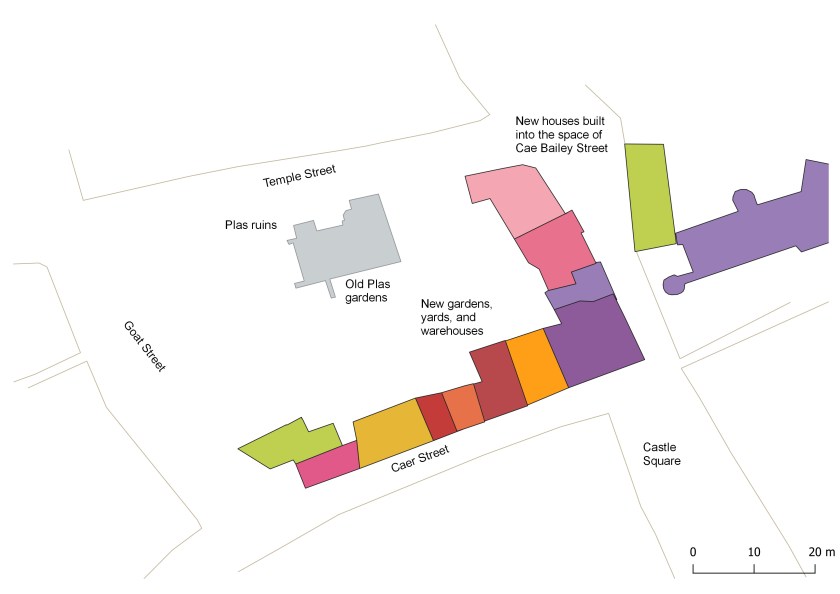
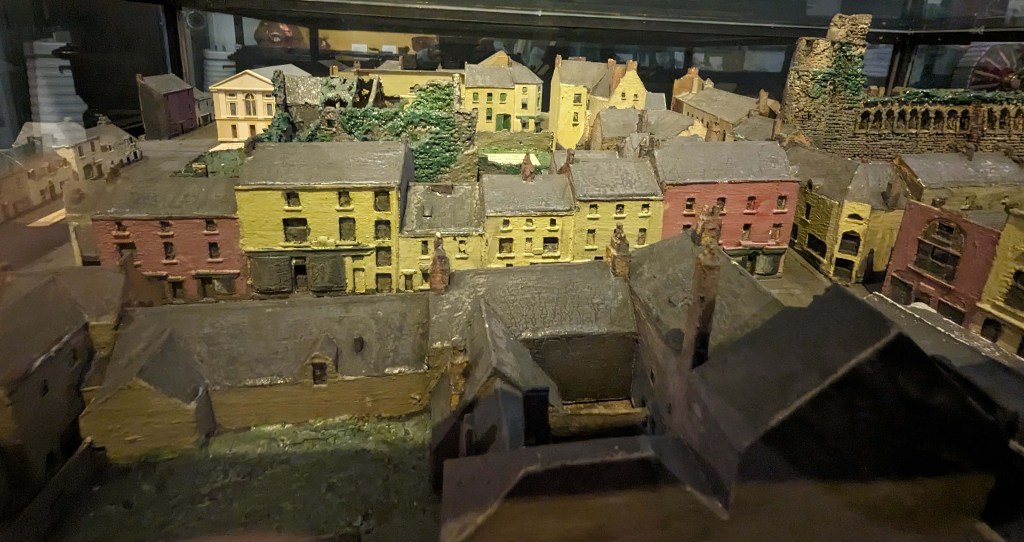
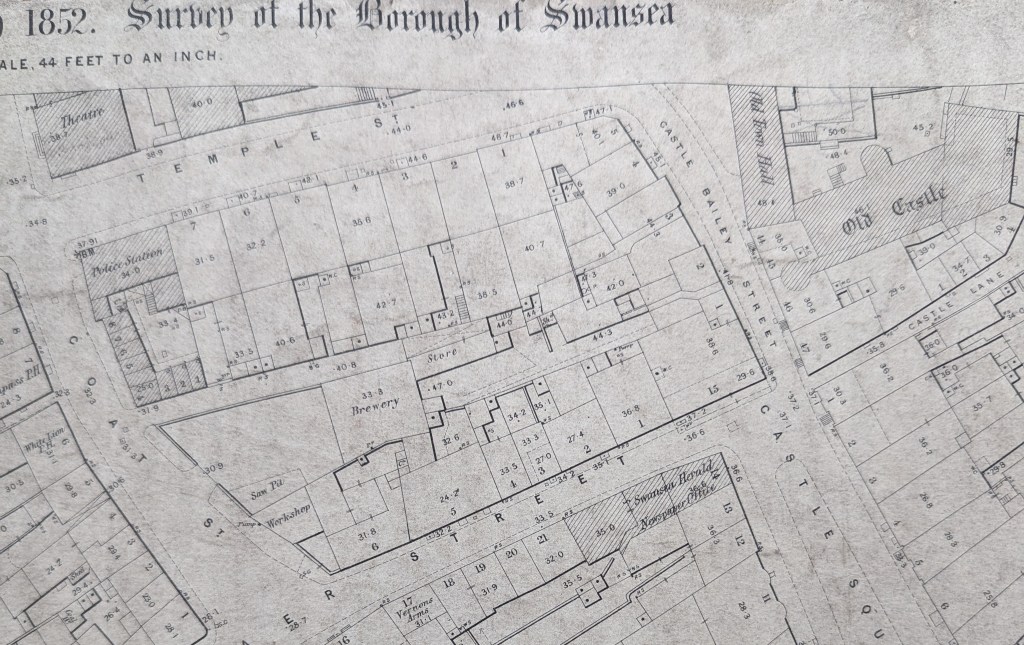
One of the most remarkable items on display in Swansea Museum is the model of the Plas House and the surrounding streets from the 1820s. It was extemely useful to be able to examine the model when I was reconstructing the layout of the streets for the Y Tân book.
It is difficult to create a good quality map of the town streets until the creation of the 1852 Board of Health plans. The model in the museum is topographically corect and I was able, with the help of modern technology, fix an exact position of the Plas House and its relationship to Temple Street. Knowing the positions of these two things makes it easier to understand the construction of Ben Evans and what happened after the war, when it became Castle Gardens.
The model is on the first floor of the museum.
You can but the book online here Y Tân (lulu.com)
Although we now know Castle Gardens as an ugly concrete space in the centre of town, that area of land has been central to Swansea’s history for centuries.
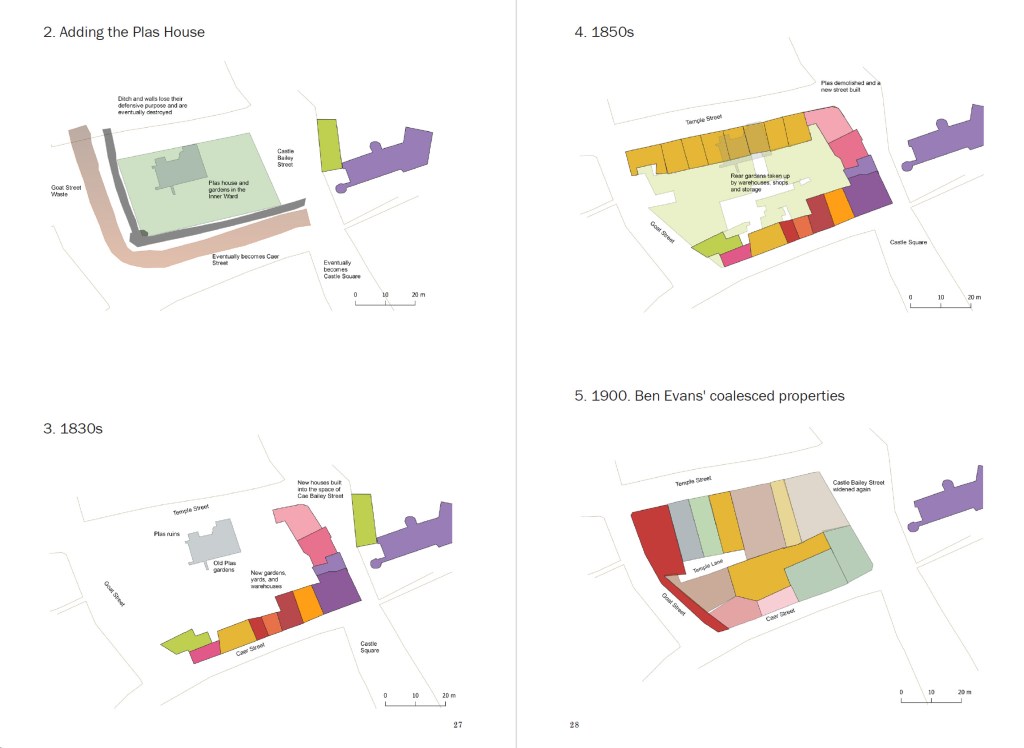
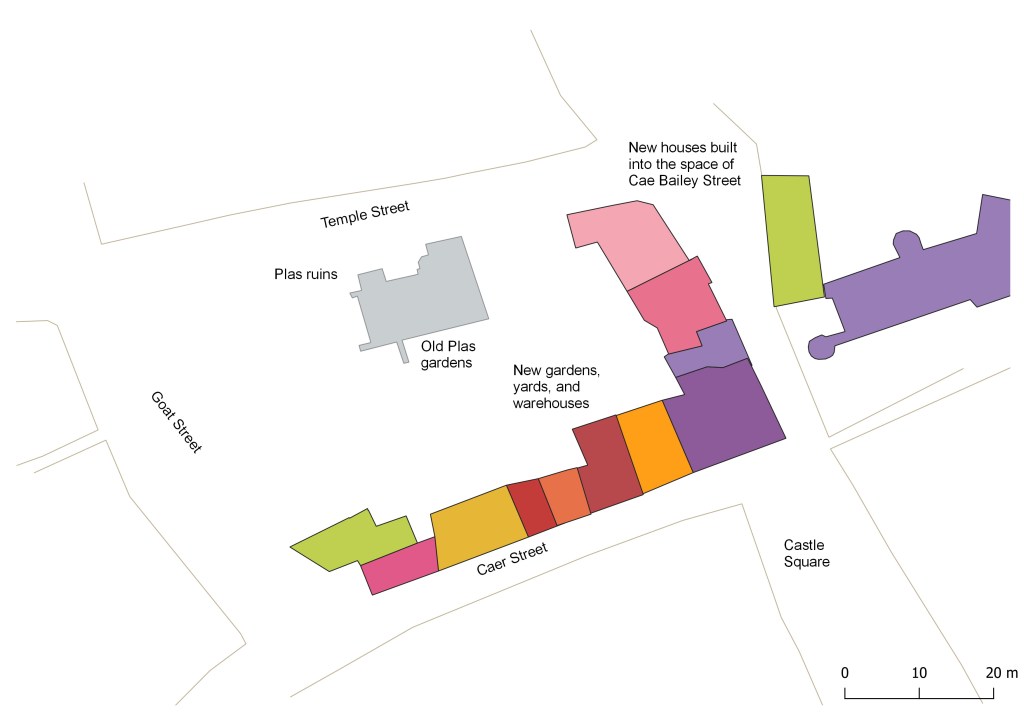
Originally part of the inner ward of Swansea Castle, the space has over the years held many buildings starting with the Plas House built in the 1300s. You can see a fantastic model of the area in Swansea Museum which was made in the 1820s. The streets that defined the Plas House block are part of Swansea’s long history. Temple Street to the north which once held the Three Lamps Inn, Goat Street to the west which held the original police station, and Caer Street to the south, which is (sort of) still there.
Pride of place has to go to Castle Bailey Street to the east which originally was a big space in front of the castle. By the 1890s, the site was the home of the various properties that made up the Ben Evans department store. Understanding the layout and contsruction of the store is an important part of understanding how it caught fire and burned so easily in February 1941.
For the book I reconstructed the various eras of building on the block to understand more about how the space was used. I used methods from the 1940s when architects and fire engineers were reviewing the incendiary attacks on Britain and looking to learn lessons to destroy German towns and rebuild Swansea after the war. Understanding Castle Gardens is a chapter in my book.
You can buy online here: Y Tân (lulu.com)
Just starting a new research project on the 1940s incendiary bomb attacks on Swansea. Although a few books have been written on wartime Swansea, the reliability can be suspect because of the lack of documentary records. The primary source is still John Alban’s keystone work on some of the archival sources that survived (Alban 1994). The response of a local authority to the challenges of an intense air attack varied widely across the country and has been the subject of a growing body of research, such as this thesis from 2020 (Wareham 2020)In this study, the author examines Cardiff Council’s response to wartime life and air attacks. It’s a mixed bag of successes and failures as the Council struggled to meet the challenges of maintaining services under air attacks. Some local authorities did little to meet their responsibilities, and civilians have died in various towns where bomb shelters, services and food supplies were poorly managed. As historians, we are not helped by the limited nature of the official history of civil defence, which barely investigated matters outside London (O’Brien 1955).
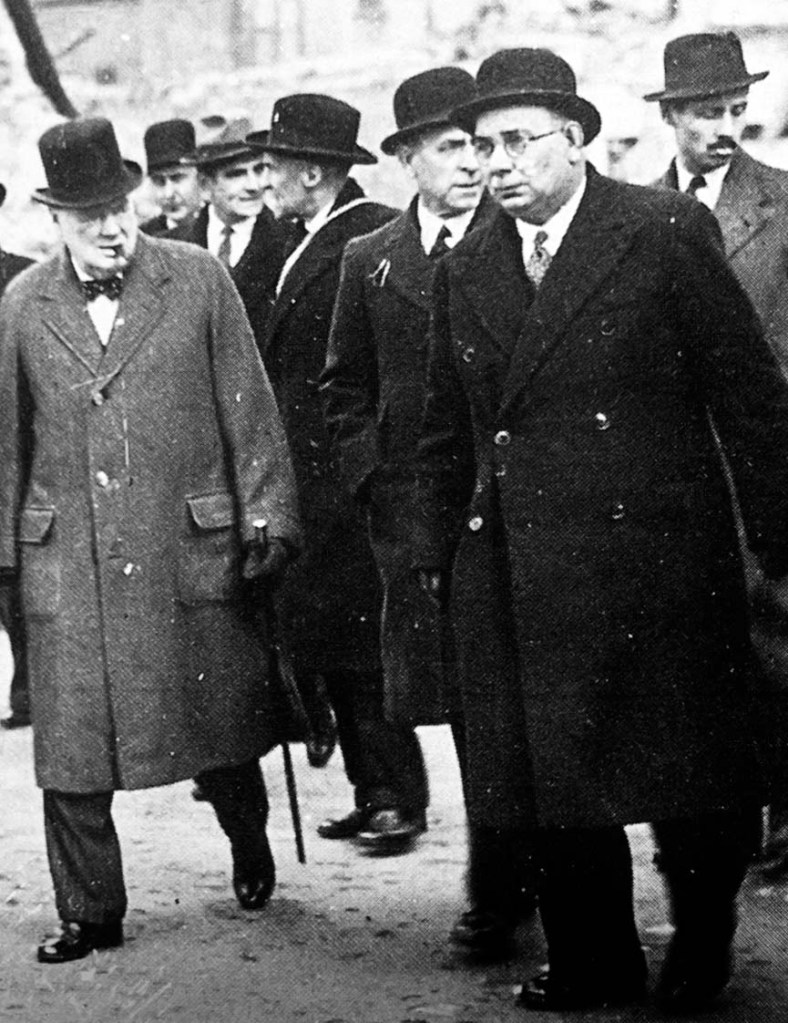
Swansea’s air raid precautions and defences worked well, and senior members of the Churchill government and officials of various agencies praised the efficiency of their response. However, local Swansea politicians criticised them and insisted on complaining that the ARP staff did not sufficiently recognise their role as politicians even amid incredible tragedy of 1941 (Alban 1994: 59–61).
Understanding the situation faced in the Blitz of February 1941 relies heavily on understanding the role of the ARP Controller, who led the entire local authority response to the bombing. For Swansea, this was the Town Clerk Howell Lang Lang-Coath. He was a veteran of over thirty years of Swansea’s local government processes, but at the end of his career, at sixty-six years old, his leadership and authority did much to save lives during and after the raids.
Understanding his role and effectiveness relies on understanding his communication flows and processes as he managed the ARP response from his control room in the Guildhall in Swansea. The dearth of contemporary records has meant I have had to reconstruct the communication flows from a wide range of local sources. Here’s my first pass through the information. Imagine having a small team of secretaries having to deal with over 8,000 messages for 561 incidents and controlling First Aid, Alarms, ARP staff, Rescue, Ambulances, Gas, Electricity and Water supply in an era where communications were unreliable telephones and a network of messengers in cars and on bicycles (often teenagers).
The police forces of the country were unwilling to share or modify their status and their responsibilities even during the hardest times of the war and a dual response method was imposed on the country where ARP and Fire services were managed separately. The success of this approach depended on the personal qualities of the ARP Wardens. You can see this on the diagram with different communication flows to ARP Control (at The Guildhall) and the Fire Control Centre (at Central Police Station).
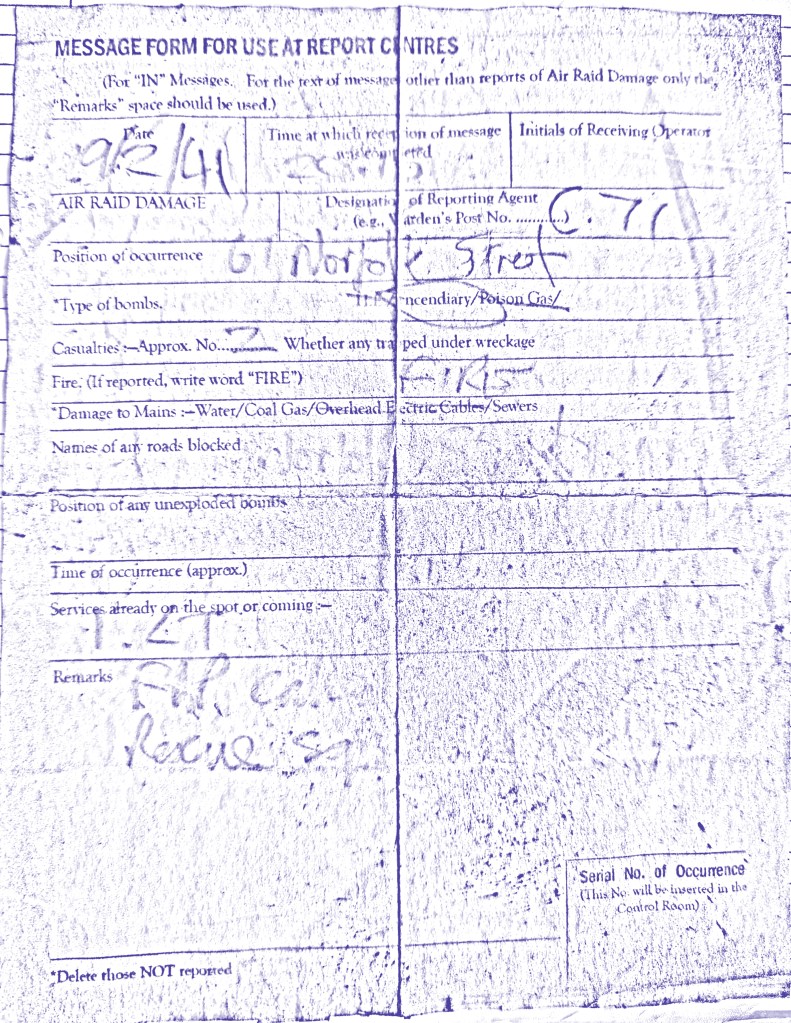
One of the surprises was the efficiency of the ARP M2 Reporting Form which allowed structured information at the correct level of detail to be quickly transmitted or passed to the staff andv the ARP Control Centre.
Alban, J.R. 1994. The Three Nights’ Blitz: Select Contemporary Reports Relating to Swansea’s Air Raids of February 1941, Studies in Swansea’s History, 3 (Swansea: City of Swansea)
O’Brien, Terence H. 1955. Civil Defence (London: HMSO)
Wareham, Evonne Elaine. 2020. ‘Serving the City: Cardiff County Borough in the Second World War’ (unpublished PhD, Cardiff: Cardiff University)
 Nigel Robins