Yi-Fu Tuan was one of the most influential geographers of his generation. Tuan created the concept of ‘Topophilia’, a bond between people and a place or setting. In a landmark book, Tuan explored the many ways people bonded themselves to their environment (Tuan 1974). The intimacies of personal encounters with a space produce ‘a sense of place’. This is what Cilfái has. Equally, it is what many modern local authorities strive for and fail to achieve. Cilfái is a runaway success, whilst Castle Gardens is a runaway failure. Cilfái is a miracle of the natural environment, born out of the criminal pollution of the past whilst Castle Gardens, or the St David’s Centre, are poorly devised spatial concepts that have little bearing on the needs of the community and their spiritual life.

Yi-Fu Tuan is one of the reasons I became a geographer. He had me at the line:
‘Awareness of the past is an important element in the love of place.’
(Tuan 1974: 1332)
The hill of Cilfái fits perfectly with Tuan’s idea that a ‘place’ or ‘space’ needs to be a natural unit with which people can readily identify. The hill has historical continuity and boundaries; it can be known personally in a way the wider city of Swansea can never be because it is too disparate and big. One of Swansea’s most famous history books is ‘The Story of Swansea’s Districts and Villages’. That’s no accident; the author knew what he was talking about (Thomas 1969).
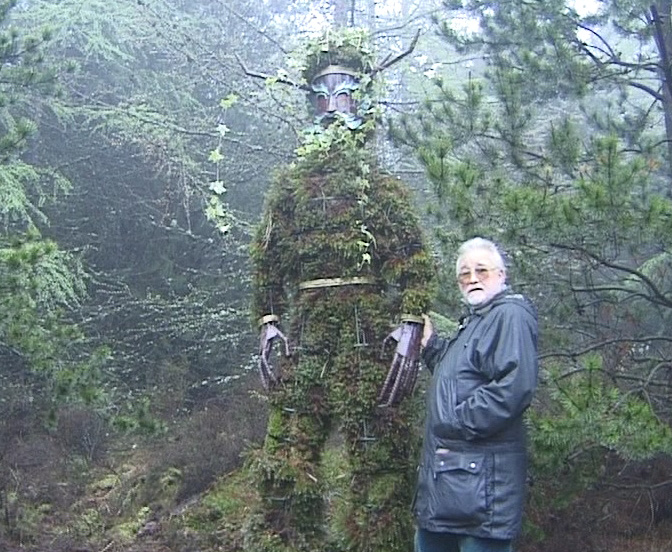
When Pete Thomas created Green Man, he had tuned in to the same emotion of recreating space and place on the hill.
I hope we get to keep it.
Thomas, Norman Lewis. 1969. The Story of Swansea’s Districts and Villages (Swansea: Qualprint)
Tuan, Yi Fu. 1974. Topophilia: A Study of Environmental Perception, Attitudes, and Values (New York: Columbia)
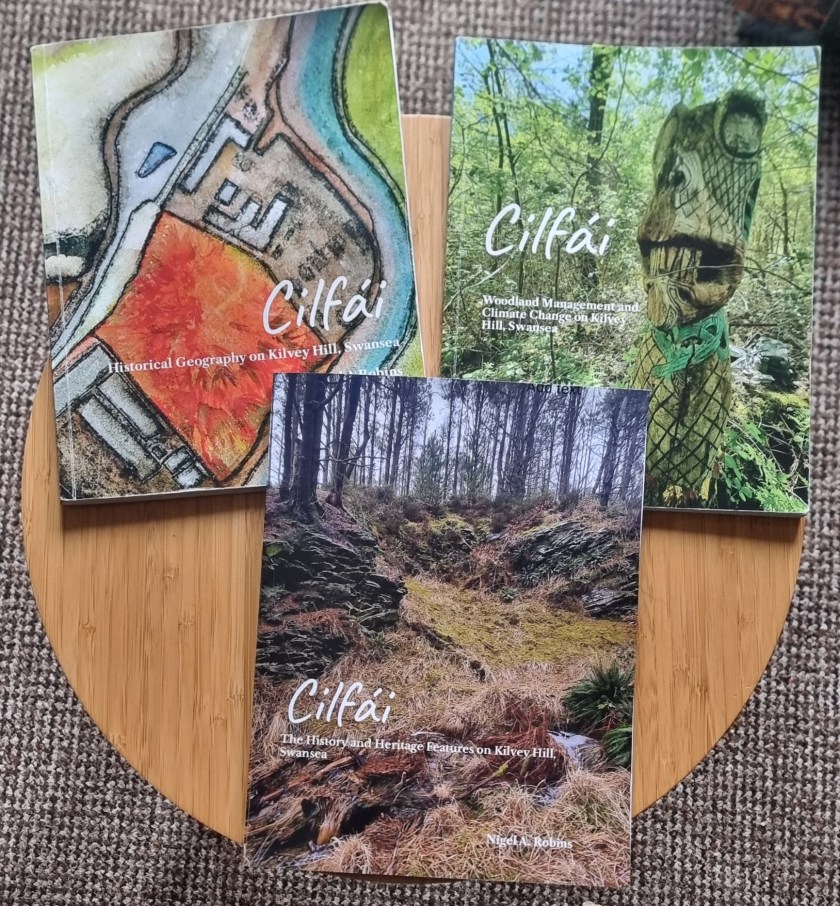
 Nigel Robins