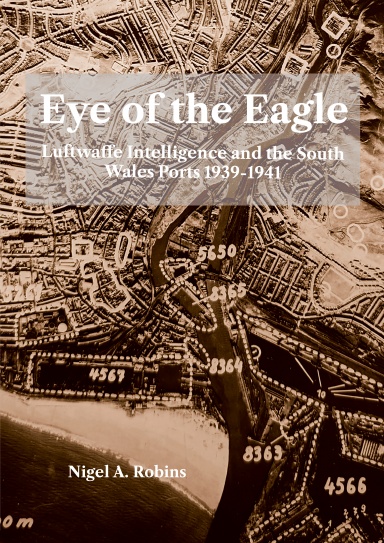
Eye of the Eagle: Luftwaffe Intelligence and the South Wales Ports 1939-1941 ISBN 978-1-7393533-3-9

This has now been reissued as a 2025 Second Edition. I’ve also updated the copyright and EU product compliance details.

The first version of Eye of the Eagle was published in 1993. At that time, the research was to look at local landscape history, and British government aerial photographs were prohibitively expensive for such research, whereas, with a bit of effort, the Luftwaffe aerial surveys were freely available albeit via the record offices of the USA. As a geographer, my first instinct was to look for photographs and maps that give a first impression of a landscape before experiencing the land by walking. Since those days, a revolution in information sciences has changed so much. British record offices are far easier to engage with, and online and digital sources provide a wealth of resources and historical riches that were undreamed of in the 1990s. Combining the images with appropriate GIS/GPS systems has provided spectacular insights into ancient woodland and post-industrial recovery of land.
However, what has not changed is the research and writing techniques that underpin our discipline. This book has been written several times, only to be rewritten when new sources become available or are revealed in the improved access or digitisation of various records. Some of the many images and sources you will see here were rescued from rubbish dumps as organisations sought to ‘become digital’ in the early 2000s by throwing away ‘old’ records. Which explains their rather ‘worn’ looks.
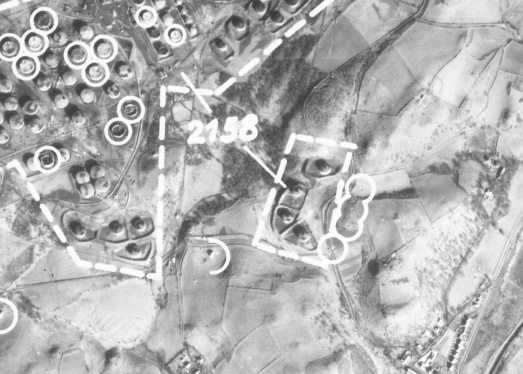
Llandarcy showing destroyed oil tanks and near misses after the 1940 bombing raids.
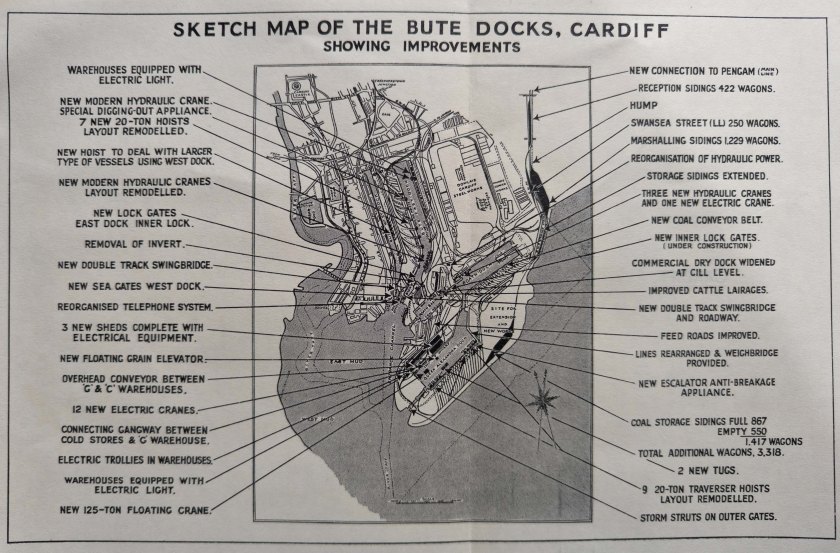
One of the GWR plans of Cardiff used by thew Luftwaffe to plan their air attacks in September 1939.

Port Talbot and the Luftwaffe

Port Talbot is covered in Chapter 8 of Eye of the Eagle: Luftwaffe Intelligence and the South Wales ports, 1939-1941.

Port Talbot (Aberafan) has a long history as a port, although much of the town’s historic identity is swallowed up by the dominant steelworks . Coal was moved down the Afan Valley to a site originally known as Llewellyn’s Quay, probably from the 1600s or earlier. By the 1750s, a tram line had replaced the pack horse route, and by 1811, iron was also being moved through the valley. Copper ore was imported for the copper works at Cwmafan by the 1830s, and a wharf near Llewellyn’s Quay was built to handle ore (the original Copper Works Wharf).

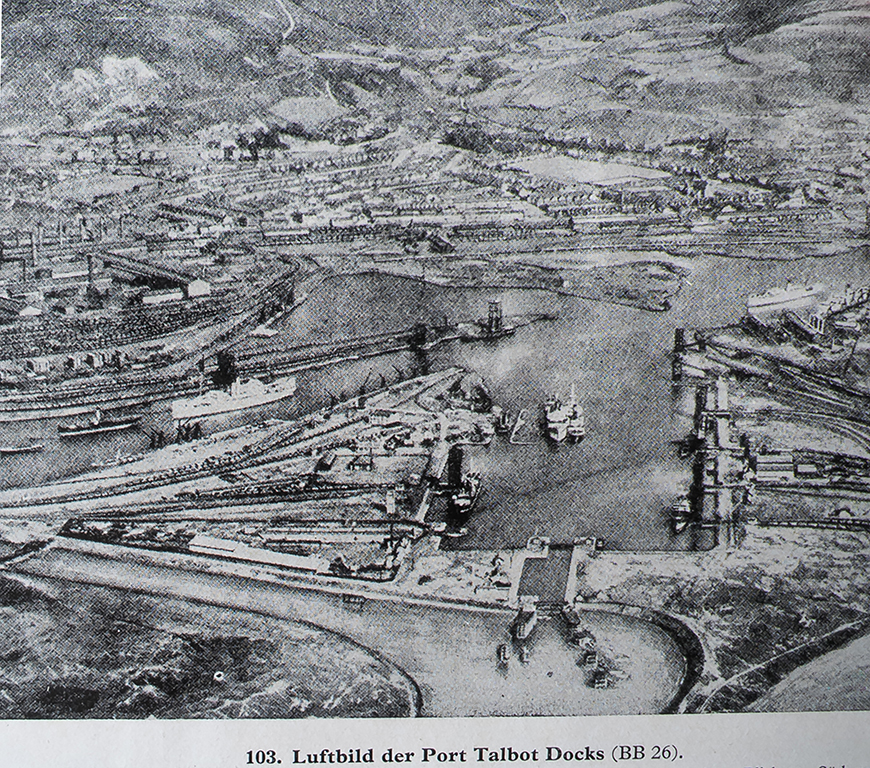
Port Talbot was identified as a port of interest because of the two large integrated steelworks. The dock was also considered vulnerable because it could be destroyed by bombs on the lock gate and entrance.

Above: Port Talbot from Luftwaffe intelligence records created in 1938-39.

Eye of the Eagle: Luftwaffe Intelligence and the South Wales Ports 1939-1941

My new book on the history of the Blitz bombing of Swansea and the other South Wales ports is now available from me.

This is the second edition of Eye of the Eagle, the first edition was published in 1993!

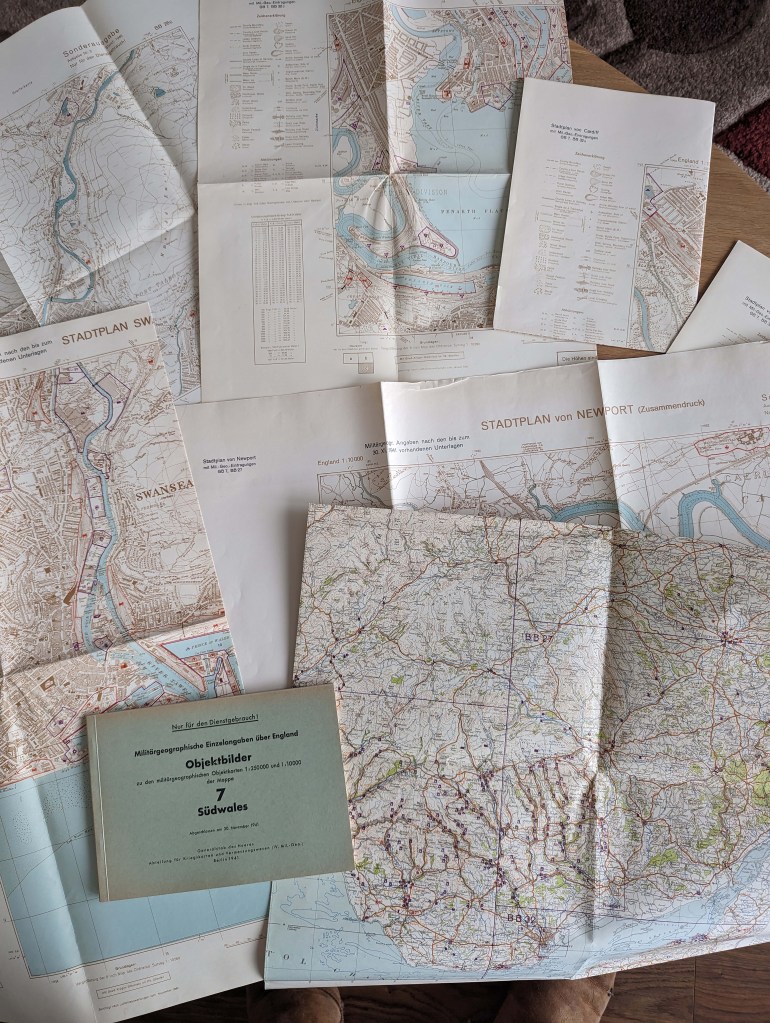
I’ve completely rewritten the history based on years of research in German Air Force sources and I’ve looked at the other ports the Luftwaffe attacked in 1940 and 1941. Over the years I’ve collected a large range of intelligence materials which are rarely seen because they were often destroyed at the end of the war.

In this history I have concentrated on Luftwaffe intelligence maps, photographs and other sources to give the real reasons why Swansea and the other ports were attacked and dispell some of the rumours from the past. I’ve also looked at the U-boat campaign against Swansea and Cardiff and included translations of key German war diaries and Luftwaffe intelligence records. I’ve described in detail the U-boat mining of the Scarweather lightship and the U-boat attack on Swansea.

Intelligence records are often difficult to understand so I’ve added a detailed examination of how photographs were taken in the preparation for invasion and the Blitz attacks on the ports.

I’ve made this book a big A4 size to take full advantage of the many maps and images that show Swansea and the ports as seen from the German point of view. Over 130 illustrations, many in colour.

Chapters: 1. Understanding Intelligence and Reconnaissance (The Munich Crisis, The decision to bomb Swansea, the bombs and the aftermath as seen by the Luftwaffe cameramen), 2. The history of the South Wales ports between 1933 and 1941 (The ports as targets, how they were selected, and how they fought their war). 3. Reconnaissance over Wales (the Units and aircraft), Detailed illustrated chapters on 4. Newport, 5. Cardiff, 6. Penarth, 7. Barry, 8. Port Talbot, 9. Llandarcy Oil Refineries, 10. Briton Ferry, and 11. Swansea, With Annexes on the U-boat mining of the Scarweather Lightship, Descriptions of the Luftwaffe intelligence records, and other information on the bombs that were dropped on the ports.

Eye of the Eagle: Luftwaffe Intelligence and the South Wales Ports 1939-1941, Nigel A. Robins, Size: A4, Paperback, 170 pages. Price £16.99.

Available from Nyddfwch Publishing, Swansea, or contact the author on nrcontact30@gmail.com. Or you can contact me here.

Available online in mid May.

#SwanseaHistory, #CardiffHistory, #Luftwaffe, #SwanseaBlitz, #CardiffBlitz, #U-boats, #PortTalbotHistory, #Barry, #Great WesternRailway, #MilitaryIntelligence, #LandscapeHistory