Kilvey: Recent storms and Windthrow

Kilvey Hill experiences frequent storms and high winds, which are a major threat to woodlands and any buildings or structures. The risk of wind damage and windthrow is expected to increase with climate change, with more frequent storms, wind speed, winter rainfall, and faster tree growth.

The projected increase in our winter rainfall is likely to increase wind risk, as rooting depth and root anchorage are both reduced in waterlogged soils. An increase in tree growth rate due to warmer temperatures is possible in areas where moisture availability is not limiting, this could increase wind risk with stands reaching a critical height earlier.
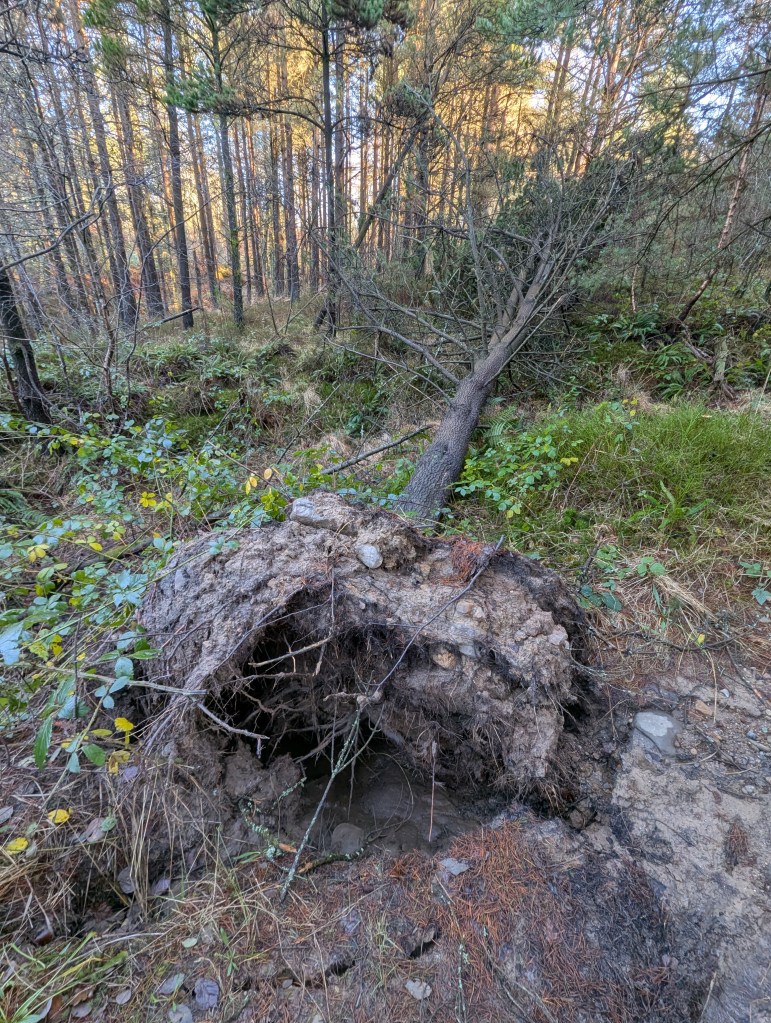
The presence of the TV and phone masts on the hill means that we know a lot about the wind speeds and weather on the hill. However, getting hold of the data is sometimes hard as it can be regarded as a ‘secret’. Anybody who walks the hill will know the signs of wind damage and constant high winds, which are now increasingly common around the year, no longer just the winter months.

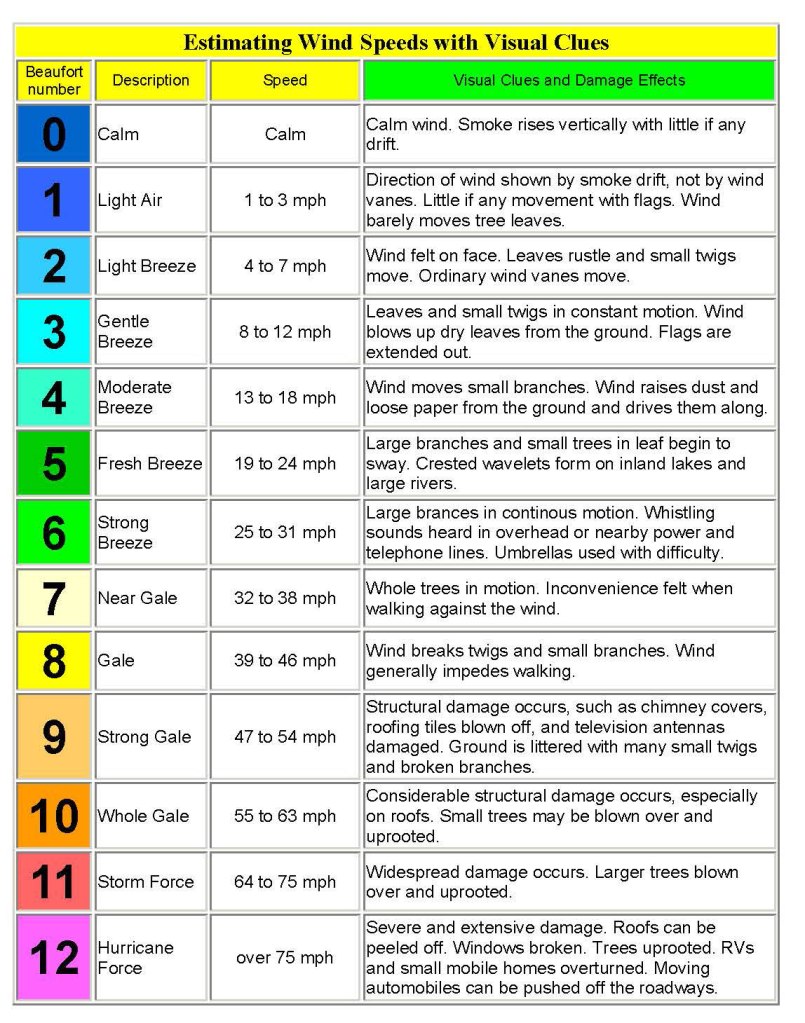
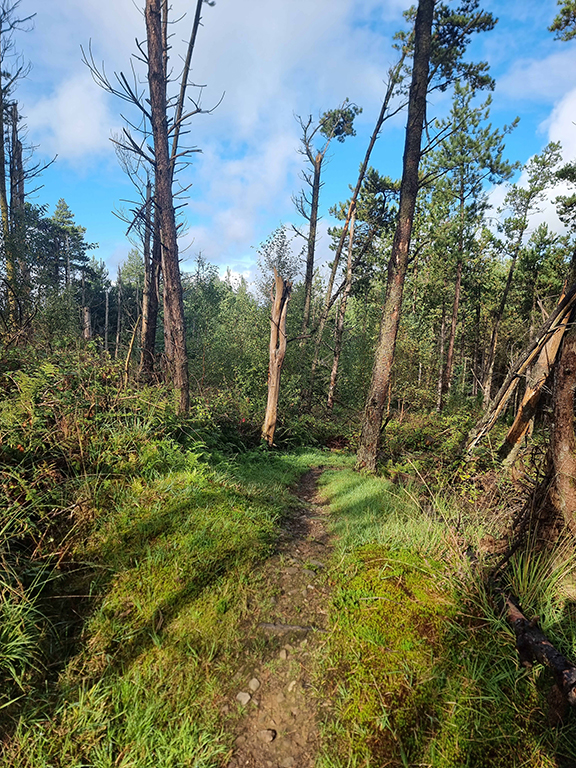
We can use the table below to assess wind speeds and damage based on the evidence we see after the storm is over. This table is based on expert fieldwork from the US Forest Service and is used all over the world. Look at the damage in the photos here and see where it is on this list…
It doesn’t matter what your viewpoints are on who or what causes climate change. The evidence is out there, and the question is how to interpret it and design for the future. It might, for instance, be an incredibly risky act for Swansea Council to risk millions of pounds (of money they apparently don’t have) on supporting a risky tourism venture on a Welsh coastal hill that is increasingly exposed to dangerous windspeeds and disruptive weather.

Those who walk the hill regularly know of the health and safety responsibility of taking walkers out on Kilvey in deteriorating or unsettled weather. We never take the risk. Would a profit-centred tourist firm be equally responsible? Would you get in cable cars and zip wires in the bad weather? Equally, how many days a year is Kilvey safe for adventure tourism? I’m not sure, but I can be confident that climate change means that the number of days of safe weather is declining as the climate changes.
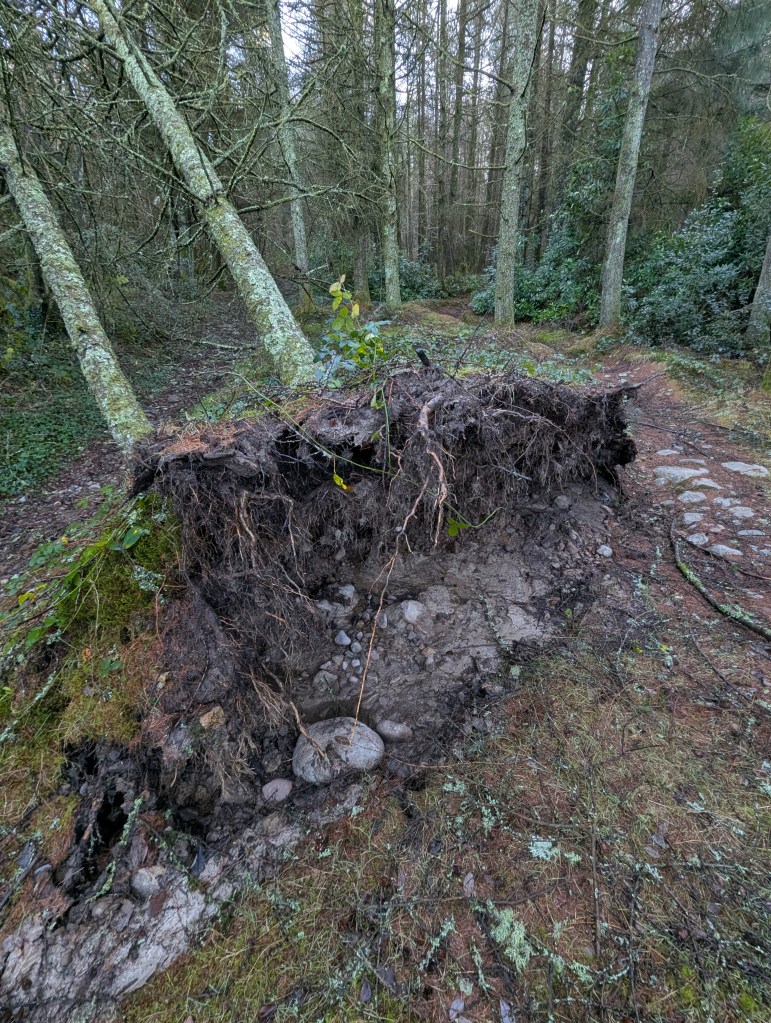
Storm damage above White Rock works in January 2025.
Above wind and wildfire damage in the ‘Skyline Zone’ 2023.

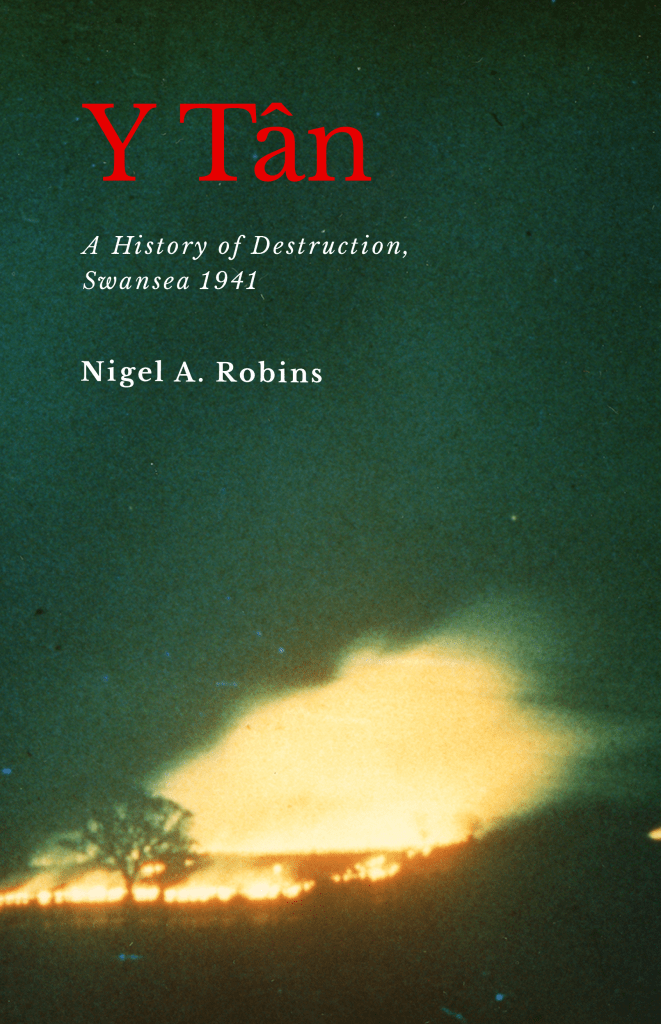
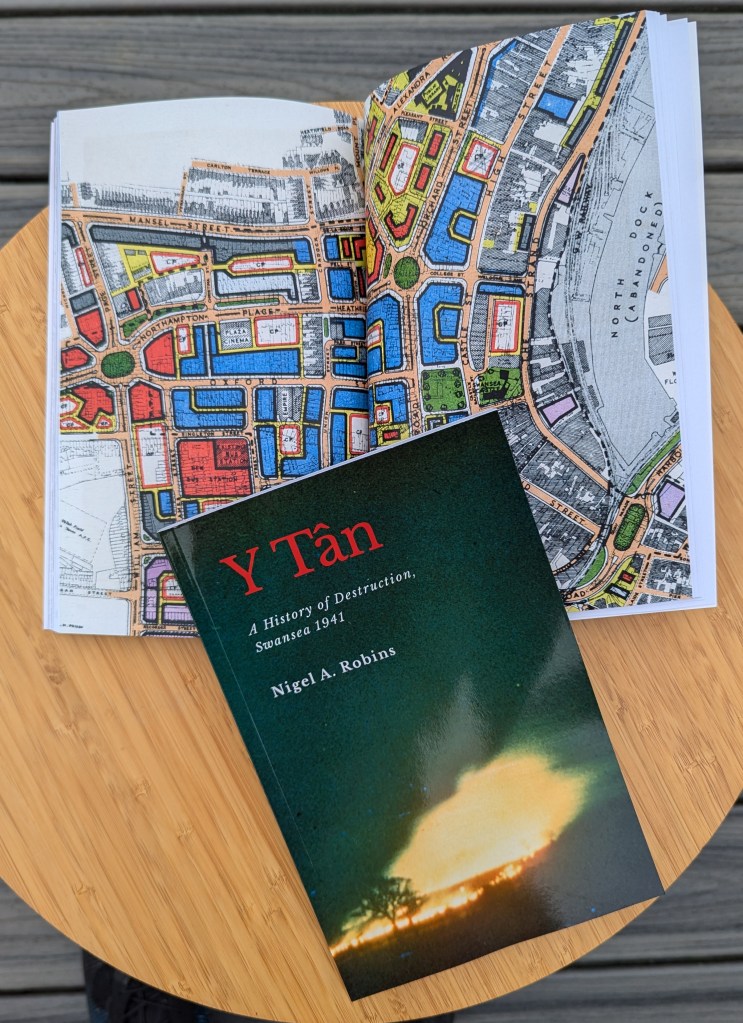
Y Tân: A History of Destruction, Swansea, 1941 ISBN 978-7393533-4-6

This has now been reprinted as a 2025 Second Edition with some updates. I’ve also updated the copyright for AI constraints and EU product compliance details.

The first edition was an incredible success and I’d like to thank everyone who attended the illustrated talks and came on the blitz tours in 2024. I’ll be doing more walks and talks in 2025.

This book started with me trying to make sense of a part of my family’s history, so in many ways it is a work of years. I grew up as a child of the inner city of Swansea, a point that came home to me when I eventually realised that both my mother’s and father’s families lost relatives in the bombing.

The story of the loss of Jack Bowers was something I grew up with but the true significance didn’t really hit me until I became a parent myself and I lost the older members of the family. I heard stories of the war from Florence and Ethel (my grandmothers), but they were never overly keen to talk about those years. I’m grateful for the things they shared with me.

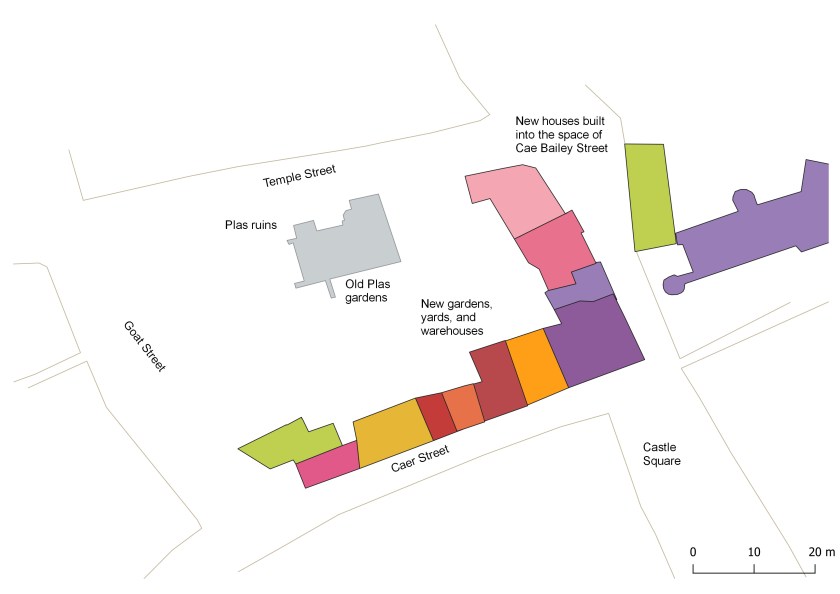
The history of the town centre, later known as Castle Gardens, is central to understanding how Swansea was destroyed.

I am so grateful to my friend Dr John Alban for his expert knowledge of the period and the many discussions we have had over the years. John’s generosity and support has been significant for so many of us as Swansea historians. I gained a deeper understanding of fire whilst working on the restoration of the Palace of Westminster (which has a unique relationship with fire itself), and I learned much from working with fire engineers on the Parliament restoration, although none of my colleagues realised I was busy applying what I was learning to the destruction of Swansea in the blitz. My lifelong friend John Andrew was particularly supportive and our long conversations so productive.

I was very privileged to be able to talk with Tony Kilmister about the courageous exploits of his mother and father, who were central to the Teilo Crescent tragedy. The Royal Engineers Association were incredibly helpful and friendly and I remember with great affection spending evenings in the Drill Hall listening to the old soldiers’ stories that put faces and personalities into the painful history of the time.

Also the wonderful support of my wife Alison who does so much to inspire and improve my writing and provide background knowledge on so many things.

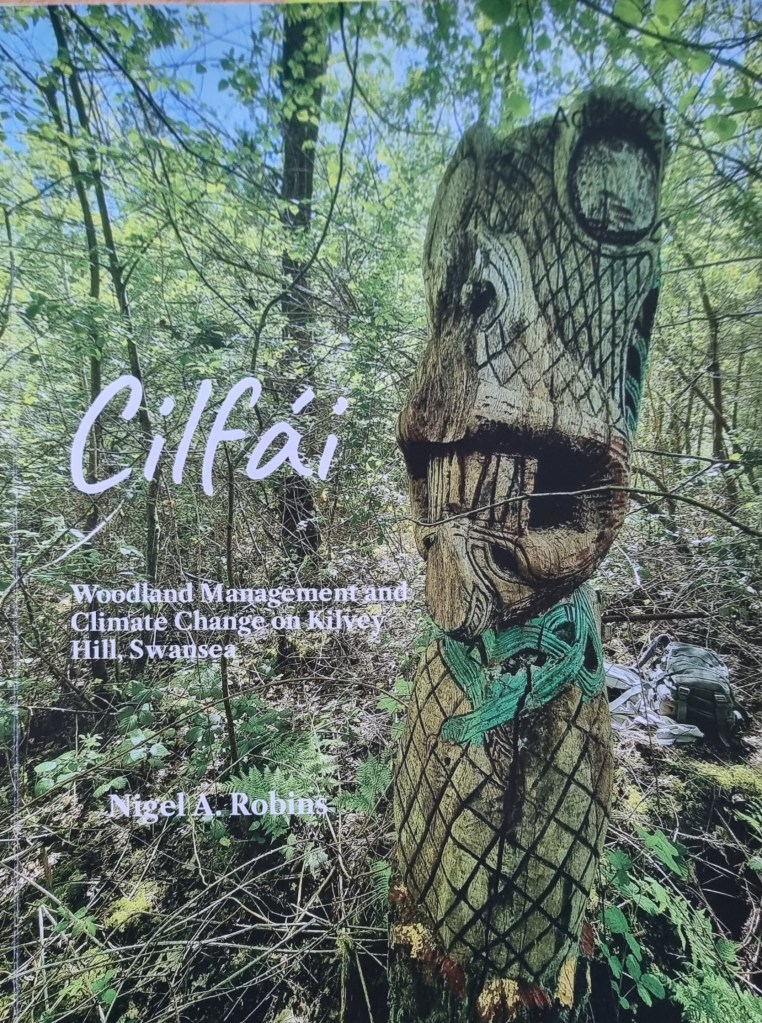
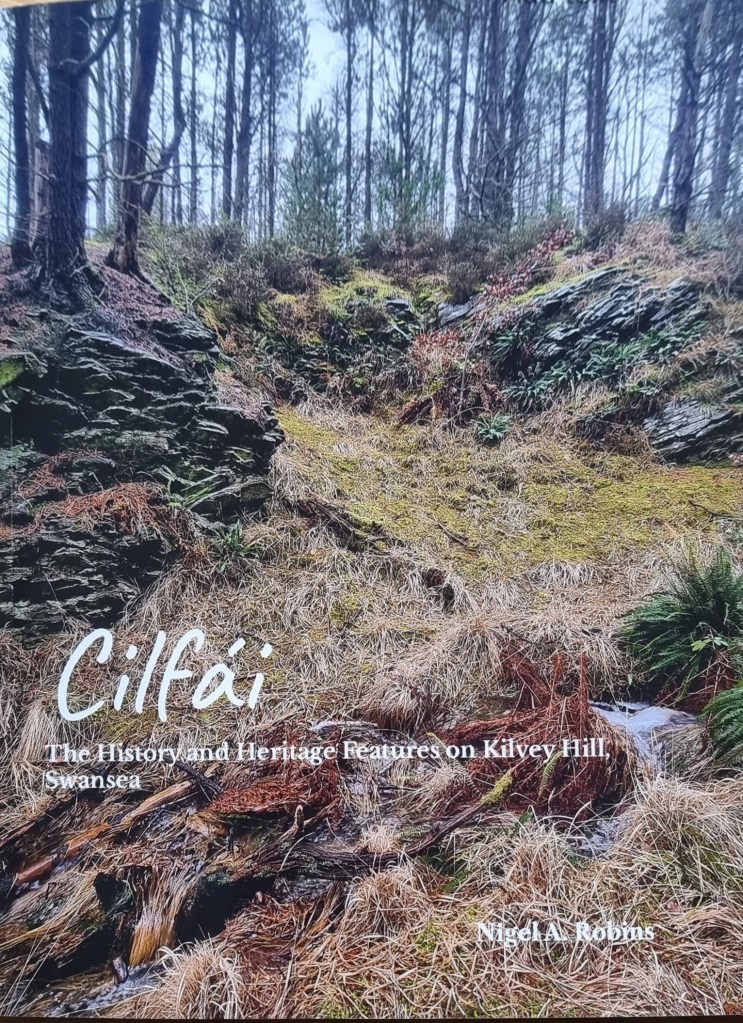
Cilfái: The History and Heritage Features on Kilvey Hill, Swansea ISBN 978-1-7393533-2-2

‘I don’t know why you all get worked up about it…there’s nothing up there’
(Swansea Council employee 2022)

This final Cilfái study was a bit more challenging than I first realised. I thought I had a good impression of the hill’s history and landscape. That was until I consulted the official records that were sadly inconsistent or often compiled with little knowledge or experience of the hill. This meant that this book and its lists were far more of a collaborative effort than the earlier books. This was no bad thing as I made or renewed friendships far and wide as spent more time on the hill connecting with the land and people. My grateful thanks and appreciation go out to all those who gave freely of their time to talk to me about their views and ambitions for the hill. This is particularly true of the features listed in the Modern History chapter, which, for many, is their whole experience of the hill. Unfortunately, the hill’s archaeological knowledge is poor, but that may be because there is more to discover, and we can be optimistic about that, as archaeologists frequently must be.


The Kilvey Woodland Volunteers are the lifeblood of the Cilfái community, and I’d like to thank Marian Francis for her support and commitment to all of us who work on the hill. Equally, the wider community who have planted so much and built The Glade and the Roundhouse and who contribute to so many well-being and craft activities on the hill have been truly inspiring in their unsung work on the hill for local people.
Once again, I need to acknowledge the help of Gerald Gabb in some of the Gwyndy story for me, and the support of library and archive services has been invaluable. The conversations with my old archaeologist friend John Andrew are always supportive. At the time of writing, I have no idea when or if the destruction threatened by Swansea Council will occur. I hope the lists in this book guide and support everybody who wants to care for and preserve what is on the hill. And yes, in answer to that nameless person who I quoted at the top of this page, there is plenty up there. You just have to care enough to look, and talk to the local community.

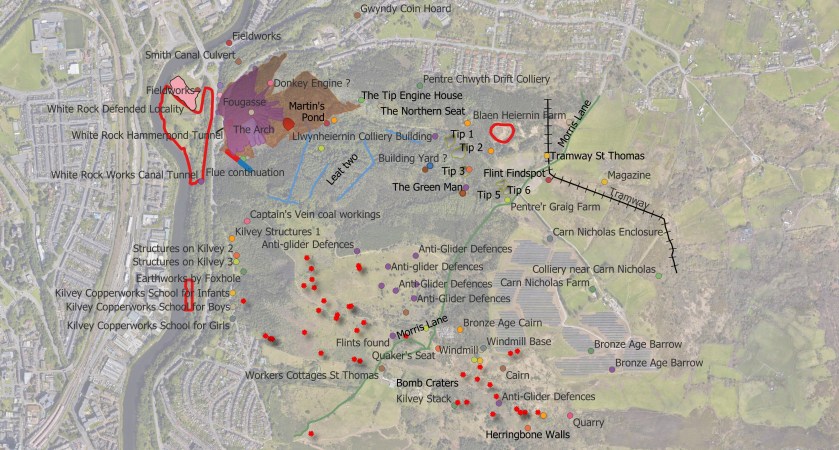
Above: Some of the heritage features of Kilvey, including some of the many bomb craters from World War Two.

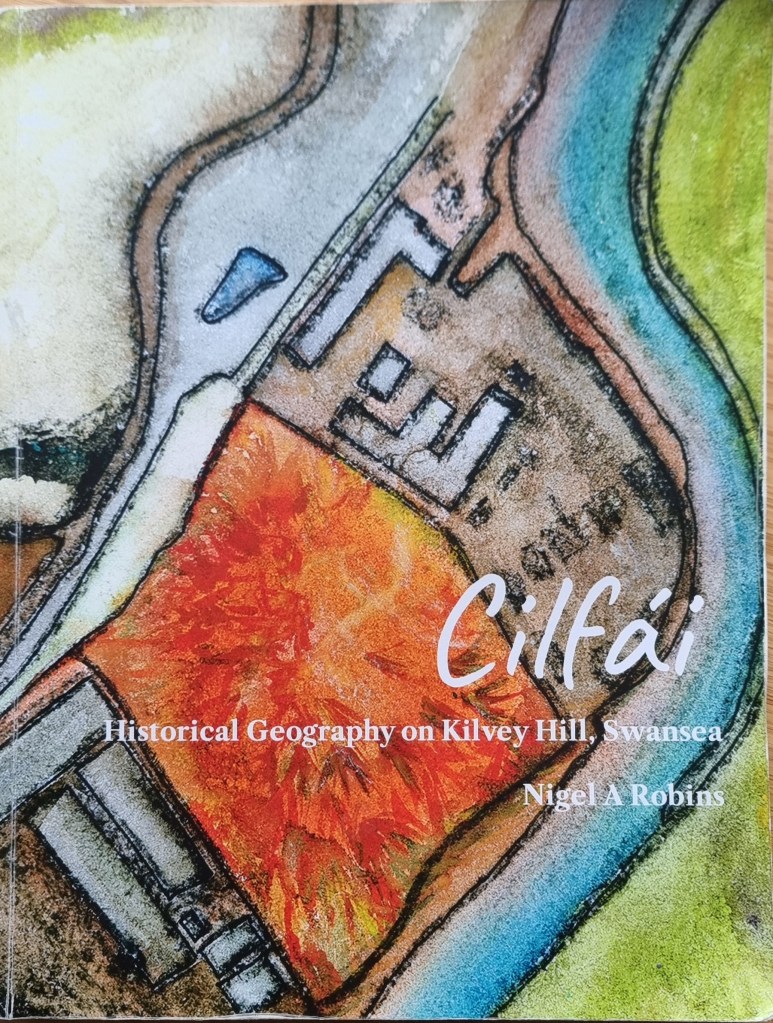
Cilfái: Historical Geography on Kilvey Hill, Swansea ISBN 978-1-7393533-0-8

This has now been reissued as a 2025 Second Edition with some updates, minor amendments and some new illustrations. I’ve also updated the copyright and EU product compliance details.

This study has been heavily reliant on past teaching notes and lessons learned from students’ questions and discussions over many years. I am indebted to all of them. Grateful thanks to the staff of West Glamorgan Archives Service and the archivists at the British Geological Survey in Keyworth who allowed me to spend time with William Logan’s original notebooks. The help of experts such as Dr John Alban and Gerald Gabb has always been beyond value and they have helped me as a sounding board and unlocking further fields of expertise which ave been so valuable. The contributions and discussions with my oldest friend John Andrew on geology and the rocks of Townhill and Kilvey have been particularly inspiring. John passed away in August 2024 and I miss his help and support terribly.

The cover of Cilfái was part of a painting of White Rock I did a while ago, mainly to show the extent of the Cae Morfa Carw waste tip (the orange land). The Tawe is on the right, and the original long workhouse of White Rock is at the top.


I must also thank the staff and colleagues at Coed Cadw/Woodland Trust who, unwittingly perhaps, spurred me on to re-explore Kilvey some thirty years after I last surveyed the land in the late 1980s. All the modern mapping was completed using the open-source QGIS application which has become a central tool as a landscape historian over the past ten years. Finally, I must mention the help and support of Kilvey Woodland Volunteers. Without the passion and commitment of the volunteer body over many years, I doubt that Kilvey would be the special place it has become. As I write this, Kilvey is under more threats from the local council and developers, and I hope this little book records a few milestones in the ongoing Kilvey story rather than an ending.


The first edition of Cilfái was remarkably successful. The aim was to fill a gap in knowledge about the Hill in the constant challenge to take care of it in the face of threats of irreversible destruction from tourist developments and an uncaring local authority. There are now many more local environmental and residents groups aware of the current value of the land and the potential loss Swansea faces if the destruction begins. This book was the first of the Cilfái trilogy, the second book covered Woodland Management and Climate Change, and the third book covered the heritage features on the hill. This book was rushed into print to address claims from the Local Authority that there was ‘not much up there’. Since 2023, I’ve taken hundreds of people on walks to view the biodiversity, history, and heritage of Cilfái, and I’ve packed out numerous community centres and halls to talk about the history. Hundreds of people have been converted to the value of the landscape we may lose.

Above: A coal adit on Kilvey was left to regenerate after about 40 years of peace. Swansea Council may be seeking to destroy this land, which they consider ‘worthless’.

Air Raids and Communication during air attacks on Swansea, 1941

Just starting a new research project on the 1940s incendiary bomb attacks on Swansea. Although a few books have been written on wartime Swansea, the reliability can be suspect because of the lack of documentary records. The primary source is still John Alban’s keystone work on some of the archival sources that survived (Alban 1994). The response of a local authority to the challenges of an intense air attack varied widely across the country and has been the subject of a growing body of research, such as this thesis from 2020 (Wareham 2020)In this study, the author examines Cardiff Council’s response to wartime life and air attacks. It’s a mixed bag of successes and failures as the Council struggled to meet the challenges of maintaining services under air attacks. Some local authorities did little to meet their responsibilities, and civilians have died in various towns where bomb shelters, services and food supplies were poorly managed. As historians, we are not helped by the limited nature of the official history of civil defence, which barely investigated matters outside London (O’Brien 1955).

Swansea’s air raid precautions and defences worked well, and senior members of the Churchill government and officials of various agencies praised the efficiency of their response. However, local Swansea politicians criticised them and insisted on complaining that the ARP staff did not sufficiently recognise their role as politicians even amid incredible tragedy of 1941 (Alban 1994: 59–61).

Understanding the situation faced in the Blitz of February 1941 relies heavily on understanding the role of the ARP Controller, who led the entire local authority response to the bombing. For Swansea, this was the Town Clerk Howell Lang Lang-Coath. He was a veteran of over thirty years of Swansea’s local government processes, but at the end of his career, at sixty-six years old, his leadership and authority did much to save lives during and after the raids.

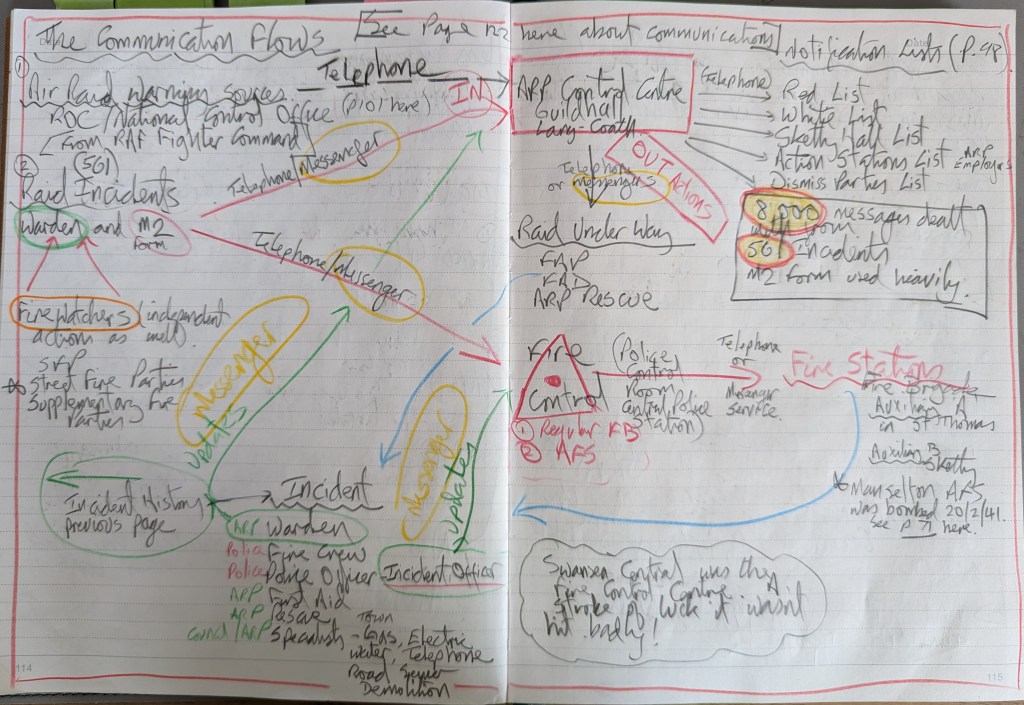
Understanding his role and effectiveness relies on understanding his communication flows and processes as he managed the ARP response from his control room in the Guildhall in Swansea. The dearth of contemporary records has meant I have had to reconstruct the communication flows from a wide range of local sources. Here’s my first pass through the information. Imagine having a small team of secretaries having to deal with over 8,000 messages for 561 incidents and controlling First Aid, Alarms, ARP staff, Rescue, Ambulances, Gas, Electricity and Water supply in an era where communications were unreliable telephones and a network of messengers in cars and on bicycles (often teenagers).

The police forces of the country were unwilling to share or modify their status and their responsibilities even during the hardest times of the war and a dual response method was imposed on the country where ARP and Fire services were managed separately. The success of this approach depended on the personal  qualities of the ARP Wardens. You can see this on the diagram with different communication flows to ARP Control (at The Guildhall) and the Fire Control Centre (at Central Police Station).

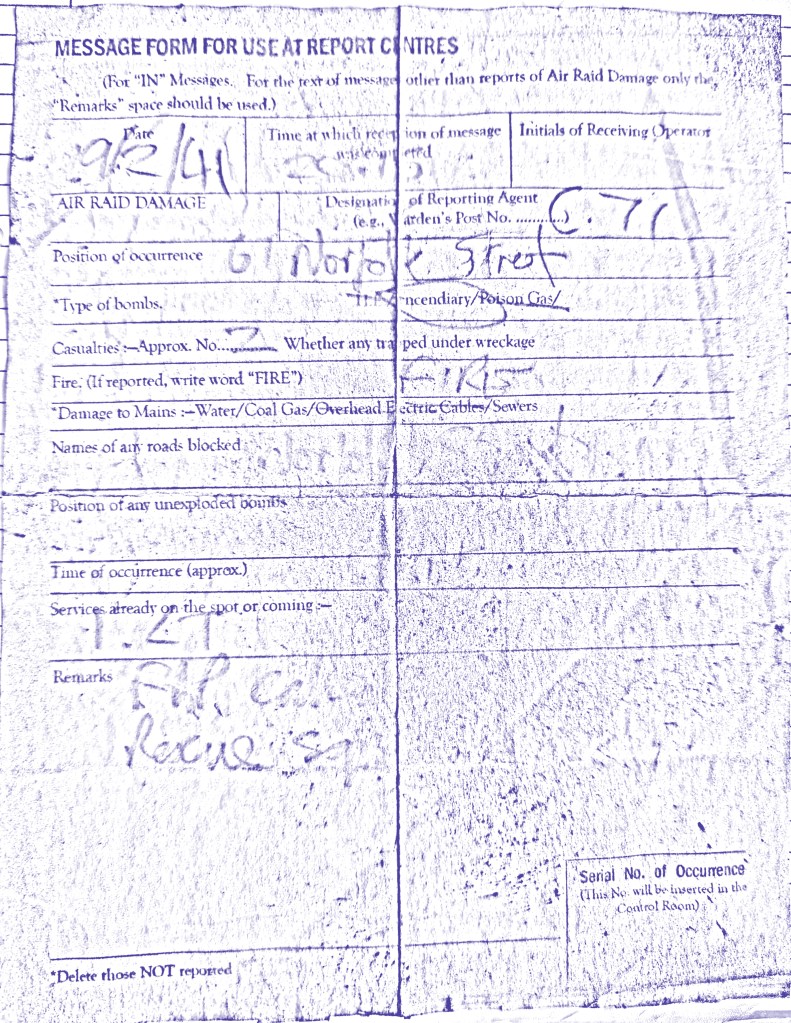
One of the surprises was the efficiency of the ARP M2 Reporting Form which allowed structured information at the correct level of detail to be quickly transmitted or passed to the staff andv the ARP Control Centre.

Alban, J.R. 1994. The Three Nights’ Blitz: Select Contemporary Reports Relating to Swansea’s Air Raids of February 1941, Studies in Swansea’s History, 3 (Swansea: City of Swansea)

O’Brien, Terence H. 1955. Civil Defence (London: HMSO)

Wareham, Evonne Elaine. 2020. ‘Serving the City: Cardiff County Borough in the Second World War’ (unpublished PhD, Cardiff: Cardiff University)

Above: The story so far on understanding the relationships between ARP Warden, Police, AFS, and the ARP Control Centre.

Above: A rough copy of the ARP M2 Reporting Form which was instrumental in allowing effective incident communication. People gave their lives moving these forms through the streets of the blitzed town in February 1941.

Cilfái and the Lower Swansea Valley: the essential books.

There are several crucial books on the history of Cilfái and the Lower Swansea Valley that serve as invaluable references. These are the books that form the foundation of your understanding. Without them, comprehending the reasons behind certain actions, inactions, and unresolved issues can be a daunting task. As with any large organisation, Swansea Council grapples with a lack of corporate memory and knowledge, particularly concerning the valley. In fact, some of the current issues with disputed ownership and title of the hill stem from the lack of historical knowledge and records among younger or less-experienced staff.

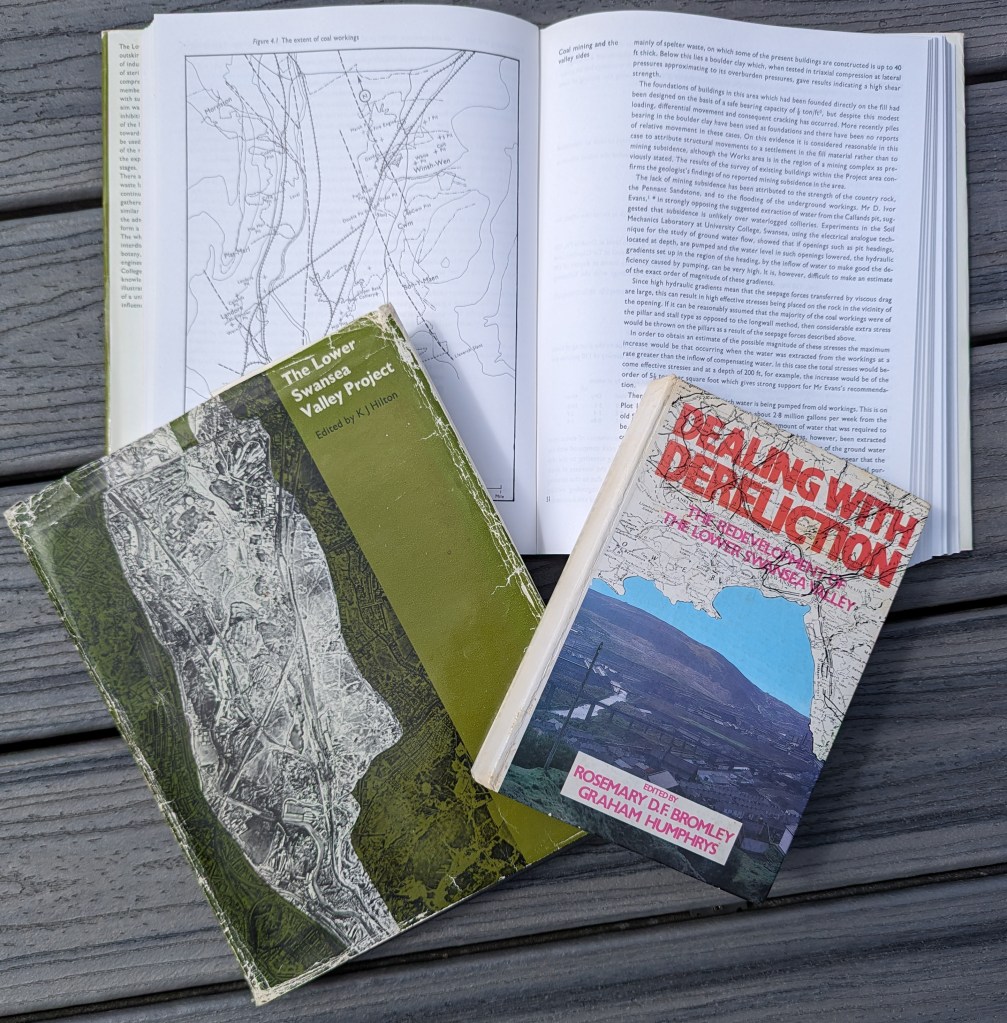
Perhaps the most famous book is the Lower Swansea Valley Project (Hilton 1967)This is the handbook summarising the scope and delivery of the Lower Swansea Valley Project. For decades, it has been a standard reference for environmental and ecological history. I used this book extensively to research the first Cilfái volume. The LSV Project remains a milestone in the history of government, local authority, and academic teamwork, and the work results have benefitted Valley residents immensely.

The Hilton volume documents, in thirteen chapters, the history, drainage, engineering, transportation, and social aspects of the LSV and the challenges involved in delivering change.

The second milestone book for the history of Cilfái and the Valley is Dealing with Dereliction. (Bromley and Humphrys 1979)This book came out over a decade after the Hilton volume and chronicles the challenges and changes the Project brought about. It is a wonderful example of a project closure report covering the benefits delivered and remaining issues. In my civil service days, I used it to illustrate how to manage the lifecycle of a large government programme or project.

Last but certainly not least, I’ve selected the City Archives Office booklet from 1991 describing some of the Archives Office holdings covering the LSV Project (Alban 1991). The cover notes were written by Dr J.R. Alban, who many will know as one of Swansea’s most significant historians. Dr Alban, who was our City Archivist at the time, wrote many such booklets. If you can get to see a copy, this is the quickest way to understand some of the archived records of Cilfái and the surrounding area.

You will find all these books easy to consult in Swansea Library and the West Glamorgan Archive Service on the big bookshelf!

Alban, J.R. 1991. ‘Rebuilding a Future: The Reclamation of the Lower Swansea Valley Exhibition Catalogue’ (Swansea City Council)

Bromley, Rosemary D. F., and Graham Humphrys (eds.). 1979. Dealing with Dereliction: The Redevelopment of the Lower Swansea Valley (Swansea: University College of Swansea)

Hilton, K. J. (ed.). 1967. The Lower Swansea Valley Project (London: Longmans)

The Redevelopment of Cilfái

Yesterday (18 April 2024), Swansea Council took a first public step towards leasing or selling a large part of Kilvey Hill to a foreign tourist company. The decision was a milestone in a process started in secret in 2017. The years since have seen covert land assembly, including a particularly unpleasant land steal by Swansea Council, as politicians and staff work officially or otherwise to facilitate the plans of the foreign tourist company.

Our abysmal local government system’s callous, unthinking bureaucratic jargon describes the potential sell-off as a ‘disposal,’ as if the land were used tissue. This had happened before when previous generations and local councils enthusiastically embraced industrial development and regarded the destruction of nineteenth-century Kilvey as merely ‘collateral damage’ … a disposal problem.

The transformation of Swansea from an attractive resort to an industrial black spot was beautifully catalogued in a 1986 book called ‘The Brighton of Wales’ (Boorman 1986). Boorman traces the point of departure from unspoiled beaches to the Lower Swansea Valley industrial magnet. Now, the wheel has turned full circle as a desperate local authority, in acts of unbridled boosterism, refers to Swansea as a world-class tourism destination. I can only assume Councillors haven’t recently made that dangerous walk from Swansea railway station down the High Street.

There will be plenty of economic arguments for the developments to go ahead based largely on optimism and faith in the future. One thing is certain: the enthusiasts for the scheme and all the positive comments on those strange news sites don’t live there.

The Council and the local communities have a lot to be proud of regarding environmental recovery and the new uses of the urban woodlands on the east side. I wish the politicians would recognise this instead of chasing a handful of ice cream-selling jobs.

Boorman, David. 1986. The Brighton of Wales: Swansea as a Fashionable Seaside Resort, c.1780-1830 (Swansea: Swansea Little Theatre Company)

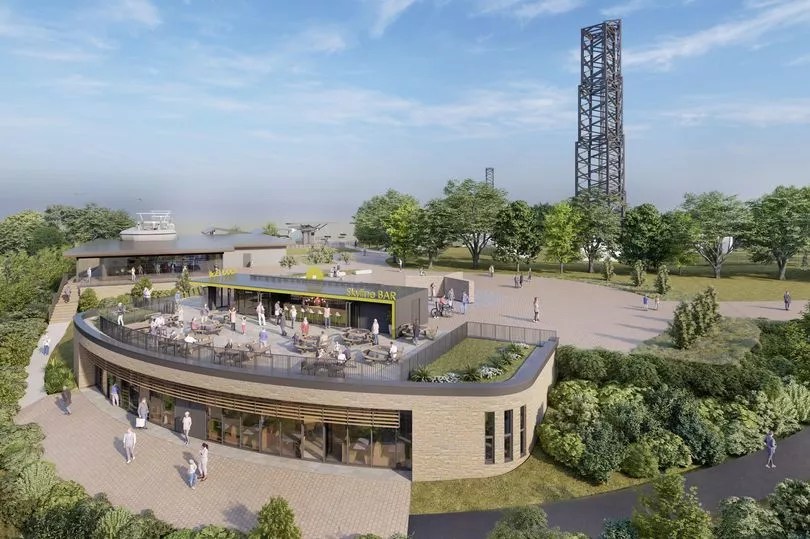
Below: The planned Skyline buildings. Incredibly, this picture is of part of Kilvey Hill that Swansea Council don’t actually own.