The Luftwaffe attacking Welsh steel

The steelworks of the Welsh ports were of obvious interest to the early Luftwaffe investigators. Iron and steel were strategic materials for all sides. The Dowlais steelworks in Cardiff was a huge target. In fact it was so big that it was difficult to work out exactly where to hit it to cause most damage. The largest high quality bombs were reserved for targets like this (500kg or more), with hard steel noses to penetrate concrete roofs. Incediary bombs were not very effective against industrial targets.

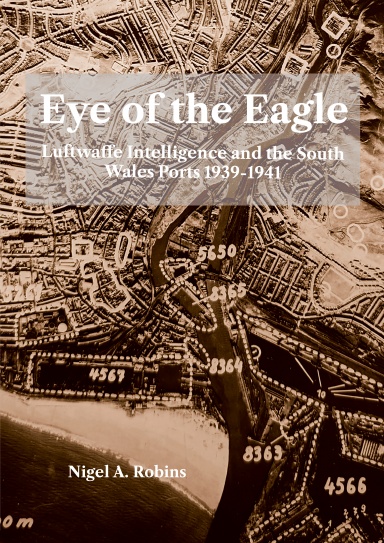
I cover Cardiff as a Luftwaffe target in Chapter 5 of Eye of the Eagle: Luftwaffe Intelligence and the South Wales Ports 1939-1941.
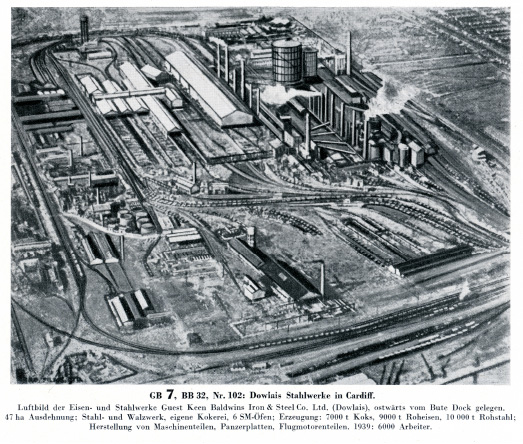
Above: The Dowlais steelworks as depicted in the Militärgeographische Einzelangaben from 1940. A difficult target to attack which required special bombs of larger size and hardened casings to penetrate concrete walls and floors. Incendiaries were practically pointless against a steelworks. There was also a need to attack at a lower altitude to increase accuracy. The presence of a couple of barrage balloons would frequently discourage crews from flying al lower altitudes.

Swansea’s strategic electric supply

Before World War Two, the Luftwaffe intelligence assessment teams under Professor Dr. Heinrich Steinmann were interested in electricity supply. Steinmann believed that the vulnerabilities of the electricity generation and supply industries made extremely valuable strategic targets. Swansea’s power stations were particularly interesting due to their importance in the South Wales power generation network.

Swansea had two power stations, the Strand Power Station (opened in 1900) and Tir John Northeast of Kilvey (opened in 1935).

As a very modern and efficient power station, Tir John was identified as a strategic target as part of the Study Blue research into conducting an air war against Britain. In the Luftwaffe target lists, Tir John was assigned Target number GB 50 56. The full story is in Eye of the Eagle: Luftwaffe Intelligence and the South Wales Ports 1939-1941.
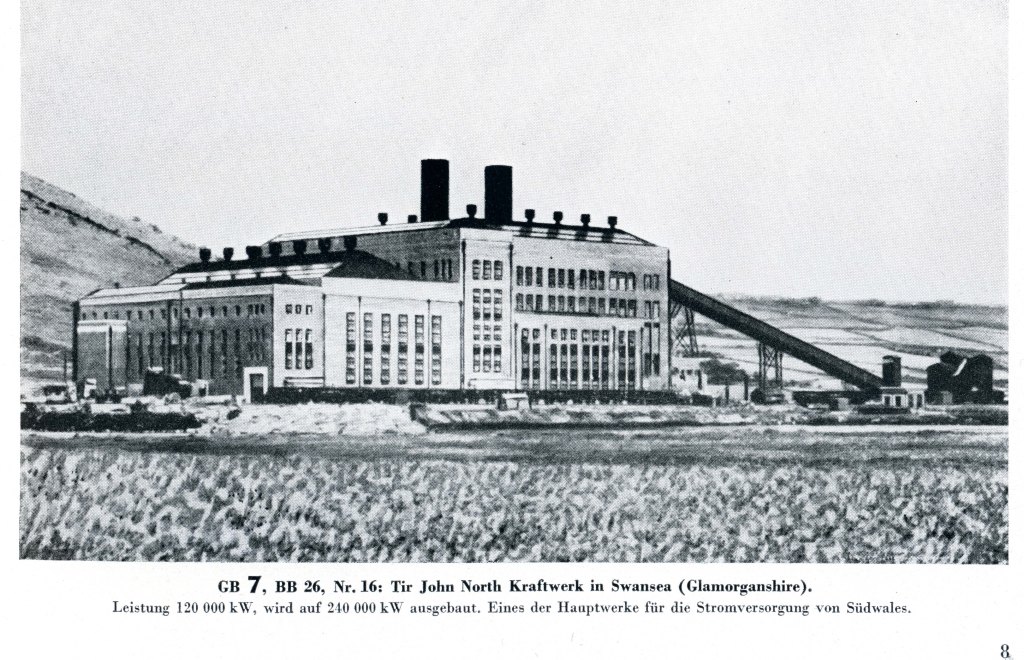
Below: a 1930s illustration of Tir John North power station (Kraftwerk) from German intelligence records.