Cilfái: Copper Smoke

I write about the copper smoke in Chapter Four of Cilfái: Historical Geography on Kilvey Hill, Swansea.

The copper smoke from White Rock was horrendous. Black, acrid, greasy and opaque. It killed everything it touched. The chemical composition of the Cornish copper ore meant that once burnt with Kilvey’s bituminous coal, released vast quantities of sulphur dioxide, hydreogen fluoride, sulphrous and sulphuric acids. in the 1840s, the Vivian’s Hafod Works were releasing 188 tons of Sulphuric Acid daily into the Swansea Valley.
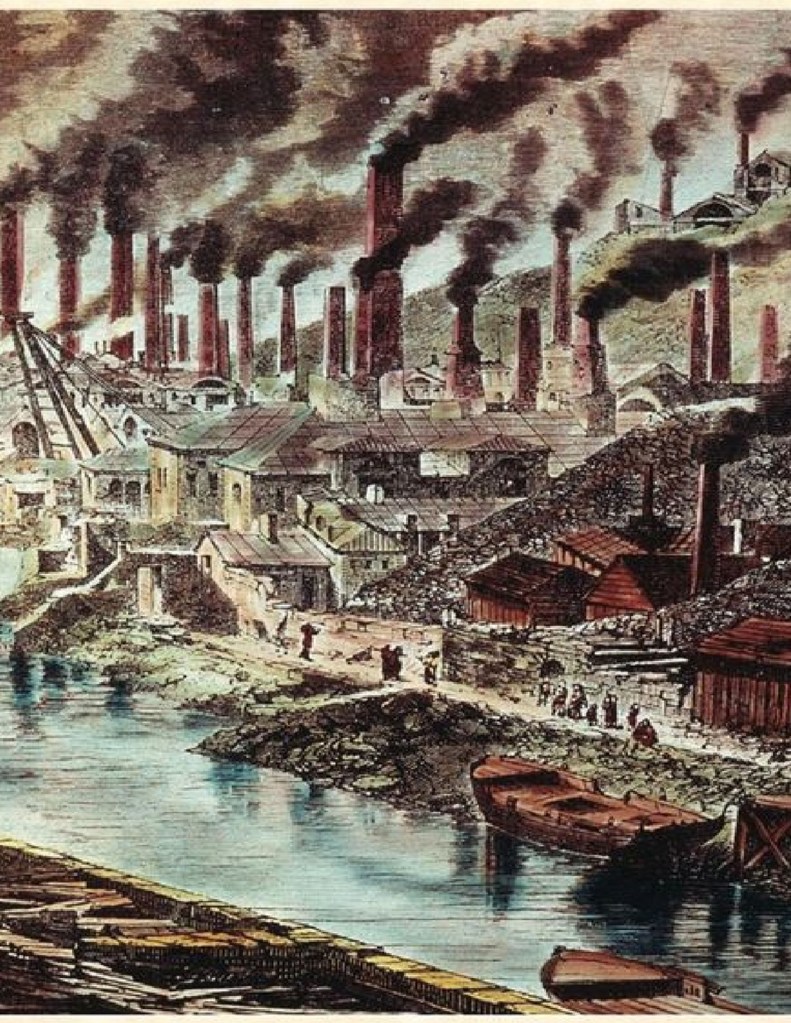
Above: An extract from a rare coloured version of an image commonly used to show the forest of chimneys at White Rock in the 1860s The toe of the Cae Morfa Carw slag tip is left of centre and the mass of chimneys of Middle Bank is to the left. The drawing was commissioned by the French travel journal ‘Le Tour du Monde ‘ and the artist was Jean-Baptiste Henri Durand-Brager (Le Tour du Monde) 1865) (Author’s collection).

Cilfái: The legacy in the soil

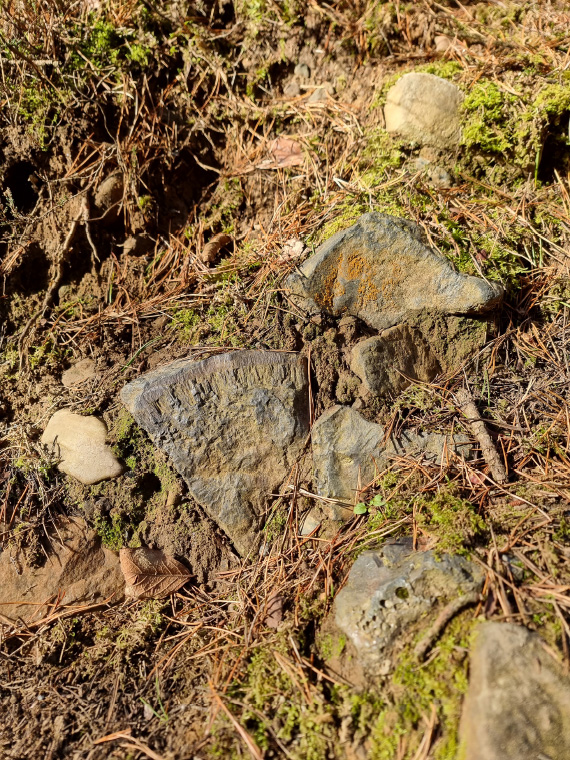
The industrial pollution phase of Cilfái’s history has left a permanent mark in the nature of the landscape. Industrial smelting waste forms a large part of the soil for over twenty percent of the woodlands around The Glade, Roundhouse, and up to Martin’s Pond. Slag takes its place amongst the native sandstone and the glacial debris from the last ice age. The structure and chemical profile of the soil is permanently altered and many trees eventually succumb to the toxicity. This is a good reason why natural regeneration should be favoured over massive new plantation of native species. Natural regeneration allows plants that are resilient to the poisons to develop. I explain more in the second Cilfái book.

P.50 Cilfái: Woodland Management and Climate Change

Copper slag in the soil at Martin’s Pond 2022.