John Hardman and Co., Birmingham metalworkers and problems of conservation

I needed to produce an ontology-based version of the ornamental metalwork output of John Hardman (https://www.gracesguide.co.uk/John_Hardman_and_Co). This originated from work in the various furniture collections of the Palace of Westminster. The Palace has large quantities of ornamental metalwork, particularly candle holders of various kinds, which were popular in the nineteenth century. Particular types of metalwork are frequently at greater risk. Whilst most can agree on the conservation case for a Hardman candle branch from the 1860s, fewer understand the extreme risk posed to classic door furniture from modern facilities management or unsympathetic cleaning regimes using abrasive chemicals. The catalogues used in the Palace were old, incomplete or had not been regularly updated or maintained through a series of digital systems. The risk to objects is large, as a comprehensive catalogue entry is often the first line of defence against damage or loss. This ontology was an attempt to communicate the scope of essential information that needed to be linked and understood for future systems.

I needed to produce an ontology-based version of the ornamental metalwork output of John Hardman (https://www.gracesguide.co.uk/John_Hardman_and_Co). This originated from work in the various furniture collections of the Palace of Westminster. The Palace has large quantities of ornamental metalwork, particularly candle holders of various kinds, which were popular in the nineteenth century. Particular types of metalwork are frequently at greater risk. Whilst most can agree on the conservation case for a Hardman candle branch from the 1860s, fewer understand the extreme risk posed to classic door furniture from modern facilities management or unsympathetic cleaning regimes using abrasive chemicals. The catalogues used in the Palace were old, incomplete or had not been regularly updated or maintained through a series of digital systems. The risk to objects is large, as a comprehensive catalogue entry is often the first line of defence against damage or loss. This ontology was an attempt to communicate the scope of essential information that needed to be linked and understood for future systems.

In the 1830s, a collaboration with Augustus Pugin considerably enhanced Hardman’s output, and the Palace of Westminster has many examples of the finest Hardman output at all scales and sizes. Although I do find Hardman metalwork and fire furniture in many other large buildings.
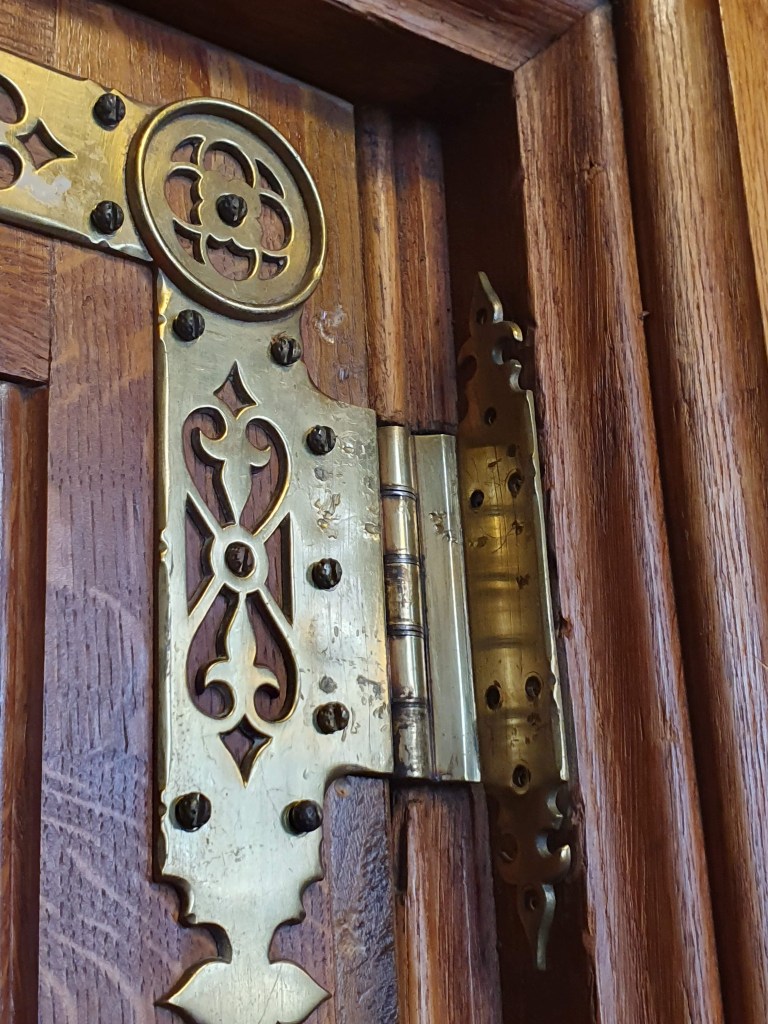
Above: Gouge marks from inappropriate screwdrivers on irreplaceable Hardman door plates. A good quality HBIM approach will save money, prevent damage, and preserve furniture by providing essential information and guidance to the correct level of detail for maintenance staff.

Some large public buildings will have complex collections of ornamental metalwork, and most of this is not recognised nor its significance recorded. Items at greatest risk include door furniture, which is often exposed to damage and loss by restorers and maintenance staff who remain unaware of the significance. A good example is the use of caustic cleaning chemicals on brass door furniture, resulting in the erosion and destruction of the original finish. Another common issue is the use of the wrong size screwdrivers, resulting in broken screws that were handmade in the nineteenth century and are now irreplaceable. There is also a need to recognise the wide scope of lighting products for candles and gas available to architects and designers in Victorian Britain, many of which were installed in significant public buildings.

Whilst many items are recognised within the Getty Art and Architecture Thesaurus AAT  (https://www.getty.edu/research/tools/vocabularies/aat/), there are several omissions, and I found that the  AAT is not representative of the wide range of British artistic output in the second half of the nineteenth century.

Above: When a lock plate is removed for whatever reason, the staff frequently break the screws, making it impossible to replace the door furniture and leaving the door looking like this in a significant public-facing corridor. A good-quality HBIM catalogue will reduce the likelihood of this kind of damage, by providing the essential care information at the point of need.

This approach involves relating actual examples of Hardman items in British buildings to the various catalogues released by the company.  Items were identified from various catalogues, museum listings, informal cleaning records, and property registers, and most were confirmed by fieldwork to confirm the physical presence (or, in some cases, survival) of the item.

Alongside the fieldwork in several house collections and the Palace of Westminster, I found the Hardman Collection at Birmingham Library of particular use, particularly the Metal Sales Ledgers and their delivery books.

Nigel A Robins. (2022). John Hardman (1880s) and Co. data and product ontology (Version 1). Zenodo. https://doi.org/10.5281/zenodo.6912960
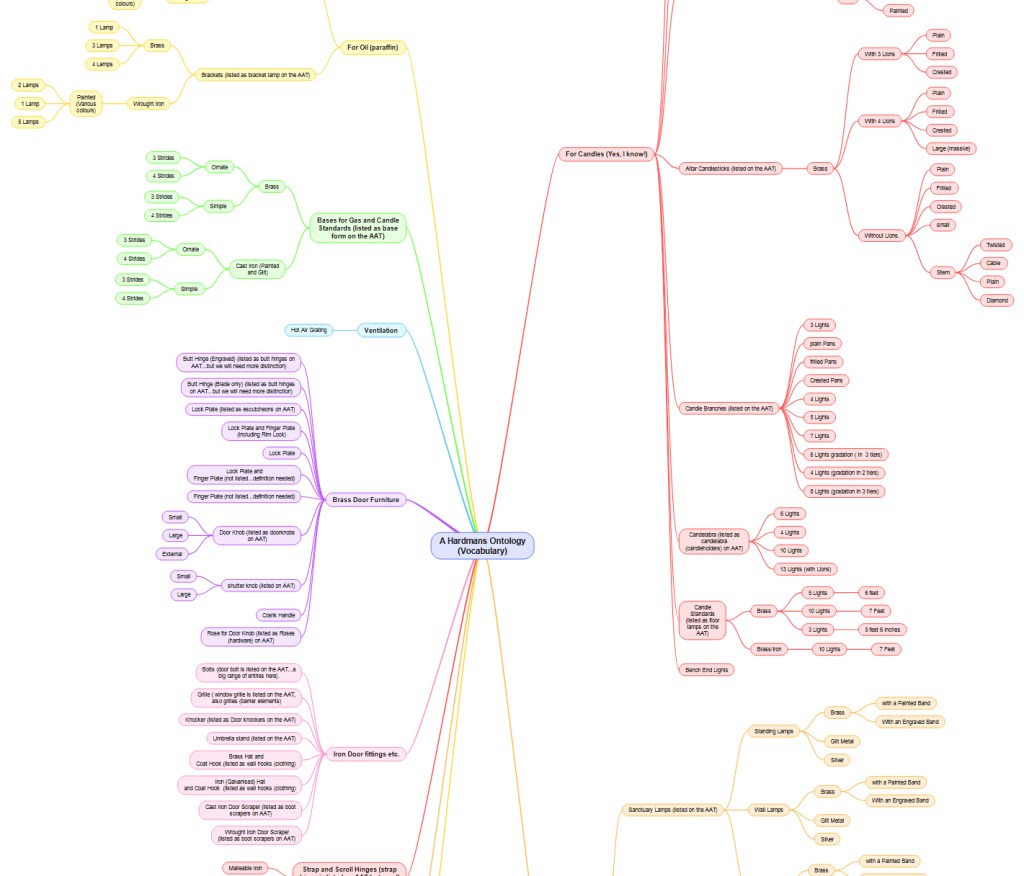
Above an extract from my original Hardmans ontology. https://doi.org/10.5281/zenodo.6912960
Microhistory on Cilfái

These days we are often in a situation where we are forced to rely on the opinions of staff in various organisations to tell us what ‘history’ or ‘ecology’ or ‘biodiversity’ are. In and around Swansea, we have Cadw to judge what is ‘significant’ for heritage, an Archaeological Trust to tell us what is important under the ground, and a host of private companies employed by building developers to tell us what plants and animals are important. Unfortunately all these organisations can be flawed when it comes to understanding what matters to local communities. It is a deeply unsatisfactory situation. You’d expect local politicians to be more in tune with their communities, after all they were elected to do just that. However, the strong whipping of Swansea Labour Councillors over the Cilfái developments shows how impotent local politics actually is in the face of corporate ambitions.

Communities always change and their interests and viewpoints can also evolve. The toppling of the statue in Bristol shows what can happen when frustration with politics boils over. Closer to home, the issues with the General Picton memorials are an interesting response from the cultural sector who sometimes have strong impulses to react to changing community values.

The identification of heritage and cultural features on Cilfái is clearly inconvenient to politicians and tourism developers. The neat packages of the Hafod-Morfa tourist attraction are predictable, grant-friendly, and a big hit with local builders. Not so much the ‘informal’ heritage of Cilfái. The hill is packed with history above and below ground but that won’t matter to Councillors. Features with the unfortunate characteristic of ‘being in the way’ will be dug up, destroyed or removed. It is ironic that a tourism firm from New Zealand (a country that is barely 100 years old) is leading the destruction of our heritage, much older than that little country.

What tends to get lost first are the little things, the things that people enjoy. They often get thrown away because we as residents are told they aren’t significant by the organisations that ironically are there to serve us.

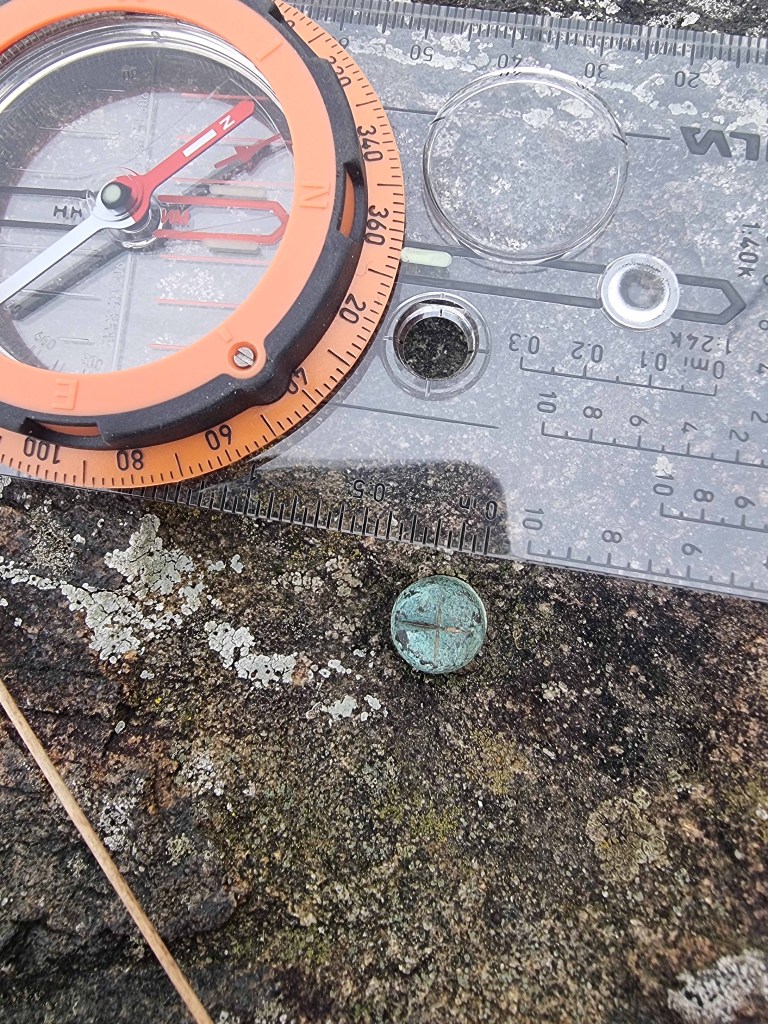
Here’s one that will probably be brushed away by a careless Skyline bulldozer. A little copper nail hammered into a rock in the danger zone. It was probably put there by William Logan as part of the early exploration of coal seams on the hill in the 1820s. I found his notebooks that told me about it. It remains as a little memorial to all the hard work and industry from pioneers in the past. The story is covered in Cilfái: History and Geography and Cilfái: Heritage Features

Copper Industry Heritage on Cilfái

The waste tips and pollution on the hill are the obvious legacy remains of the copper industry. However, there are several other copper-related features on the hill. In Cilfái: The History and Heritage Features, I listed 16 features of Swansea copper heritage. One of them appears to have been completely missed by the several archaeologists that apparently surveyed the area. The Copper 14 Feature (listed on page 57) White Rock Hammer Pond Tunnel is an incredible survivor of a water course that supplied water to the water wheels of the original watermill that was on the White Rock site before the building of the works in 1737. It still works today carrying the Nant Llwynheiernin under the Pentrechwyth Road and into the White Rock site before running out to the river south of White Rock near the original White Rock coal yard.

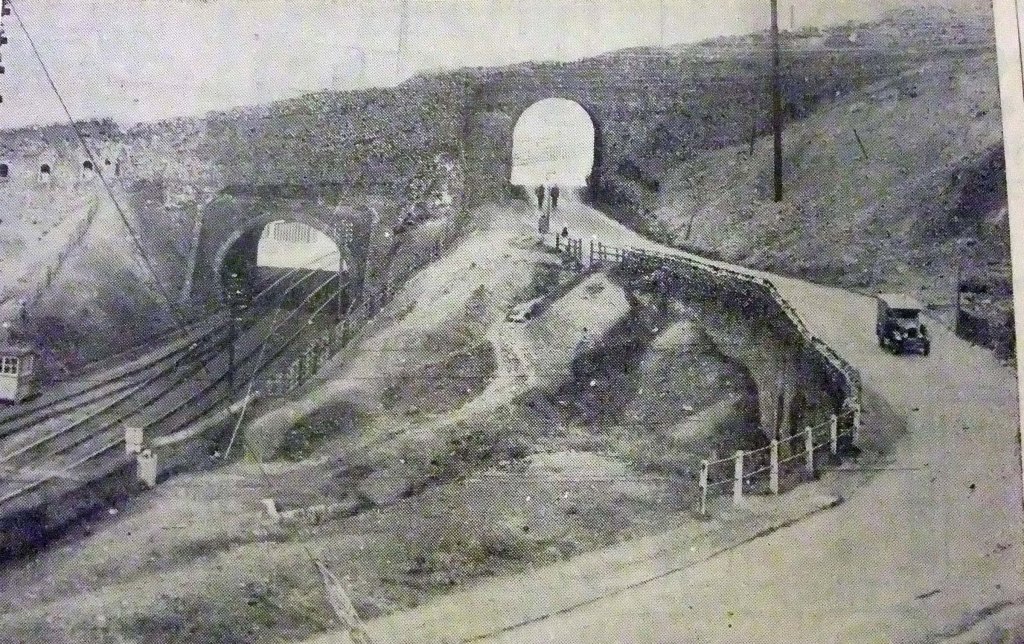
Below: The White Rock incline and site of Nant Llwyheiernin bridge and tunnel in the early 1930s. The bridge and tunnel still survive buried in the new road.

Below: The tunnel entrance as it survives today.

Cilfái’s Heritage Features

The third Cilfái book covers all the history and heritage features on the hill. Normally local authorities and developers rely on a list of heritage features on the Archwilio site.

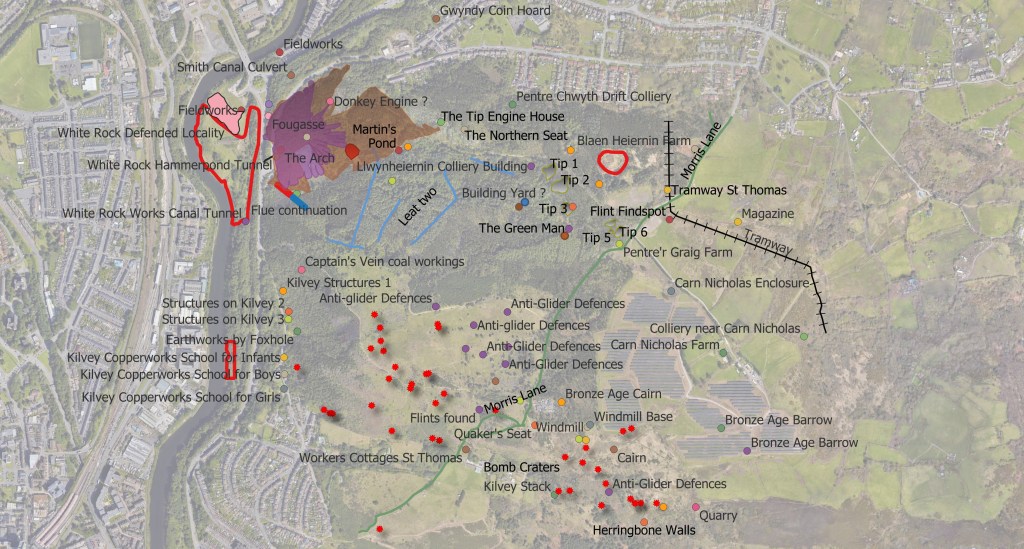
What was on the Archwilio site wasn’t really good enough for us to understand Cilfái, so I redid the surveys. I increased the heritage fetures count on the Hill from 35 to nearer 80. A lot of our Copper, Coal and modern history is not officially recognised by archaeologists…but it doesn’t make it unimportant. You can’t expect historians or achaeologists from elsewhere in England or Wales to understand the significance of our local history and culture. We are forced to do that for ourselves.

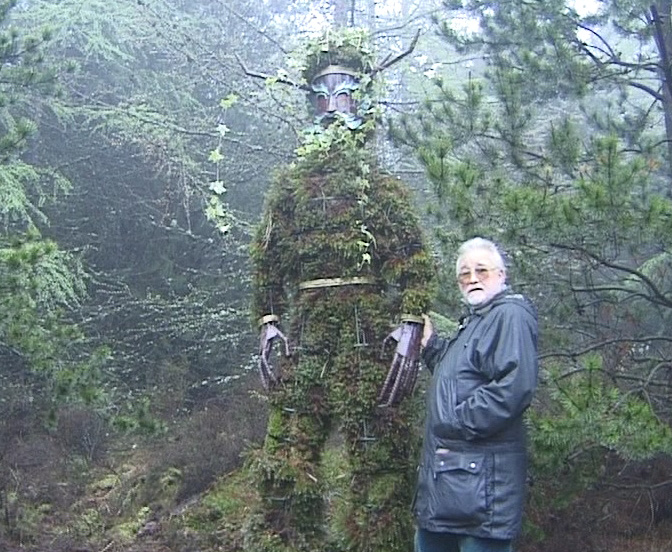
Below: Pete Thomas and Green Man in 1998 shortly after it was completed.

.

Below: A map of some of the heritage features on Cilfái.