The arrival of copper smelting in Swansea changed the nature of industrialisation and transformed the thousand year old coal industry into something new. The redevelopment of Hafod-Morfa and the branding of Swansea Copper as a commodity for tourism involves a lot of verbal gymnastics explaining to new generations and visitors what the copper industry was and why they should be interested in it all. And what it used to look like because it sure as hell doesn’t look like anything now.
It is a tough sell as almost every structure related to the industry was demolished in the twentieth century. The ruins were dirty, dangerous, toxic and were seen as ugly. Fast forward to today when clever marketers will be paid to dress up what is left into a ‘legacy’ tourism…anything is possible with the right amount of ‘Levelling Up’ money. Until it runs out.
Although we have two chimneys and a flavoured whisky business leading the charge to new tourism, there is one legacy of the copper industry that will never be erased…the pollution. I talk of a lot of this in Chapter Three of the Cilfái: Historical Geography book. The copper waste tips of the Lower Swansea Valley were famous on a European scale. most is still there but levelled out and (sort of) grassed over. It continues to inject zinc, cadmium, lead and mercury into the water table.
You can order a copy of Cilfái: Historical Geography on Kilvey Hill, Swansea direct from me, or you can go online to my Lulu site and get one printed immediately. Shop the Independent Bookstore | Lulu
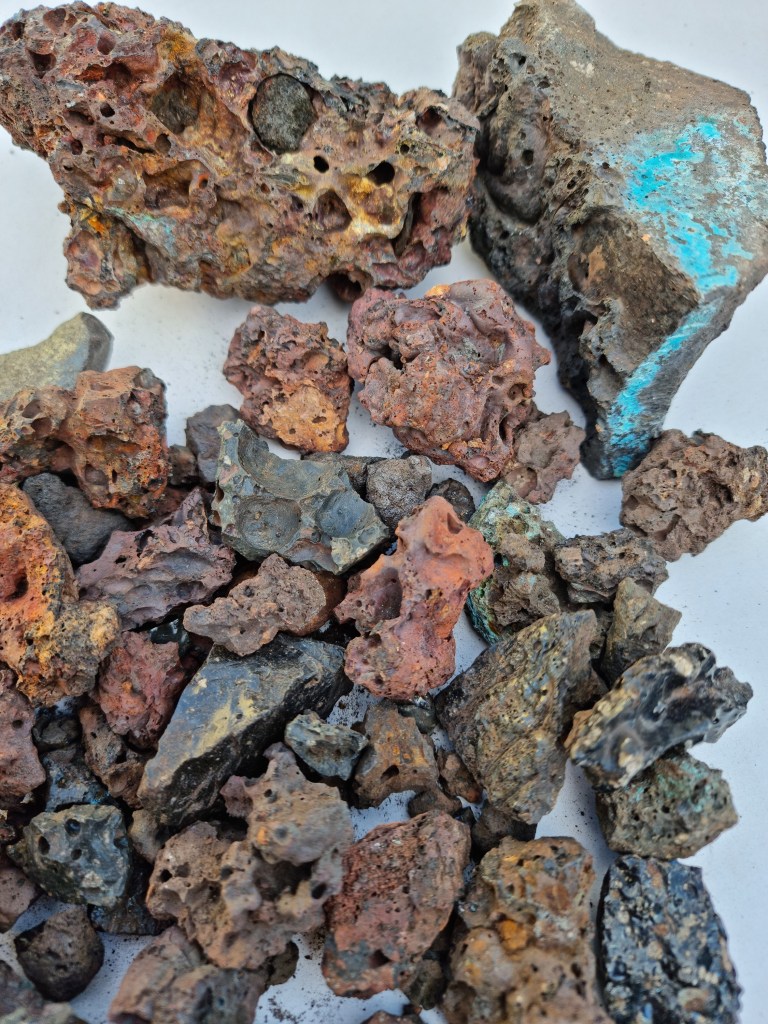
Below: Slag from White Rock will often have the green stain of copper and the remains of the charcoal thrown onto the molten copper at certain times of the smelting process. The nastiest and most toxic tip is right next to the White Rock remains. The waste was thrown on to the meadow of Cae Morfa Carw and the conical pile of waste is like a gravestone over the remains of the pre-industrial landscape.
 Nigel Robins