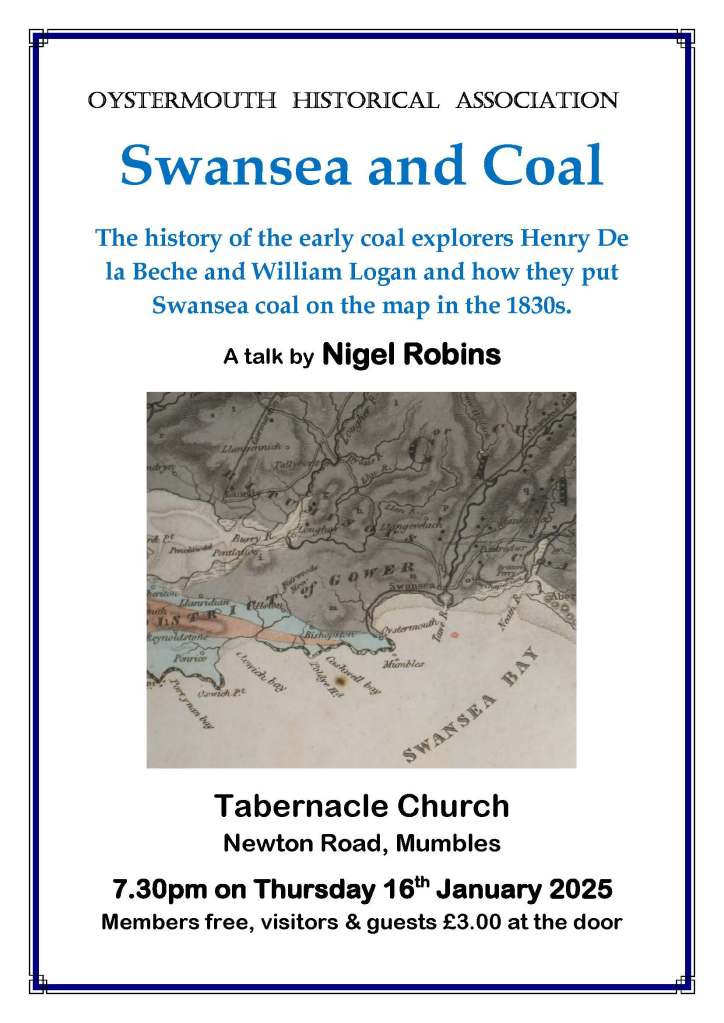
Swansea and Coal
‘I don’t know why you all get worked up about it…there’s nothing up there’
(Swansea Council employee 2022)
This final Cilfái study was a bit more challenging than I first realised. I thought I had a good impression of the hill’s history and landscape. That was until I consulted the official records that were sadly inconsistent or often compiled with little knowledge or experience of the hill. This meant that this book and its lists were far more of a collaborative effort than the earlier books. This was no bad thing as I made or renewed friendships far and wide as spent more time on the hill connecting with the land and people. My grateful thanks and appreciation go out to all those who gave freely of their time to talk to me about their views and ambitions for the hill. This is particularly true of the features listed in the Modern History chapter, which, for many, is their whole experience of the hill. Unfortunately, the hill’s archaeological knowledge is poor, but that may be because there is more to discover, and we can be optimistic about that, as archaeologists frequently must be.
The Kilvey Woodland Volunteers are the lifeblood of the Cilfái community, and I’d like to thank Marian Francis for her support and commitment to all of us who work on the hill. Equally, the wider community who have planted so much and built The Glade and the Roundhouse and who contribute to so many well-being and craft activities on the hill have been truly inspiring in their unsung work on the hill for local people.
Once again, I need to acknowledge the help of Gerald Gabb in some of the Gwyndy story for me, and the support of library and archive services has been invaluable. The conversations with my old archaeologist friend John Andrew are always supportive. At the time of writing, I have no idea when or if the destruction threatened by Swansea Council will occur. I hope the lists in this book guide and support everybody who wants to care for and preserve what is on the hill. And yes, in answer to that nameless person who I quoted at the top of this page, there is plenty up there. You just have to care enough to look, and talk to the local community.
This has now been reissued as a 2025 Second Edition with some updates, minor amendments and some new illustrations. I’ve also updated the copyright and EU product compliance details.
This study has been heavily reliant on past teaching notes and lessons learned from students’ questions and discussions over many years. I am indebted to all of them. Grateful thanks to the staff of West Glamorgan Archives Service and the archivists at the British Geological Survey in Keyworth who allowed me to spend time with William Logan’s original notebooks. The help of experts such as Dr John Alban and Gerald Gabb has always been beyond value and they have helped me as a sounding board and unlocking further fields of expertise which ave been so valuable. The contributions and discussions with my oldest friend John Andrew on geology and the rocks of Townhill and Kilvey have been particularly inspiring. John passed away in August 2024 and I miss his help and support terribly.
I must also thank the staff and colleagues at Coed Cadw/Woodland Trust who, unwittingly perhaps, spurred me on to re-explore Kilvey some thirty years after I last surveyed the land in the late 1980s. All the modern mapping was completed using the open-source QGIS application which has become a central tool as a landscape historian over the past ten years. Finally, I must mention the help and support of Kilvey Woodland Volunteers. Without the passion and commitment of the volunteer body over many years, I doubt that Kilvey would be the special place it has become. As I write this, Kilvey is under more threats from the local council and developers, and I hope this little book records a few milestones in the ongoing Kilvey story rather than an ending.
The first edition of Cilfái was remarkably successful. The aim was to fill a gap in knowledge about the Hill in the constant challenge to take care of it in the face of threats of irreversible destruction from tourist developments and an uncaring local authority. There are now many more local environmental and residents groups aware of the current value of the land and the potential loss Swansea faces if the destruction begins. This book was the first of the Cilfái trilogy, the second book covered Woodland Management and Climate Change, and the third book covered the heritage features on the hill. This book was rushed into print to address claims from the Local Authority that there was ‘not much up there’. Since 2023, I’ve taken hundreds of people on walks to view the biodiversity, history, and heritage of Cilfái, and I’ve packed out numerous community centres and halls to talk about the history. Hundreds of people have been converted to the value of the landscape we may lose.

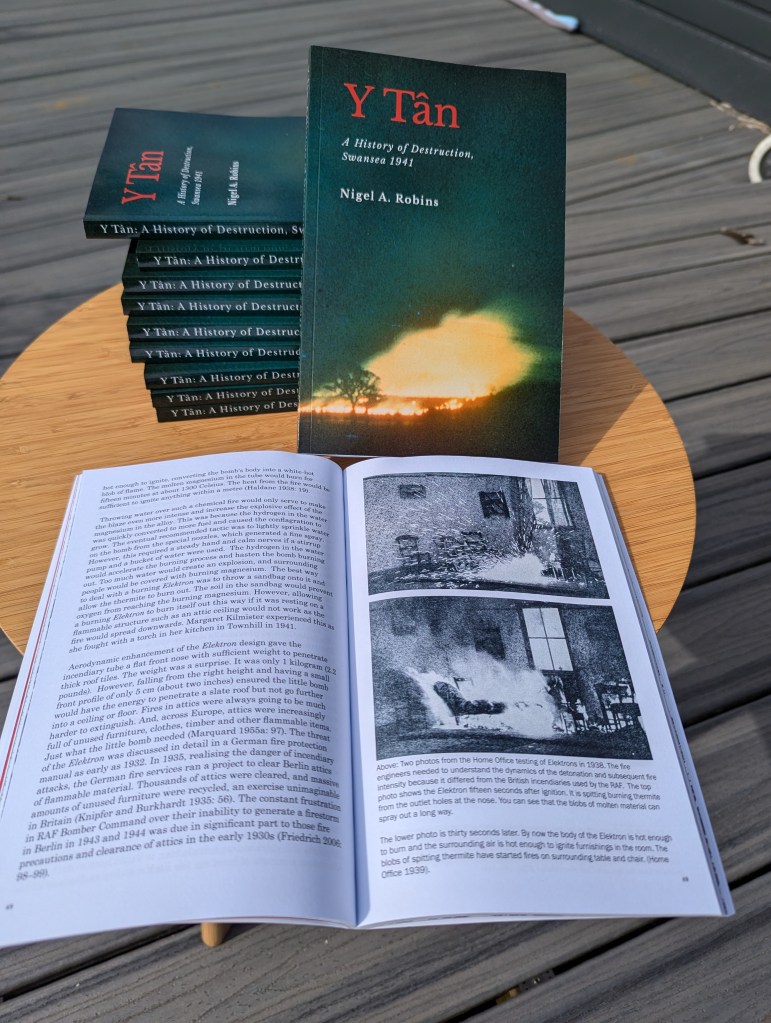
I’ve now got a stock of my latest book Y Tân.
Y Tân: A History of Destruction, Swansea 1941 is about my history of the Three Nights Blitz in February 1941. The town suffered appalling damage, and many argue it has never recovered. My grandfather died fighting the fires on the last night of the Blitz in Castle Street which was the site of a number of tragedies on that dreadful Friday.
In Y Tân I examine the situation in Swansea in the month before the attacks and look at the vulnerability of Swansea to German bombs and incendiaries. I examine the history of the weapon that destroyed the town and explain why Ben Evans was so vulnerable to fire. I examine the history of Castle Gardens and the reasons it became so dangerous. I also reconstruct the events of the three nights with eyewitness testimony from local people, war diaries and German air force sources. A chapter explains what happened to the piles of rubble in the town that eventually gave way to the redevelopments we see today—copiously illustrated with photos, maps and archive records from the author’s collections. Fully academically referenced.
Y Tân complements the groundbreaking examination of Luftwaffe intelligence maps and plans published earlier this year, Eye of the Eagle: Luftwaffe Intelligence and the South Wales Ports 1939-1941.
Y Tân is £16.99, easily available from the author, or you can buy it online here.
Also available from me or online:
Eye of the Eagle: Luftwaffe Intelligence and the South Wales Ports 1939-1941: A4 170 pages with over a hundred illustrations and map extracts.
The Cilfái Trilogy
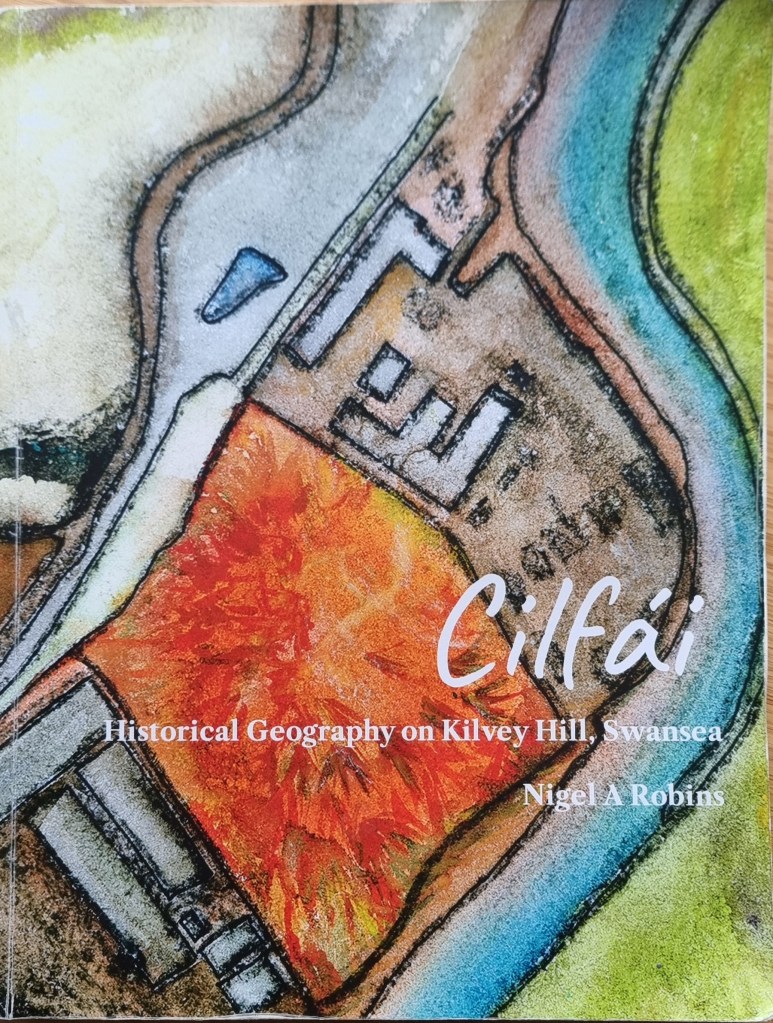
Cilfái: Historical Geography on Kilvey Hill, Swansea: £15.99, many colour illustrations and maps, 126 pages
Cilfái: Woodland Management and Climate Change on Kilvey Hill, Swansea: £15.99, many colour illustrations and maps, 130 pages.
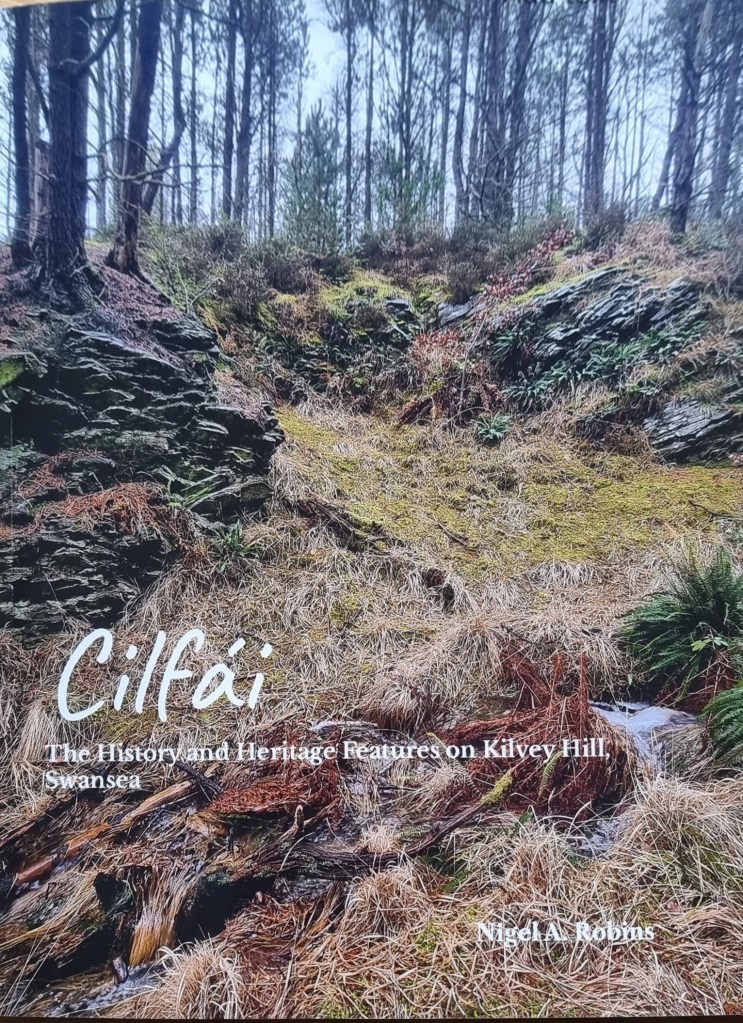
Cilfái: The History and Heritage Features on Kilvey Hill, Swansea: £14.99, many colour illustrations and maps, 98 pages.
Contact me via email at nyddfwch@gmail.com or message me. All payments are made easily with Paypal.
Or you can order from my bookshop at Nigel A Robins: Geographer – Books and Publications Spotlight | Lulu
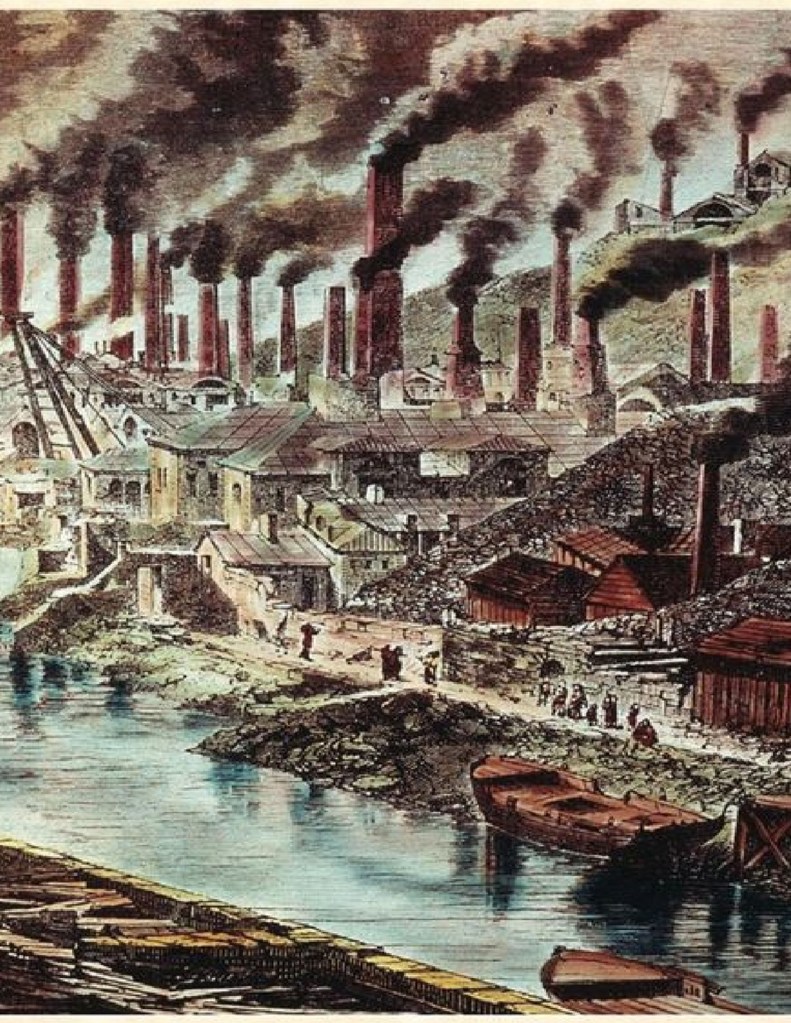
I write about the copper smoke in Chapter Four of Cilfái: Historical Geography on Kilvey Hill, Swansea.
The copper smoke from White Rock was horrendous. Black, acrid, greasy and opaque. It killed everything it touched. The chemical composition of the Cornish copper ore meant that once burnt with Kilvey’s bituminous coal, released vast quantities of sulphur dioxide, hydreogen fluoride, sulphrous and sulphuric acids. in the 1840s, the Vivian’s Hafod Works were releasing 188 tons of Sulphuric Acid daily into the Swansea Valley.
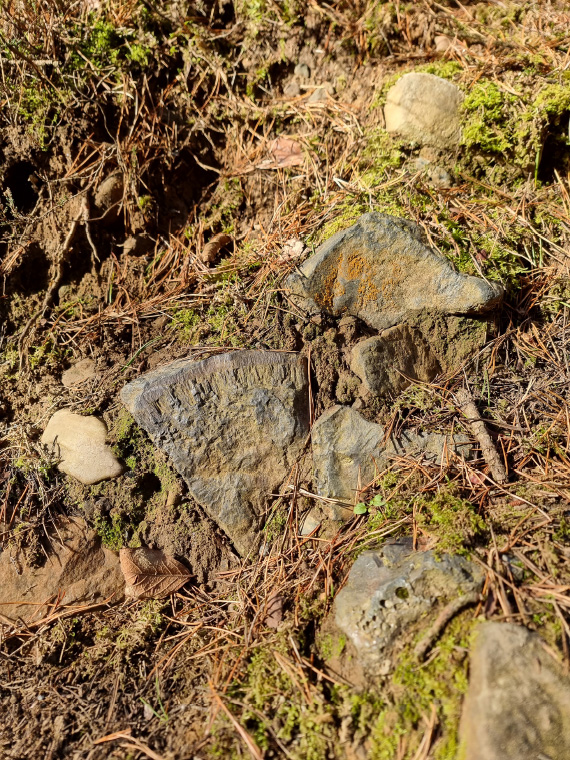
The industrial pollution phase of Cilfái’s history has left a permanent mark in the nature of the landscape. Industrial smelting waste forms a large part of the soil for over twenty percent of the woodlands around The Glade, Roundhouse, and up to Martin’s Pond. Slag takes its place amongst the native sandstone and the glacial debris from the last ice age. The structure and chemical profile of the soil is permanently altered and many trees eventually succumb to the toxicity. This is a good reason why natural regeneration should be favoured over massive new plantation of native species. Natural regeneration allows plants that are resilient to the poisons to develop. I explain more in the second Cilfái book.
P.50 Cilfái: Woodland Management and Climate Change
These days we are often in a situation where we are forced to rely on the opinions of staff in various organisations to tell us what ‘history’ or ‘ecology’ or ‘biodiversity’ are. In and around Swansea, we have Cadw to judge what is ‘significant’ for heritage, an Archaeological Trust to tell us what is important under the ground, and a host of private companies employed by building developers to tell us what plants and animals are important. Unfortunately all these organisations can be flawed when it comes to understanding what matters to local communities. It is a deeply unsatisfactory situation. You’d expect local politicians to be more in tune with their communities, after all they were elected to do just that. However, the strong whipping of Swansea Labour Councillors over the Cilfái developments shows how impotent local politics actually is in the face of corporate ambitions.
Communities always change and their interests and viewpoints can also evolve. The toppling of the statue in Bristol shows what can happen when frustration with politics boils over. Closer to home, the issues with the General Picton memorials are an interesting response from the cultural sector who sometimes have strong impulses to react to changing community values.
The identification of heritage and cultural features on Cilfái is clearly inconvenient to politicians and tourism developers. The neat packages of the Hafod-Morfa tourist attraction are predictable, grant-friendly, and a big hit with local builders. Not so much the ‘informal’ heritage of Cilfái. The hill is packed with history above and below ground but that won’t matter to Councillors. Features with the unfortunate characteristic of ‘being in the way’ will be dug up, destroyed or removed. It is ironic that a tourism firm from New Zealand (a country that is barely 100 years old) is leading the destruction of our heritage, much older than that little country.
What tends to get lost first are the little things, the things that people enjoy. They often get thrown away because we as residents are told they aren’t significant by the organisations that ironically are there to serve us.
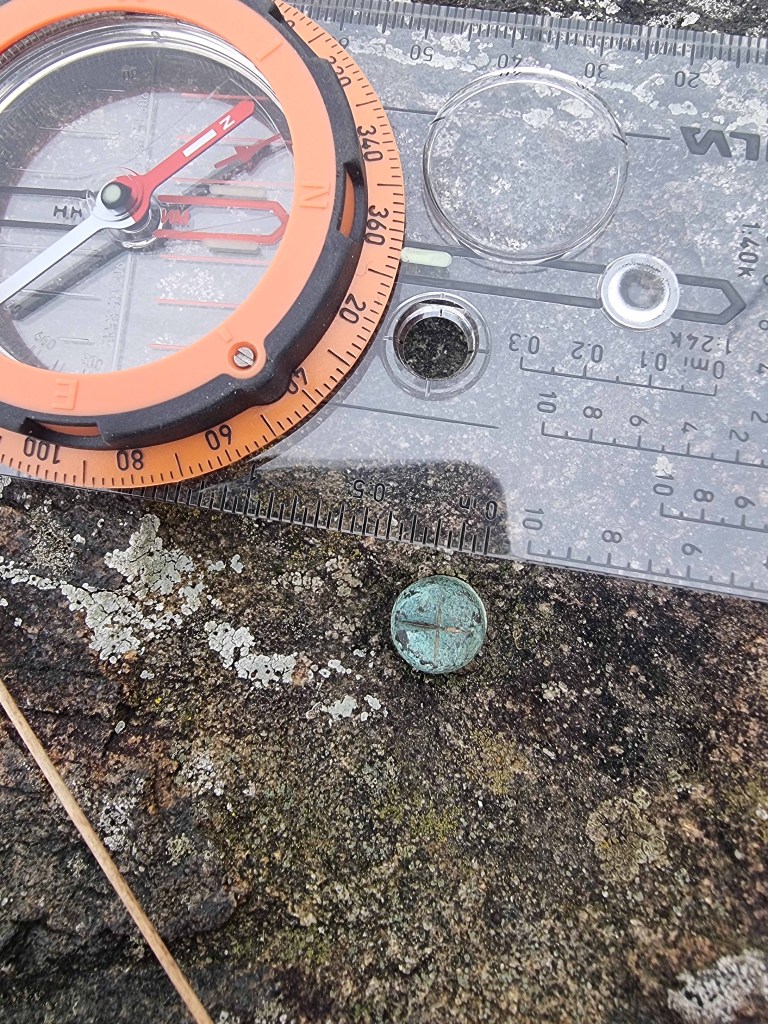
Here’s one that will probably be brushed away by a careless Skyline bulldozer. A little copper nail hammered into a rock in the danger zone. It was probably put there by William Logan as part of the early exploration of coal seams on the hill in the 1820s. I found his notebooks that told me about it. It remains as a little memorial to all the hard work and industry from pioneers in the past. The story is covered in Cilfái: History and Geography and Cilfái: Heritage Features
The waste tips and pollution on the hill are the obvious legacy remains of the copper industry. However, there are several other copper-related features on the hill. In Cilfái: The History and Heritage Features, I listed 16 features of Swansea copper heritage. One of them appears to have been completely missed by the several archaeologists that apparently surveyed the area. The Copper 14 Feature (listed on page 57) White Rock Hammer Pond Tunnel is an incredible survivor of a water course that supplied water to the water wheels of the original watermill that was on the White Rock site before the building of the works in 1737. It still works today carrying the Nant Llwynheiernin under the Pentrechwyth Road and into the White Rock site before running out to the river south of White Rock near the original White Rock coal yard.
Below: The White Rock incline and site of Nant Llwyheiernin bridge and tunnel in the early 1930s. The bridge and tunnel still survive buried in the new road.
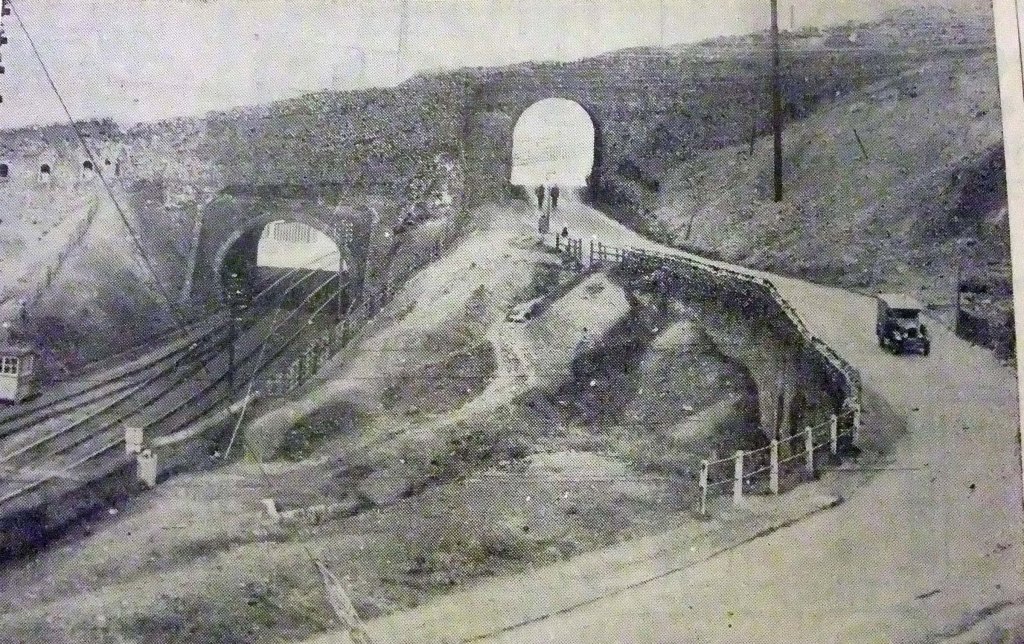
Below: The tunnel entrance as it survives today.

The third Cilfái book covers all the history and heritage features on the hill. Normally local authorities and developers rely on a list of heritage features on the Archwilio site.
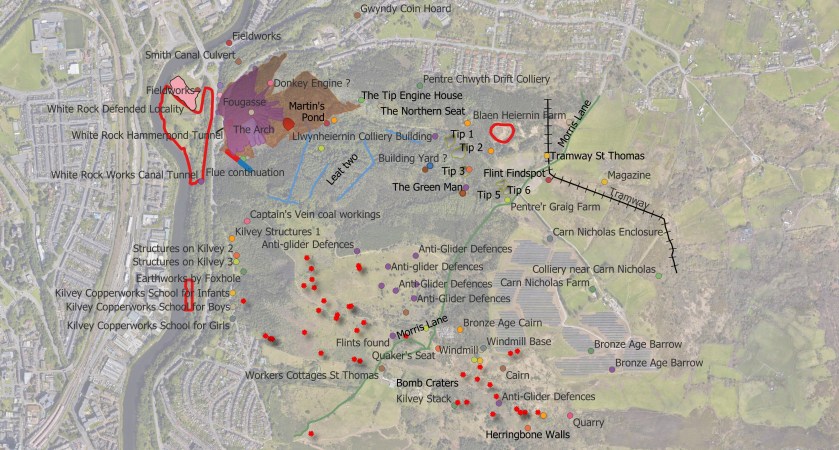
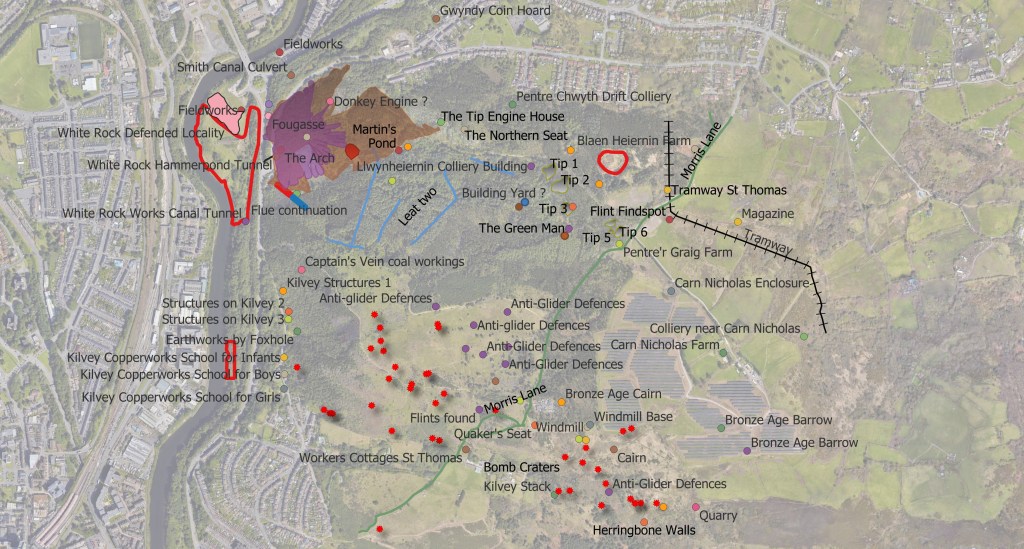
What was on the Archwilio site wasn’t really good enough for us to understand Cilfái, so I redid the surveys. I increased the heritage fetures count on the Hill from 35 to nearer 80. A lot of our Copper, Coal and modern history is not officially recognised by archaeologists…but it doesn’t make it unimportant. You can’t expect historians or achaeologists from elsewhere in England or Wales to understand the significance of our local history and culture. We are forced to do that for ourselves.
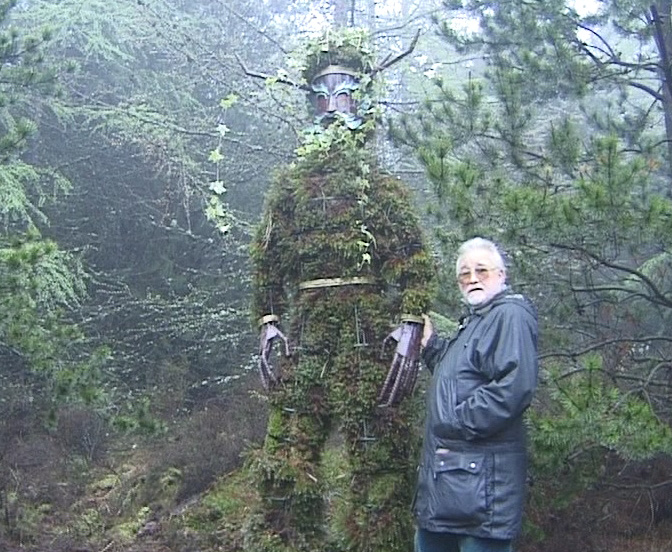
Below: Pete Thomas and Green Man in 1998 shortly after it was completed.
.
Below: A map of some of the heritage features on Cilfái.
Yesterday (18 April 2024), Swansea Council took a first public step towards leasing or selling a large part of Kilvey Hill to a foreign tourist company. The decision was a milestone in a process started in secret in 2017. The years since have seen covert land assembly, including a particularly unpleasant land steal by Swansea Council, as politicians and staff work officially or otherwise to facilitate the plans of the foreign tourist company.
Our abysmal local government system’s callous, unthinking bureaucratic jargon describes the potential sell-off as a ‘disposal,’ as if the land were used tissue. This had happened before when previous generations and local councils enthusiastically embraced industrial development and regarded the destruction of nineteenth-century Kilvey as merely ‘collateral damage’ … a disposal problem.
The transformation of Swansea from an attractive resort to an industrial black spot was beautifully catalogued in a 1986 book called ‘The Brighton of Wales’ (Boorman 1986). Boorman traces the point of departure from unspoiled beaches to the Lower Swansea Valley industrial magnet. Now, the wheel has turned full circle as a desperate local authority, in acts of unbridled boosterism, refers to Swansea as a world-class tourism destination. I can only assume Councillors haven’t recently made that dangerous walk from Swansea railway station down the High Street.
There will be plenty of economic arguments for the developments to go ahead based largely on optimism and faith in the future. One thing is certain: the enthusiasts for the scheme and all the positive comments on those strange news sites don’t live there.
The Council and the local communities have a lot to be proud of regarding environmental recovery and the new uses of the urban woodlands on the east side. I wish the politicians would recognise this instead of chasing a handful of ice cream-selling jobs.
Boorman, David. 1986. The Brighton of Wales: Swansea as a Fashionable Seaside Resort, c.1780-1830 (Swansea: Swansea Little Theatre Company)
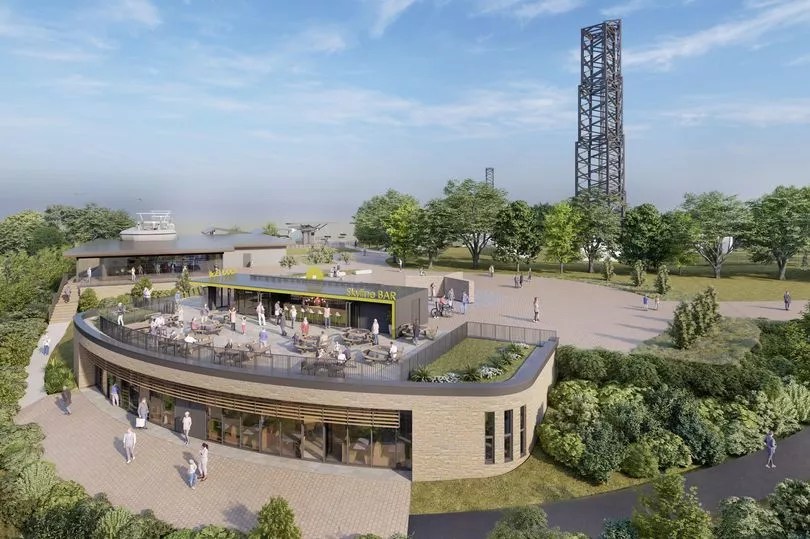
Below: The planned Skyline buildings. Incredibly, this picture is of part of Kilvey Hill that Swansea Council don’t actually own.
 Nigel Robins