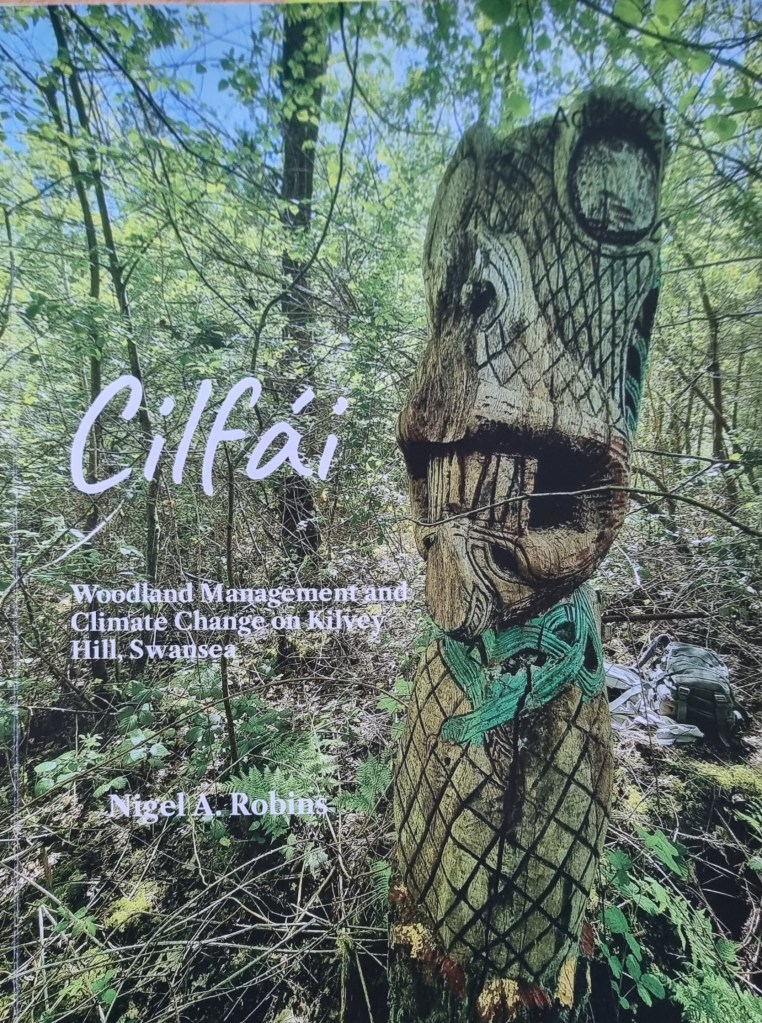
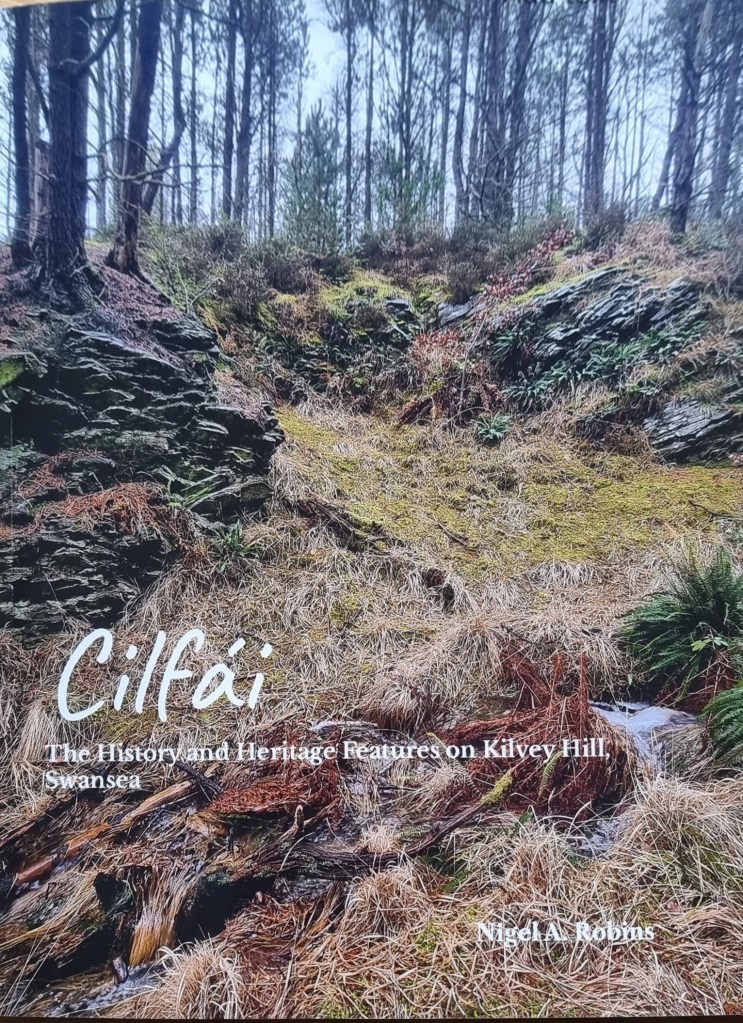
Cilfái: Historical Geography on Kilvey Hill, Swansea ISBN 978-1-7393533-0-8

This has now been reissued as a 2025 Second Edition with some updates, minor amendments and some new illustrations. I’ve also updated the copyright and EU product compliance details.

This study has been heavily reliant on past teaching notes and lessons learned from students’ questions and discussions over many years. I am indebted to all of them. Grateful thanks to the staff of West Glamorgan Archives Service and the archivists at the British Geological Survey in Keyworth who allowed me to spend time with William Logan’s original notebooks. The help of experts such as Dr John Alban and Gerald Gabb has always been beyond value and they have helped me as a sounding board and unlocking further fields of expertise which ave been so valuable. The contributions and discussions with my oldest friend John Andrew on geology and the rocks of Townhill and Kilvey have been particularly inspiring. John passed away in August 2024 and I miss his help and support terribly.
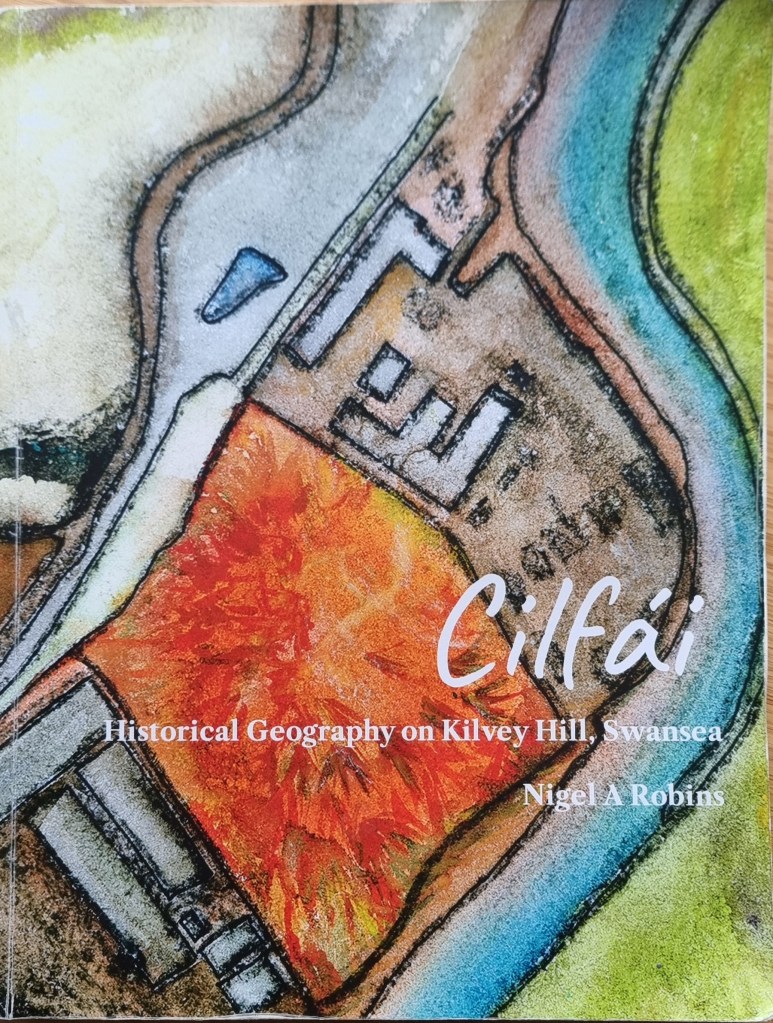
The cover of Cilfái was part of a painting of White Rock I did a while ago, mainly to show the extent of the Cae Morfa Carw waste tip (the orange land). The Tawe is on the right, and the original long workhouse of White Rock is at the top.


I must also thank the staff and colleagues at Coed Cadw/Woodland Trust who, unwittingly perhaps, spurred me on to re-explore Kilvey some thirty years after I last surveyed the land in the late 1980s. All the modern mapping was completed using the open-source QGIS application which has become a central tool as a landscape historian over the past ten years. Finally, I must mention the help and support of Kilvey Woodland Volunteers. Without the passion and commitment of the volunteer body over many years, I doubt that Kilvey would be the special place it has become. As I write this, Kilvey is under more threats from the local council and developers, and I hope this little book records a few milestones in the ongoing Kilvey story rather than an ending.


The first edition of Cilfái was remarkably successful. The aim was to fill a gap in knowledge about the Hill in the constant challenge to take care of it in the face of threats of irreversible destruction from tourist developments and an uncaring local authority. There are now many more local environmental and residents groups aware of the current value of the land and the potential loss Swansea faces if the destruction begins. This book was the first of the Cilfái trilogy, the second book covered Woodland Management and Climate Change, and the third book covered the heritage features on the hill. This book was rushed into print to address claims from the Local Authority that there was ‘not much up there’. Since 2023, I’ve taken hundreds of people on walks to view the biodiversity, history, and heritage of Cilfái, and I’ve packed out numerous community centres and halls to talk about the history. Hundreds of people have been converted to the value of the landscape we may lose.

Above: A coal adit on Kilvey was left to regenerate after about 40 years of peace. Swansea Council may be seeking to destroy this land, which they consider ‘worthless’.

More on Swansea coal

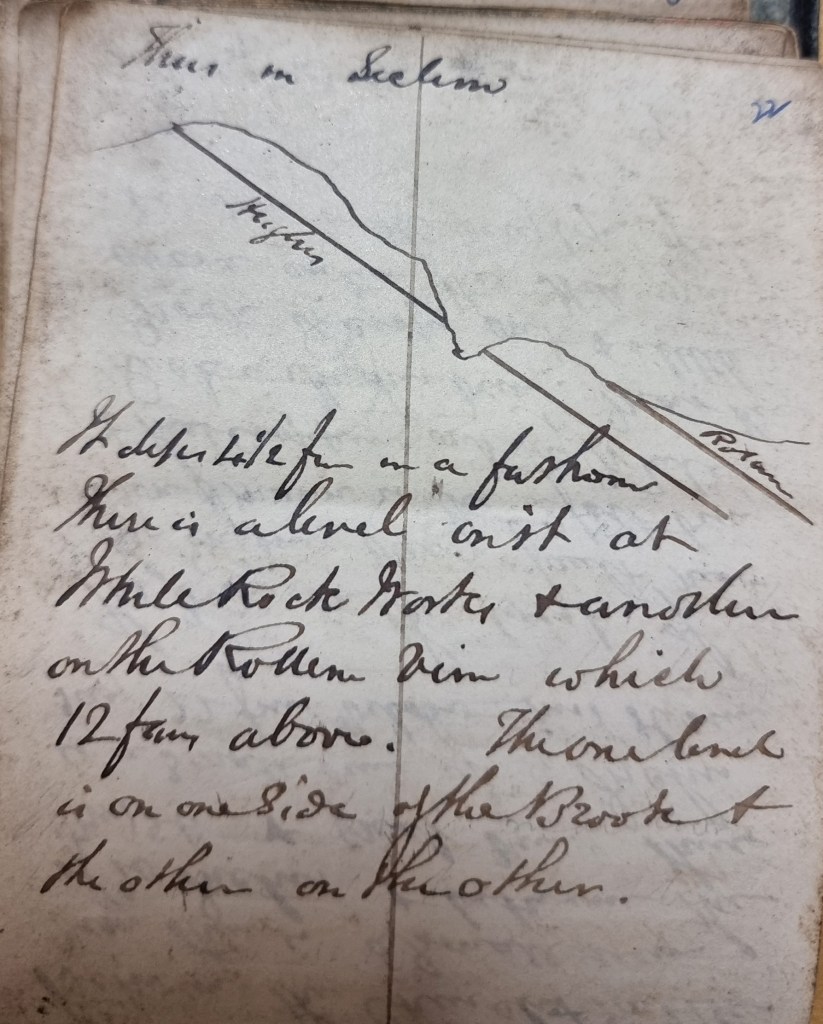
I’m still working on the history of geological exploration in and around the Swansea area. Some of it was included in the first Cilfái book, where I wrote about the early work history of William Logan, who learned much of his early geology studying the coal veins of Cilfái.

Knowledge of every coal vein in the area was once the lifeblood of the Industrial Revolution. It is hard to believe now when we can walk through the lush green vegetation of Cilfái without seeing any evidence of the past unless we make an effort to dig to find some.

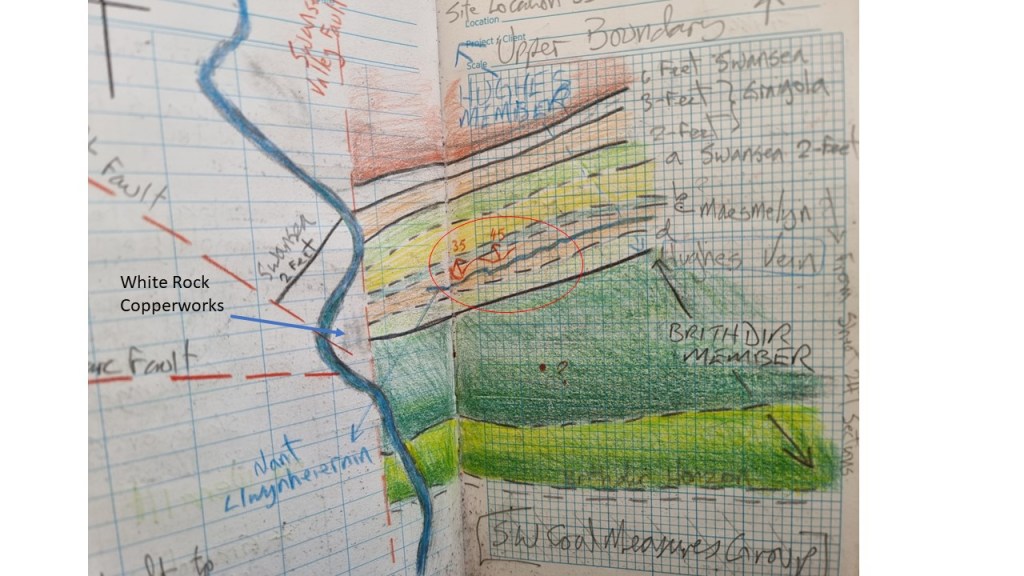
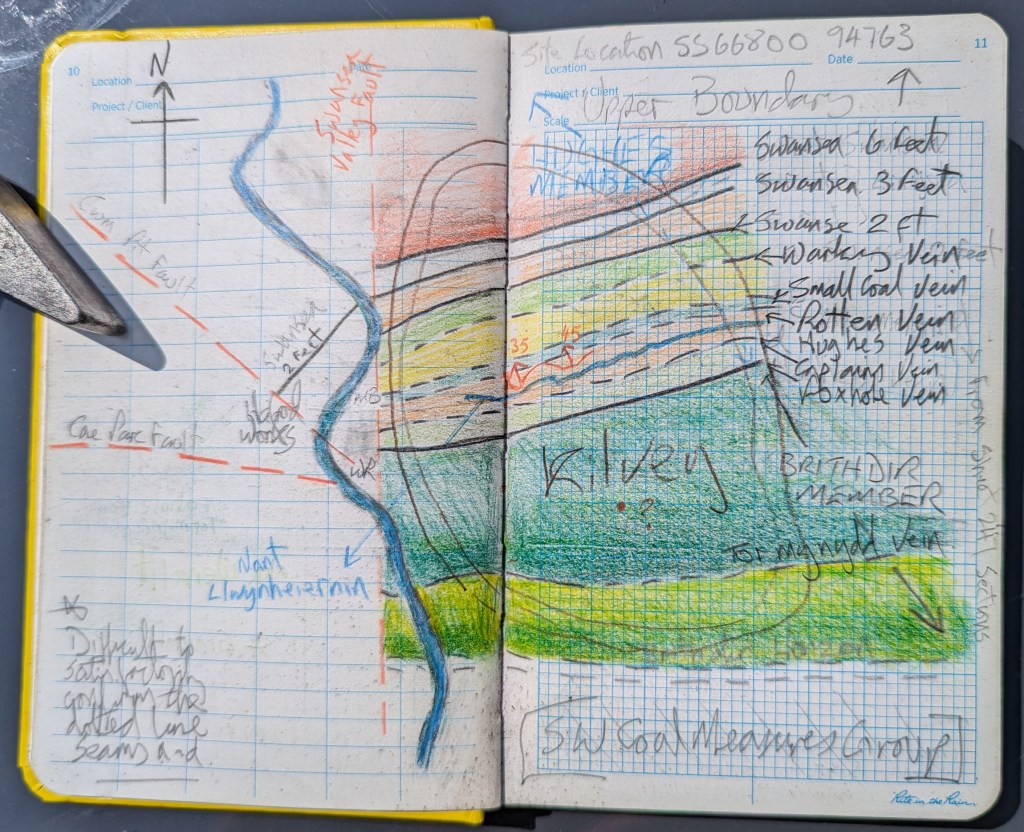
During our ITV filming on Monday, I was asked about the Tormynydd coal seam. This substantial coal layer, which extends from the seaward side of the hill to Neath and Port Talbot, played a pivotal role in the Industrial Revolution. Like all Cilfái coals, it is bituminous or binding coal that can burn with a cloud of thick black smoke and tends to stick in big lumps when it burns down. (Conybeare and Phillips 1822: 426). The Tormynydd vein is at the bottom of the sketch map and is marked today by a line of big quarries and tunnels across the front of the hill.

My sketch map of the coal veins across Cilfái. It has to be in pencil because I keep updating it as I find more sources and information.

Knowledge of the coal veins of Cilfái and wider Swansea was passed from father to son for generations and it wasn’t until the 1790s that people started to think seriously about understanding the nature and relationship of the underground coal veins.  The first map of coal in the area is William Smith’s map dated 1815 (but based on considerable local knowledge). There’s an extract of it below (Macfarlane 2020).

My sketch plan is based on diaries and memoirs from various times. It is incredible to think that Cilfái had about 10 coal veins providing coal for White Rock and Middle Bank in the 1790s

Above: This is an extract from the earliest map of the local Geology we have. This is dated 1815, but is based on lots of earlier information from the 1700s. This map pre-dates the Ordnance Survey plans for Swansea so gives us a different view of priorities for understanding the main features of Swansea. William Smith had to devise a set of colours to depict the different types of rock (or ‘Strata’ ) that he found. Smith decided on blue to depict limestone…a convention that we still honour today. The grey shading is the ‘coal measures’, the rocks of sandstone and mudstone that contained the precious coal seams (veins in Smith’s time). The fact that Kilvey has a place name shows how important the hill was as a landmark in Swansea’s coal geography. You can see the crosses that mark the location of Swansea’s biggest coal mines at the time of the Napoleonic Wars.

Conybeare, William Daniel, and William Phillips. 1822. Outlines of the Geology of England and Wales: With an Introductory Compendium of the General Principles of That Science, and Comparative Views of the Structure of Foreign Countries … (W. Phillips)

Macfarlane, Robert. 2020. STRATA: William Smith’s Geological Maps, 1st edition, ed. by Oxford University Museum of Natural History (London: Thames and Hudson Ltd)

Cilfái: The Importance of our History.

Who owns history?

Last Saturday, I talked about the history of Cilfái as part of our National Local History Month celebrations.

I had a packed room in the Central Library, not to see me… but to listen to the topic. Concern over losing our history and heritage is mounting as more threats from local Council plans get closer. I knew many of the audience, some of my old colleagues, heritage and environmental workers, and my past history teachers. There were a lot of local people as well who made an effort to come and sit in a warm teaching room on one of the hottest days of the year.

The combined years of experience in the room were amazing. People who had worked on the hill researched and cared for it, and a newer generation is taking on the challenge of future care. There was an unbroken chain of partnerships and friendships dating back to the pioneer historians Clarence Seyler and George Grant Francis.

The talk and the questions session afterwards led me to reflect on the history I was talking about. Much of the past fifty years of Cilfái history is not documented and runs a significant risk of being ‘reinterpreted’ by an unmindful local authority and a foreign tourism company. That risk of deliberate amnesia was one of the reasons I wrote the Cilfái volumes.

But who ‘owns’ the history? It is always an important question. In 1891, Oscar Wilde penned an often-quoted phrase, ‘The one duty we owe to history is to re-write it.’ Although Wilde was likely thinking more of fine art criticism, the statement holds up in modern times with the revision of colonialism and racism prominently featured in research and popular histories. I’m part of that process as I talk of the environmental pollution and ecocide that accompanied the explosion of industrialisation and exploitation in the Swansea Valley.

As good as the Wilde observation is, I felt I was always led by this statement from George Santayana in 1905…’ Those who cannot remember the past are condemned to repeat it.’ I suppose the ‘remembering’ or ‘forgetting’ can be both wilful and accidental. In the past month, I have had conversations with senior Council officers over Cilfái, where officials were adamant that records and land titles were entirely in order concerning the hill (and officially stating that was the case) whilst not checking anything about the truth and validity of those statements. The main reason behind their indolence was an intention to wilfully ignore the hill’s history. After my pushback, the senior planning officer had to retract those silly statements. The worst part of the episode was the inherent untruths and misrepresentation of vague facts advanced by Council employees who may be qualified but are rarely experienced. The injured parties are us as the public.

In books and talks about the history of Cilfái, I have tried to open ownership of our history to the broader public to combat the apparent desire of some to shut down debate, consultation, and knowledge. It is also important to remember that some of the most vocal Facebook warriors in unquestioning support for foreign tourism company plans have never been on the hill.

Above: Coal mine workings on Cilfái after 40 years of uninterrupted recovery. The Council and the foreign tourism company want us to believe this is worthless and they can do better. Really?

Cilfái, The Death of Nature, and Carolyn Merchant

When I wrote the first Cilfái book, on the history of the hill, my views were strongly coloured by the work of American ecofeminist Carolyn Merchant. Merchant has many talents, but one of her earliest books was titled ‘The Death of Nature’ (The Death of Nature: Women, Ecology and the Scientific Revolution )A strong title, and I can recall being quite challenged by it when I first read it in the early 1980s. Merchant is a formidable historian of science and her book explored the importance of gender in early writing on nature. Her grasp on European industrial history was superb and her interpretation of how the understanding of nature changed in the Industrial Revolution from an organic or female conception through to the mechanistic model of coalfields and resources.

Alongside this, the destruction of people’s rights and freedoms throughout the medieval period by greedy landlords had a profound impact on the perception of land and property. The medieval economy of Cilfái was based on organic and renewable energy sources (wood, water, and wind), the emerging capitalist economy of the Mansel family was based on coal and metals which transformed the nature of the hill. The changes on Cilfái over the past few centuries are confirmation of Merchant’s theories.

In one of her most famous statements…

The female earth was central to organic cosmology that was undermined by the Scientific Revolution and the rise of a market-oriented culture … for sixteenth-century Europeans the root metaphor binding together the self, society and the cosmos was that of an organism … organismic theory emphasized interdependence among the parts of the human body, subordination of individual to communal purposes in family, community, and state, and vital life permeate the cosmos to the lowliest stone

Understanding Luftwaffe bombing in South Wales: The GWR Ports

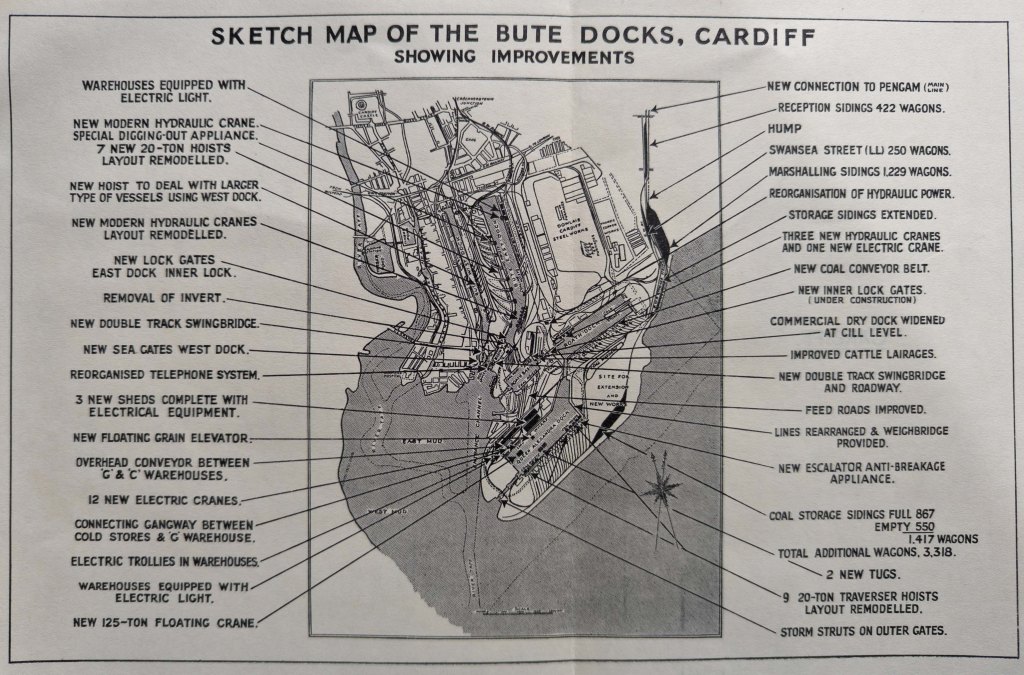
The Great Western Railway (GWR) ports of Souh Wales were vitally important in both world wars for the defence of Britain and hadling imports to support the war effort. Although the ports were mostly designed to export coal before World War One, the GWR invested a lot of money in the 1920s to redevelop some of the ports into general cargo import and export. So, Cardiff, Swansea, and Newport were all given better cranes and storage facilities which enabled a mioxed economy develop as coal exports slowly declined. Eventually, Penarth closed as it was too heavily engineered for coal handling to be of much use. Swansea ans Cardiff became important food import ports with good rail links and plenty of power for large grain and frozen food storage. The full story is covered in Eye of the Eagle: Luftwaffe Intelligence and the South Wales ports 1939-1941.

Below: A GWR plan from 1933 showing the improvements made to Cardiff Docks before the war.

Below: The GWR coal export rail network in 1933. An incredibly dense network of railways allowing bulk transport of coal from every part of the Glamorgan coalfield.

Ancient Woodland in Swansea

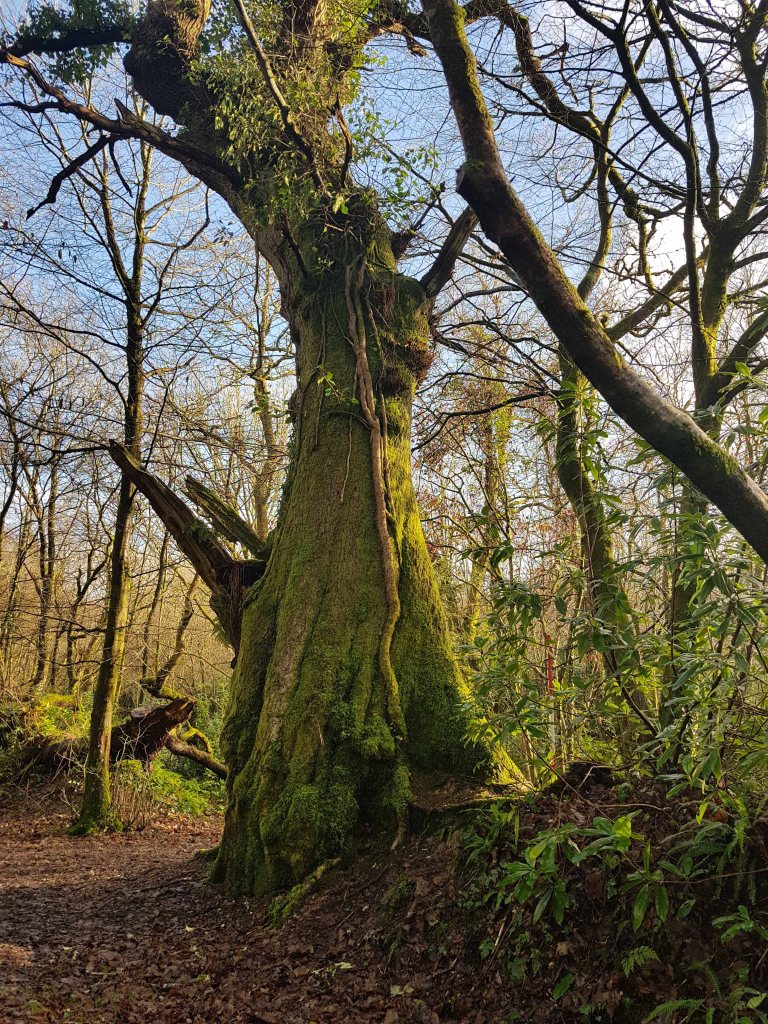
We don’t have any ancient woodland on Cilfái. The last of it was killed off in the 1750s by industrial pollution. The coal industry on the hill probably removed most of the bigger trees before that as coal mining consumed massive quantities of timber. Both Cilfái and Townhill were cleared of their natural woodland by the 1300s (Robins 1990: 4–8).

1970 marked the new beginning of woodland on the Cilfái woodland site. We know that the Scots and Monterey pines on the western side were planted alongside efforts by the Forestry Commission to reestablish forestry on the upper slopes of the west side (Robins 2023a: 62–77, 2023b: 55–58).

Although the landscape of ancient woodland has disappeared, Swansea does have some incredible surviving old trees in Singleton Park and Penllergaer (Penllergare) Country Park. The trees in Singleton survived being part of farmland in the 1600s and were incorporated into the estate of the Vivian family in the 1800s (Morris 1995: 5–26).

The Penllergaer Country Park has some incredible survivors who survived the devastation of the coal mining period between 1500 and 1790 and became incorporated into the private parklands of the Dillwyn Llewelyn family. I wrote about some of the trees in Swansea History Journal a while back (Robins 2021).

The trees of Cilfái are special because we know how old they are and what they have gone through to survive today. The trees of Nyddfwch are special because they are far older but have also survived the ravages of industrialisation and human interference.

Morris, Bernard. 1995. The Houses of Singleton: A Swansea Landscape and Its History (Swansea: West Glamorgan Archive Service)

Robins, Nigel A. 1990. The Enclosure of Townhill: An Illustrated Guide (Swansea: City of Swansea)

———. 2021. ‘The Landscape History of Nyddfwch (Penlle’rgaer)’, Minerva: The Swansea History Journal, 29: 121–34

———. 2023a. Cilfái: Historical Geography on Kilvey Hill, Swansea (Swansea: Nyddfwch)

———. 2023b. Cilfái: Woodland Management and Climate Change on Kilvey Hill, Swansea (Swansea: Nyddfwch)

Below: The Nyddfwch oak in the Llan Valley. Originally planted as a marker tree on a hedge guarding the Llan meadows.

The ‘lumpy veins’ of Cilfái

Although there is a publicity fanfare about Copper in Swansea, it is coal that is in the heart of Swansea’s history. There may be two thousand years of coal workings around the city and west to Crofty. Beyond that, the rocks of Gower change so there is no coal mining.

The mining of coal was a part of every farm and farmworker’s life before the Industrial Revolution in the 1750s. Coal often outcropped on the surface and small scrapes or pits still survive all across Swansea. The country park of Penllergare is an invention of the mid 1800s, before that the Llan valley was devastated by coal workings. The valley is still full of pits and collapsed tunnels. Cilfái’s coal was mined from medieval times, and Swansea’s earliest coal mining records are actually Cilfái coal mining above Foxhole. I discuss the early history of coal in Cilfái: Historical Geography.

Cilfái had three good coal seams running west-east across the hill. These were the Hughes Vein, Captains Vein, and the Foxhole Vein. The Hughes and Captains yielded a good-quality bituminous coal which was used in the copper smelters of White Rock and Middle Bank. The Foxhole Vein was more of a problem, it tended to vary in thickness and quality so mining it was often frustrating as it would disappear and then reappear further up the hill. The top of Cilfái is marked with excavations from the 1700s where men had dug to try and get a better access to good coal from the Foxhole. They never found it, so the Foxhole Vein was called ‘lumpy’…unreliable.

Local colliers on Cilfái knew all about the problems of mining on the hill and the knowledge was passed down the generations. It wasn’t until 1837 when William Logan started talking to the colliers and mapping their knowledge, that we begin to have detailed knowledge of the coalfield under Swansea and Morriston

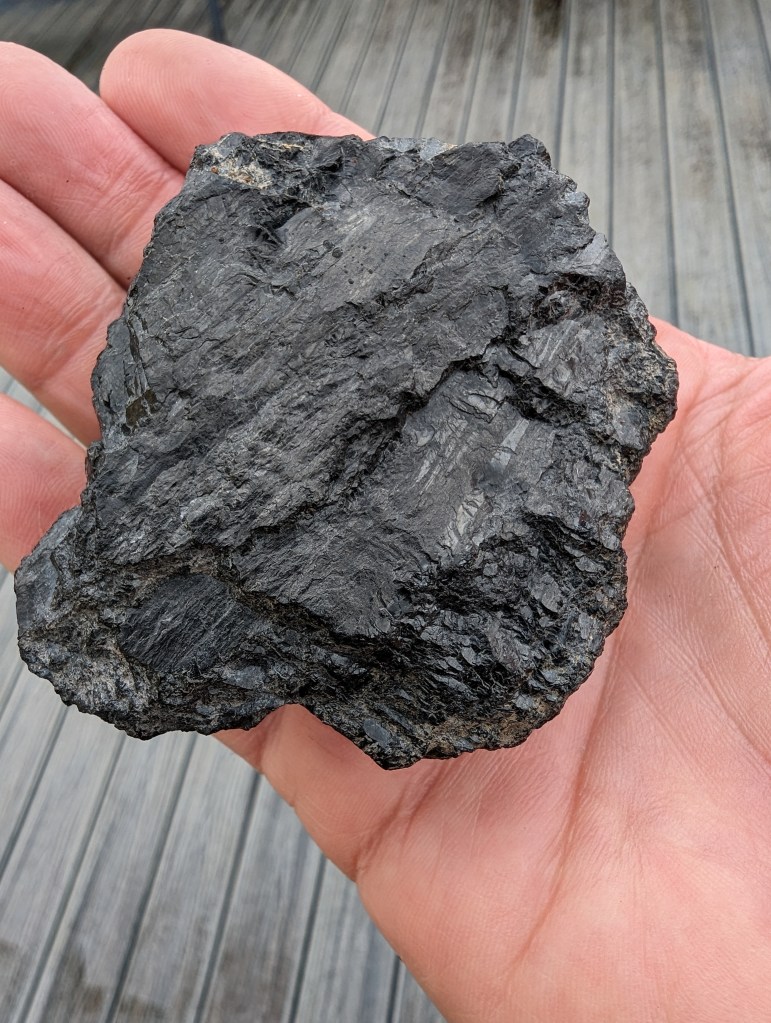
Below: Coal from the Hughes Vein above White Rock. A lustrous black coal that shines like a jewel. You can see the layers of harder vitreous coal that were often the source of better quality fires. The nature of layers in the coal was only finally understood in the early 1900s by Dr Marie Stopes, Britain’s pioneering palaeobotanist.

Cilfái’s Heritage Features

The third Cilfái book covers all the history and heritage features on the hill. Normally local authorities and developers rely on a list of heritage features on the Archwilio site.

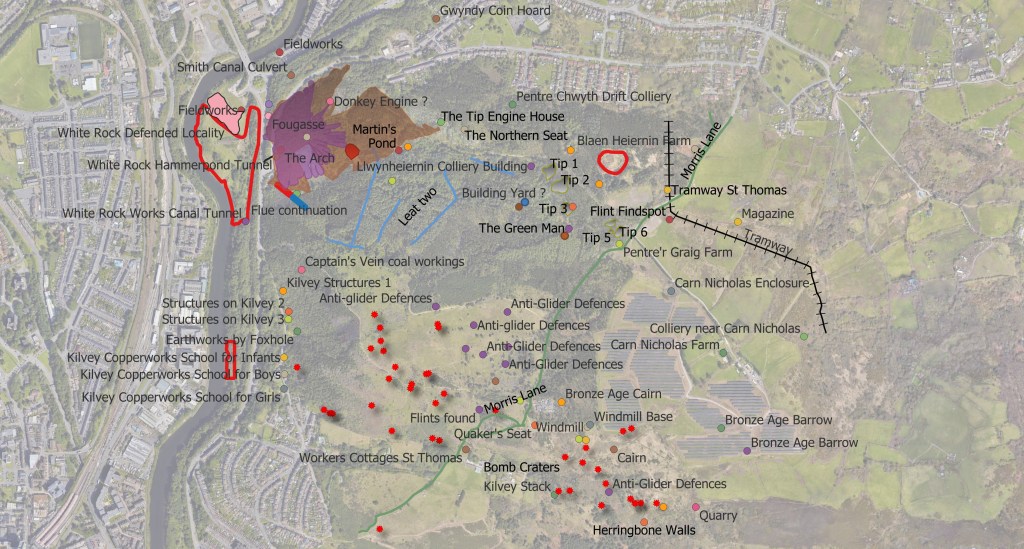
What was on the Archwilio site wasn’t really good enough for us to understand Cilfái, so I redid the surveys. I increased the heritage fetures count on the Hill from 35 to nearer 80. A lot of our Copper, Coal and modern history is not officially recognised by archaeologists…but it doesn’t make it unimportant. You can’t expect historians or achaeologists from elsewhere in England or Wales to understand the significance of our local history and culture. We are forced to do that for ourselves.

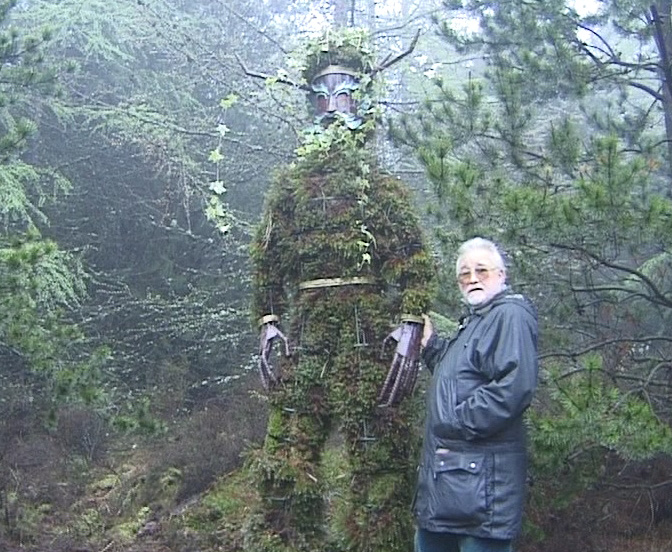
Below: Pete Thomas and Green Man in 1998 shortly after it was completed.

.

Below: A map of some of the heritage features on Cilfái.

Investigating Cilfái Landscape: The Geological Memoir

When investigating the history of a landscape, one of the first things worth looking at is the underlying rocks that make up the land. In Wales, this is often the question, ‘Is there coal here?’ In Swansea, the answer is usually ‘yes!’

We can usually get a map showing us the geology of the land. In Swansea, we have the famous Sheet 247 to guide us. As a young student of Geology, my old Dynevor Geology teacher John Rees always told me to ‘get the Memoir’. It was sage advice, and referring to the Memoir is one of the most essential tools in a researcher’s toolkit. Even today, when I read my copy of the Memoir, it comes out in John Rees’ voice and tone in my head—the legacy of an excellent teacher.

The Memoir is the written guide that accompanies every British Geology map. Most were published in the nineteenth or early twentieth century. Whereas the map represents what is under the ground, the Memoir describes in detail all the features and rock types. Swansea’s Memoir was published in 1907 and is a priceless record of years of fieldwork and investigation by a team of accomplished geologists working throughout the 1890s (Strahan 1907). The original work of the Memoir began in the 1830s on Cilfái when pioneer Geologist William Logan taught himself geology by exploring the mines of Cilfái Hill.

The Memoir is a historical record in itself now, as almost all the landscape described has disappeared under housing and tarmac. The Memoir is vital to understanding the geology of Cilfái, and I refer to it many times in Chapter Two of Cilfái: Historical Geography.

Strahan, Aubrey. 1907. The Geology of the South Wales Coal-Field. Part VIII, The Country around Swansea: Being an Account of the Region Comprised in Sheet 247 of the Map, Memoirs of the Geological Survey. England and Wales, 247 (London: Printed for His Majesty’s Stationery Office by Wyman and Sons)

Below: The title page of the Swansea Memoir and below that Swansea as shown on the modern edition of Sheet 247. It still credits the original work by William Logan from the 1830s.

The Cilfái coal seams

There is a lot of coal on Cilfái. This is why it was so important for Swansea’s early industrial economy. Almost all of the original coal workings have been buried or submerged under new trees and vegetation that has grown up since 1970. The Cilfái coal seams dip northwards so that what was originally at the surface above White Rock Copper Works dips underground so that they are underground at Morriston. This is why Copper Pit was so deep, it had to dig down through the glacial debris in the valley and a lot of Pennant Sandstone Rock. The pioneer geologist William Logan taught himself Geology by closely examining the coal seams on Cilfái. Almost two hundered years later, I was able to reconstruct his view of Cilfái coal by reading his notebooks. Here’s my original sketch plan based on his notes

The full story is in Cilfái:Historical Geography