Kilvey: Recent storms and Windthrow

Kilvey Hill experiences frequent storms and high winds, which are a major threat to woodlands and any buildings or structures. The risk of wind damage and windthrow is expected to increase with climate change, with more frequent storms, wind speed, winter rainfall, and faster tree growth.

The projected increase in our winter rainfall is likely to increase wind risk, as rooting depth and root anchorage are both reduced in waterlogged soils. An increase in tree growth rate due to warmer temperatures is possible in areas where moisture availability is not limiting, this could increase wind risk with stands reaching a critical height earlier.
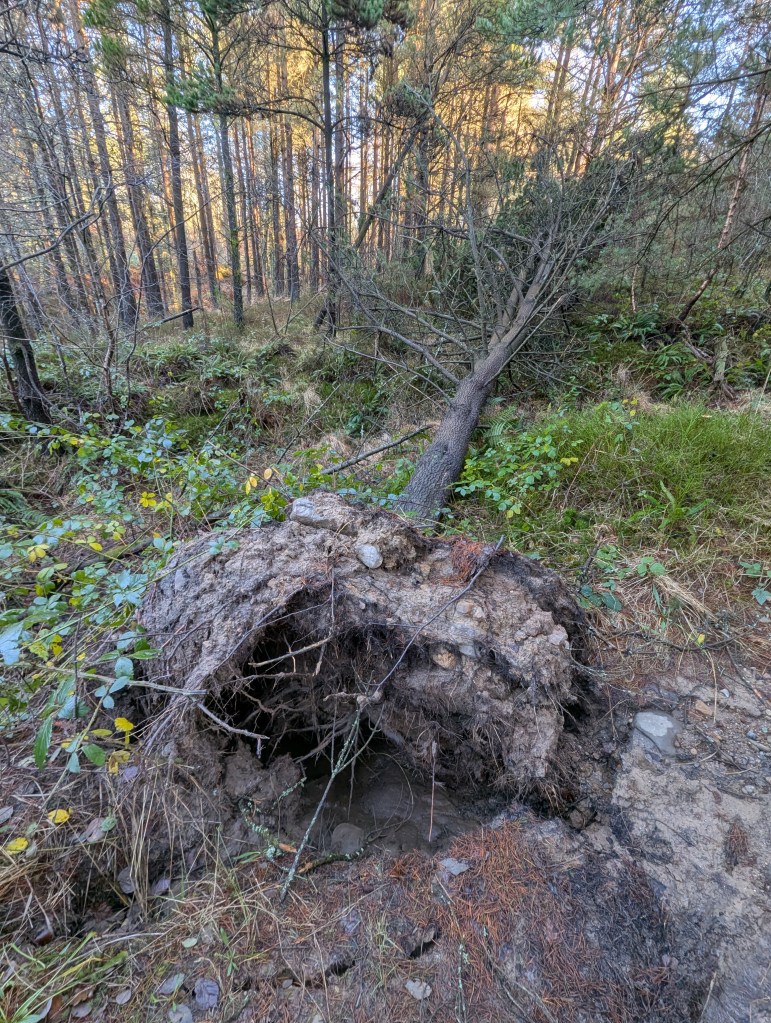
The presence of the TV and phone masts on the hill means that we know a lot about the wind speeds and weather on the hill. However, getting hold of the data is sometimes hard as it can be regarded as a ‘secret’. Anybody who walks the hill will know the signs of wind damage and constant high winds, which are now increasingly common around the year, no longer just the winter months.

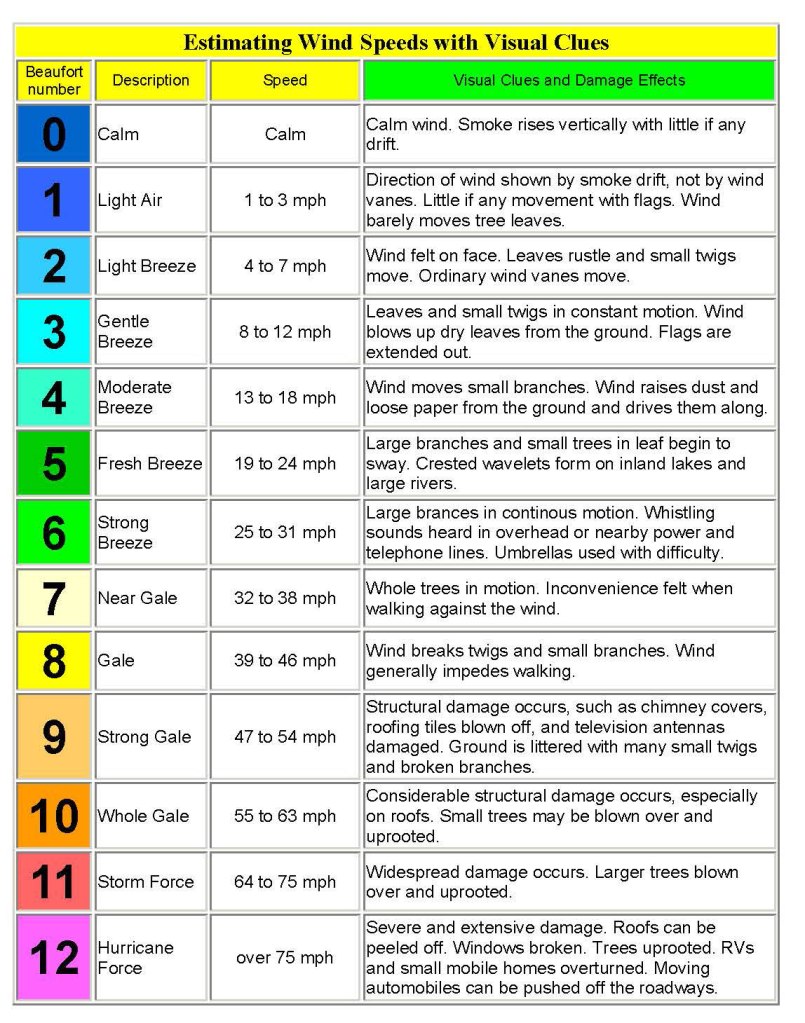
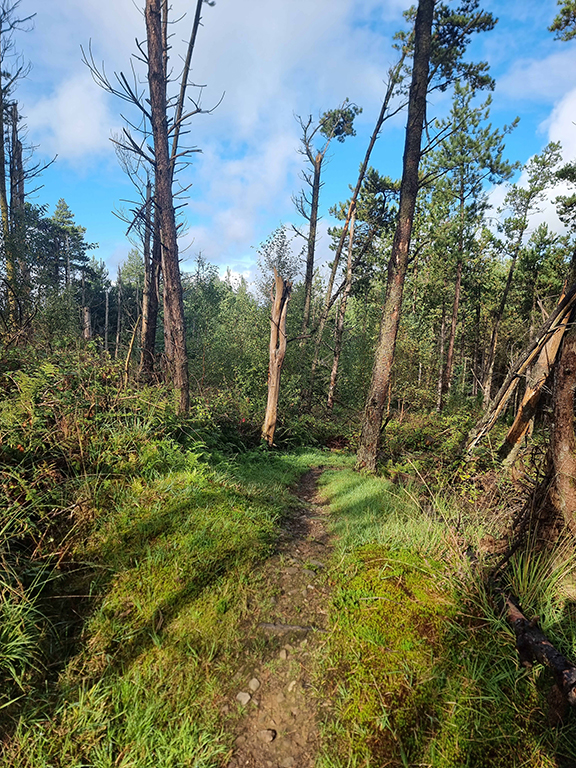
We can use the table below to assess wind speeds and damage based on the evidence we see after the storm is over. This table is based on expert fieldwork from the US Forest Service and is used all over the world. Look at the damage in the photos here and see where it is on this list…
It doesn’t matter what your viewpoints are on who or what causes climate change. The evidence is out there, and the question is how to interpret it and design for the future. It might, for instance, be an incredibly risky act for Swansea Council to risk millions of pounds (of money they apparently don’t have) on supporting a risky tourism venture on a Welsh coastal hill that is increasingly exposed to dangerous windspeeds and disruptive weather.

Those who walk the hill regularly know of the health and safety responsibility of taking walkers out on Kilvey in deteriorating or unsettled weather. We never take the risk. Would a profit-centred tourist firm be equally responsible? Would you get in cable cars and zip wires in the bad weather? Equally, how many days a year is Kilvey safe for adventure tourism? I’m not sure, but I can be confident that climate change means that the number of days of safe weather is declining as the climate changes.
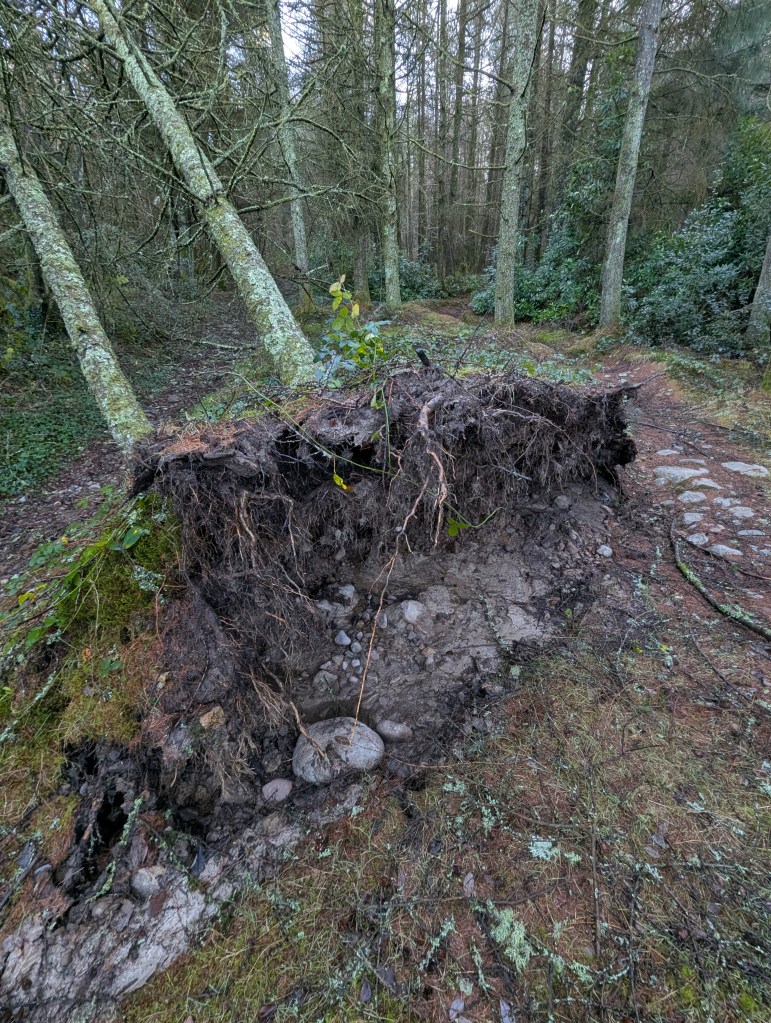
Storm damage above White Rock works in January 2025.
Above wind and wildfire damage in the ‘Skyline Zone’ 2023.

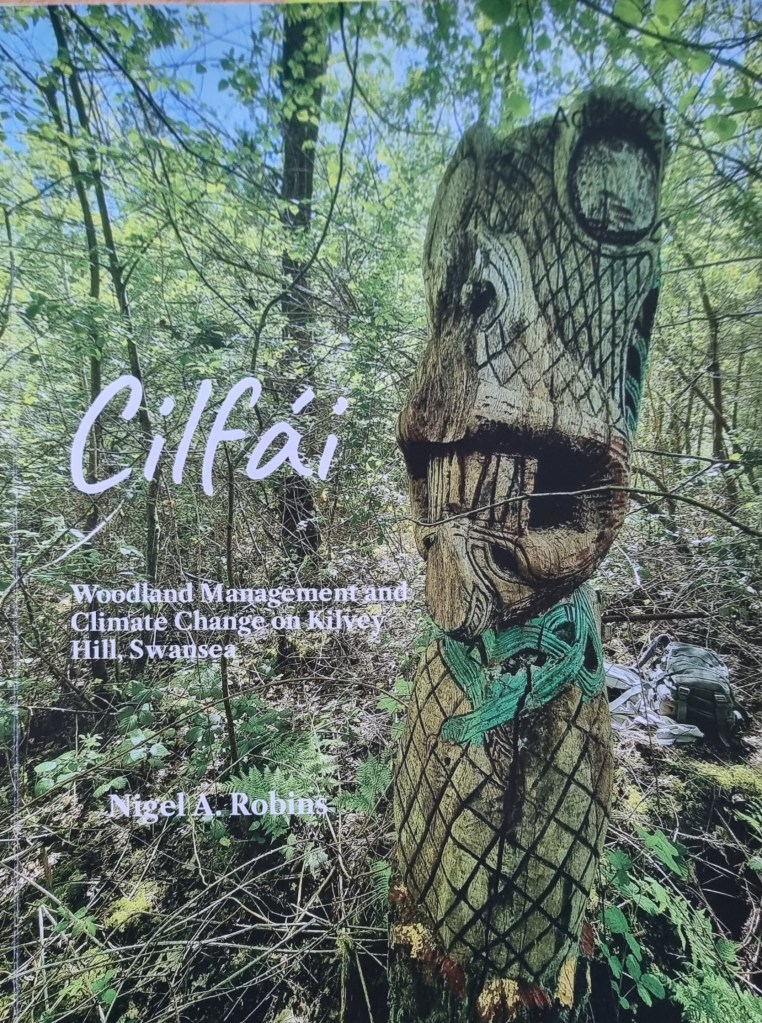
Cilfái: Woodland Management and Climate Change on Kilvey Hill, Swansea ISBN 978-1-7393533-1-5

This has now been reprinted as a 2025 Second Edition with some updates I’ve also updated the copyright for AI constraints, and EU product compliance details.

This book started out as a collection of notes made over more than a decade of surveys in Welsh woodlands. What started out as a historical investigation into industrial archaeology in woodlands transformed into a catalogue of what climate change, government policy and local politics is doing to our landscape. As I write this Cilfái is threatened once more with proposed transformation that increasingly looks like destruction.


This is a companion volume to Cilfái: Historical Geography on Kilvey Hill, Swansea. But this one is more about the environment of the woods and the climate change that is already changing the nature of the land. Climate change is now part of life and the next generation will be challenged with adaptation to what is happening. This book is my chronicle of what some of that means for Cilfái (Kilvey), this most special part of Swansea’s character that has been abused, ignored and loved…depending on where you live and what your politics are. Some of this work is based on my government experience as a programme reviewer of many environmental and cultural projects across the UK where I experienced the good, the bad, and the ugly of politicians, the Civil Service and successive government policies or the lack of them.


Authors always have inspiration from somewhere and I am no different. My inspiration has been in the conversations and actions of many colleagues in my time working in UK Government in Defra, MOD, Cabinet Office, and Parliament. They all contributed, sometimes unwittingly. You can often learn a lot about a topic by listening to people who know very little about it but who never feel restricted in holding an opinion. Climate change is one of those topics.
I have been privileged to have had the company of experts in many conversations about the topics covered here. But notably, the Forestry Commission was laid bare to me by veteran forestry man David Connick. Equally, the passion of my friend Keith Clement in worrying about where we are going has constantly coloured my sense of urgency.
The commitment and enduring engagement of the Kilvey Woodland Volunteers never ceases to amaze and inspire, and I regularly see incredible generous acts of sharing and care for the Hill that should be an example to all volunteer groups.

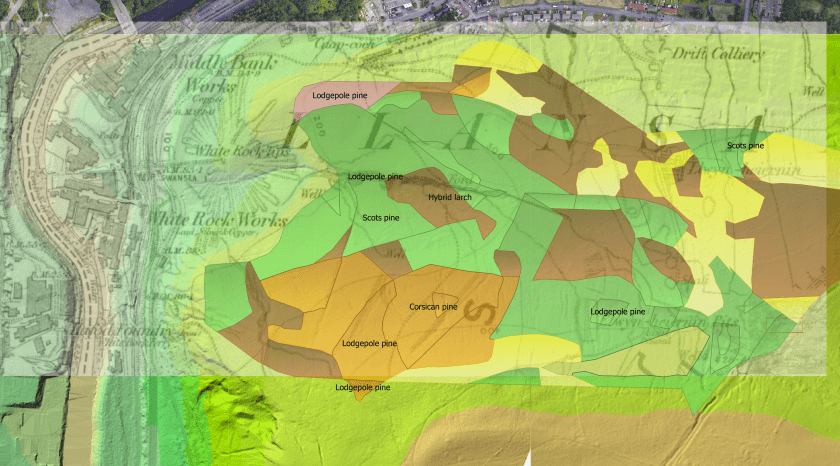
I produced or maspped a lot of data (both historical and current) using QGIS. Here you can see the 1980s woodland compartments and their relationship with the original industrial waste tips.

Cilfái: The Principles of Diversity and Resilience

Cilfái’s connectivity to other wildlife and natural habitats is not just a concern, it’s a massive issue. The dangerous main roads dominate the wider extent, west towards the river and north towards what was the Enterprise Zone. Within the woodlands, further development for bike paths, walking trails and cable car routes are all immediate risks for ruinous fragmentation. The width of paths and firebreaks and cableways and how we manage the woodland edge habitats are crucial. Cilfái’s wider nature network must be urgently mapped and managed using the ten well-known best practice principles (Crick and others 2020a: 91–101).

1. Understand the Place. Understanding the community and the natural networks that are in place.

2. Create a Vision. Create a future that is understandable and engages the biggest stakeholders, usually the local communities, animals and plants, and those responsible for caring for and maintaining the land.

 3. Involve People. Communication, engagement and consultation are tremendously important. Do we see that commitment from local politicians?

4. Create Core Sites. The central Cilfái woodland is our core site.

5. Build Resilience. This is protection against climate change-related events such as drought, torrential rain, wildfires, and temperature extremes. I describe some of these in the book.

6. Embrace Dynamism. Nature changes constantly. Change can happen in a matter of minutes: a tree blows down, a stream bursts its banks, or a rockfall changes the shape of the land. We can’t keep spending money on keeping things ‘as they are’. Is expensively recreating a nineteenth-century landscape that relies on money, gardening, water and stable weather and climate  (as they do at Penllergare Country Park) even possible in the modern world? We must accept and adapt to our situation, not the situation we would like to be in.

7. Encourage Diversity. There is genetic variabilityspecies diversityecosystem diversity and phylogenetic diversity. Diversity is not distributed evenly on Cilfái. The ecosystem we see building on the hill results from 50 years of growth and change.It should be allowed to develop naturally. The notion that a local Council or a private tourism company can care for the land is an outrageous conceit.

8. Think ‘Networks!’ Plants, animals, and people move and live in connected networks.

9. Start Now, but Plan Long-term. Short-term is about 3 years, long-term is about 50 or more. Nobody knows what the world will be like in 50 years.

10. Monitor Progress. We can’t understand change if we don’t observe it constantly. A 3-day ecological survey by a non-local contract ecology firm on behalf of a foreign tourist company doesn’t cut it.

However, there will always be uncertainty about what Cilfái can contain because it is always prone to extreme disturbance.

Crick, H.Q.P., I.E. Crosher, C.P. Mainstone, S.D. Taylor, A Wharton, and others. 2020. Nature Networks: A Summary for Practitioners (York: Natural England)

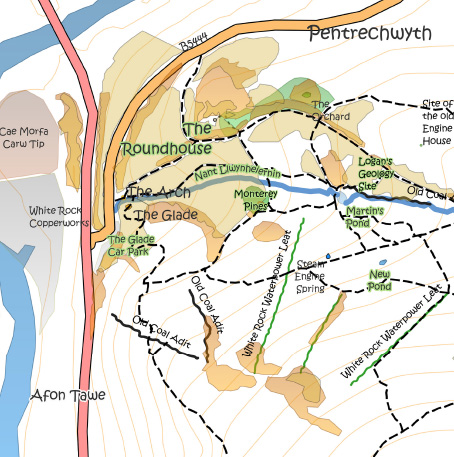
Above: The western part of the woodland with areas of particular attraction to birds and wildlife highlighted in shades of Brown. These areas are open or semi open and also show strong characteristics of ‘woodland edge’ or ‘Stand A’ structures (see Annex 7). These areas have their origin in polluted soils from slag tips or fire damage from wildfire attacks. The old coal adits and leats provide damper cover than the surrounding woodland and frequently act as biodiversity hotspots because they retain moisture in drought conditions. These Brown areas are the current centres of natural regeneration. The woodland cover in these areas will not be necessarily native species, it is far more likely to be the ‘Cilfái mix’ of coniferous, native and invasive non-native. These areas are rapidly becoming reptile hotspots and also very strong presences of foraging bats.
 

Woodland Resilience

I talk about ‘Resilience’ in Chapter Three of the second Cilfái volume.

The term ‘resilience’has become a key concept in our landscape management. Resilience in woodland is becoming a broader and more important topic as climate change starts to bite.

In its current form, Cilfái is resilient. Yes, people burn it every year, but that results in more biodiversity hotspots as the burnt patches grow back with local species of trees and vegetation that are much more resilient to fire and drought.

Anything done to the woodland should be to enhance resilience…not knock it back with imported plants, plastic tree tubes and high maintenance planting schemes.

Diversity in the Cilfái woodlands can range froim genes and species to habitats and landscapes. The complexity of the Cilfái woodlands ecosystem will always be limited compared to a woodland that is older or has not been polluted. Still, the pollution history of the hill makes the ecosystem special and probably even unique.

Above: The seaward slopes of Cilfái are increasingly susceptible to windstorms which easily topple the trees that often have poor anchorage because of the soil conditions. The resulting deadwood (both prone and standing) provides useful food and shelter for many animals and insects. The natural regeneration quickly takes over a windblown space and colonises fast with the ‘Cilfái mix’ of local species. Incredibly, this site on the proposed tourism development is a bat hotspot. (Author’s collection).

The ‘lumpy veins’ of Cilfái

Although there is a publicity fanfare about Copper in Swansea, it is coal that is in the heart of Swansea’s history. There may be two thousand years of coal workings around the city and west to Crofty. Beyond that, the rocks of Gower change so there is no coal mining.

The mining of coal was a part of every farm and farmworker’s life before the Industrial Revolution in the 1750s. Coal often outcropped on the surface and small scrapes or pits still survive all across Swansea. The country park of Penllergare is an invention of the mid 1800s, before that the Llan valley was devastated by coal workings. The valley is still full of pits and collapsed tunnels. Cilfái’s coal was mined from medieval times, and Swansea’s earliest coal mining records are actually Cilfái coal mining above Foxhole. I discuss the early history of coal in Cilfái: Historical Geography.

Cilfái had three good coal seams running west-east across the hill. These were the Hughes Vein, Captains Vein, and the Foxhole Vein. The Hughes and Captains yielded a good-quality bituminous coal which was used in the copper smelters of White Rock and Middle Bank. The Foxhole Vein was more of a problem, it tended to vary in thickness and quality so mining it was often frustrating as it would disappear and then reappear further up the hill. The top of Cilfái is marked with excavations from the 1700s where men had dug to try and get a better access to good coal from the Foxhole. They never found it, so the Foxhole Vein was called ‘lumpy’…unreliable.

Local colliers on Cilfái knew all about the problems of mining on the hill and the knowledge was passed down the generations. It wasn’t until 1837 when William Logan started talking to the colliers and mapping their knowledge, that we begin to have detailed knowledge of the coalfield under Swansea and Morriston

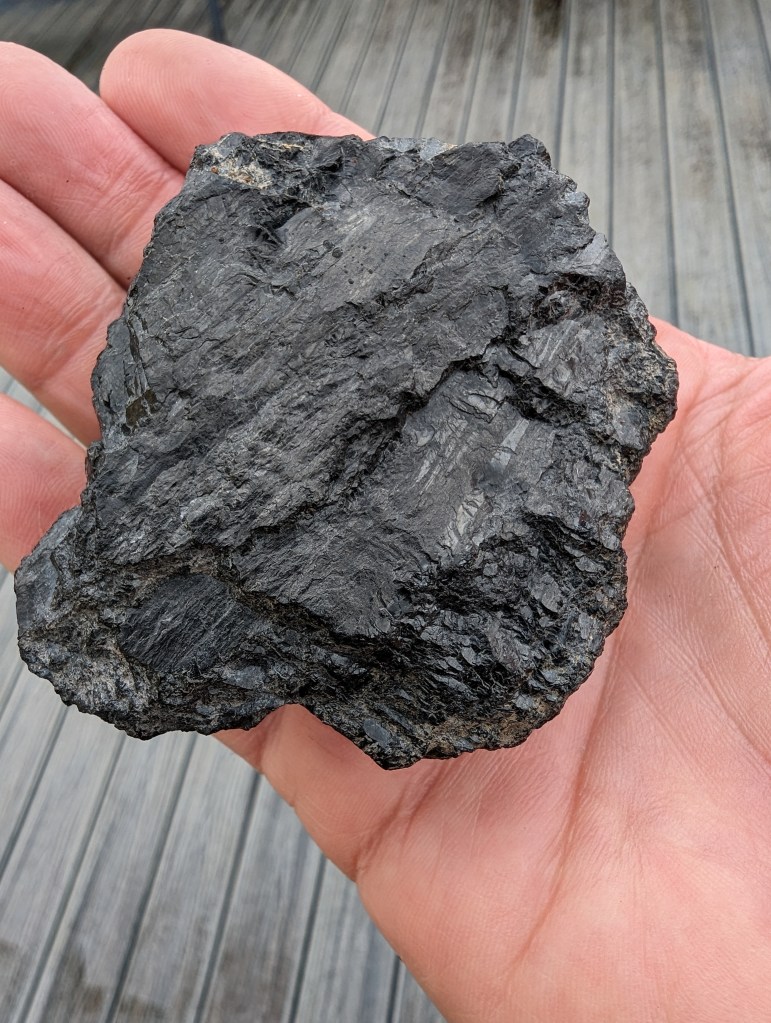
Below: Coal from the Hughes Vein above White Rock. A lustrous black coal that shines like a jewel. You can see the layers of harder vitreous coal that were often the source of better quality fires. The nature of layers in the coal was only finally understood in the early 1900s by Dr Marie Stopes, Britain’s pioneering palaeobotanist.

Saving the Environment: The importance of Information

When I worked for the Government, I did some tours of duty in environmental activities. Over the years, I monitored programmes on the health of Honeybees, parks protection in Greenwich’s ancient woodlands, Restoration of the environment in the Olympic site in East London, and several small conservation programmes on security sites for the MOD, where fencing things off from the general public did wonders for the local biodiversity. In all of that, I learned that data and information are vital. Far too often I heard the comment ‘there’s nothing there!’, often from gentlemen in their fifties whose only interest in nature was how to kill it or cut it down. When I got to a position of some influence, I could slow down or even reverse developments by insisting on a good quality ecological survey before any construction work. Sometimes, this was deeply unpopular as the construction industry usually has little interest in conservation or environmental care…what we see of due diligence by building firms is there because the Law forces them. This will definitely be an issue in Cilfái with the Skyline development. That tourist firm will promise anything in the planning permission stage but quietly ignore it in the building phase, knowing very well that Swansea Council does not have the resources to monitor and enforce anything. We as volunteers will need to monitor the destruction to try and ensure it is kept to the promised minimum. In December 2022, I prepared the first of a series of ecological protection documents based on my time in Whitehall. The key one is called an Ecological Constraints and Opportunities Plan (ECOP for short). I did one for Cilfái based on what we knew at the time. It proved quite popular and still is, judging from the large number of downloads it still gets from all over the country. Eventually, the ECOP evolved into the second book Cilfái: Woodland Management and Climate Change on Kilvey Hill, Swansea. I published all my survey notes and plans going back over about ten years of tree and animal survey, including all my work on the Hill. So, the book has an explanation of the data covering the Hill and lists of bats, birds, plants and animals I found or saw presence of. I also included the wonderful observations made by Carl Squires over many years of walking the Hill. I also added some of my Climate Change risk analysis from my time working for UK Parliament. Below: A mash-up of some of the Cilfái data from my surveys and explorations.  It is complex because ecology always is. The red dots are dead or dying trees, the dotted lines and light green stripes are areas for better bird habitat, Yellows and oranges are different types of open land, and darker greens are the Forestry Commission plantation trees. The red lines show the ghost of the coming area of Skyline destruction.