Castle Gardens: The site of Ben Evans

Although we now know Castle Gardens as an ugly concrete space in the centre of town, that area of land has been central to Swansea’s history for centuries.

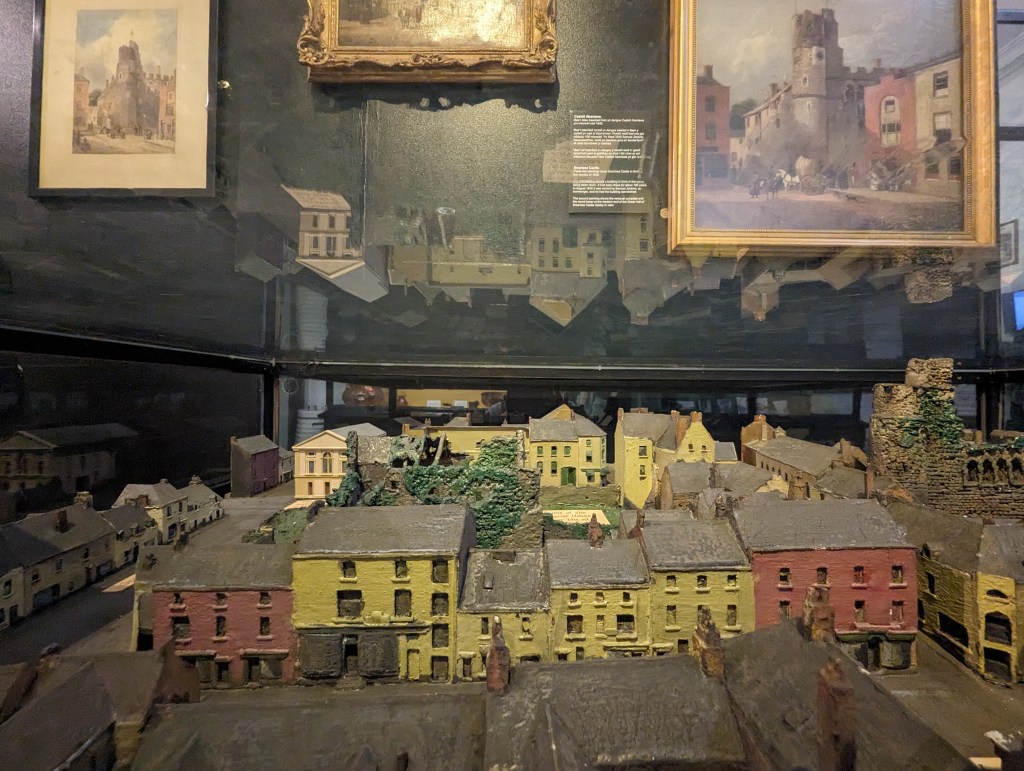
Originally part of the inner ward of Swansea Castle, the space has over the years held many buildings starting with the Plas House built in the 1300s. You can see a fantastic model of the area in Swansea Museum which was made in the 1820s. The streets that defined the Plas House block are part of Swansea’s long history. Temple Street to the north which once held the Three Lamps Inn, Goat Street to the west which held the original police station, and Caer Street to the south, which is (sort of) still there.

Pride of place has to go to Castle Bailey Street to the east which originally was a big space in front of the castle. By the 1890s, the site was the home of the various properties that made up the Ben Evans department store. Understanding the layout and contsruction of the store is an important part of understanding how it caught fire and burned so easily in February 1941.

For the book I reconstructed the various eras of building on the block to understand more about how the space was used. I used methods from the 1940s when architects and fire engineers were reviewing the incendiary attacks on Britain and looking to learn lessons to destroy German towns and rebuild Swansea after the war. Understanding Castle Gardens is a chapter in my book.

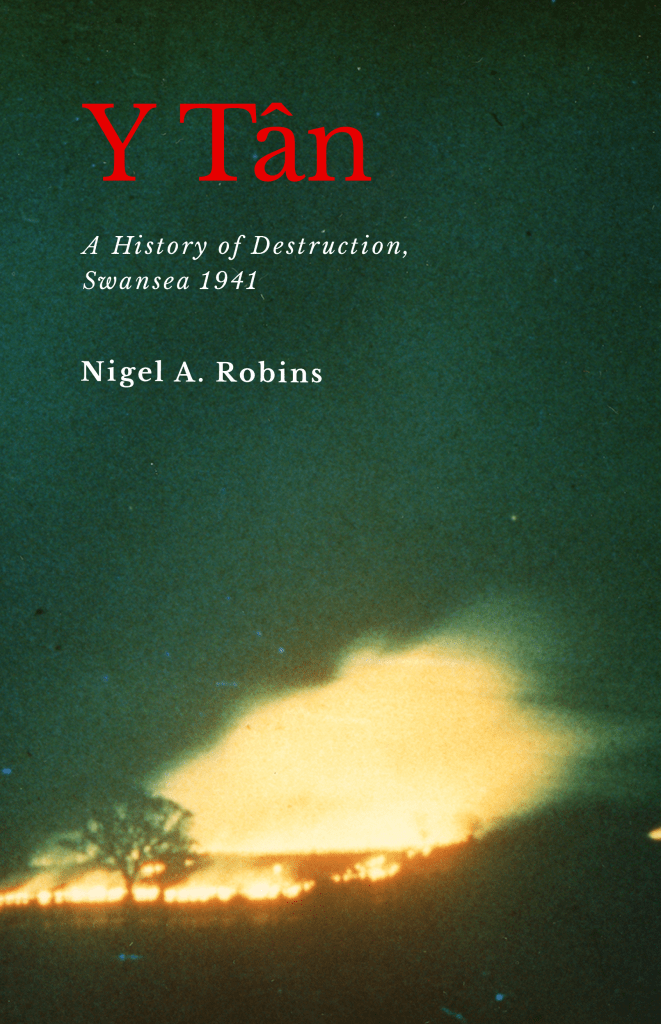
You can buy online here: Y Tân (lulu.com)
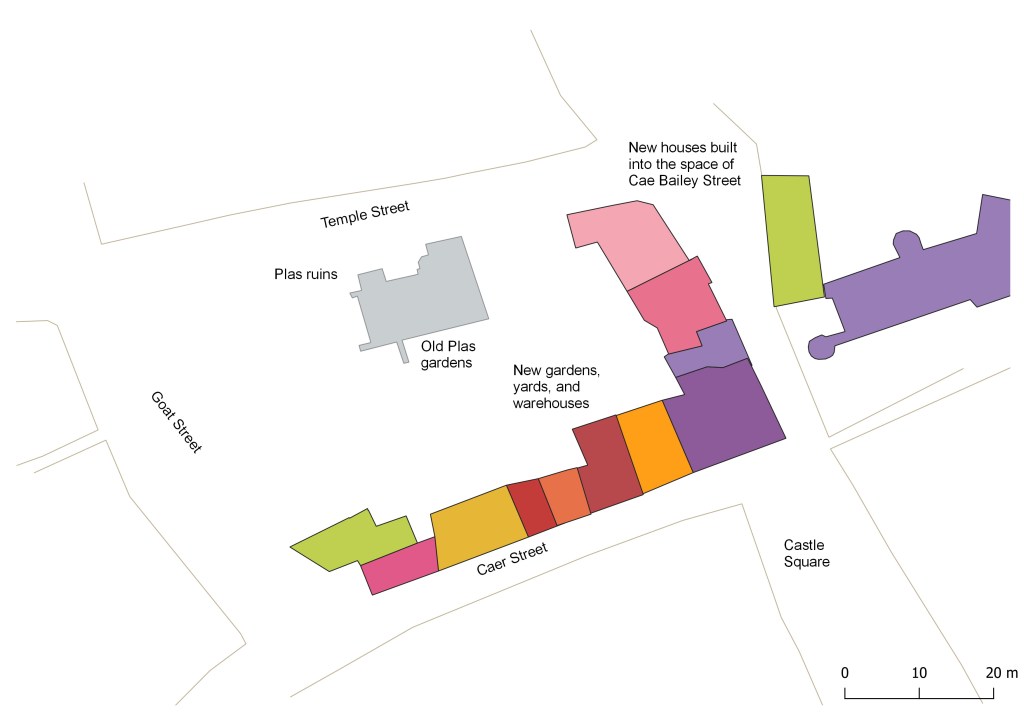
Above: Part of my reconstruction of the Castle Gardens block in central Swansea. By the 1840s, houses and shops were built on Castle Bailey Street and Caer Street. They built around the remains of the house and garden of the Plas House. Eventually, commercial pressures led to the destruction of the Plas and the construction of more houses and shops on Temple Street.
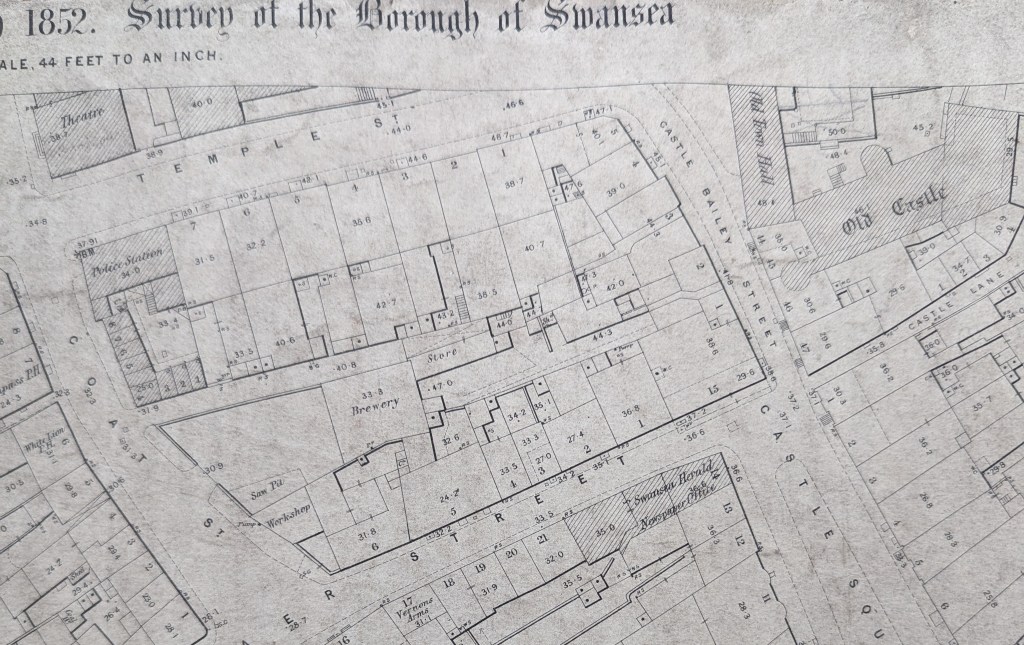
Above: A rare map of the Castle Gardens block in the 1850s.

Swansea: Looking at Castle Gardens, Ben Evans and the Blitz fires

Castle Gardens appears to be unlovely and unloved. I know it is the target of a proposed refurbishment ‘after consultation’. The plan I saw promises small (cheap) changes.

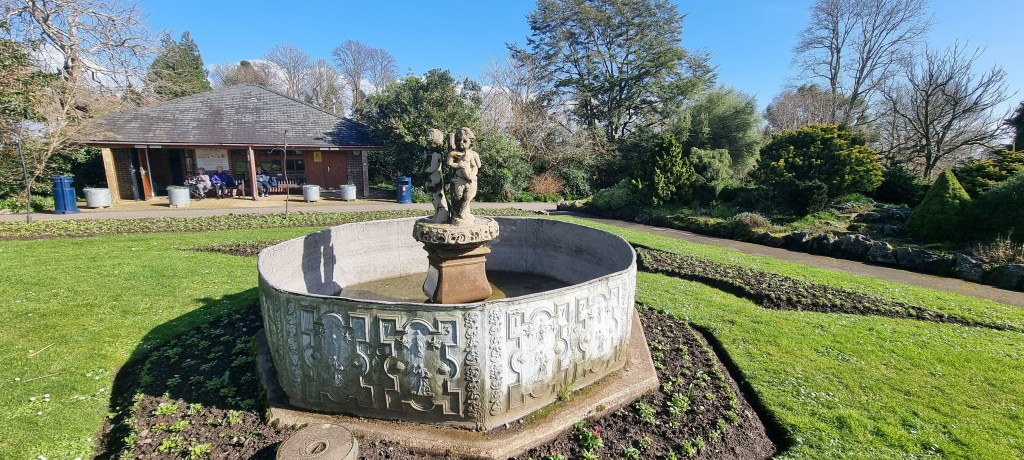
I grew up wandering around the original Castle Gardens in the 1960s. Chasing the army of pigeons that lived on the roofs of the Sidney Heath’s buildings. It was full of green spaces and the Sidney Heath fountain, and the covered area was always full of (to me) old men sitting and drinking. The fountain seems to now be in the gardens in Singleton.

I think this is the remains of the Castle Gardens Fountain ?

The open space originated as a ‘Garden of Rest’ site after the Blitz. (Evans 2019). It eventually (after the inevitable Swansea Council arguments!) became the open space of some grass, some paths and the fountain, which stayed until 1990 when it was obliterated for the ghastly makeover we see today.

The plot of land is fascinating. It was the site of the famous Ben Evans store and, before that, the Plas manor house. As one of the most significant urban areas of the medieval town, it may be that significant archaeology lies underneath the northern side close to where the Plas and Temple Street were.

In my latest research on the Blitz, the plot is helpful to study the impact of incendiaries on the wider town and it’s become a case study in my next book.

Understanding the site that once held Ben Evans entails delving back into the past to look for the Plas manor house and the rebuilding of Cae Bailey Street between 1840 and 1850. The maps are poor, but we do have a fantastic model of the area made in the 1840s, which is now in Swansea Museum, and Gerald Gabb has examined all the paintings and prints in his books (Gabb 2019: 199–207).

The model of the centre of Swansea made in the 1840s. Damaged in the Blitz and repaired by Bernard Morris. Now in Swansea Museum.

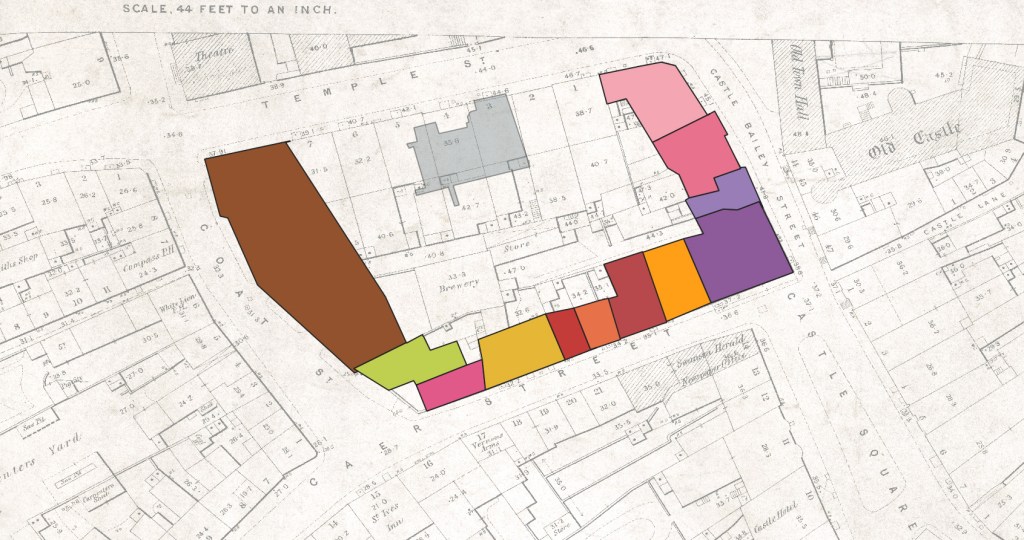
I’m digitising the various stages of buildings in the Castle Gardens site as part of the background for understanding the Swansea fire catastrophe of February 1941 (Alban 1994). I’m lucky in that there is a detailed survey of the area from 1852, which is the basis for establishing the area that eventually became Ben Evans in the 1890s.

Alban, J.R. 1994. The Three Nights’ Blitz: Select Contemporary Reports Relating to Swansea’s Air Raids of February 1941, Studies in Swansea’s History, 3 (Swansea: City of Swansea)

Evans, Dinah. 2019. A New, Even Better, Abertawe: Rebuilding Swansea 1941-1961 (Swansea: West Glamorgan Archive Service)

Gabb, Gerald. 2019. Swansea and Its History Volume II: The Riverside Town (Swansea: Privately published)

Above: My digitising of 1840 to 1852 properties that were Castle Gardens. The grey block at the top of the image is the location of the Plas manor house. The area was heavily resculpted after 1945 to create Princess Way and the David Evans shops.