Swansea Blitz, 1941: Fighting the incendiary bombs

Incendiary bombs were heavily used by all World War Two air forces to attack civilians. Swansea was attacked on several occasions with large numbers of incendiary bombs, which eventually caused complete destruction of most of the town centre.

Incendiary bombs to specifically attack houses were a German invention from World War One. Still, it was in the middle years of the Second World War that they really became a favourite weapon of air forces.

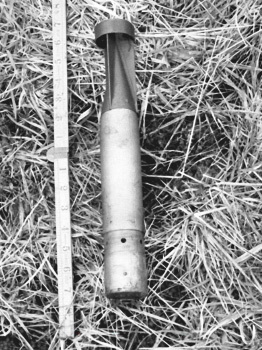
The incendiary bomb used to attack Swansea was known as the ‘Elektron‘. a slim tube of aluminium and magnesium with an incendiary filling. The little bomb had a hard nose designed to penetrate a slate roof and settle in the attic, where it would gradually start a fire. The Swansea Civil Defences and auxiliary firemen learned various ways to deal with the bomb, but it was civilians, including women and children, who tackled most of the burning bombs.
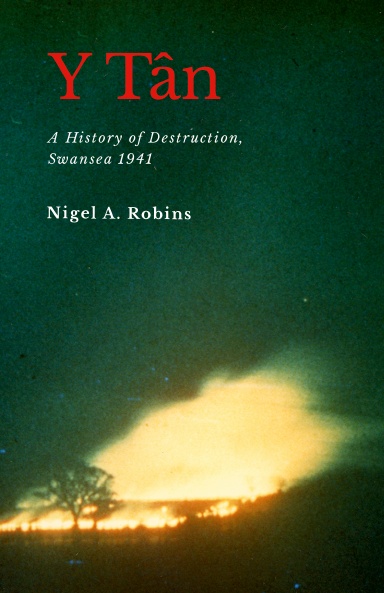
Below is a page from Y Tân: A History of Destruction, Swansea 1941, with pictures from a civil defence manual showing how to tackle a burning Elektron bomb. It was important for morale to show a woman dealing with the bomb and hundreds of bombs in Swansea were extinguished by women with sandbags and stirrup pumps.

The full story of Swansea dealing with incendiary bombs during the Three Nights’ Blitz is told in the book.
Cilfái and unexploded bombs

Swansea was bombed about forty times during World War Two. Many of the bombs dropped didn’t explode and many are still out there under the ground on Cilfái.

The most imfamous bombing event was Swansea’s Three Nights’ Blitz of 19-21 February 1941. People assume that Cilfái’s bombs came from that event, but the main damage to the Hill was caused by the heavy bombing raid of 17 January 1941. On this night the Luftwaffe dropped a lot of heavy bombs. Many of which missed the Docks and ended up on the hill.

Bombs that landed on the marshy ground on the town side of the hill sank into the ground and never exploded. They are still there, but a long way underground (maybe five metres or more). Others did explode when they hit the hill leaving large craters, some of which have filled with water and are now biodiversity hotspots.

The Skyline development raises the risk that some of the unexploded bombs will be disturbed by excavators and diggers. This is a common ocurrence in areas that were heavily bombed. When I worked in construction in London, we all had to be trained in recognition and procedures if one of the diggers brought a bomb up in a bucket. The risk on the hill is real and has already been recognised in planning documents, and precautions will be essential.

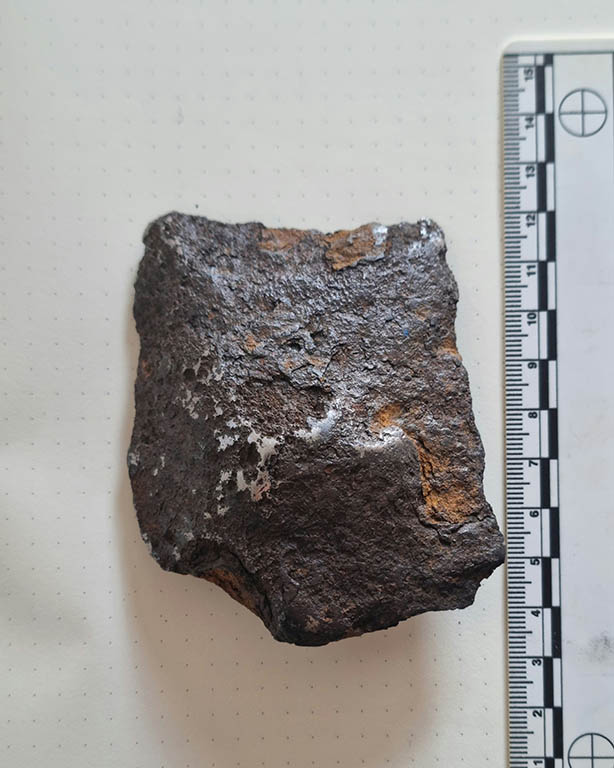
The bombs that did explode produced a lot of metal fragments of all sizes. In some places bomb fragments have become part of Cilfái’s archaeology. Fragments were incredibly dangerous. A piece of a bomb weighing about half a gramme (a fiftieth of an ounce) would be enough to smash through an arm or leg destroying the bones. The bigger fragments could kill instantly or easily destroy a vehicle.

Some parts of the hill were peppered with this kind of shrapnel. The photo below is of a big piece (aqbout 9 cm) I found. The sides of this fragment are still as sharp as a Stanley knife.

The World War Two remains are part of the wider collectiion of heritage and archaeology remains listed in the third Cilfái book Cilfái: History and Heritage Features on Kilvey Hill Swansea.

No matter how old they are or how rusty they look, bombs will still explode and kill.

Above: Bomb shrapnel from bombs dropped on Swansea in 1940.