Highlight Reports
I’ll put my version of the highlights of the development here.
This page begins with the day that irreparable changes began, and I’ll post the events associated with the building development. I won’t have many answers because the poor relationships between Swansea Council, the tourism firm and the local residents are, at the time of writing, extremely poor. Relationships have not been improved by the stealthy acquisition of land title in an area preserved initially as open green space and a particularly mendacious adverse possession claim from the Swansea Council legal department.
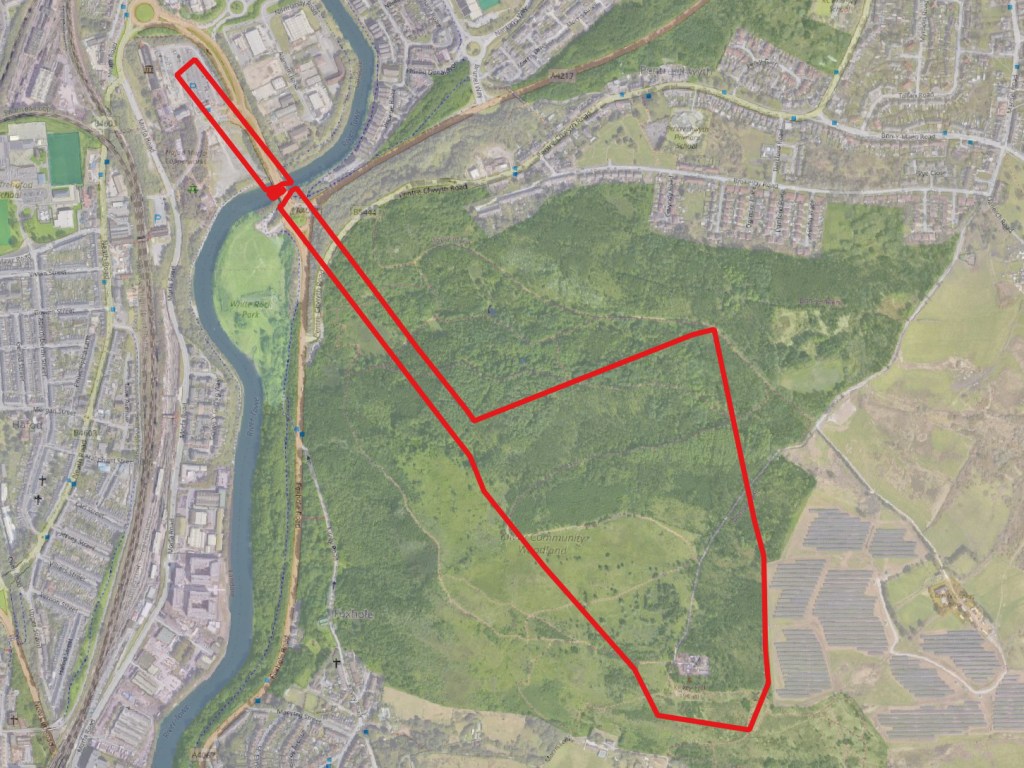
One of the key assumptions people have made is that the scheme has been severely delayed by informed and effective opposition for at least two years. When I last talked to Skyline staff at a meeting on the top of the hill in 2023, the firm was desperate to make a start on the building activities. At that time, Skyline were unaware that Swansea Council did not even own all the land promised to Skyline, and a protracted adverse possession exercise had to be conducted by the Council in the face of significant opposition from a rainbow coalition of opposing groups and open spaces campaigners.
As a historical geographer, the significant issue for me is the irreversible loss of a significant inner-city woodland heavily used as an informal recreation space and for woodland pursuits and wellbeing activities. The land of Kilvey was entirely destroyed by industrial pollution in the eighteenth and nineteenth centuries, and its miraculous recovery over the past four decades is now going to be destroyed or at least heavily modified by the development. A lot of the background to the history, environment and nature of the hill is covered in my three Cilfái books published over the past few years.
The Skyline Swansea planning application was eventually passed in March 2025. The strength and quality of the opposition to the scheme resulted in considerable work by Council officers to address the large number of objections and at least two bouts of legal action brought by opponents of the scheme. Consequently, the duties of care for the application scrutiny were somewhat higher than what would typically be expected for a private firm in close partnership with a local authority.
In over three hundred documents and plans accompanying the planning application, it is now clear that the tourism company intend to dramatically change the nature of the hill with considerable earth movement, massive deposition of concrete runways and other infrastructure and disruption of the existing transport network by detstroying a costly park and ride installation and disrupting significant archaeology in the Hafod/Morfa area. The impact of the noise, access and disruption in both building and operational phases for residents of the east side communities has been discounted by Swansea Council as ‘insignificant’ or the cost of doing business.
Swansea has a long history of poor or unwise planning decisions, although this is not necessarily out of kilter with other Labour-controlled councils in South Wales.
The environmental changes will be considerable, and some are irreversible. The changes to the local communities remain unmeasured.
 Nigel Robins