My next illustrated talk

This will be at the Local Studies Room at Swansea Central Library on Saturday, 22 February 2025 at 2.00 pm. This will be one of Gwilym’s local studies talks in the afternoons. (https://www.swansea.gov.uk/centrallibraryevents).

Above: The Lower Swansea Valley as seen by German bomber cre3ws in February 1941

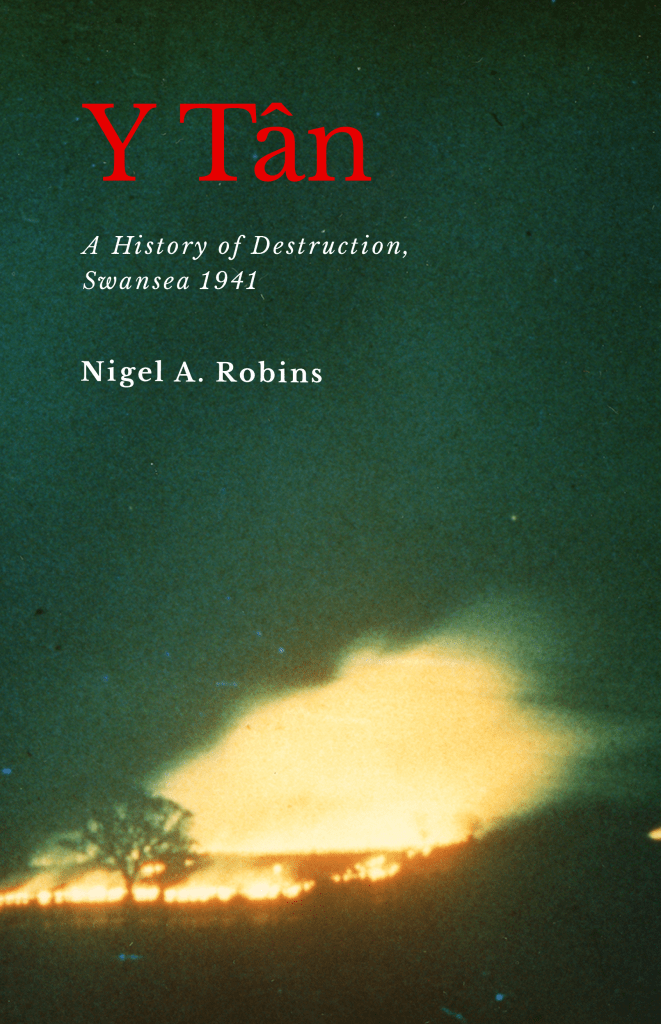
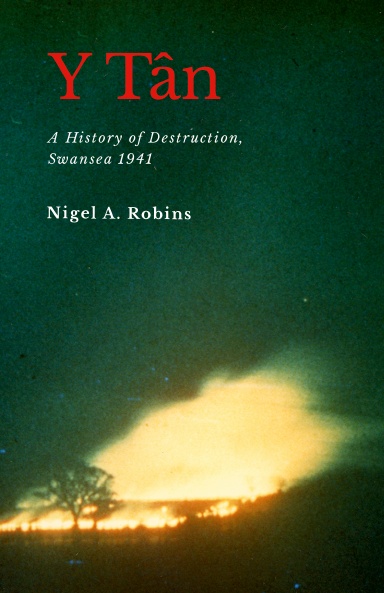
I’ll talk about the three nights of air attack that transformed the town centre. Based on my research for my Y Tân: A History of Destruction, Swansea 1941.

In World War Two, Swansea was regularly attacked by the German Air Force. The worst attacks were over three nights in February 1941. The bombs and fires transformed the centre of the town, and the author’s grandfather was killed as a volunteer firefighter. This book explores the events of the three nights, the loss of the author’s grandfather, how the fire was used to destroy the town and the consequences of the raids for the future of Swansea. Swansea Blitz was an early example of a firestorm and became a template for attacks on many European towns and cities in 1942 and 1943. The author reconstructs the events of the three nights and includes eyewitness descriptions from some of the people who worked to save lives and property. The book also includes an analysis of the loss of the Ben Evans department store and the detailed history of the land we call Castle Gardens. With technical details of the bombs and explosives that were used to attack the town and the history of the bomb disposal teams that worked to save Swansea. Based on meticulous research this fully referenced book examines the vulnerability of the town to air attacks, the technical background of the incendiary bombs, the events of the three nights of terror, the ecology of the devastated town centre and the aftermath of rebuilding.

I’ll have both Y Tân and Eye of the Eagle books for sale at a discount price of £10.00 each. The new editions won’t be available on Amazon or local bookshops.
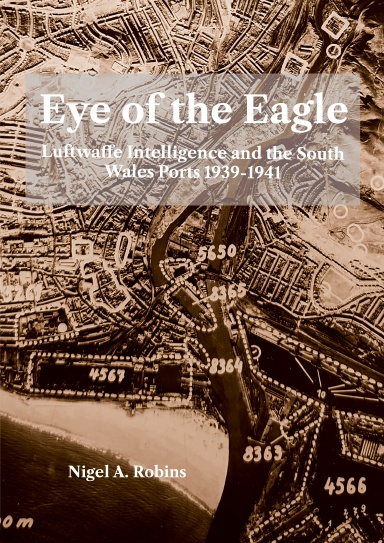
History of the Luftwaffe Reconnaissance and Intelligence during the air war over South-Wales 1939-1941. Over 130 maps, illustrations, and images, many in colour. Individual biographies of the Luftwaffe intelligence of Newport, Cardiff, Penarth, Barry, Port Talbot, Llandarcy Oil Refinery, Briton Ferry, and Swansea. Explanatory text and translation of original Luftwaffe intelligence records. Annex describing intelligence records, U-boat operations off Swansea and Magnetic Mines. Explanatory text covering the role of intelligence and reconnaissance and explanations of why the Welsh ports were bombed in the Blitz attacks of 1941. Illustrated with Luftwaffe intelligence maps and documents gathered from over 10 years of research. Fully academically referenced.
Swansea Blitz, 1941: Fighting the incendiary bombs

Incendiary bombs were heavily used by all World War Two air forces to attack civilians. Swansea was attacked on several occasions with large numbers of incendiary bombs, which eventually caused complete destruction of most of the town centre.

Incendiary bombs to specifically attack houses were a German invention from World War One. Still, it was in the middle years of the Second World War that they really became a favourite weapon of air forces.

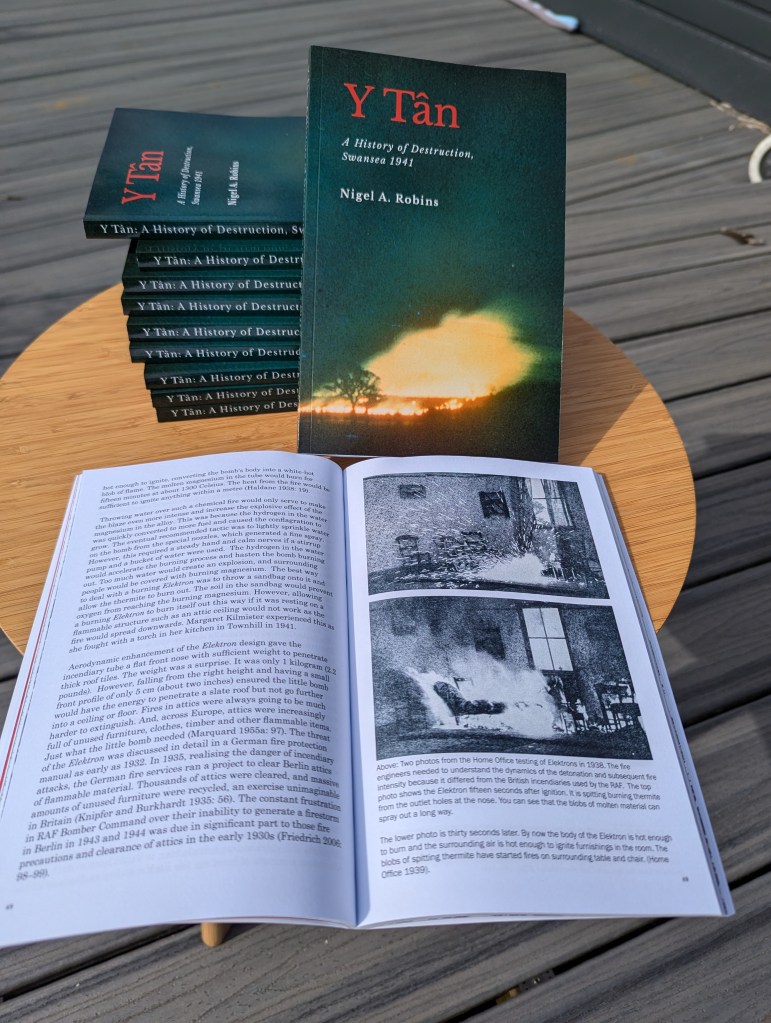
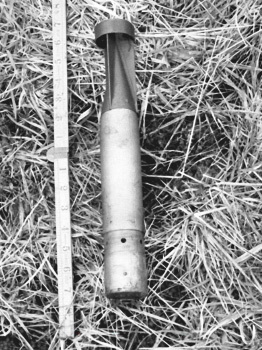
The incendiary bomb used to attack Swansea was known as the ‘Elektron‘. a slim tube of aluminium and magnesium with an incendiary filling. The little bomb had a hard nose designed to penetrate a slate roof and settle in the attic, where it would gradually start a fire. The Swansea Civil Defences and auxiliary firemen learned various ways to deal with the bomb, but it was civilians, including women and children, who tackled most of the burning bombs.

Below is a page from Y Tân: A History of Destruction, Swansea 1941, with pictures from a civil defence manual showing how to tackle a burning Elektron bomb. It was important for morale to show a woman dealing with the bomb and hundreds of bombs in Swansea were extinguished by women with sandbags and stirrup pumps.

The full story of Swansea dealing with incendiary bombs during the Three Nights’ Blitz is told in the book.

Y Tân: A History of Destruction, Swansea, 1941 ISBN 978-7393533-4-6

This has now been reprinted as a 2025 Second Edition with some updates. I’ve also updated the copyright for AI constraints and EU product compliance details.

The first edition was an incredible success and I’d like to thank everyone who attended the illustrated talks and came on the blitz tours in 2024. I’ll be doing more walks and talks in 2025.

This book started with me trying to make sense of a part of my family’s history, so in many ways it is a work of years. I grew up as a child of the inner city of Swansea, a point that came home to me when I eventually realised that both my mother’s and father’s families lost relatives in the bombing.

The story of the loss of Jack Bowers was something I grew up with but the true significance didn’t really hit me until I became a parent myself and I lost the older members of the family. I heard stories of the war from Florence and Ethel (my grandmothers), but they were never overly keen to talk about those years. I’m grateful for the things they shared with me.

The history of the town centre, later known as Castle Gardens, is central to understanding how Swansea was destroyed.

I am so grateful to my friend Dr John Alban for his expert knowledge of the period and the many discussions we have had over the years. John’s generosity and support has been significant for so many of us as Swansea historians. I gained a deeper understanding of fire whilst working on the restoration of the Palace of Westminster (which has a unique relationship with fire itself), and I learned much from working with fire engineers on the Parliament restoration, although none of my colleagues realised I was busy applying what I was learning to the destruction of Swansea in the blitz. My lifelong friend John Andrew was particularly supportive and our long conversations so productive.

I was very privileged to be able to talk with Tony Kilmister about the courageous exploits of his mother and father, who were central to the Teilo Crescent tragedy. The Royal Engineers Association were incredibly helpful and friendly and I remember with great affection spending evenings in the Drill Hall listening to the old soldiers’ stories that put faces and personalities into the painful history of the time.

Also the wonderful support of my wife Alison who does so much to inspire and improve my writing and provide background knowledge on so many things.

My books: latest…

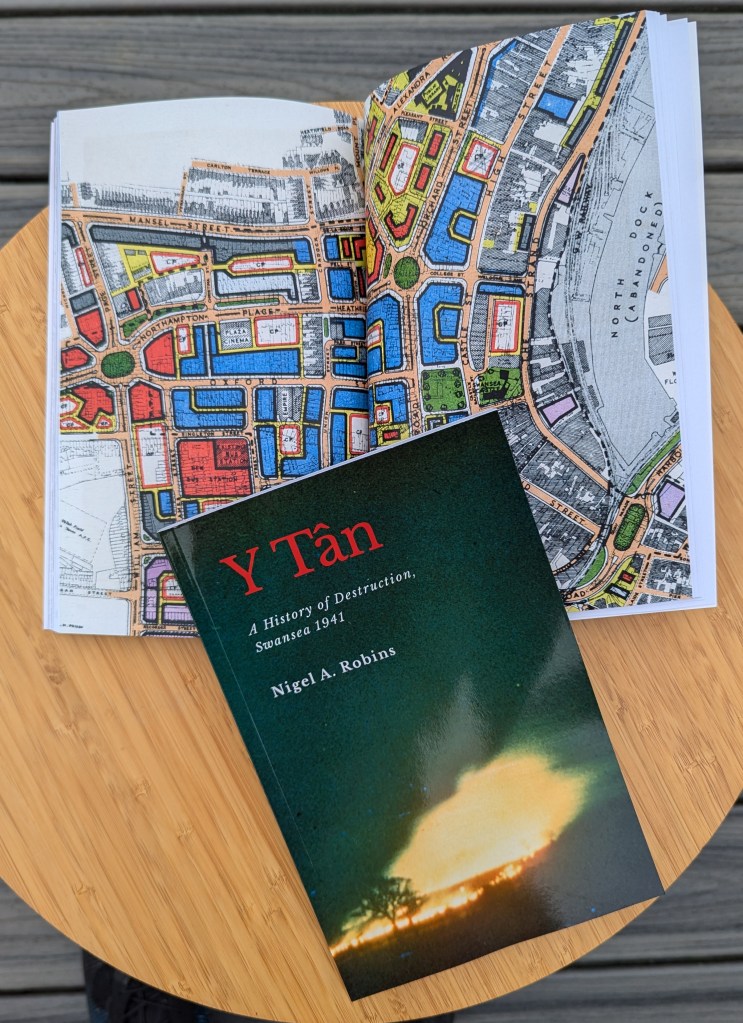
I’ve now got a stock of my latest book Y Tân.

Y Tân: A History of Destruction, Swansea 1941 is about my history of the Three Nights Blitz in February 1941. The town suffered appalling damage, and many argue it has never recovered. My grandfather died fighting the fires on the last night of the Blitz in Castle Street which was the site of a number of tragedies on that dreadful Friday.

In Y Tân I examine the situation in Swansea in the month before the attacks and look at the vulnerability of Swansea to German bombs and incendiaries. I examine the history of the weapon that destroyed the town and explain why Ben Evans was so vulnerable to fire. I examine the history of Castle Gardens and the reasons it became so dangerous. I also reconstruct the events of the three nights with eyewitness testimony from local people, war diaries and German air force sources. A chapter explains what happened to the piles of rubble in the town that eventually gave way to the redevelopments we see today—copiously illustrated with photos, maps and archive records from the author’s collections. Fully academically referenced.

Y Tân complements the groundbreaking examination of Luftwaffe intelligence maps and plans published earlier this year, Eye of the Eagle: Luftwaffe Intelligence and the South Wales Ports 1939-1941.

Y Tân is £16.99, easily available from the author, or you can buy it online here.

Also available from me or online:

Eye of the Eagle: Luftwaffe Intelligence and the South Wales Ports 1939-1941: A4 170 pages with over a hundred illustrations and map extracts.

The Cilfái Trilogy

Cilfái: Historical Geography on Kilvey Hill, Swansea: £15.99, many colour illustrations and maps, 126 pages

Cilfái: Woodland Management and Climate Change on Kilvey Hill, Swansea: £15.99, many colour illustrations and maps, 130 pages.

Cilfái: The History and Heritage Features on Kilvey Hill, Swansea: £14.99, many colour illustrations and maps, 98 pages.

Contact me via email at nyddfwch@gmail.com or message me. All payments are made easily with Paypal.

Or you can order from my bookshop at Nigel A Robins: Geographer – Books and Publications Spotlight | Lulu

New: Y Tân (The Fire): A History of Destruction, Swansea 1941

Proofs have now dropped. Printing has begun. Really pleased with this one as it originally started as an eight-page article!

Communication during the blitz

Most of the documents and other evidence about how Swansea coped during the war have not survived. As I said earlier, we have a lot of photographs, but understanding how people managed is harder to explore. My earlier post discussed the role of the ARP Controller Hywel Lang Lang-Coath. I looked through the available evidence to reconstruct the communication processes people needed to work through the awful problems the bombing caused.

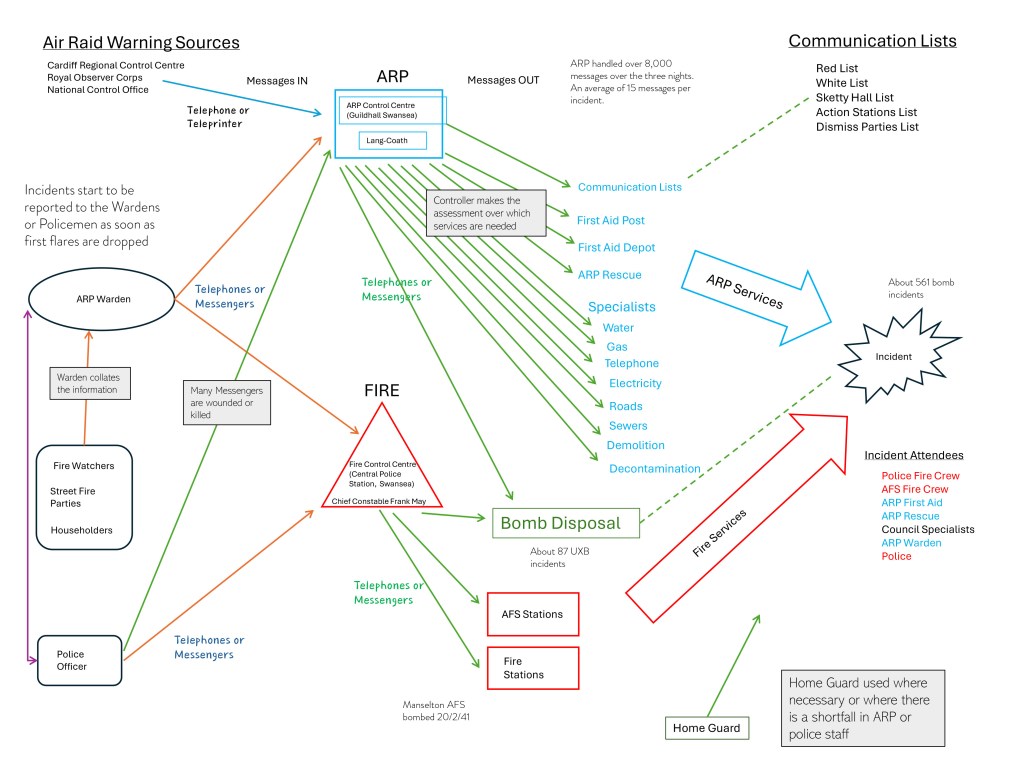
One of the most important roles was the Air Raid Warden, who was expected to act as first-line help, assess the problems a bomb or fire had caused and ensure both the police and the ARP control knew about the problem. Wardens had to be special people, confident, capable, and able to prioritise problems on the spot. Nearly twenty per cent of wardens were women.

Below is my reconstruction of the communication flows between the warden and the fire control at Swansea Central Police Station and ARP Control in the Guildhall. You can see how complex the ARP role was and how many decisions Lang-Coath had to make. Once the telephone lines were destroyed, all messages were carried by teenagers on bikes or motorbikes, or even just running through the bombs and fires. A number of Messengers died trying to get their messages to the Guildhall.

Above: My reconstruction of the communications during the three nights’ blitz of February 1941. The blue shows the complexity of all the services that had to be sent to deal with a bomb explosion or fire.

You can buy the book here: Y Tân (lulu.com)

Coping with the air raids: The incredible achievements of Hywel Lang Lang-Coath

Various social media pages regularly post pictures of the Swansea Blitz damage. What is less well-known is how Swansea Council dealt with the disaster. As the local authority, it fell to the Council to lead the town’s civil defence. Whereas the police and fire brigade were already recognised in their duties, the new type of war on civilians needed a new set of approaches and a new organisation…Air Raid Precautions (or ARP).

Traditionally, the local authority’s head of administration, often called the Town Clerk, was appointed as the Controller of ARP. In Swansea, this esteemed role was held by the renowned Hywel Lang Lang-Coath. With over thirty years of experience and an intimate knowledge of Swansea, Lang-Coath, originally from Bridgend, wielded significant influence over the County Borough’s administration.

When the bombing came, Swansea’s Chief Constable dealt with the policing and fires, but Lang-Coath had to oversee everything else. This meant that he had to make the decisions on water supply, gas mains, telephone repairs, electricity cables, roads, sewers, demolition of bomb-damaged buildings, decontamination of food supplies, feeding bombed-out families, issuing emergency ration books and sending ambulances and first aid to bombed areas of Swansea. Many Swansea councillors didn’t like him and were jealous of his control and power. They wanted to be part of the process. Lang-Coath refused and focussed on saving lives and looking after the bomb victims and prioritised the emergency services to support people at the worst time in their lives. Many people can be grateful that Swansea councillors were prevented from playing petty party politics at the worst point in Swansea’s recent history.

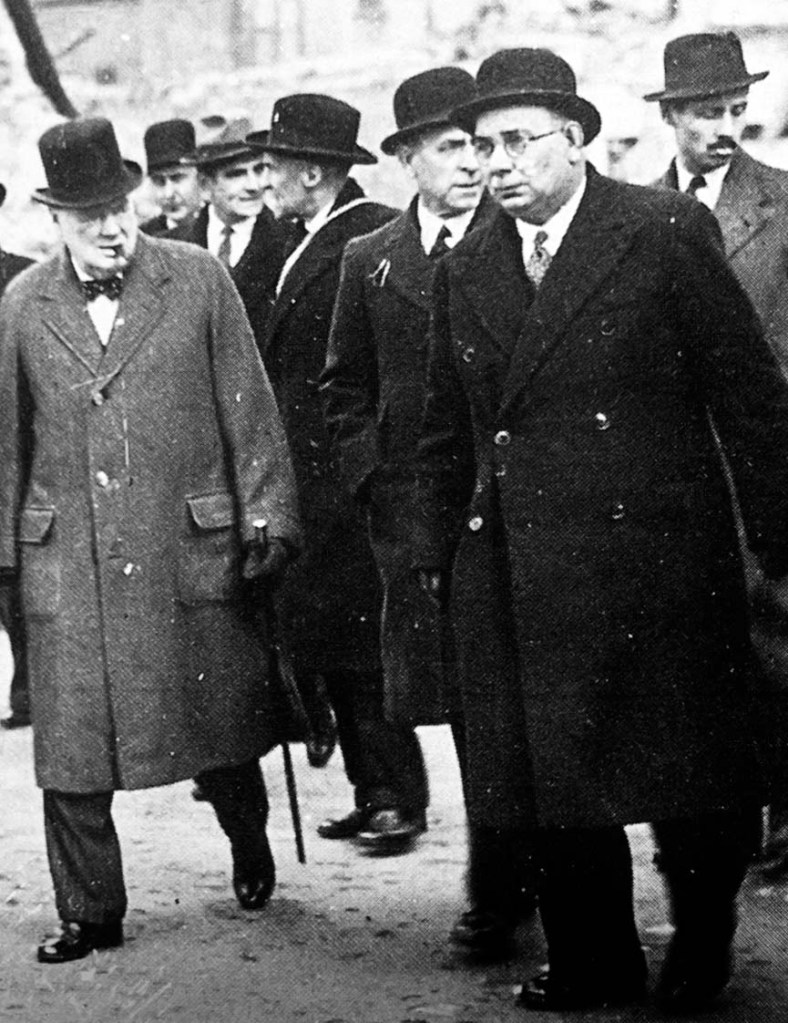
Above: Lang-Coath seen between Winston Churchill and the Mayor Tom James
during his visit to the blitzed areas on 11 April 1941. The visit was pure political theatre for Churchill, and his entourage included the newly installed American Ambassador John Winant
and Averell Harriman who was President Roosevelt’s ‘Aid for Britain’ director. The
devastated scenes were used by Churchill to show the Americans the reality of
the bomb attacks and both men submitted their impressions directly back to the
President. Lang-Coath is in a typical pose, looking off-camera probably checking the
whole event was going smoothly. (Printed source).

The Museum Model of the Castle Gardens/Ben Evans Block

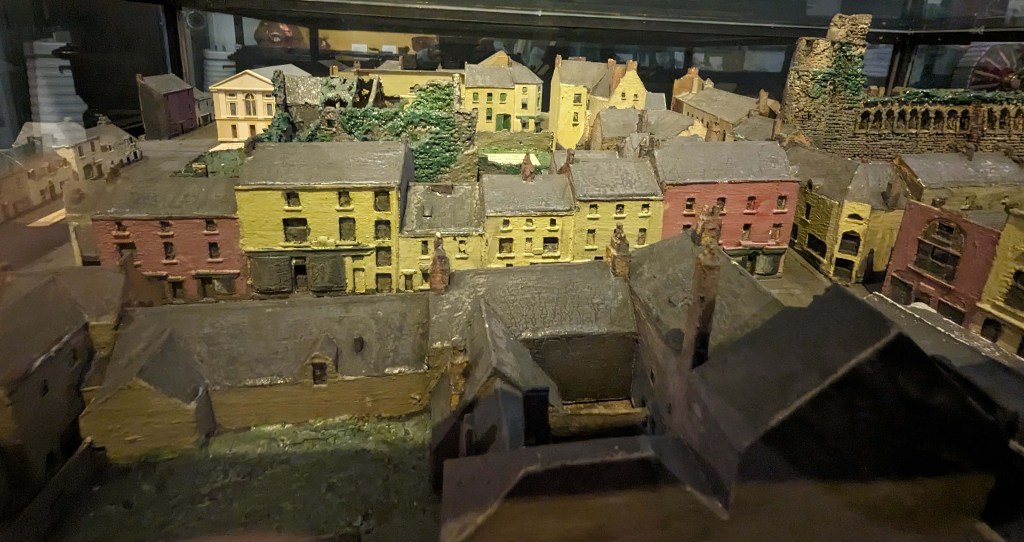
One of the most remarkable items on display in Swansea Museum is the model of the Plas House and the surrounding streets from the 1820s. It was extemely useful to be able to examine the model when I was reconstructing the layout of the streets for the Y Tân book.

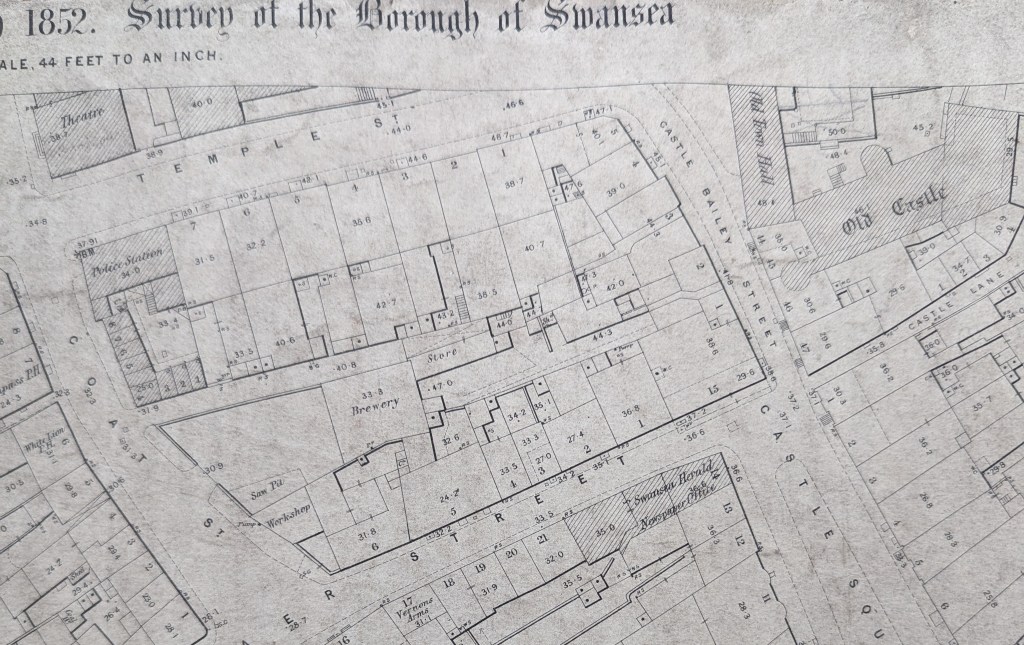
It is difficult to create a good quality map of the town streets until the creation of the 1852 Board of Health plans. The model in the museum is topographically corect and I was able, with the help of modern technology, fix an exact position of the Plas House and its relationship to Temple Street. Knowing the positions of these two things makes it easier to understand the construction of Ben Evans and what happened after the war, when it became Castle Gardens.

The model is on the first floor of the museum.

Above: A view of the splendid model of the castle and town centre made in the
1820s. The model has pride of place in Swansea Museum. The row of houses
coloured yellow and pink are in Caer Street and you can see the castle on the right.
Behind Caer Street you can see the ruins of the Plas House, covered in vegetation.
The types of vegetation covering the ruins are described in chapter 5.

You can but the book online here Y Tân (lulu.com)

Castle Gardens: The site of Ben Evans

Although we now know Castle Gardens as an ugly concrete space in the centre of town, that area of land has been central to Swansea’s history for centuries.

Originally part of the inner ward of Swansea Castle, the space has over the years held many buildings starting with the Plas House built in the 1300s. You can see a fantastic model of the area in Swansea Museum which was made in the 1820s. The streets that defined the Plas House block are part of Swansea’s long history. Temple Street to the north which once held the Three Lamps Inn, Goat Street to the west which held the original police station, and Caer Street to the south, which is (sort of) still there.

Pride of place has to go to Castle Bailey Street to the east which originally was a big space in front of the castle. By the 1890s, the site was the home of the various properties that made up the Ben Evans department store. Understanding the layout and contsruction of the store is an important part of understanding how it caught fire and burned so easily in February 1941.

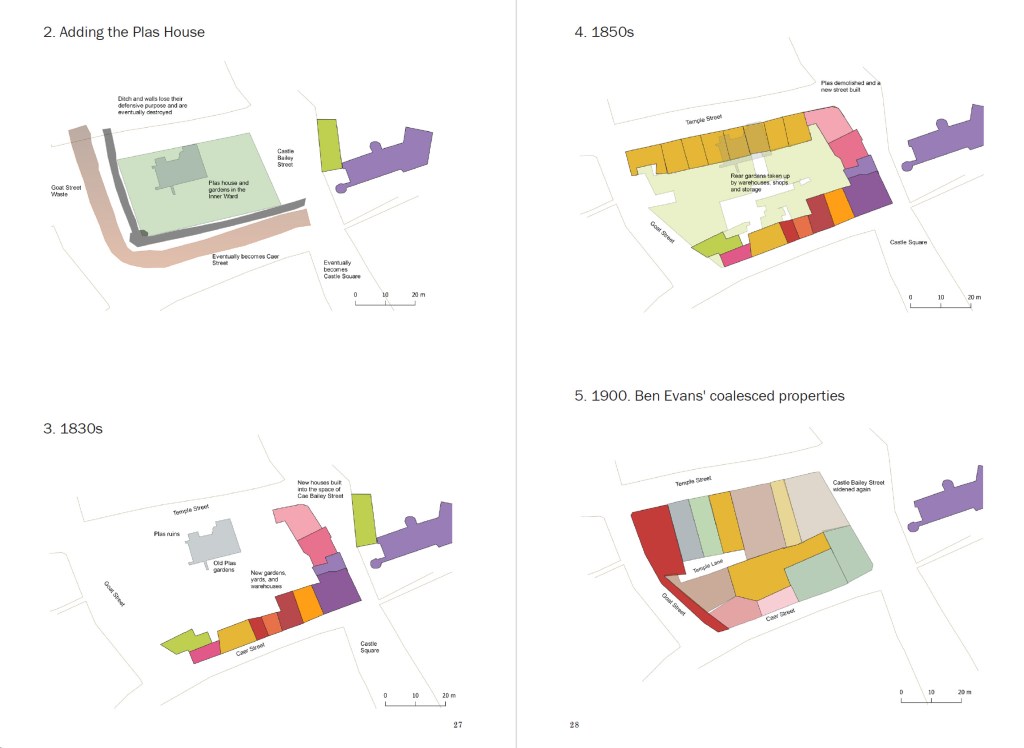
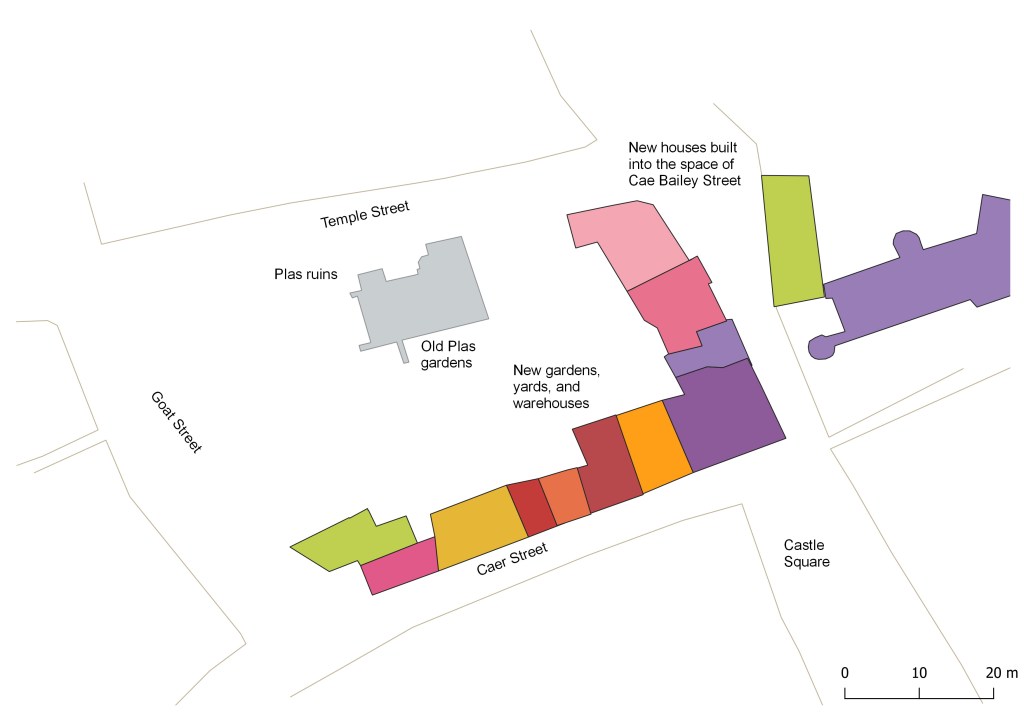
For the book I reconstructed the various eras of building on the block to understand more about how the space was used. I used methods from the 1940s when architects and fire engineers were reviewing the incendiary attacks on Britain and looking to learn lessons to destroy German towns and rebuild Swansea after the war. Understanding Castle Gardens is a chapter in my book.

You can buy online here: Y Tân (lulu.com)

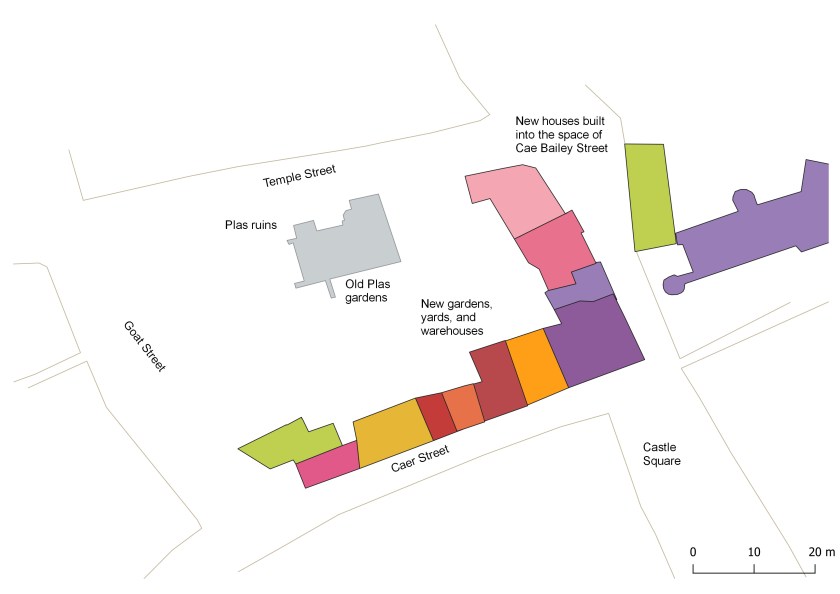
Above: Part of my reconstruction of the Castle Gardens block in central Swansea. By the 1840s, houses and shops were built on Castle Bailey Street and Caer Street. They built around the remains of the house and garden of the Plas House. Eventually, commercial pressures led to the destruction of the Plas and the construction of more houses and shops on Temple Street.
Above: A rare map of the Castle Gardens block in the 1850s.