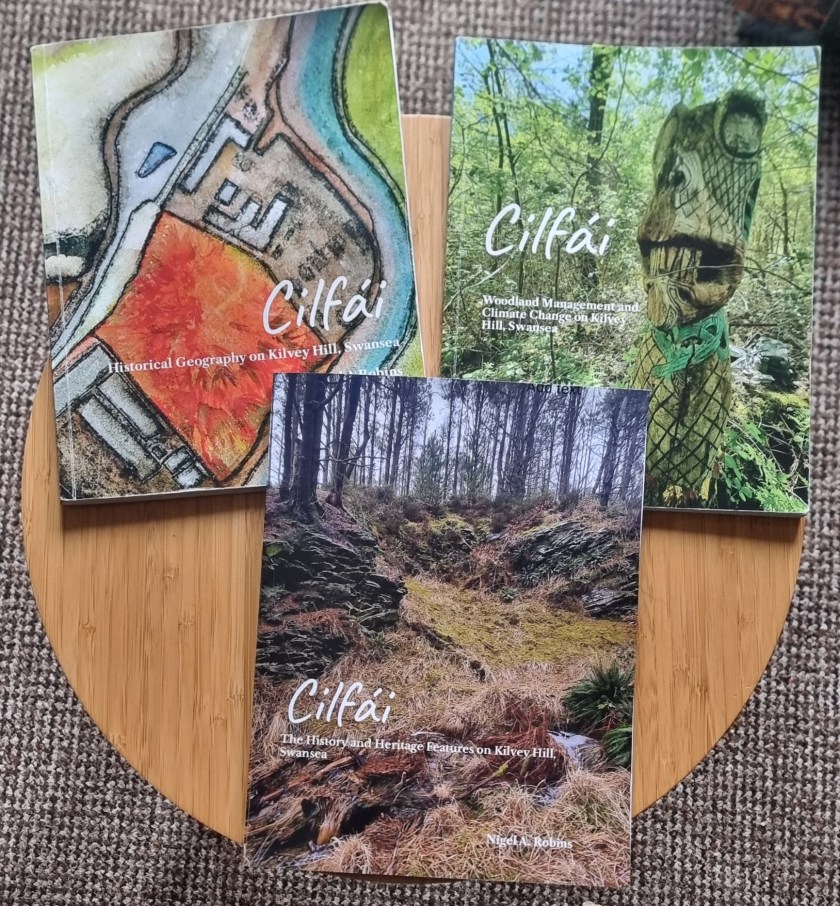
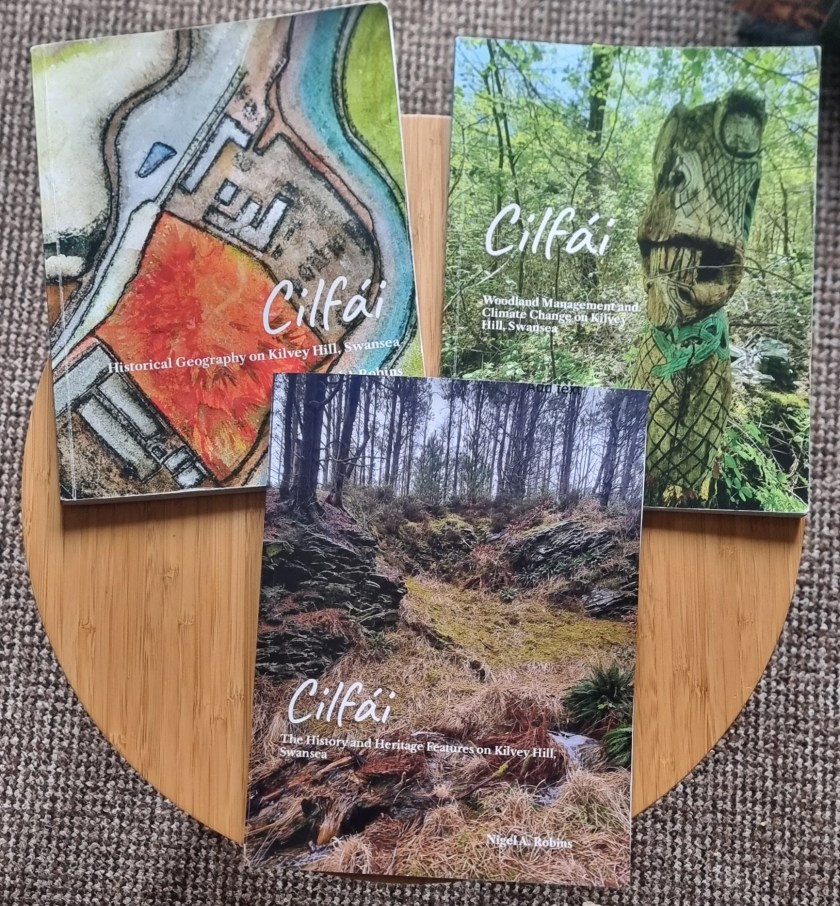
Cilfái: Historical Geography on Kilvey Hill, Swansea ISBN 978-1-7393533-0-8

This has now been reissued as a 2025 Second Edition with some updates, minor amendments and some new illustrations. I’ve also updated the copyright and EU product compliance details.

This study has been heavily reliant on past teaching notes and lessons learned from students’ questions and discussions over many years. I am indebted to all of them. Grateful thanks to the staff of West Glamorgan Archives Service and the archivists at the British Geological Survey in Keyworth who allowed me to spend time with William Logan’s original notebooks. The help of experts such as Dr John Alban and Gerald Gabb has always been beyond value and they have helped me as a sounding board and unlocking further fields of expertise which ave been so valuable. The contributions and discussions with my oldest friend John Andrew on geology and the rocks of Townhill and Kilvey have been particularly inspiring. John passed away in August 2024 and I miss his help and support terribly.
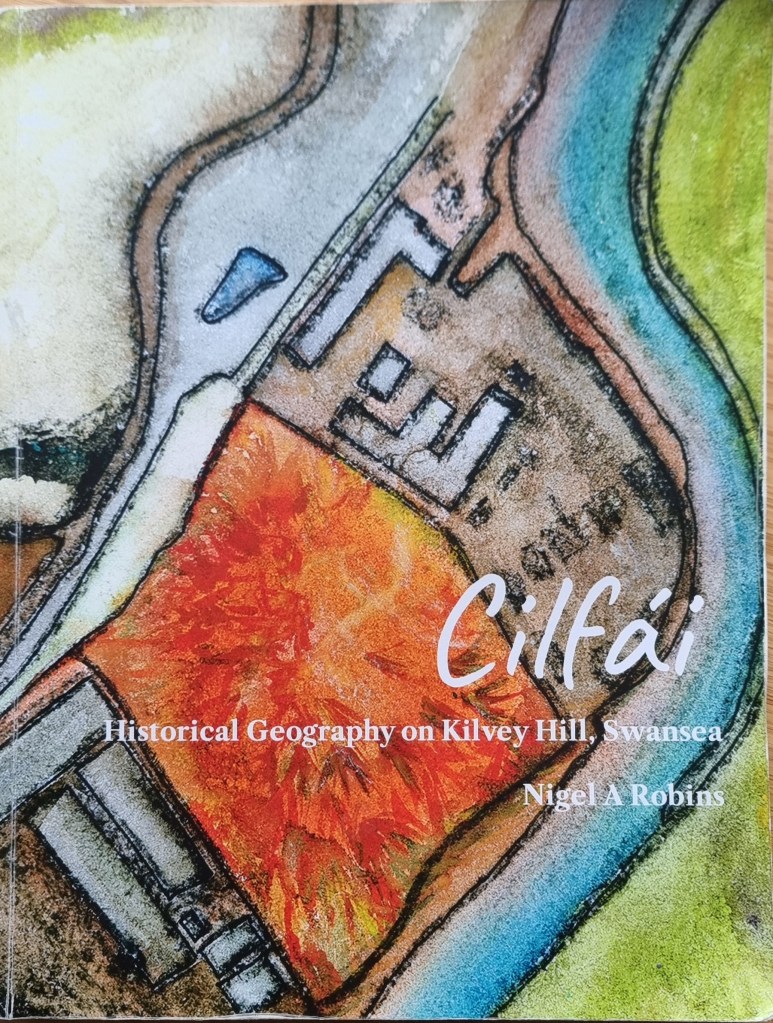
The cover of Cilfái was part of a painting of White Rock I did a while ago, mainly to show the extent of the Cae Morfa Carw waste tip (the orange land). The Tawe is on the right, and the original long workhouse of White Rock is at the top.


I must also thank the staff and colleagues at Coed Cadw/Woodland Trust who, unwittingly perhaps, spurred me on to re-explore Kilvey some thirty years after I last surveyed the land in the late 1980s. All the modern mapping was completed using the open-source QGIS application which has become a central tool as a landscape historian over the past ten years. Finally, I must mention the help and support of Kilvey Woodland Volunteers. Without the passion and commitment of the volunteer body over many years, I doubt that Kilvey would be the special place it has become. As I write this, Kilvey is under more threats from the local council and developers, and I hope this little book records a few milestones in the ongoing Kilvey story rather than an ending.


The first edition of Cilfái was remarkably successful. The aim was to fill a gap in knowledge about the Hill in the constant challenge to take care of it in the face of threats of irreversible destruction from tourist developments and an uncaring local authority. There are now many more local environmental and residents groups aware of the current value of the land and the potential loss Swansea faces if the destruction begins. This book was the first of the Cilfái trilogy, the second book covered Woodland Management and Climate Change, and the third book covered the heritage features on the hill. This book was rushed into print to address claims from the Local Authority that there was ‘not much up there’. Since 2023, I’ve taken hundreds of people on walks to view the biodiversity, history, and heritage of Cilfái, and I’ve packed out numerous community centres and halls to talk about the history. Hundreds of people have been converted to the value of the landscape we may lose.

Above: A coal adit on Kilvey was left to regenerate after about 40 years of peace. Swansea Council may be seeking to destroy this land, which they consider ‘worthless’.

Coal in Swansea

Swansea’s history would have been totally different witthout it. Coal is now part of Britain’s past history although across the planet coal use is now larger than at any time in the past. Led by China and Australia, coal burning will exceed 8.7 billion tonnes this year resulting in the climate change we now experience.

Swansea has a unique place in the history of coal. Kilvey Hill and Townhill were both places where early geologists first learned about the relationships of coal seams and sandstones that eventually led to understanding the coal resources across the whole of the Glamorgan coalfield. Engineers like Edward Martin, and geologists like Henry de la Beche and William Logan learned about coal by exploring the coal veins of Swansea.

I’ll be talking about the history of Swansea coal at a lecture for the Oysterrmouth Historical Association on Thursday 16 January at Tabernacle Church, Newton Road, at 7.30pm.

Above is a lump of Kilvey coal from the Swansea Rotten Vein above White Rock. You can see the layers of hard, glassy carbon and the duller layers of carbonised charcoal that made this coal incredibly polluting when burned in massive quantities in the Lower Swansea Valley.

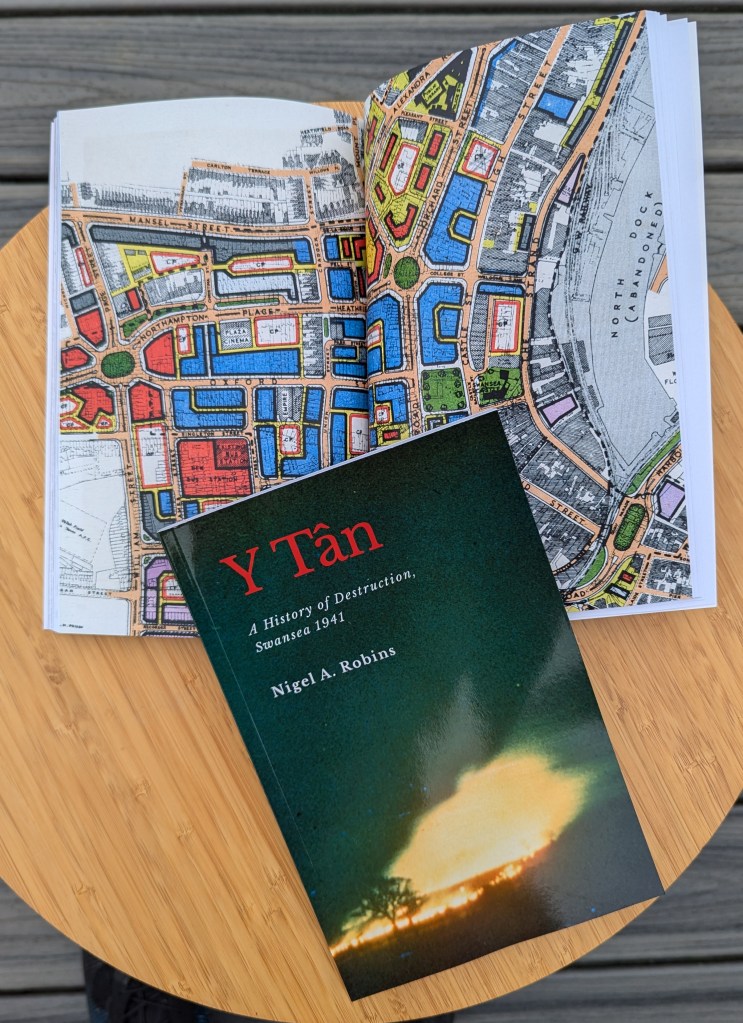
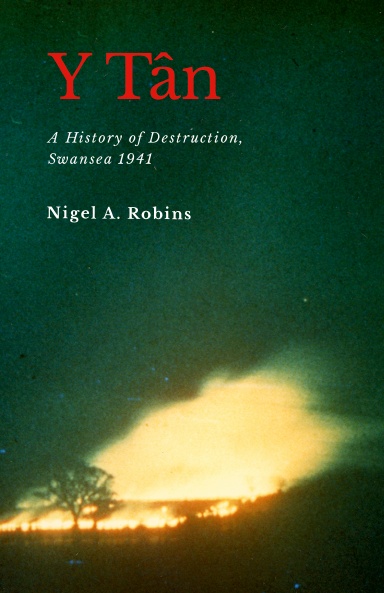
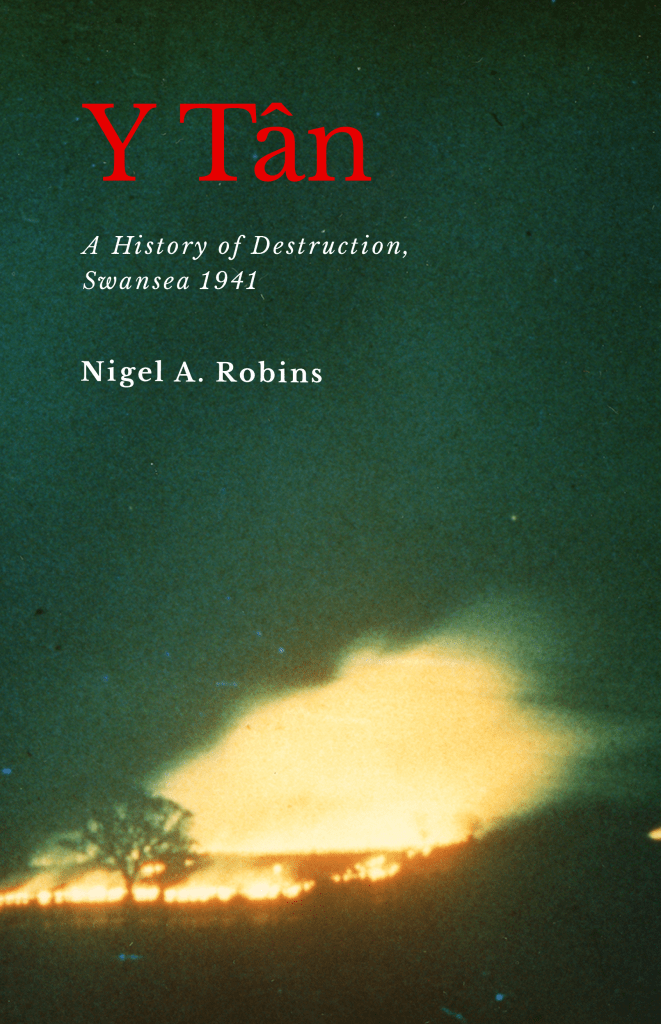
New: Y Tân (The Fire): A History of Destruction, Swansea 1941

Proofs have now dropped. Printing has begun. Really pleased with this one as it originally started as an eight-page article!

Coping with the air raids: The incredible achievements of Hywel Lang Lang-Coath

Various social media pages regularly post pictures of the Swansea Blitz damage. What is less well-known is how Swansea Council dealt with the disaster. As the local authority, it fell to the Council to lead the town’s civil defence. Whereas the police and fire brigade were already recognised in their duties, the new type of war on civilians needed a new set of approaches and a new organisation…Air Raid Precautions (or ARP).

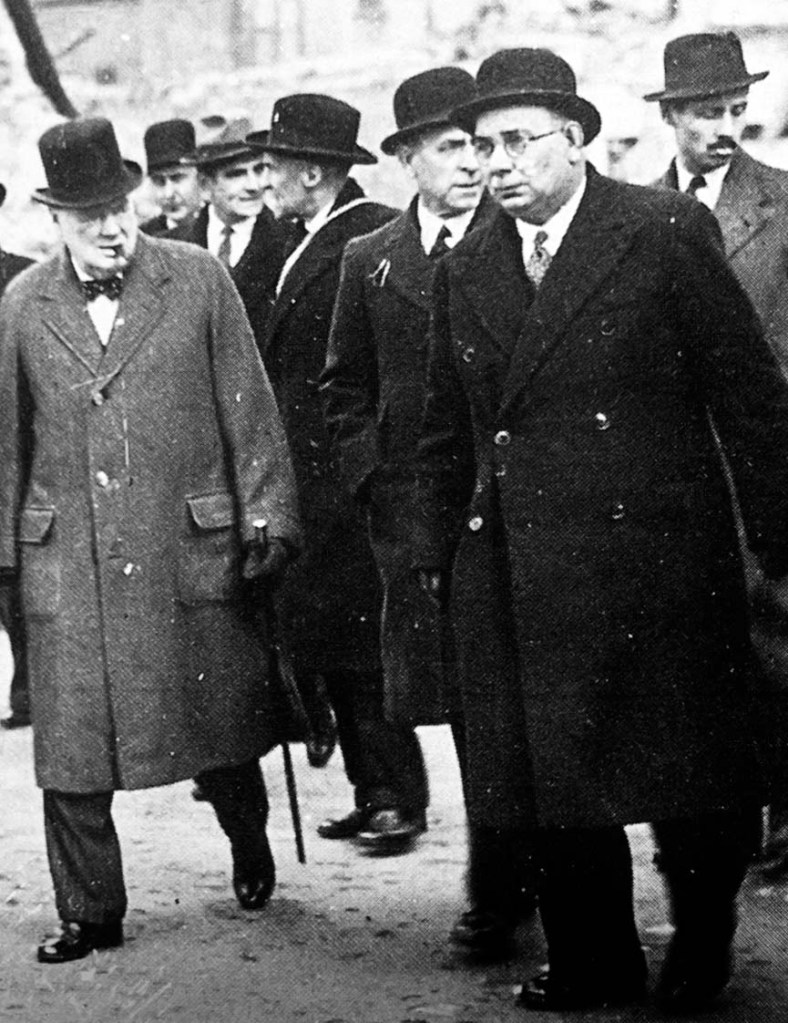
Traditionally, the local authority’s head of administration, often called the Town Clerk, was appointed as the Controller of ARP. In Swansea, this esteemed role was held by the renowned Hywel Lang Lang-Coath. With over thirty years of experience and an intimate knowledge of Swansea, Lang-Coath, originally from Bridgend, wielded significant influence over the County Borough’s administration.

When the bombing came, Swansea’s Chief Constable dealt with the policing and fires, but Lang-Coath had to oversee everything else. This meant that he had to make the decisions on water supply, gas mains, telephone repairs, electricity cables, roads, sewers, demolition of bomb-damaged buildings, decontamination of food supplies, feeding bombed-out families, issuing emergency ration books and sending ambulances and first aid to bombed areas of Swansea. Many Swansea councillors didn’t like him and were jealous of his control and power. They wanted to be part of the process. Lang-Coath refused and focussed on saving lives and looking after the bomb victims and prioritised the emergency services to support people at the worst time in their lives. Many people can be grateful that Swansea councillors were prevented from playing petty party politics at the worst point in Swansea’s recent history.

Above: Lang-Coath seen between Winston Churchill and the Mayor Tom James
during his visit to the blitzed areas on 11 April 1941. The visit was pure political theatre for Churchill, and his entourage included the newly installed American Ambassador John Winant
and Averell Harriman who was President Roosevelt’s ‘Aid for Britain’ director. The
devastated scenes were used by Churchill to show the Americans the reality of
the bomb attacks and both men submitted their impressions directly back to the
President. Lang-Coath is in a typical pose, looking off-camera probably checking the
whole event was going smoothly. (Printed source).

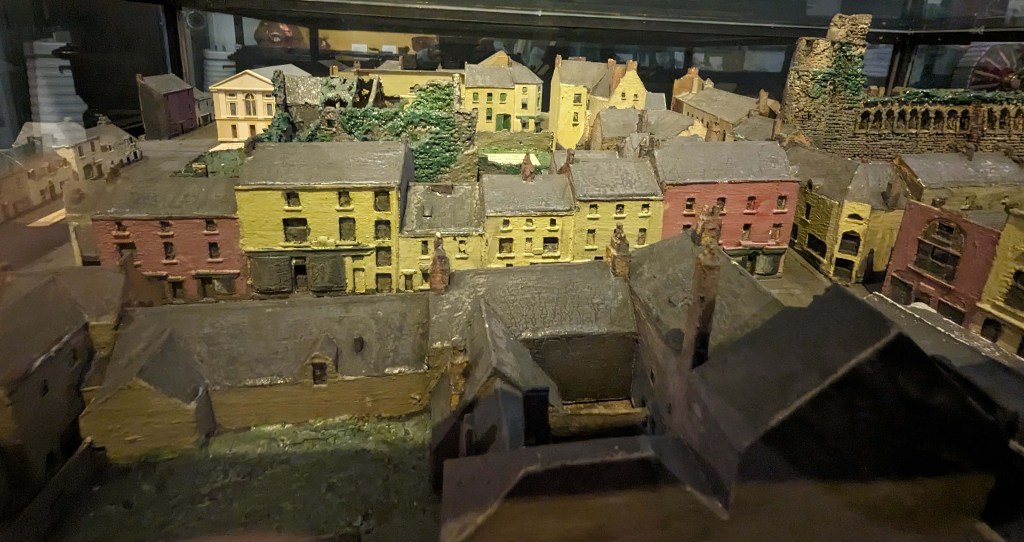
The Museum Model of the Castle Gardens/Ben Evans Block

One of the most remarkable items on display in Swansea Museum is the model of the Plas House and the surrounding streets from the 1820s. It was extemely useful to be able to examine the model when I was reconstructing the layout of the streets for the Y Tân book.

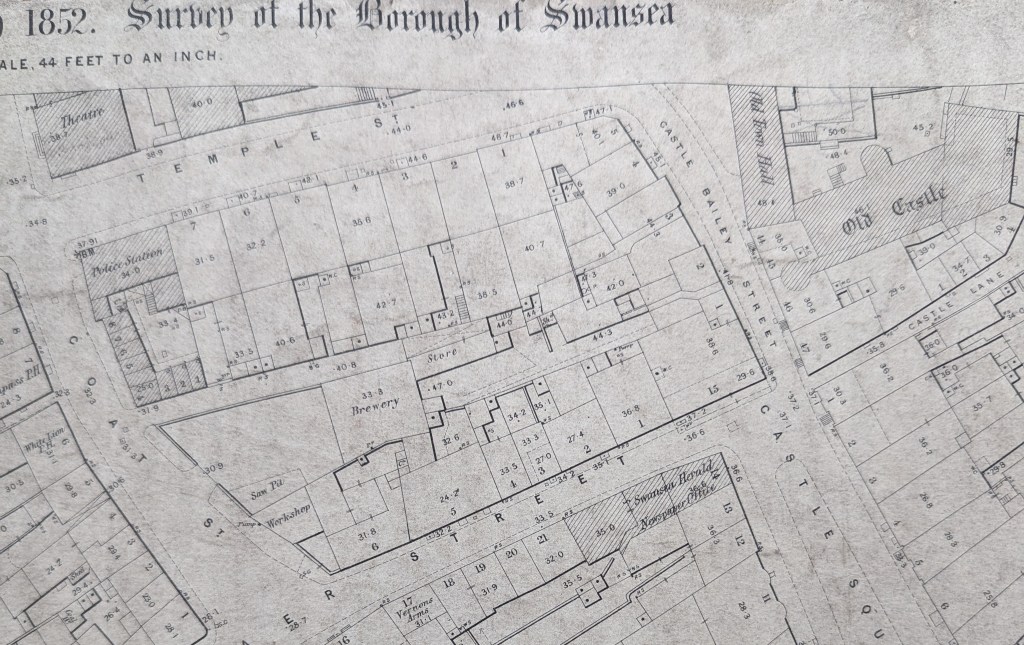
It is difficult to create a good quality map of the town streets until the creation of the 1852 Board of Health plans. The model in the museum is topographically corect and I was able, with the help of modern technology, fix an exact position of the Plas House and its relationship to Temple Street. Knowing the positions of these two things makes it easier to understand the construction of Ben Evans and what happened after the war, when it became Castle Gardens.

The model is on the first floor of the museum.

Above: A view of the splendid model of the castle and town centre made in the
1820s. The model has pride of place in Swansea Museum. The row of houses
coloured yellow and pink are in Caer Street and you can see the castle on the right.
Behind Caer Street you can see the ruins of the Plas House, covered in vegetation.
The types of vegetation covering the ruins are described in chapter 5.

You can but the book online here Y Tân (lulu.com)

Castle Gardens: The site of Ben Evans

Although we now know Castle Gardens as an ugly concrete space in the centre of town, that area of land has been central to Swansea’s history for centuries.

Originally part of the inner ward of Swansea Castle, the space has over the years held many buildings starting with the Plas House built in the 1300s. You can see a fantastic model of the area in Swansea Museum which was made in the 1820s. The streets that defined the Plas House block are part of Swansea’s long history. Temple Street to the north which once held the Three Lamps Inn, Goat Street to the west which held the original police station, and Caer Street to the south, which is (sort of) still there.

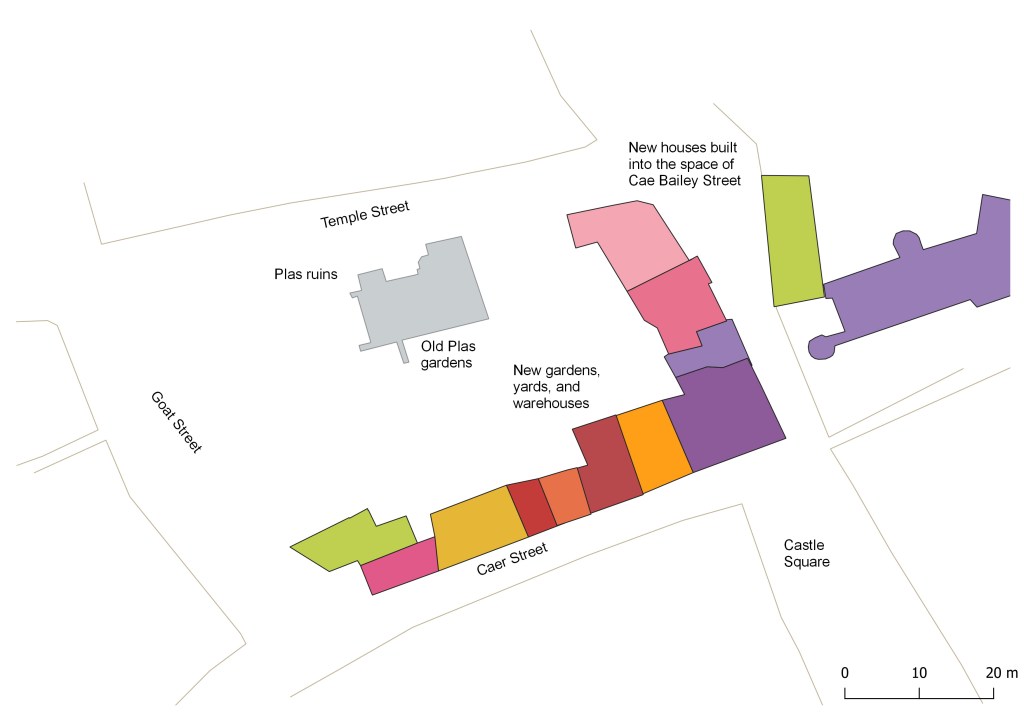
Pride of place has to go to Castle Bailey Street to the east which originally was a big space in front of the castle. By the 1890s, the site was the home of the various properties that made up the Ben Evans department store. Understanding the layout and contsruction of the store is an important part of understanding how it caught fire and burned so easily in February 1941.

For the book I reconstructed the various eras of building on the block to understand more about how the space was used. I used methods from the 1940s when architects and fire engineers were reviewing the incendiary attacks on Britain and looking to learn lessons to destroy German towns and rebuild Swansea after the war. Understanding Castle Gardens is a chapter in my book.

You can buy online here: Y Tân (lulu.com)

Above: Part of my reconstruction of the Castle Gardens block in central Swansea. By the 1840s, houses and shops were built on Castle Bailey Street and Caer Street. They built around the remains of the house and garden of the Plas House. Eventually, commercial pressures led to the destruction of the Plas and the construction of more houses and shops on Temple Street.
Above: A rare map of the Castle Gardens block in the 1850s.

Y Tân (The Fire): A History of Destruction, Swansea 1941

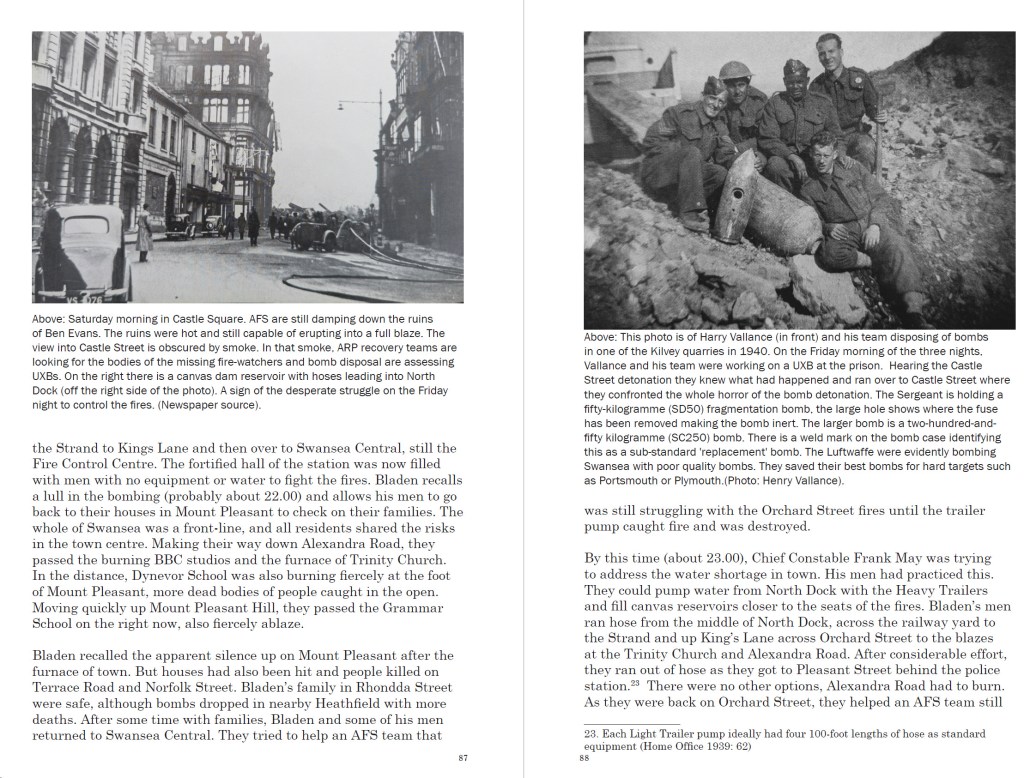
One of my longer-term projects. This originally started as a small article about the death of my grandfather, Jack Bowers. Jack died fighting fires in Castle Street on the third night of the February 1941 bombing of Swansea. It was a family tragedy and coloured the lives of my mother and aunt for the rest of their lives. My research went further and broader as I tried to understand the nature of the air attacks and what happened to people on the ground. I also looked at the history of the rubble that was left, including the history of Castle Gardens and Ben Evans the famous Swansea department store.

Here’s the blurb on the back cover:

“In World War Two, Swansea was regularly attacked by the German Air
Force. The worst attacks were over three nights in February 1941. The
bombs and fires transformed the centre of the town, and the author’s
grandfather was killed as a volunteer firefighter.
This book explores the events of the three nights, the loss of the
author’s grandfather, how the fire was used to destroy the town and the
consequences of the raids for the future of Swansea. Swansea Blitz was
an early example of a firestorm and became a template for attacks on
many European towns and cities in 1942 and 1943.

The author reconstructs the events of the three nights and includes
eyewitness descriptions from some of the people who worked to save
lives and property. The book also includes an analysis of the loss of
the Ben Evans department store and the detailed history of the land
we call Castle Gardens. With technical details of the bombs and
explosives that were used to attack the town and the history of the
bomb disposal teams that worked to save Swansea.


Based on meticulous research this fully referenced book examines the
vulnerability of the town to air attacks, the technical background of
the incendiary bombs, the events of the three nights of terror, the
ecology of the devastated town centre and the aftermath of
rebuilding.”

Details

Publication Date:Aug 5, 2024

Language:English

ISBN9781739353346

Category: History

Pages:160

Paperback Perfect Bound

Interior Color Color

Dimensions

Digest (5.5 x 8.5 in / 140 x 216 mm)

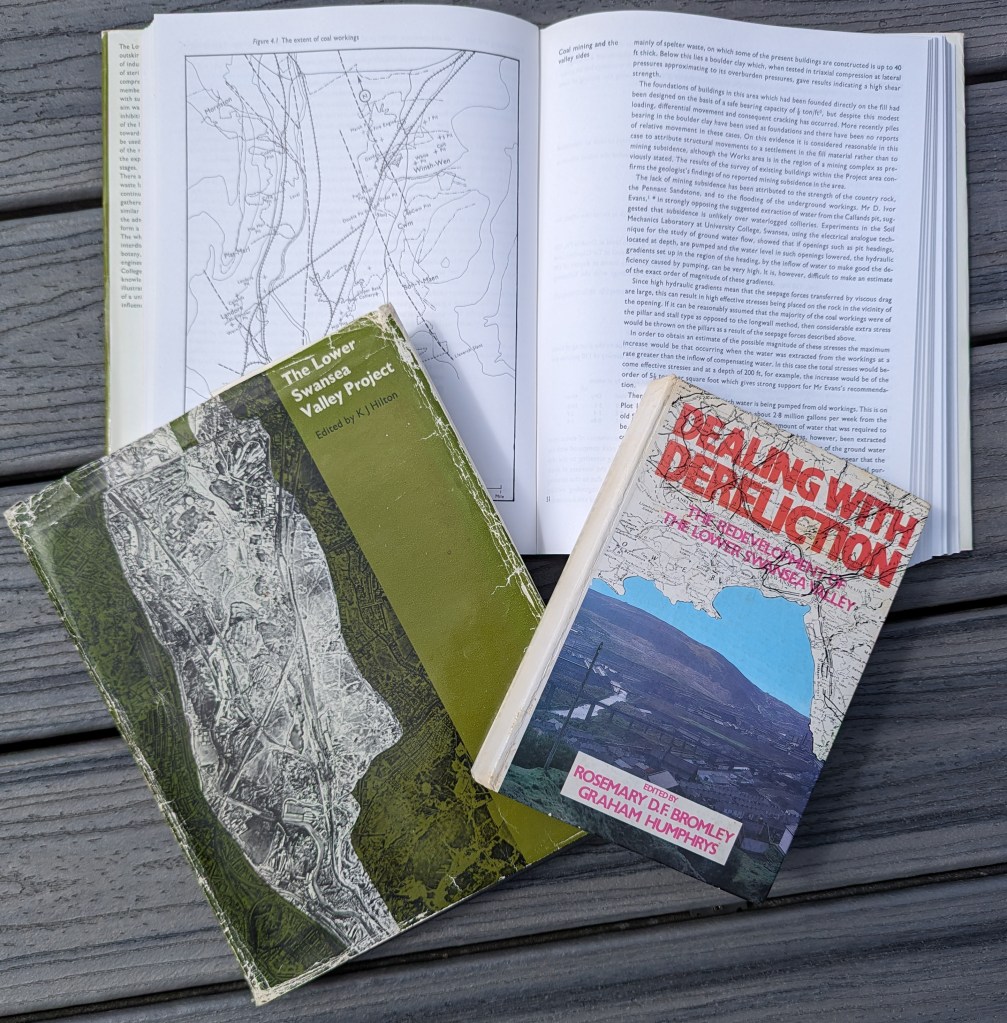
Cilfái and the Lower Swansea Valley: the essential books.

There are several crucial books on the history of Cilfái and the Lower Swansea Valley that serve as invaluable references. These are the books that form the foundation of your understanding. Without them, comprehending the reasons behind certain actions, inactions, and unresolved issues can be a daunting task. As with any large organisation, Swansea Council grapples with a lack of corporate memory and knowledge, particularly concerning the valley. In fact, some of the current issues with disputed ownership and title of the hill stem from the lack of historical knowledge and records among younger or less-experienced staff.

Perhaps the most famous book is the Lower Swansea Valley Project (Hilton 1967)This is the handbook summarising the scope and delivery of the Lower Swansea Valley Project. For decades, it has been a standard reference for environmental and ecological history. I used this book extensively to research the first Cilfái volume. The LSV Project remains a milestone in the history of government, local authority, and academic teamwork, and the work results have benefitted Valley residents immensely.

The Hilton volume documents, in thirteen chapters, the history, drainage, engineering, transportation, and social aspects of the LSV and the challenges involved in delivering change.

The second milestone book for the history of Cilfái and the Valley is Dealing with Dereliction. (Bromley and Humphrys 1979)This book came out over a decade after the Hilton volume and chronicles the challenges and changes the Project brought about. It is a wonderful example of a project closure report covering the benefits delivered and remaining issues. In my civil service days, I used it to illustrate how to manage the lifecycle of a large government programme or project.

Last but certainly not least, I’ve selected the City Archives Office booklet from 1991 describing some of the Archives Office holdings covering the LSV Project (Alban 1991). The cover notes were written by Dr J.R. Alban, who many will know as one of Swansea’s most significant historians. Dr Alban, who was our City Archivist at the time, wrote many such booklets. If you can get to see a copy, this is the quickest way to understand some of the archived records of Cilfái and the surrounding area.

You will find all these books easy to consult in Swansea Library and the West Glamorgan Archive Service on the big bookshelf!

Alban, J.R. 1991. ‘Rebuilding a Future: The Reclamation of the Lower Swansea Valley Exhibition Catalogue’ (Swansea City Council)

Bromley, Rosemary D. F., and Graham Humphrys (eds.). 1979. Dealing with Dereliction: The Redevelopment of the Lower Swansea Valley (Swansea: University College of Swansea)

Hilton, K. J. (ed.). 1967. The Lower Swansea Valley Project (London: Longmans)

Penllergare: The Ancient Trees

The latest press release from Welsh Government about the National Forest for Wales confirmed that Swansea’s Penllergare Valley Woods has been confirmed as a National Forest site. I think this makes it one of the hundred announced sites so far.

It is a clever bit of policy from Welsh Labour and throws a bit of recognition and identity branding the way of some struggling woodland sites. Creating a Welsh ‘network’, however fragmented, can only be a good idea.

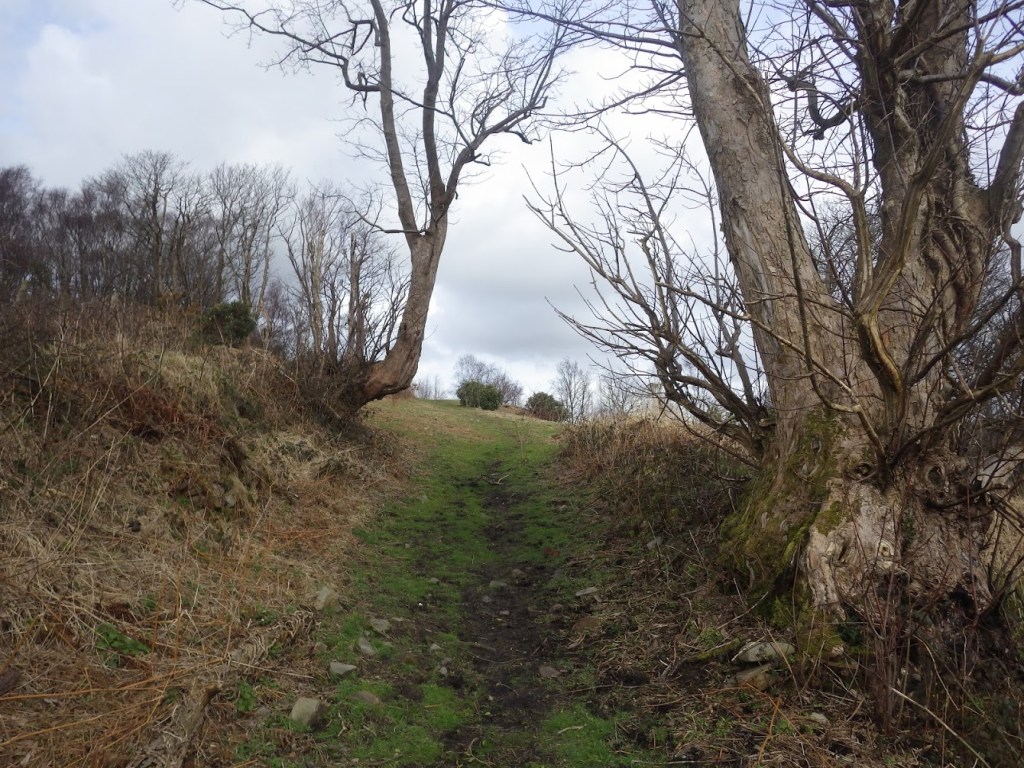
The pre-medieval road to Nyddfwch in the Penllergare Valley Woods in 2018.

The name of Penllergare is as confusing as its location. It is probably an anglicisation of nearby Penllergaer. The lottery-funded restoration project adopted the name from the long-gone mansion owned by the Llewelyn family. The awkward anglicisation always makes me uncomfortable and I tend to refer to the area as the Llan Valley or Nyddfwch which were earlier locality names and are far more in keeping with modern sensibilities.

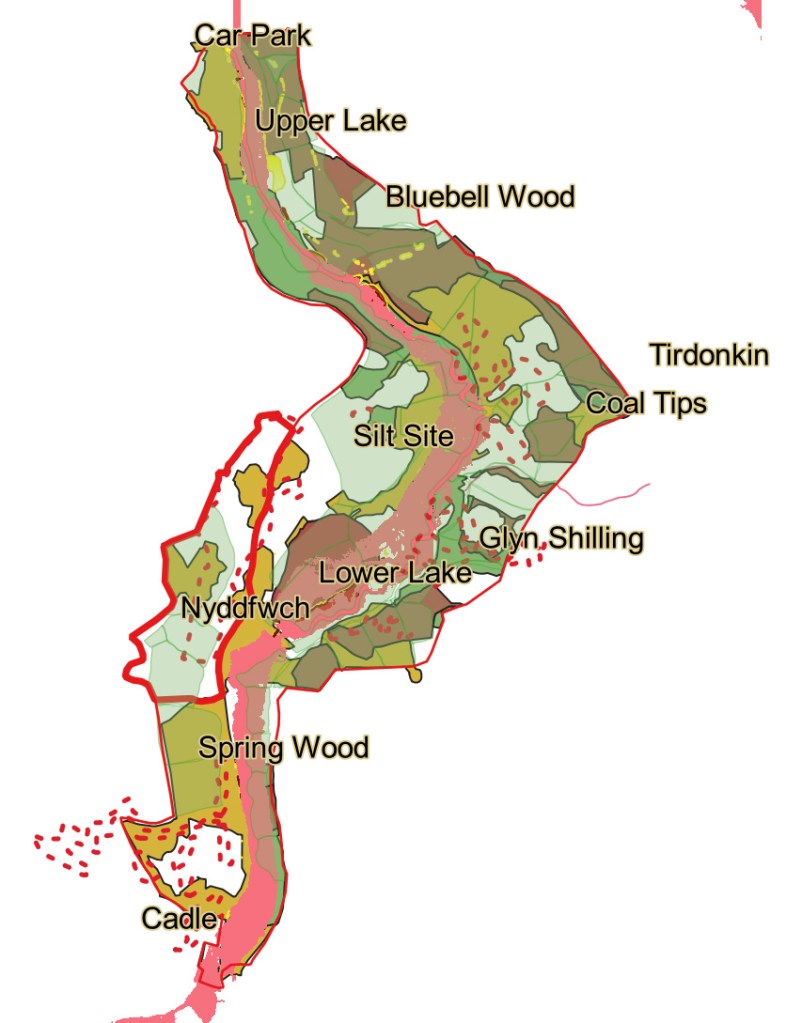
Above: The Penllergare woodlands are a complex mix of ancient woodland, garden planting, invasive non-natives and coal mining archaeology. An incredibly rich mix of history and environmment.

The valley woodlands thoroughly deserve inclusion in the National Forest list. I spent nearly ten wonderful years surveying and researching the landscape and woodlands until I felt compelled to leave in the face of the ugly politics and personalities that run the charity. Some of the staff and volunteers I worked with were some of the finest people I ever experienced in conservation circles, although all have been hounded out by the organisation, which is such a shame.

The original mission of the lottery-funded project was to recreate the nineteenth-century estate gardens of the Llewelyn family. It was centred on making something of the remaining walled garden and the paths and planting of the Llewelyns, a wonderful collection of exotic trees, native (1800s) planting, and a collection of Rhododendrons. The premise was ambitious in the early 2000s, and many of us were surprised that it got funding, as we knew the concept was challenging because of climate change and the lack of surviving substantive features. I think the charity running the place is now pressing for more money to keep the place going. Some of you who came to my Environment Centre lectures may remember I compared the limited effectiveness of money invested in Penllergare with the far better return on investment of money spent on Cilfái.

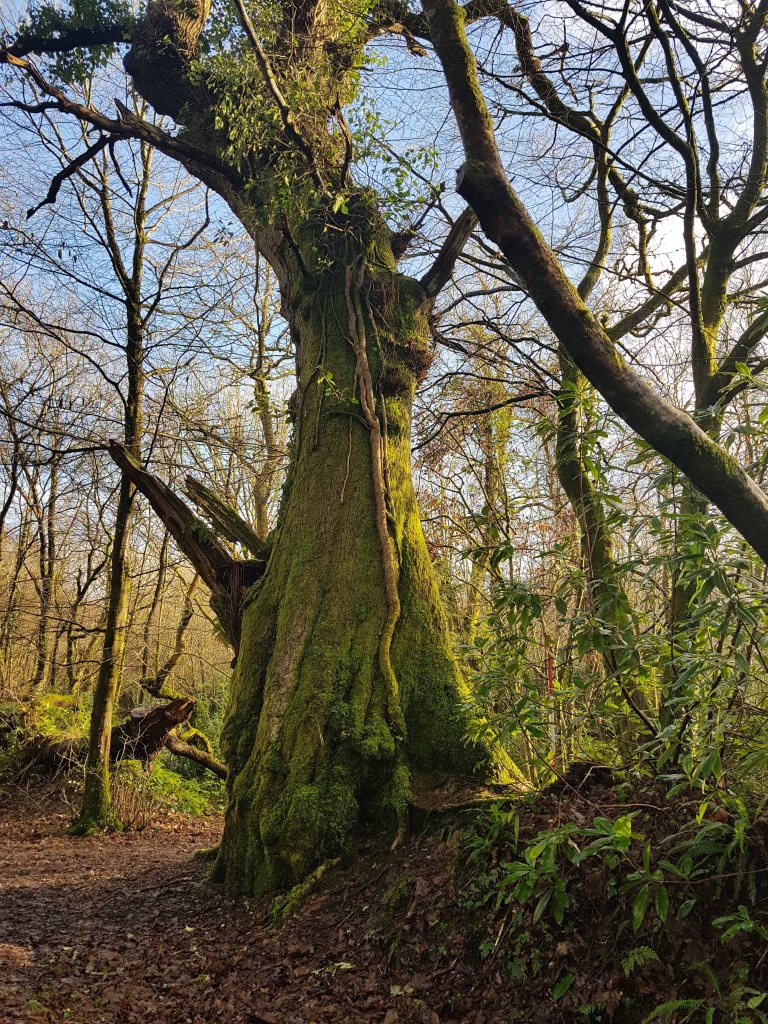
Above: The Nyddfwch Oak in Penllergare.

The wider area of woodland contains significant ancient trees, 1950s Forestry Commission planting and a spectacular collection of unusual and exotic tree species (the remnants of the nineteenth-century garden). Much is made of the links to the Llewelyn family, although they abandoned the site for a nicer house elsewhere. I imagine the family’s estate managers will be unhappy at this latest National Forest status as they were hell-bent on selling for housing; the land is on a short lease for the charity.

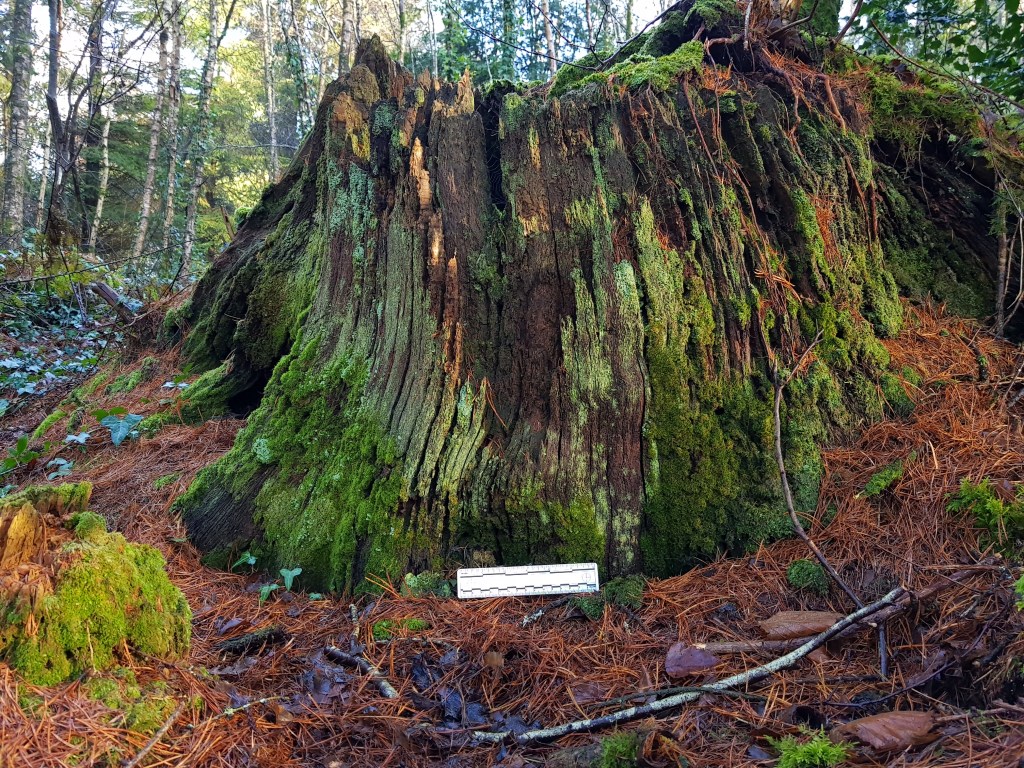
Above: Ancient tree stumps from the Penllergare valley. The area was cleared for timber in the 1940s although many trees and ther carcasses survive providing an excellent reservoir of dead wood. At one time the management wanted to sell the wood for firewood LOL.

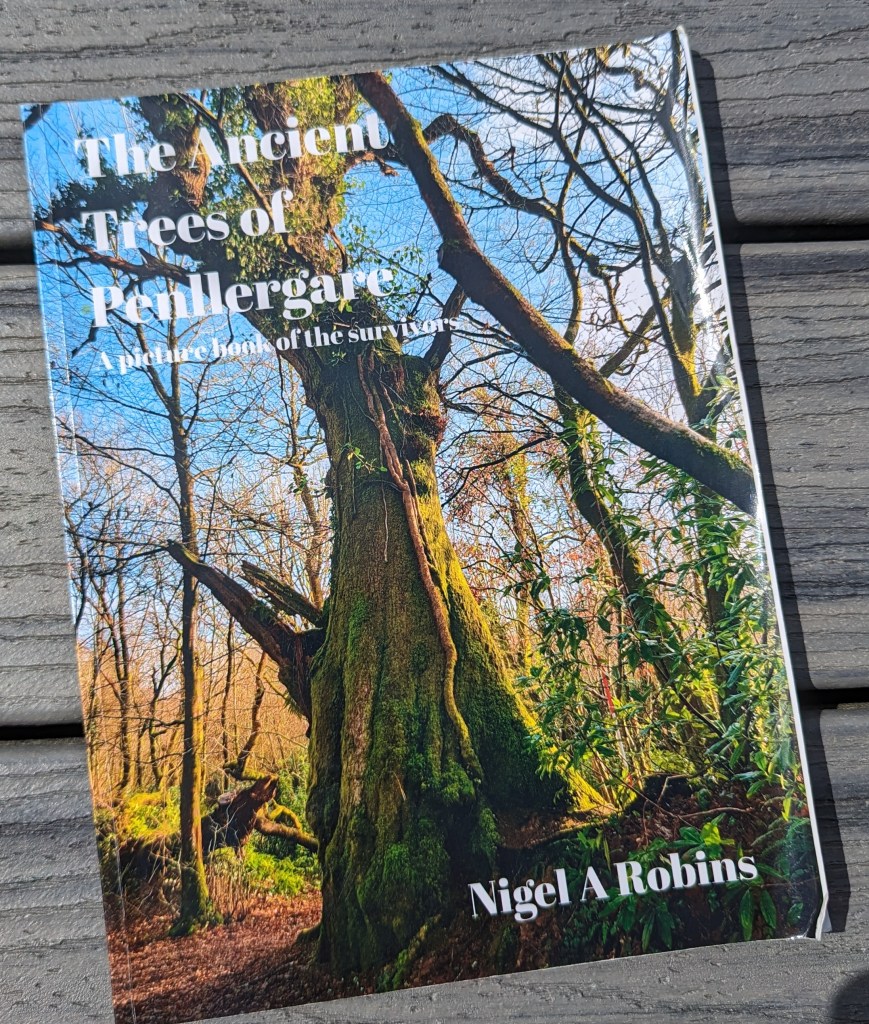
The history of the nineteenth century is only of limited significance. Far more interesting is the history of the valley in the early 1700s, when it was devastated by coal mining. So, the land is a good example of early Welsh industrialisation and the recovery after that, when the coal was worked out in the 1790s. The ancient trees are an incredible survival from the coal mining devastation of the 1700s and were probably rejected for harvesting as timber because of their shape. I prepared a draft book on the woodlands a few years ago, and now may be the time to turn it into a real entity.

I used to take many groups into the woods to explore the woodland, let me know if you’re interested and I’ll put together a walk.

Above: My original manuscript. Maybe I’ll make it real.

The importance of Referencing in writing

Last week, I spoke with an academic friend who was furious to find that an editor had amended one of his articles by altering the footnotes and referencing. He was understandably annoyed because it was without his permission and wasn’t even notified!

When he mentioned it, I remembered it had been done to me on several occasions. On one occasion, I queried why it had been done without reference back to me and was told it was for space saving. Enquiring further, I realised the reason was primarily that the editors had very little understanding of citations and referencing and eventually admitted that they ‘didn’t actually follow any recognised style or referencing format’. Indeed, when I looked back at a few back copies of their journal, I could see that it was true…woefully so.

In these days of Artificial Intelligence (AI) and countless automated writing tools, detailed referencing is vital. If I can’t explain where I got a piece of information from, how can anyone believe me? Even if barely 2% of my readers look up a reference to read further or verify something I have written, it is always there to be verified.

AI is making belief in the written word much harder. In my work as a consultant, I often saw colleagues prepare reports and presentations, often for considerable cost, and be totally silent on their sources. I know this was to hide the amount of plagiarism, passing off, duplication, and Wikipedia work that was often conducted as ‘serious’ research. I never did this and was often criticised for revealing my sources, usually by the people being fired whilst I retained contracts and the confidence of my employers.

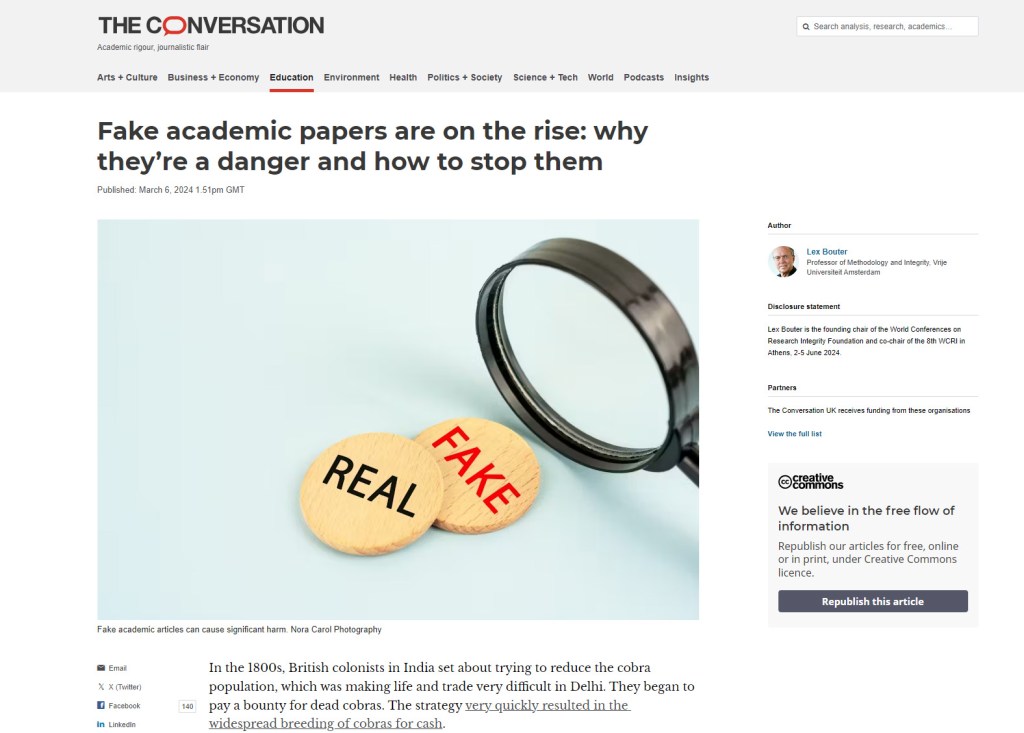
The rise of fake academic papers is alarming.

AI is now being used to write all sorts of technical, legal, and medical reports and articles, and it is smart enough to generate false references and citations to support its arguments. The AI trend is devaluing knowledge and expertise and reducing confidence in what we can rely on, whether that is local history or cancer treatments.

Many others are now declining the opportunity to appear in electronic journals, and everything I research and publish is referenced. From now on, my books and longer-form research will only be published in paper form, and only abstracts will be released online. Of course, this hasn’t stopped people from individually scanning books, and I have seen electronic versions of the Cilfái trilogy already appear.

Equally, AI is an immensely valuable tool for research. I will frequently use AI tools for library searches or organising my thoughts on a topic. They are increasingly powerful and need to be used wisely.

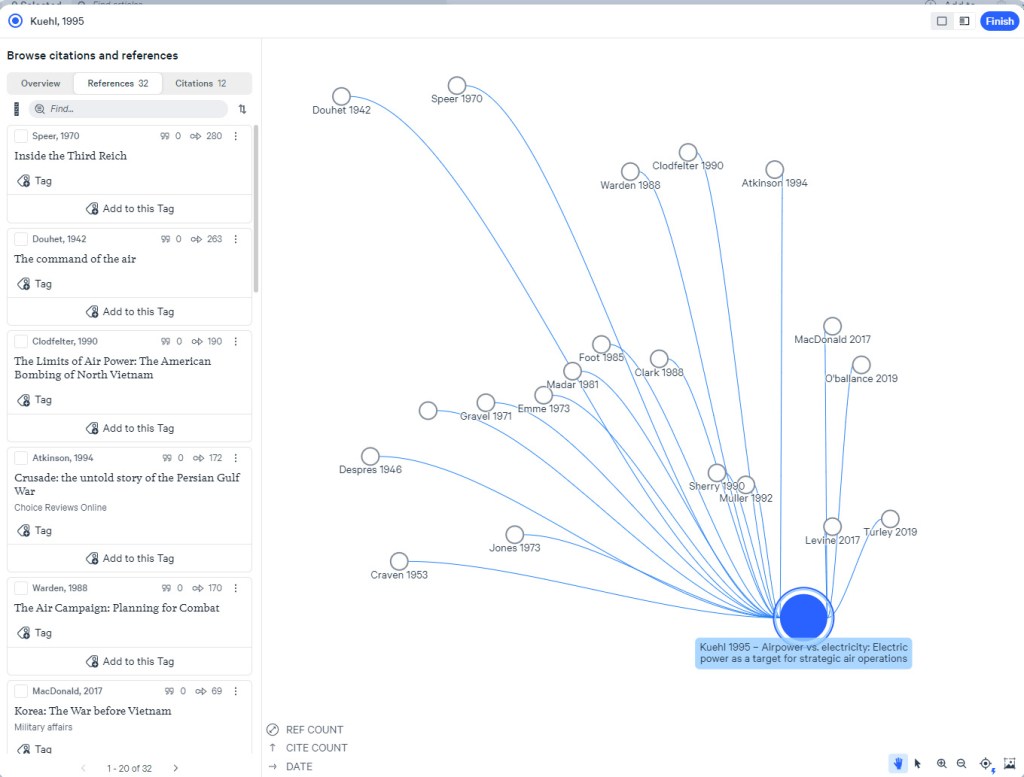
Above: One of my Lit Map citation searches allowing me to quickly locate relevant authorities on the research topic.
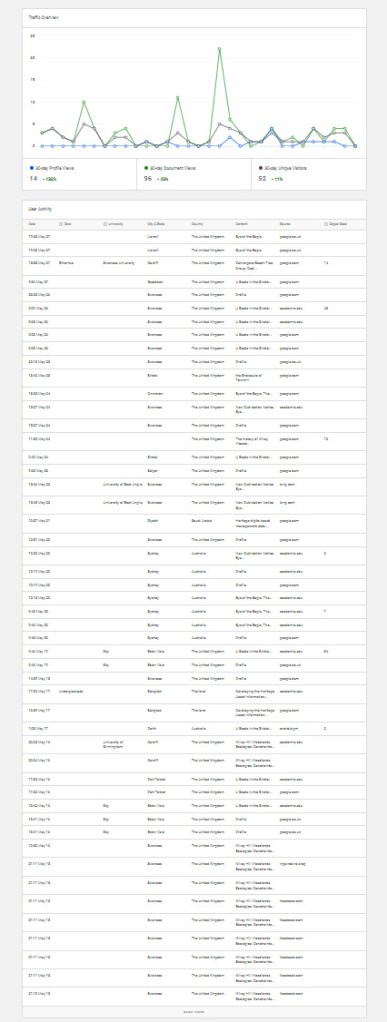
Above: AI and Google at work. A report on people (and robots) searching for my writings.