Swansea History and Our Geoheritage

Geoheritage is now becoming a broader term for our geographical and geological features that have significant scientific, educational, cultural, or aesthetic value. Swansea has an important place in the history of geological exploration and the development of the Welsh coal industry.

People who have participated in my many guided walks on Kilvey will already be aware of the value of the Kilvey Geoheritage sites and the contribution they make to the Biodiversity and Geodiversity of Swansea.

Globally, October is a month of celebrating and recognising the importance of the rocks and landscape underneath our feet. Swansea has more than most towns to be mindful of, as it is built on over a thousand years of coal mining history.
Geoheritage is now becoming a broader term for our geographical and geological features that have significant scientific, educational, cultural, or aesthetic value. Swansea has an important place in the history of geological exploration and the development of the Welsh coal industry.

People who have participated in my many guided walks on Kilvey will already be aware of the value of the Kilvey Geoheritage sites and the contribution they make to the Biodiversity and Geodiversity of Swansea.

Globally, October is a month of celebrating and recognising the importance of the rocks and landscape underneath our feet. Swansea has more than most towns to be mindful of, as it is built on over a thousand years of coal mining history.

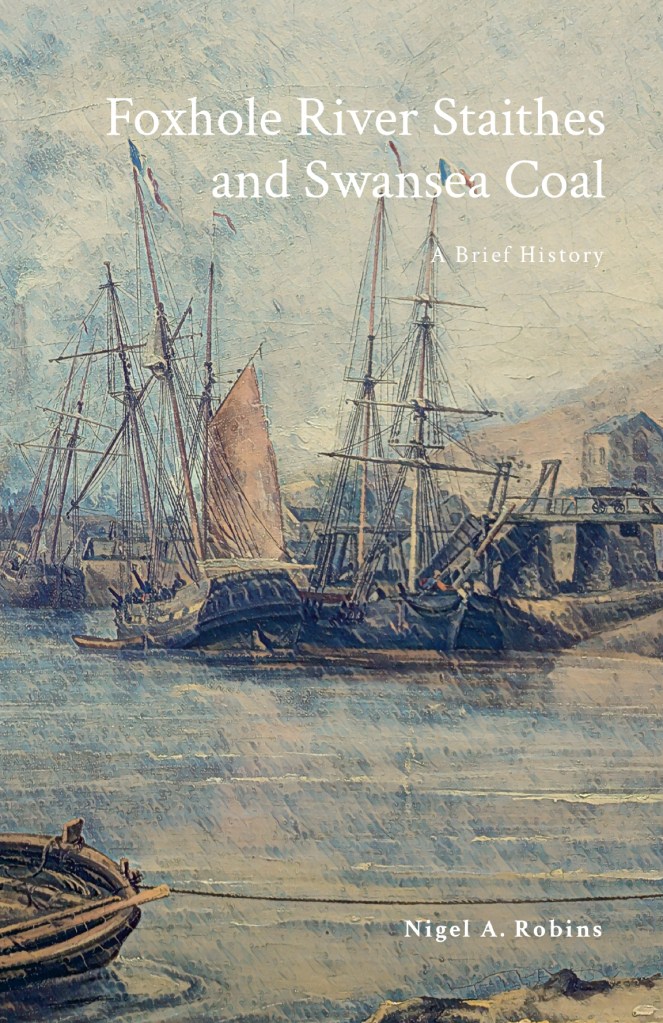
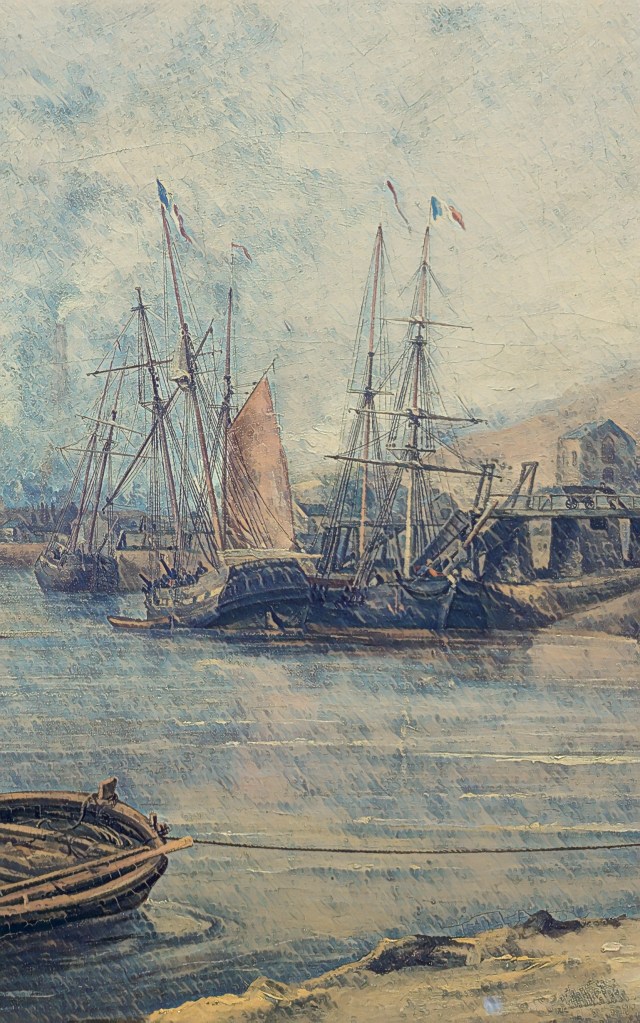
Above: Foxhole Coal Staithes in the 1840s.

Following on from my recent book on Foxhole and the history of Swansea Coal, I’ll be giving a few guided walks and talks on broader aspects of Swansea’s incredible Geoheritage and Geodiversity.

On 4 October, I’ll be talking about the history of Swansea coal and the special place Foxhole on Kilvey has in the history of Welsh coal mining. My talk will be at Swansea Museum as part of the RISW and the Historical Association’s History Day 2025. I’ll also have copies of the Foxhole history book at a discounted price.

On 6 October, as part of UNESCO’s # InternationalGeodiversityDay, I’ll be leading a walk around the geological features of Kilvey Hill and explaining the unique place in Swansea’s history that Kilvey holds. The geological features of Kilvey have long been regarded as obscured or destroyed, but many have survived against all odds. Come with me and walk the land that was explored by Geology’s most famous local coal pioneers, William Logan and Henry De la Beche. Tickets will be available shortly. I’ll advertise them via Facebook and Eventbrite.
On 8 October, I’ll be at the Friends of Penllergare monthly meeting at Llewellyn Hall in Penllergaer. I’ll be talking about ‘Penllergare, Henry De la Beche, and early Geology in Swansea’. Lewis Weston Dillwyn was often at the centre of scientific and cultural events in Swansea. He was particularly prominent in the recognition of Swansea as a centre of research in the emerging science of Geology and the first understanding of the South Wales coalfields.
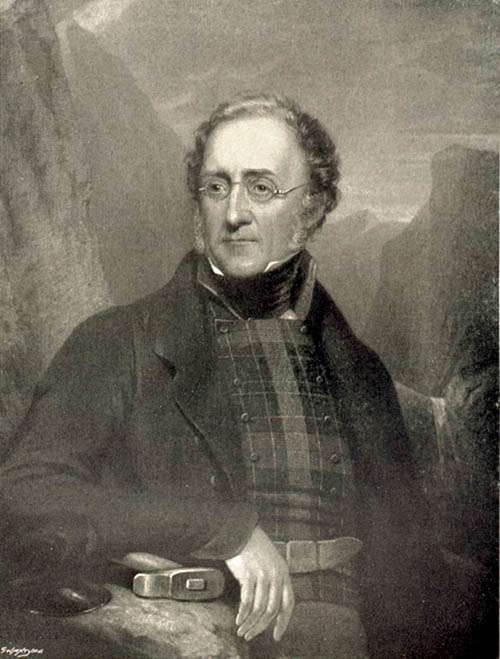
Above: Henry De la Beche. Pioneer geologist.

I’ll be doing a few more walks and talks throughout the month, and I’ll post here to let people know. If you want to know more contact mew for details.

I’ll also have my bookshop of all my current books in print at the History and Heritage Fair at the National Waterfront Museum on 27 September 2025.
Geodiversity and Cilfái

The theme for this year’s International Geodiversity Day, to be held on Monday 6th October 2025, will be ‘One Earth, Many Stories’. International Geodiversity Day was proclaimed by UNESCO in 2021, following a grassroots campaign by geoscience organisations around the world. Geodiversity is all around us, and includes the parts of nature that aren’t alive, like minerals, fossils, soils, and landscapes.

Geodiversity Day is a worldwide celebration to bring people together in promoting the many aspects of geodiversity, and its importance to society. This year’s theme is a chance for people to connect with geodiversity. Every landscape, every stone, and every fossil has a story to tell. Our planet is a record of history that dates back more than 4 billion years; one that can teach us about the origins of our natural environment and where we, as animals, came from.

As people, communities, and governments implement the Sustainable Development Goals, geodiversity provides a record of earth history that can help us prepare and respond to threats such as climate change. ‘One Earth, Many Stories’ encourages all of us to discover examples of geodiversity; in our landscape, in museums, in historic buildings; and delve deeper into the multitude of stories contained within planet Earth. It is hoped that geoscience groups around the world will organise events to make the stories of their local geodiversity more widely known.

As part of International Geodiversity Day, I’ll be leading a walk around the geological and historical treasures of Kilvey in Swansea. Kilvey played a central role in the pioneering work to understand the South Wales coalfield. The hill was the training ground of one of Geology’s most notable pioneers, William Logan, who was the first to map the Swansea coal veins and understand the arrangements of the coal beds and how they related to the surrounding Pennant Sandstone.

The hill has an incredible set of survivals from the early coal mining historry of Wales. The original coal face that Logan analysed and explored still survives, along with several medieval coal adits. There are also several fascinating sandstone rock exposures rich in plant remains, which gave the early coal prospectors of two thousand years ago the first clues that coal was present in these rocks.

Coal mining on Kilvey is a 1500-year-old industry and central to the history of Swansea.

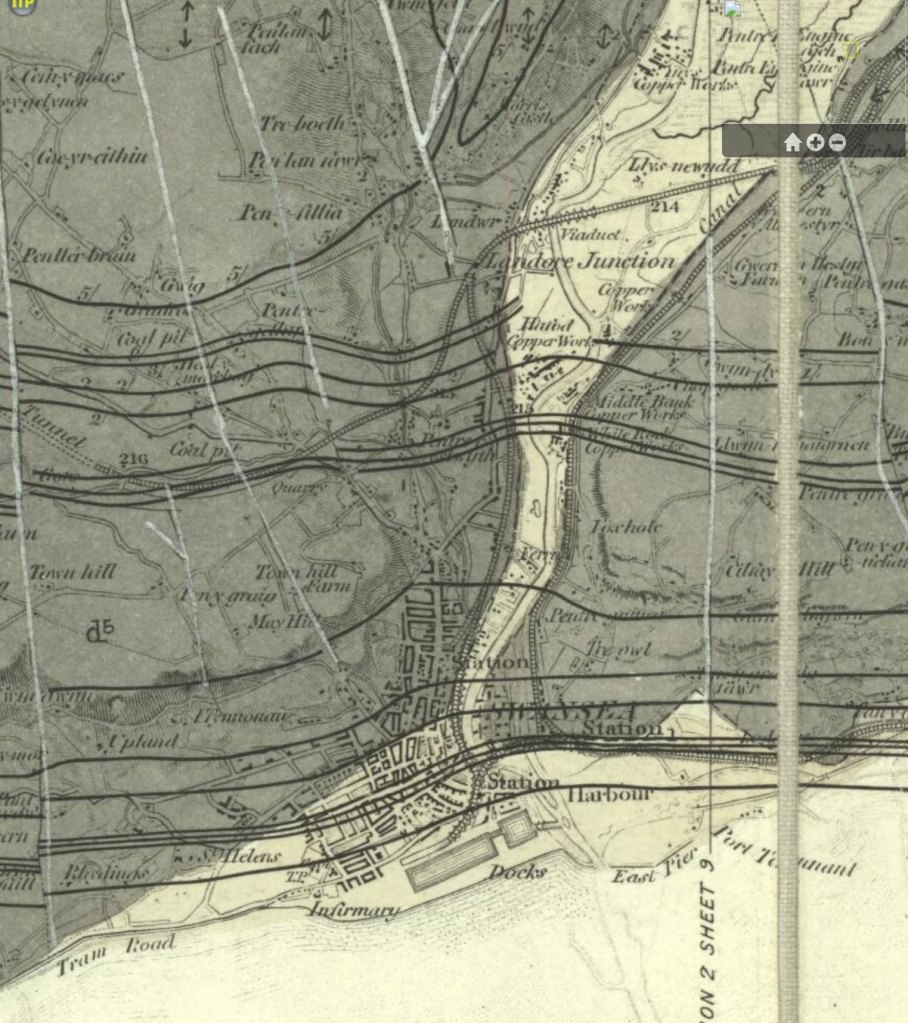
Above: An early geology map of Swansea with ‘Kilvay’ in the middle covered in coal mines.
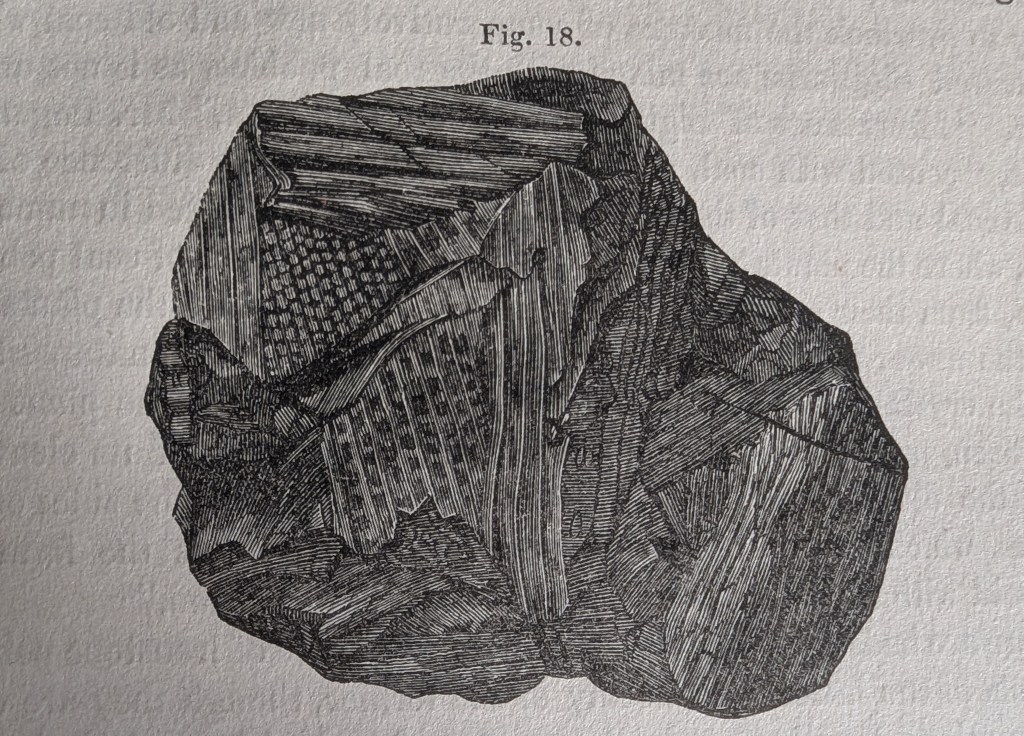
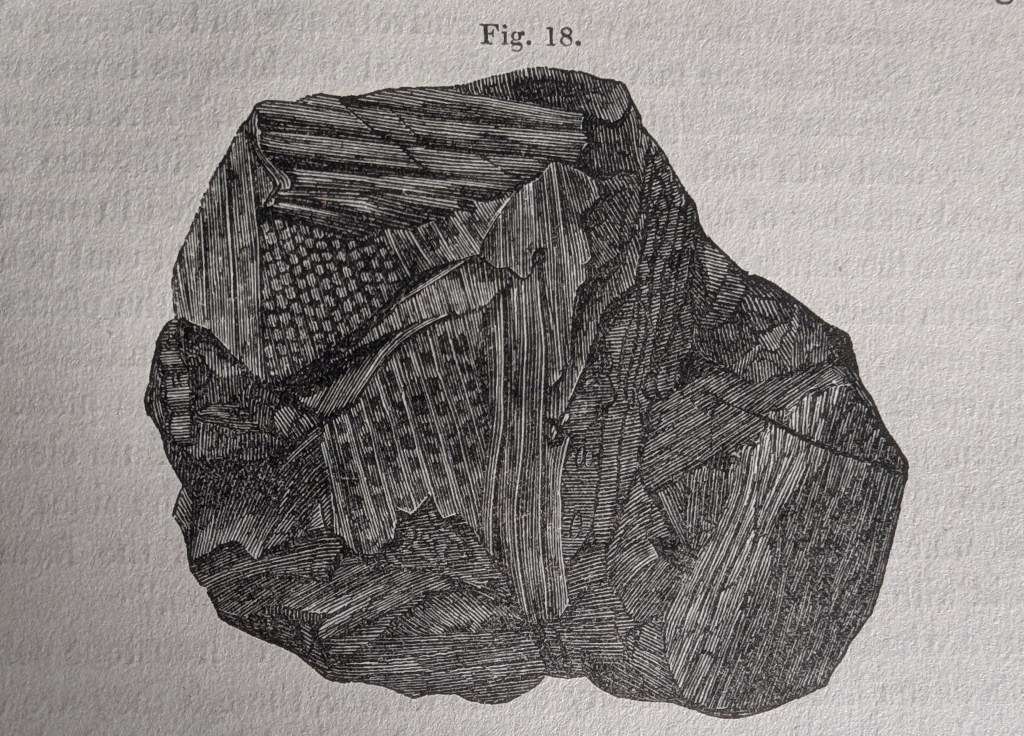
Above: A drawing of coal showing the intricate plant structures that can survive in our local bituminous coal. This drawing is from the original Memoir of Henry De la Beche (1841).

If you are interested in the history of Swansea coal, take a look at my recent bnook on the coal history of Foxhole on Kilvey

Low cost photogrammetry in the Lower Swansea Valley

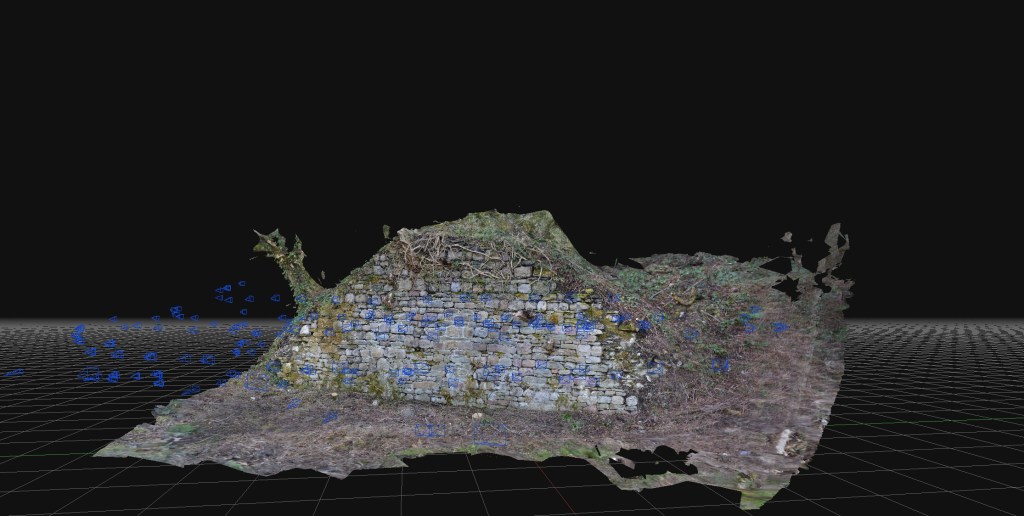
The work here was added to original surveys carried out in the 1980s, and a comparison with photographic records allowed a visual check of the structure’s deterioration and environmental changes. A review of the geology of the structure’s building materials could also be carried out, which revealed distinctive contrasts between this structure and other post-1737 structures and walls nearby.

I’m really pleased that this small project is now starting to yield results! The first delivery was a series of scans and interpretations of some rare dock structures on the banks of the River Tawe. Some of the structures are scheduled ancient monuments, but the oldest and rarest are not!

The brief for this structure was a cheap and accurate photogrammetric survey at the lowest cost, allowing for interpretation and enhancing the historical information from earlier work and new research. The requirement was cheap, quick and accurate, which meant no expensive drone or landscape surveys.

Above: An early eighteenth-century coal staith remains in the Swansea Valley.

The work here was added to original surveys carried out in the 1980s, and a comparison with photographic records allowed a visual check of the structure’s deterioration and environmental changes. A review of the geology of the structure’s building materials could also be carried out, which revealed distinctive contrasts between this structure and other post-1737 structures and walls nearby.

There is still much to do, including costing the project and leveraging the technology more effectively on little-known structures in the area.

Understanding Coal: the history

My new work is uncovering the history of the early geologists and explorers of the Welsh coalfields.

Although coal mining has been ongoing in the Swansea area for at least a thousand years, the uncertainty about what coal actually is lasted until the 1920s.

In Swansea, the exploration of our coal seams began in the eighteenth century, but it was in the 1830s that pioneer geologist William Logan first started to examine the coal and sandstone layers on Kilvey and Town Hill to understand the physical arrangement of coal seams. When Logan met Henry De la Beche (sometime in 1833), the quality of Logan’s research was instantly recognised as being central to the geological mapping of the Swansea district and the wider Welsh coalfields.

The debates over whether coal was a rock or a mineral continued throughout the early 1800s, and early geologists struggled to understand what coal was and how it was created.

Below is a drawing from 1841 showing the complex plant structures within a piece of local bituminous coal. Close examination of coal gradually revealed the incredible numbers of plants and ferns that make up the millions of tons of coal that were exported from Swansea docks.

Above: A wonderful illustration of a piece of coal showing the plant structures inside the seemingly black mass. A closer examination of coal unveiled the rich plant life that existed over 300 million years ago. This piece was drawn in 1840 by a ‘Miss Woods’ and included in the landmark geological paper by Henry De la Beche that described coal and sandstone in the Swansea area.
Above: A similarly-sized piece of coal from the veins on Kilvey Hill above White Rock.
Above: The first map of the coal seams of Swansea from 1842. The white lines are the faults and cracks in the rock mapped by William Logan in the 1830s.
The surviving coal-related heritage features are listed in the third Cilfái book. Available here.

Ecological Constraints and Opportunities (using Kilvey in Swansea)

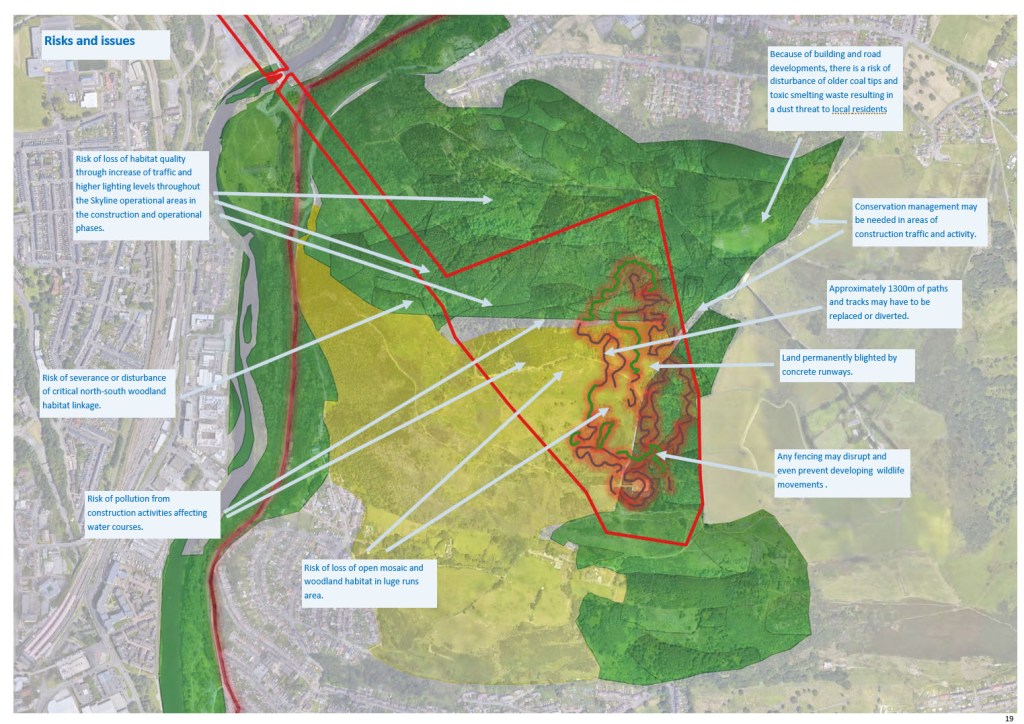
In December 2022, several senior councillors and council planning staff met in the Swansea Environment Centre with a group of concerned local people about the proposed Skyline developments on Kilvey Hill. The meeting had been prompted by the leak of information concerning a clandestine operation by Council staff to assemble a portfolio of landholdings on Kilvey Hill, which was to be leased to the Skyline investment company. Some of the land was not owned by the Council, and the authority had made strenuous efforts to obtain the land, not least because key parts of the Skyline development were planned to be built on the top of the Hill. The Council presented a series of rather mendacious arguments and ‘mistruths’ describing why they think they should acquire the land for no charge.

The meeting kickstarted a series of legal events about the unowned land and the broader picture of how the Council were dealing with the entire hill. Controversies over legal entitlement and determining a 999-year lease originally made to the Forestry Commission in 1970 abounded. The legal melee was made even worse by revelations that the hill was a designated quiet area, that there had been inconsistencies in how open access land and footpaths were being managed and a further deterioration in relationships between the Labour Council and local residents. If indeed, such a thing was possible.

The Council Leader(Robert Stewart) promised to ‘share as much as we know’ about the scheme. However, it turned out that he didn’t actually know too much, although he was obviously unwilling (and unable) to share what he did know about dealings inside the Welsh Government, an unfathomable business plan, and millions of pounds of public money being donated to a private-sector tourism venture.

I thought the meeting went as well as could be expected. Which is to say it didn’t go too well. How could it have when the questions (the good, bad, and ridiculous) were batted away with a flourish of ‘it’s too early for that’ or ‘we don’t know yet’. As the atmosphere deteriorated, Stewart descended into the understandable tactic of making stuff up, such as saying a council ecologist had been appointed, all pathways had been comprehensively mapped, and Ecological Impact Analysis had been completed, and a gradual awareness among the audience that this wasn’t a proposal in its early stages, but a carefully planned campaign of several years since local tourism consultant Terence Stevens had come up with the idea. Perhaps Terry got the idea when he became an officer of ‘Skyline Luge Sheffield Limited in 2018.

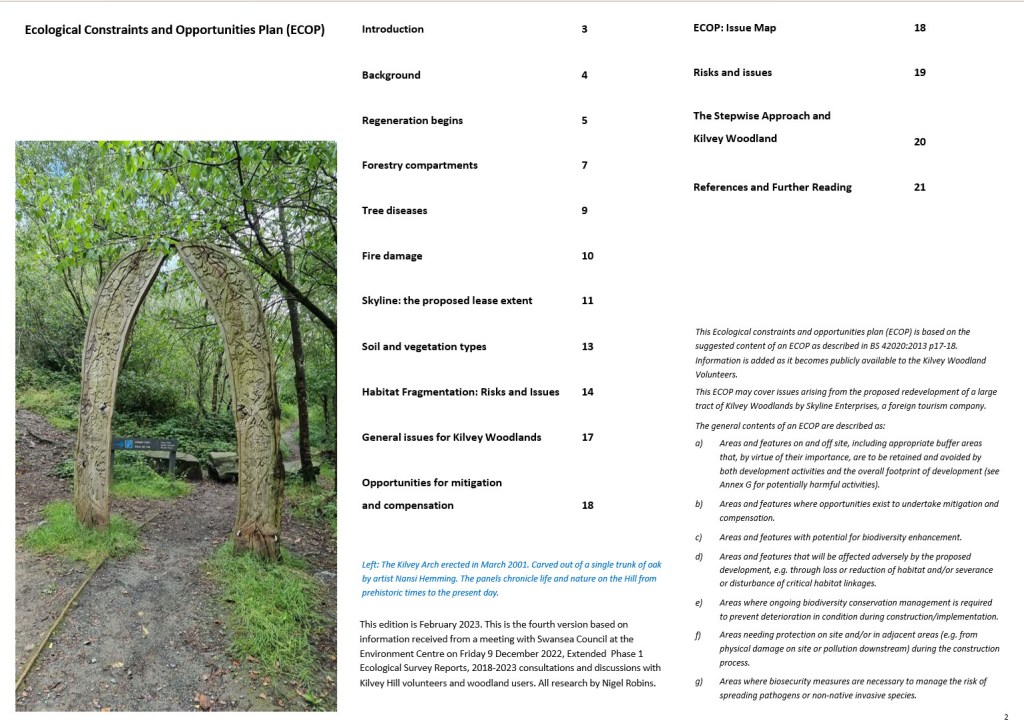
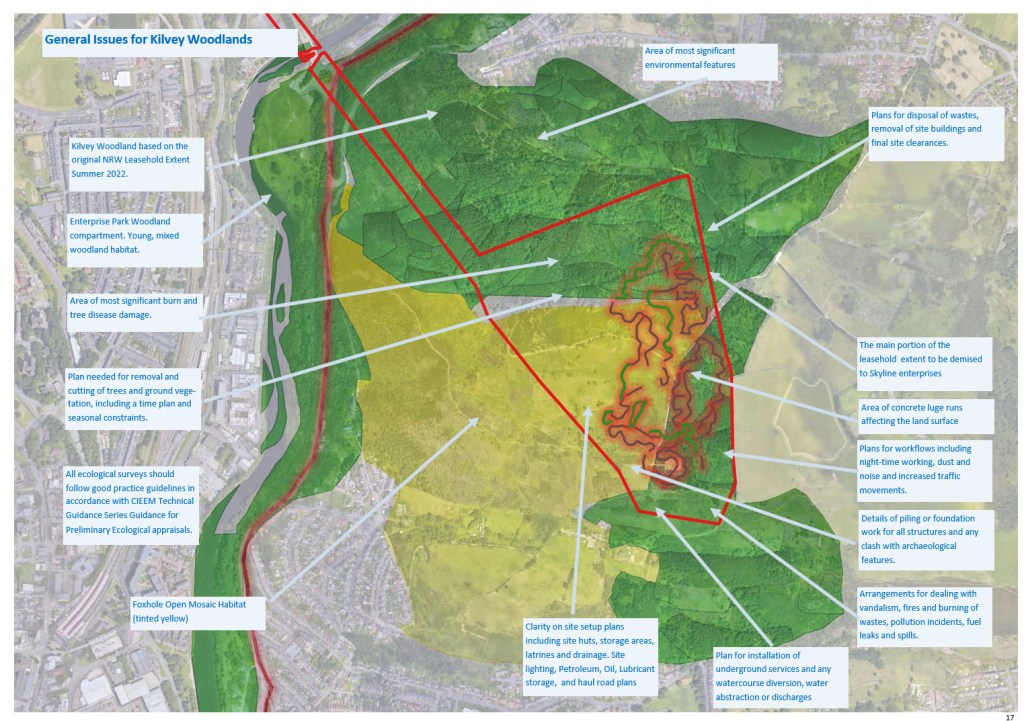
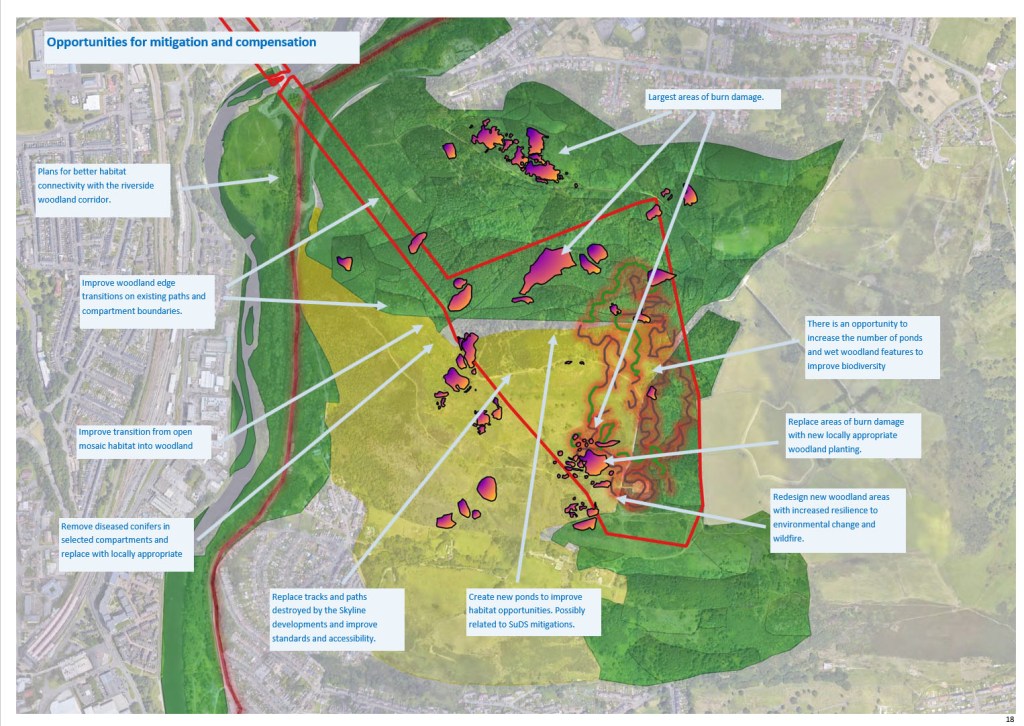
To try to fill the information gap, I created my own Ecological Constraints and Opportunites Plan (ECOP), something I used to do when I worked for the Civil Service. I was trained to follow the common standard BS42020 in structuring a document that brought together the essentials of a building plan that affected the environment.

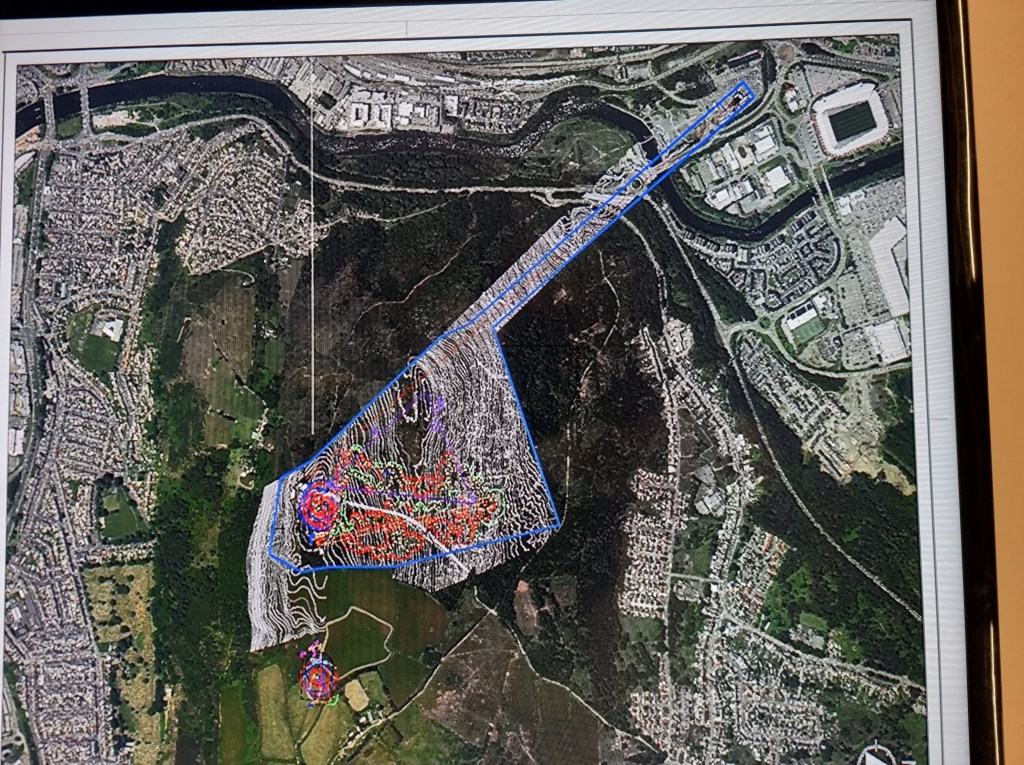
I took a photo of one of the slides on the PowerPoint shown to the meeting on the TV screen they had there. I used that as the basis for investigating the land.

Above: The original picture of the Skyline extent shown to the Environment Centre meeting in December 2022. )

I built up an ECOP over four versions one each month (Jan -April 2023), each building on information I could interpret, but all versions were incomplete. I remember having several aggressive emails from Council staff as I asked for information. I could never work out if they were upset with me for asking or Rob Stewart for giving out vague or misleading information. We’ll never know.

Eventually the ECOP turned into the Cilfái Trilogy of books which have formed a solid basis of information on history, woodland management and heritage for me to teacvh the landscape history of the hill.

As is my habit, I posted the last (fossilised) version of the ECOP on my Academia page. What amazes me is the massive number of downloads of this document (including USA and various African countries) and local authorities. So, I guess my structure is being used as a template elsewhere. Which is great.

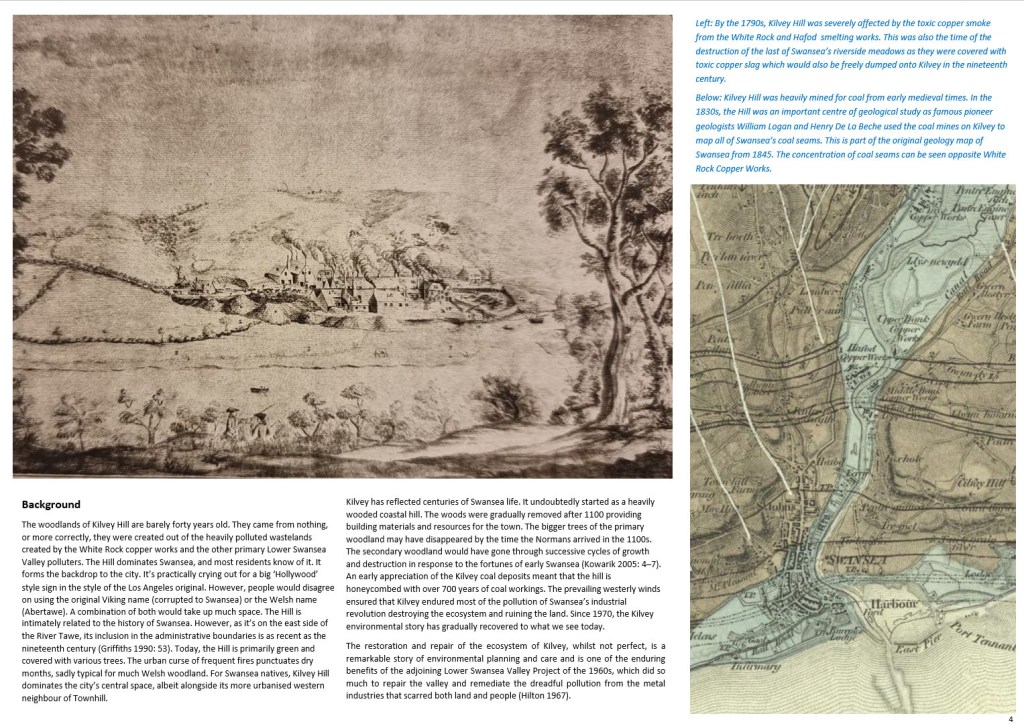
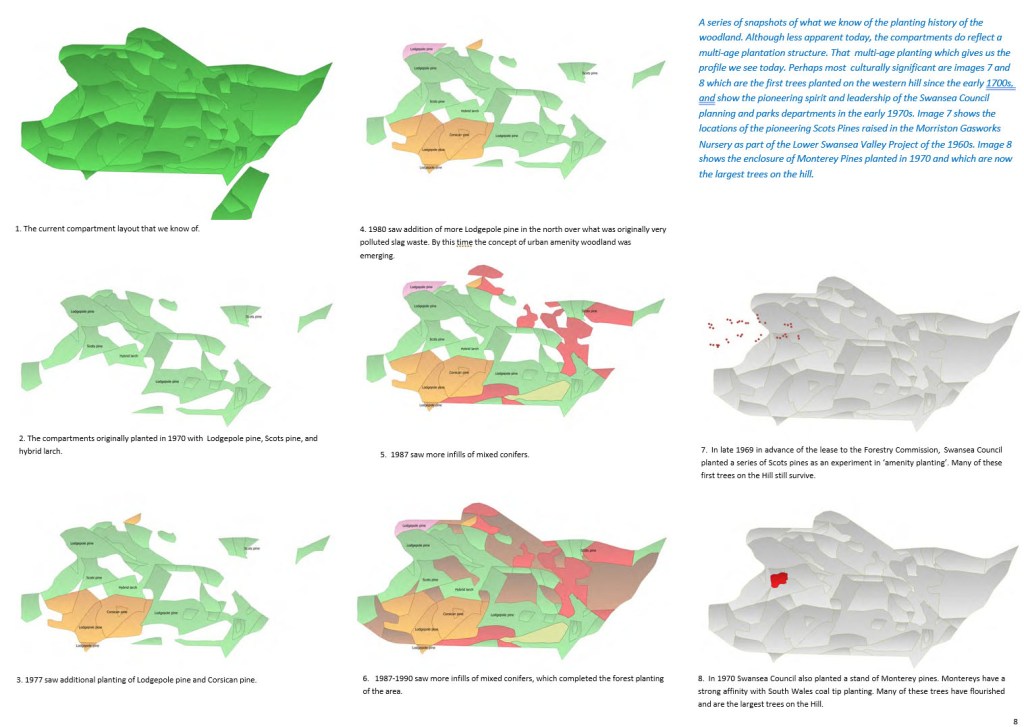
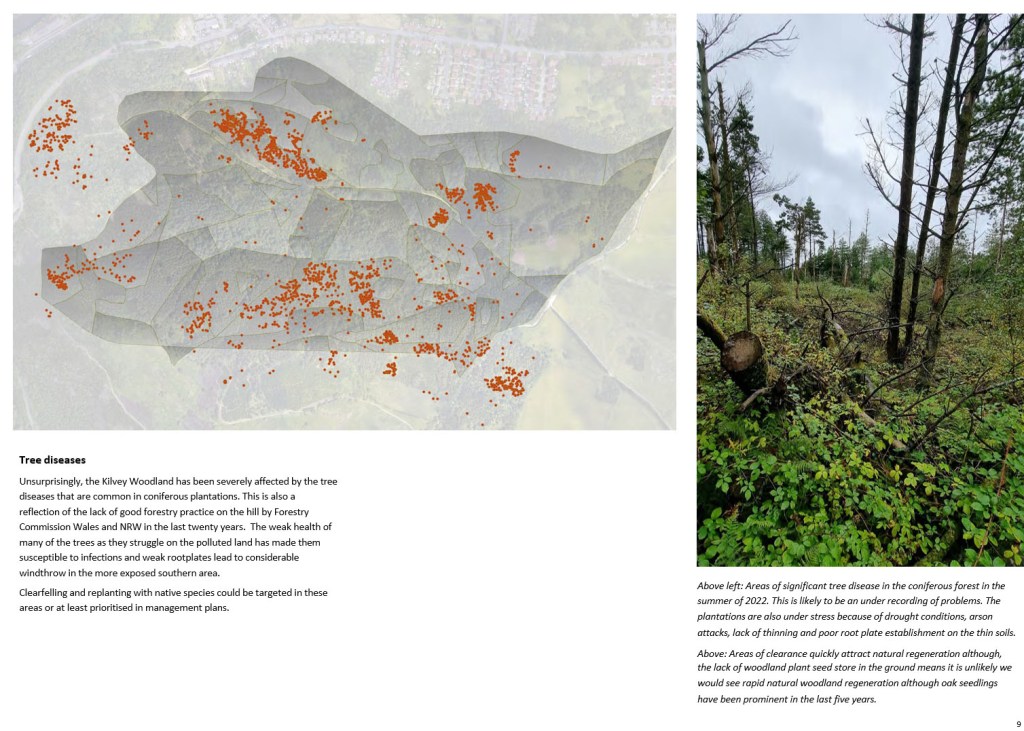
Below are screen shots of one of the versions…

My books: latest…

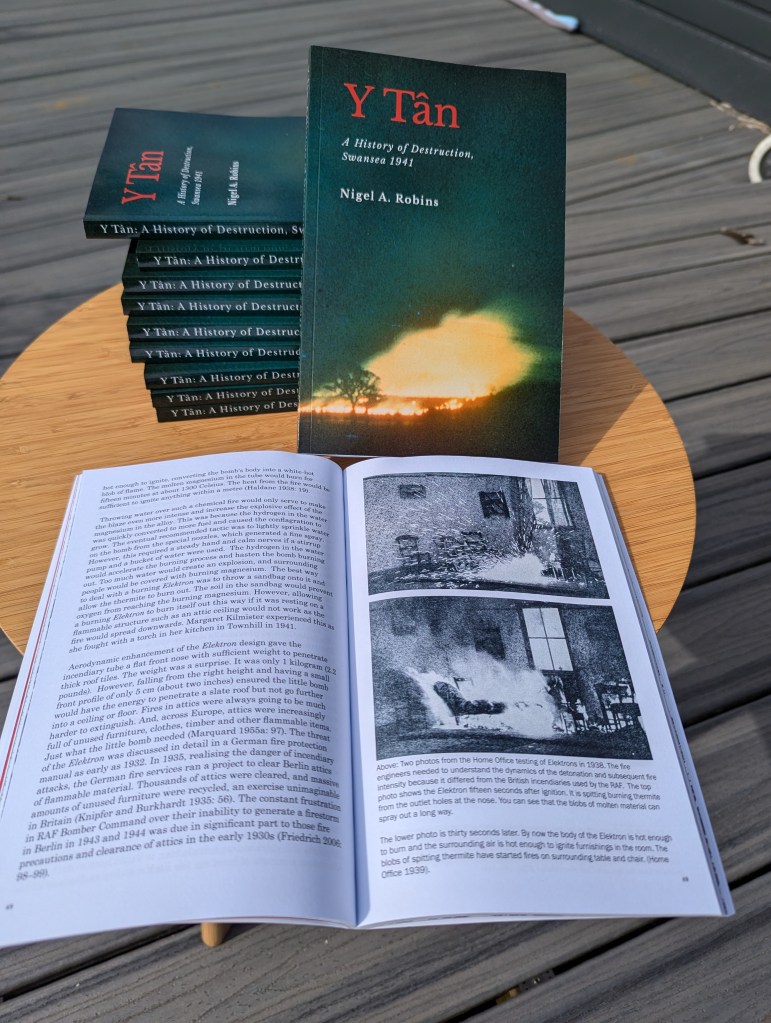
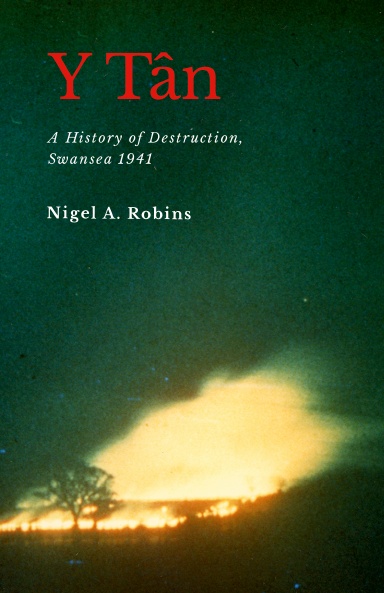
I’ve now got a stock of my latest book Y Tân.

Y Tân: A History of Destruction, Swansea 1941 is about my history of the Three Nights Blitz in February 1941. The town suffered appalling damage, and many argue it has never recovered. My grandfather died fighting the fires on the last night of the Blitz in Castle Street which was the site of a number of tragedies on that dreadful Friday.

In Y Tân I examine the situation in Swansea in the month before the attacks and look at the vulnerability of Swansea to German bombs and incendiaries. I examine the history of the weapon that destroyed the town and explain why Ben Evans was so vulnerable to fire. I examine the history of Castle Gardens and the reasons it became so dangerous. I also reconstruct the events of the three nights with eyewitness testimony from local people, war diaries and German air force sources. A chapter explains what happened to the piles of rubble in the town that eventually gave way to the redevelopments we see today—copiously illustrated with photos, maps and archive records from the author’s collections. Fully academically referenced.

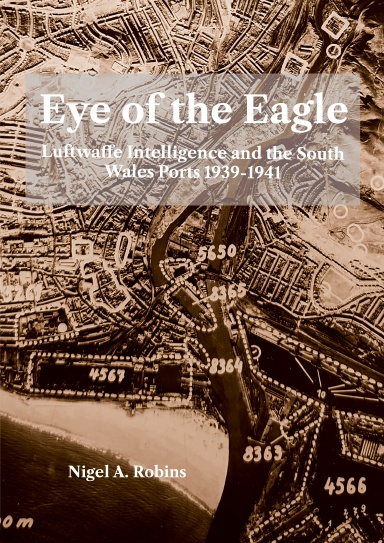
Y Tân complements the groundbreaking examination of Luftwaffe intelligence maps and plans published earlier this year, Eye of the Eagle: Luftwaffe Intelligence and the South Wales Ports 1939-1941.

Y Tân is £16.99, easily available from the author, or you can buy it online here.

Also available from me or online:

Eye of the Eagle: Luftwaffe Intelligence and the South Wales Ports 1939-1941: A4 170 pages with over a hundred illustrations and map extracts.

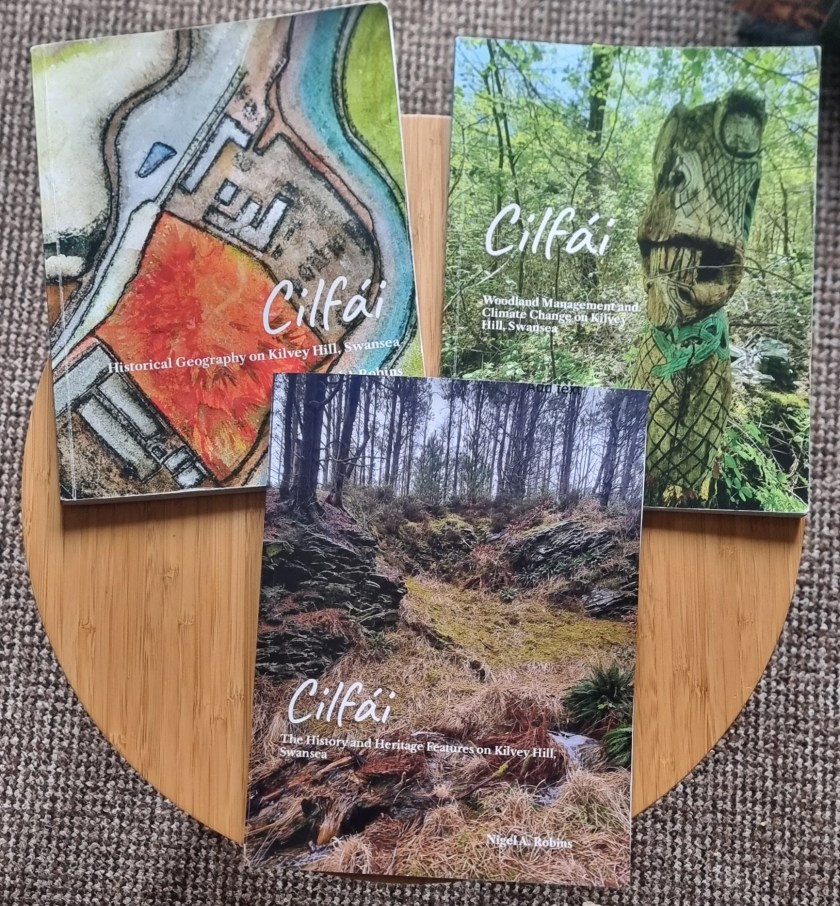
The Cilfái Trilogy

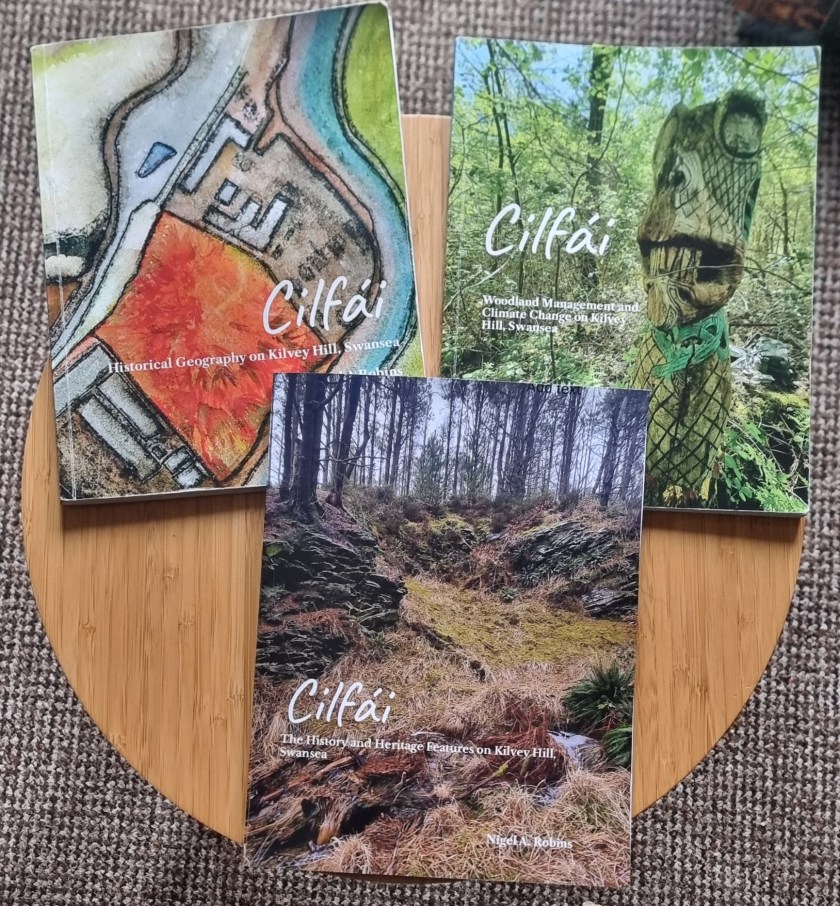
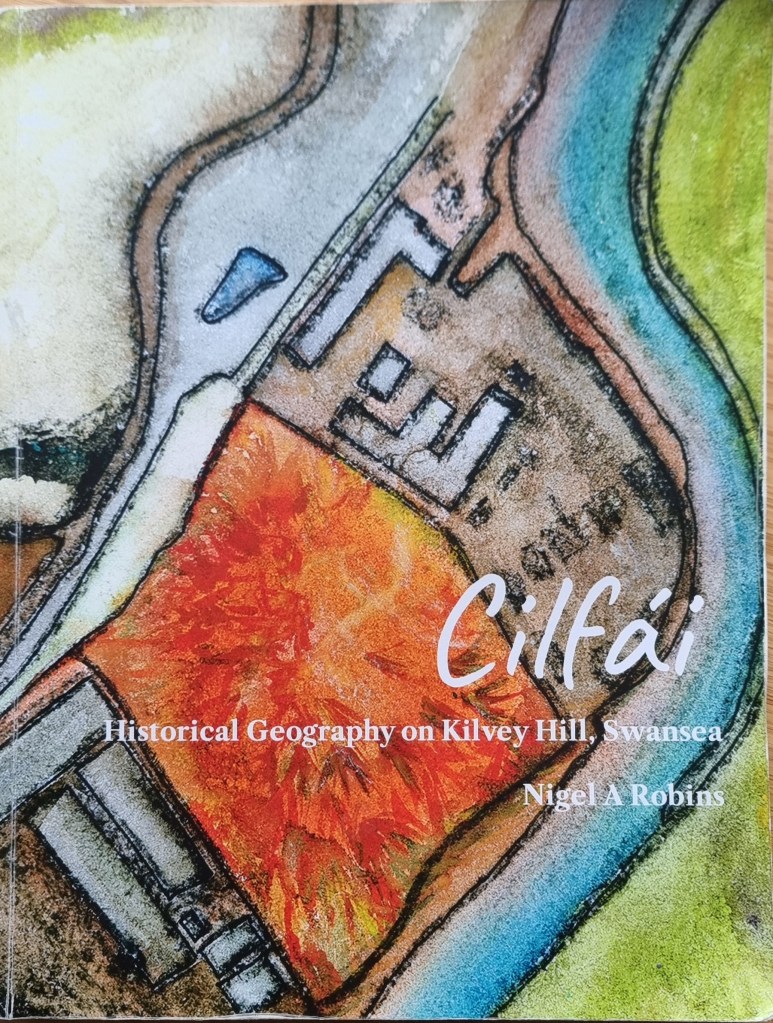
Cilfái: Historical Geography on Kilvey Hill, Swansea: £15.99, many colour illustrations and maps, 126 pages

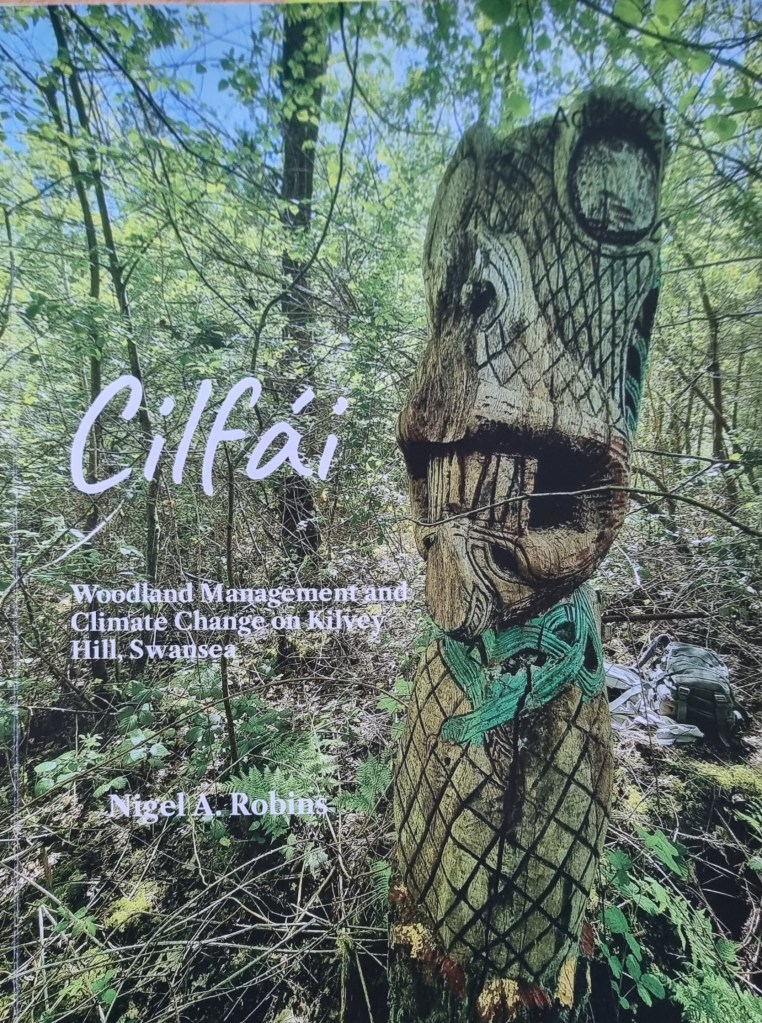
Cilfái: Woodland Management and Climate Change on Kilvey Hill, Swansea: £15.99, many colour illustrations and maps, 130 pages.

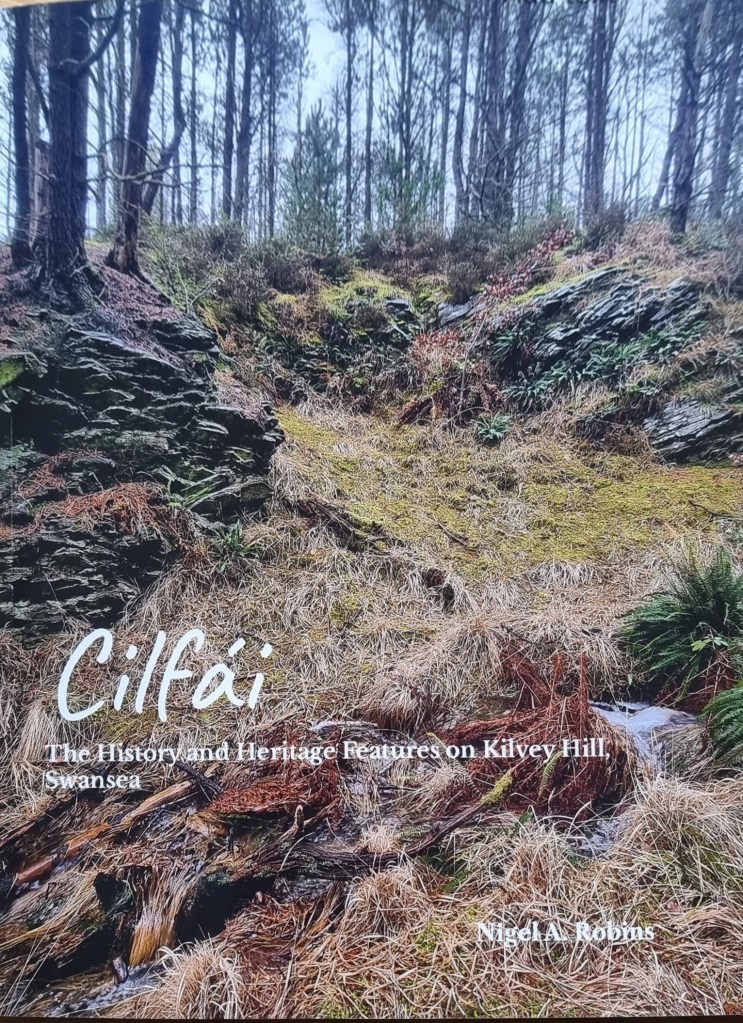
Cilfái: The History and Heritage Features on Kilvey Hill, Swansea: £14.99, many colour illustrations and maps, 98 pages.

Contact me via email at nyddfwch@gmail.com or message me. All payments are made easily with Paypal.

Or you can order from my bookshop at Nigel A Robins: Geographer – Books and Publications Spotlight | Lulu

Cilfái: Yi-Fu Tuan and a Sense of Place

Yi-Fu Tuan was one of the most influential geographers of his generation. Tuan created the concept of ‘Topophilia’, a bond between people and a place or setting. In a landmark book, Tuan explored the many ways people bonded themselves to their environment (Tuan 1974). The intimacies of personal encounters with a space produce ‘a sense of place’. This is what Cilfái has. Equally, it is what many modern local authorities strive for and fail to achieve. Cilfái is a runaway success, whilst Castle Gardens is a runaway failure. Cilfái is a miracle of the natural environment, born out of the criminal pollution of the past whilst Castle Gardens, or the St David’s Centre, are poorly devised spatial concepts that have little bearing on the needs of the community and their spiritual life.

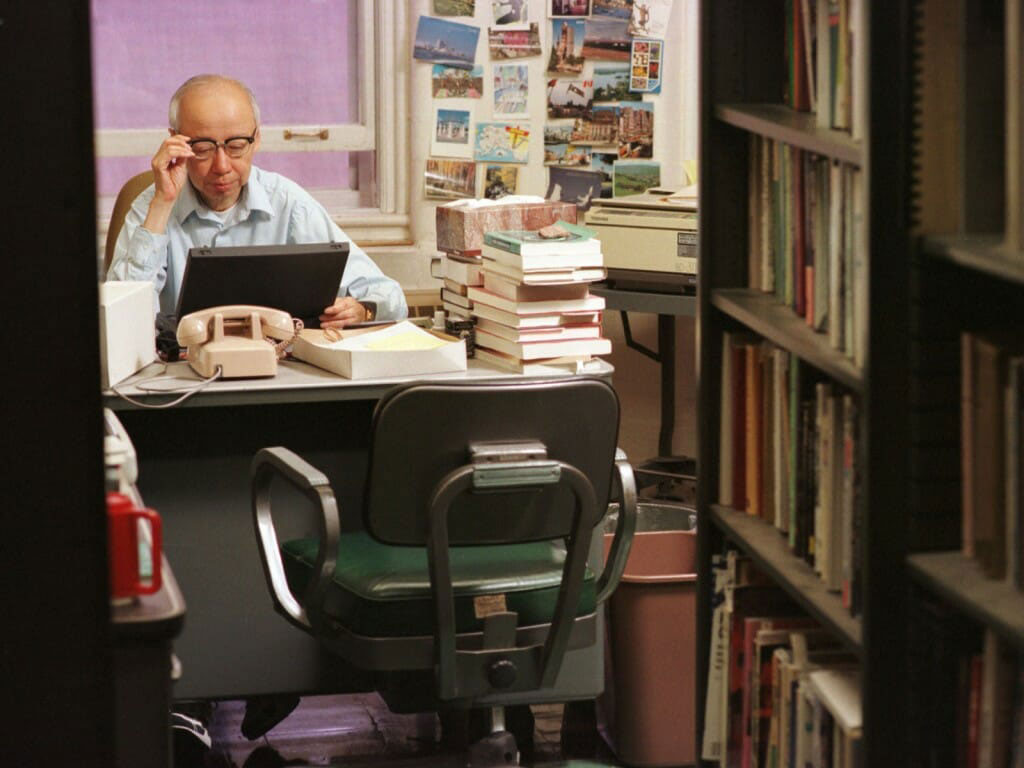
Yi-Fu Tuan in 1998.

Yi-Fu Tuan is one of the reasons I became a geographer. He had me at the line:

‘Awareness of the past is an important element in the love of place.’

(Tuan 1974: 1332)

The hill of Cilfái fits perfectly with Tuan’s idea that a ‘place’ or ‘space’ needs to be a natural unit with which people can readily identify. The hill has historical continuity and boundaries; it can be known personally in a way the wider city of Swansea can never be because it is too disparate and big. One of Swansea’s most famous history books is ‘The Story of Swansea’s Districts and Villages’.  That’s no accident; the author knew what he was talking about (Thomas 1969).

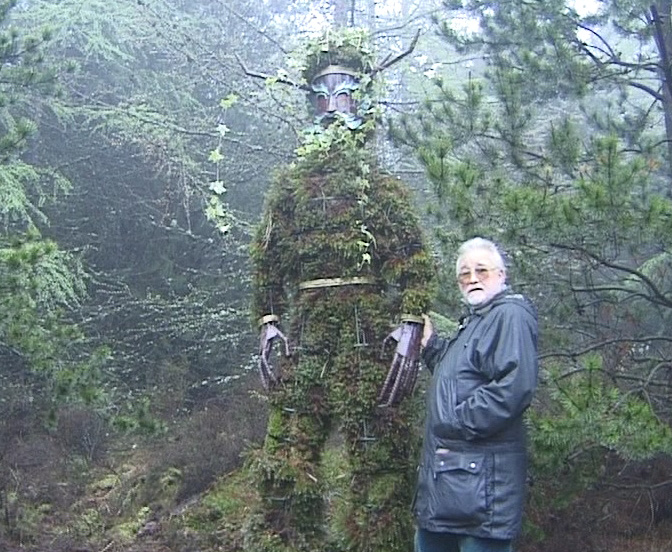
When Pete Thomas created Green Man, he had tuned in to the same emotion of recreating space and place on the hill.

I hope we get to keep it.

Thomas, Norman Lewis. 1969. The Story of Swansea’s Districts and Villages (Swansea: Qualprint)

Tuan, Yi Fu. 1974. Topophilia: A Study of Environmental Perception, Attitudes, and Values (New York: Columbia)

More on Swansea coal

I’m still working on the history of geological exploration in and around the Swansea area. Some of it was included in the first Cilfái book, where I wrote about the early work history of William Logan, who learned much of his early geology studying the coal veins of Cilfái.

Knowledge of every coal vein in the area was once the lifeblood of the Industrial Revolution. It is hard to believe now when we can walk through the lush green vegetation of Cilfái without seeing any evidence of the past unless we make an effort to dig to find some.

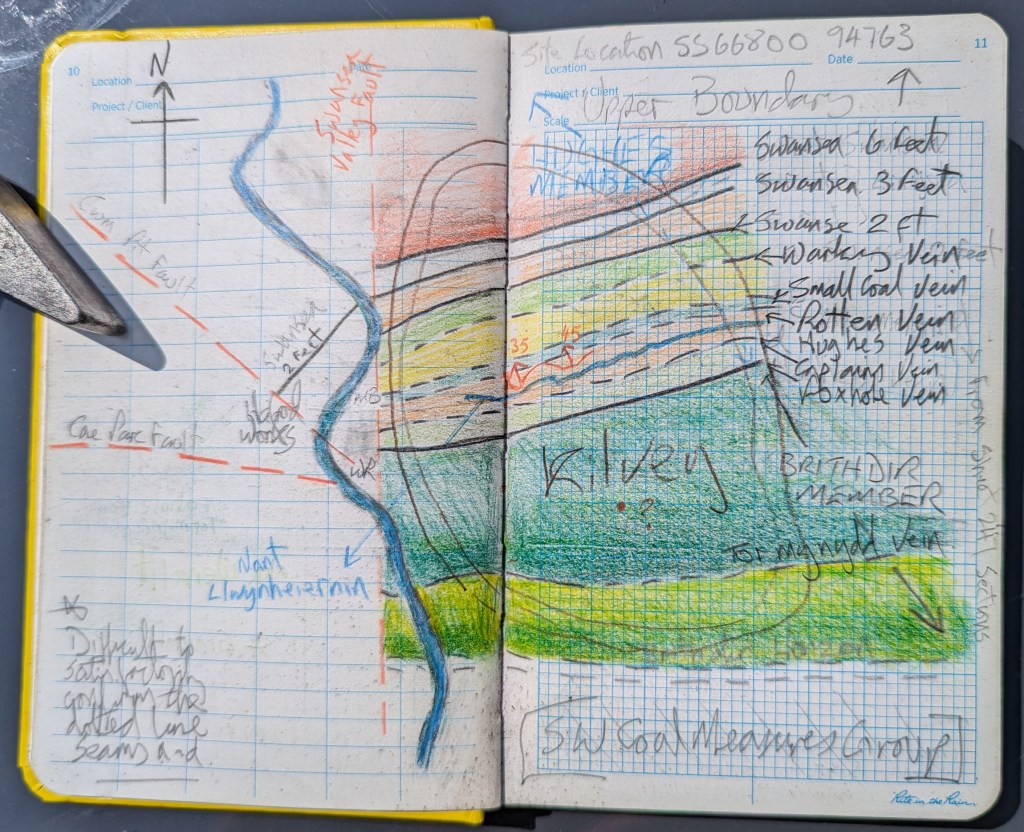
During our ITV filming on Monday, I was asked about the Tormynydd coal seam. This substantial coal layer, which extends from the seaward side of the hill to Neath and Port Talbot, played a pivotal role in the Industrial Revolution. Like all Cilfái coals, it is bituminous or binding coal that can burn with a cloud of thick black smoke and tends to stick in big lumps when it burns down. (Conybeare and Phillips 1822: 426). The Tormynydd vein is at the bottom of the sketch map and is marked today by a line of big quarries and tunnels across the front of the hill.

My sketch map of the coal veins across Cilfái. It has to be in pencil because I keep updating it as I find more sources and information.

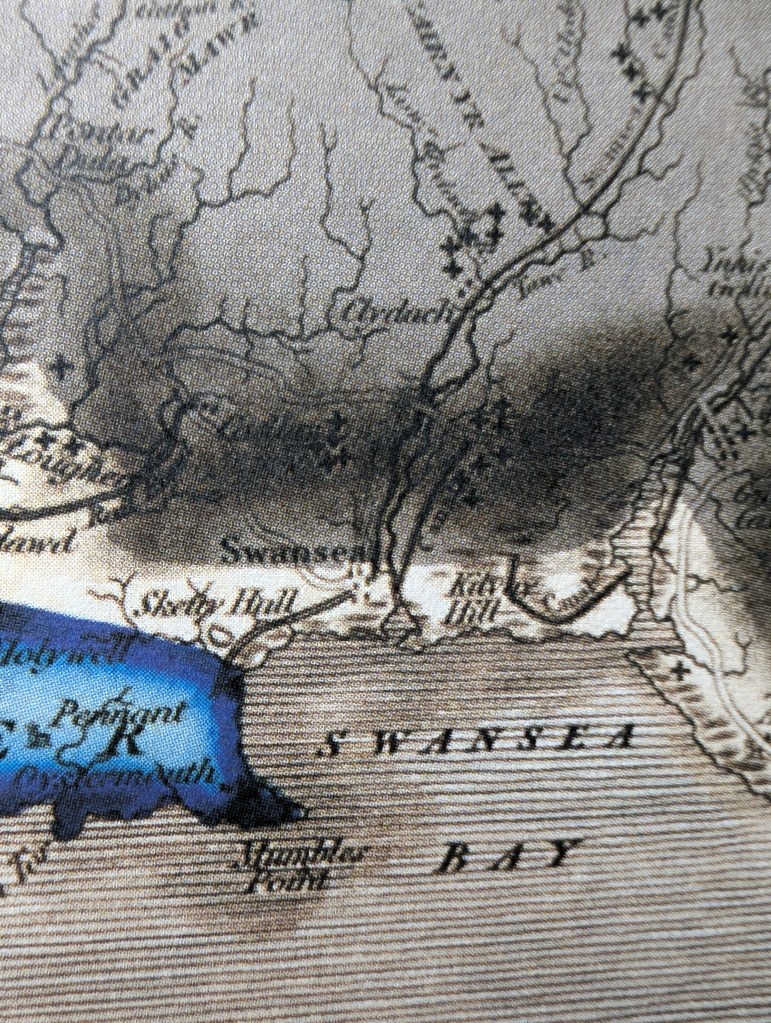
Knowledge of the coal veins of Cilfái and wider Swansea was passed from father to son for generations and it wasn’t until the 1790s that people started to think seriously about understanding the nature and relationship of the underground coal veins.  The first map of coal in the area is William Smith’s map dated 1815 (but based on considerable local knowledge). There’s an extract of it below (Macfarlane 2020).

My sketch plan is based on diaries and memoirs from various times. It is incredible to think that Cilfái had about 10 coal veins providing coal for White Rock and Middle Bank in the 1790s

Above: This is an extract from the earliest map of the local Geology we have. This is dated 1815, but is based on lots of earlier information from the 1700s. This map pre-dates the Ordnance Survey plans for Swansea so gives us a different view of priorities for understanding the main features of Swansea. William Smith had to devise a set of colours to depict the different types of rock (or ‘Strata’ ) that he found. Smith decided on blue to depict limestone…a convention that we still honour today. The grey shading is the ‘coal measures’, the rocks of sandstone and mudstone that contained the precious coal seams (veins in Smith’s time). The fact that Kilvey has a place name shows how important the hill was as a landmark in Swansea’s coal geography. You can see the crosses that mark the location of Swansea’s biggest coal mines at the time of the Napoleonic Wars.

Conybeare, William Daniel, and William Phillips. 1822. Outlines of the Geology of England and Wales: With an Introductory Compendium of the General Principles of That Science, and Comparative Views of the Structure of Foreign Countries … (W. Phillips)

Macfarlane, Robert. 2020. STRATA: William Smith’s Geological Maps, 1st edition, ed. by Oxford University Museum of Natural History (London: Thames and Hudson Ltd)

Cilfái: The Importance of our History.

Who owns history?

Last Saturday, I talked about the history of Cilfái as part of our National Local History Month celebrations.

I had a packed room in the Central Library, not to see me… but to listen to the topic. Concern over losing our history and heritage is mounting as more threats from local Council plans get closer. I knew many of the audience, some of my old colleagues, heritage and environmental workers, and my past history teachers. There were a lot of local people as well who made an effort to come and sit in a warm teaching room on one of the hottest days of the year.

The combined years of experience in the room were amazing. People who had worked on the hill researched and cared for it, and a newer generation is taking on the challenge of future care. There was an unbroken chain of partnerships and friendships dating back to the pioneer historians Clarence Seyler and George Grant Francis.

The talk and the questions session afterwards led me to reflect on the history I was talking about. Much of the past fifty years of Cilfái history is not documented and runs a significant risk of being ‘reinterpreted’ by an unmindful local authority and a foreign tourism company. That risk of deliberate amnesia was one of the reasons I wrote the Cilfái volumes.

But who ‘owns’ the history? It is always an important question. In 1891, Oscar Wilde penned an often-quoted phrase, ‘The one duty we owe to history is to re-write it.’ Although Wilde was likely thinking more of fine art criticism, the statement holds up in modern times with the revision of colonialism and racism prominently featured in research and popular histories. I’m part of that process as I talk of the environmental pollution and ecocide that accompanied the explosion of industrialisation and exploitation in the Swansea Valley.

As good as the Wilde observation is, I felt I was always led by this statement from George Santayana in 1905…’ Those who cannot remember the past are condemned to repeat it.’ I suppose the ‘remembering’ or ‘forgetting’ can be both wilful and accidental. In the past month, I have had conversations with senior Council officers over Cilfái, where officials were adamant that records and land titles were entirely in order concerning the hill (and officially stating that was the case) whilst not checking anything about the truth and validity of those statements. The main reason behind their indolence was an intention to wilfully ignore the hill’s history. After my pushback, the senior planning officer had to retract those silly statements. The worst part of the episode was the inherent untruths and misrepresentation of vague facts advanced by Council employees who may be qualified but are rarely experienced. The injured parties are us as the public.

In books and talks about the history of Cilfái, I have tried to open ownership of our history to the broader public to combat the apparent desire of some to shut down debate, consultation, and knowledge. It is also important to remember that some of the most vocal Facebook warriors in unquestioning support for foreign tourism company plans have never been on the hill.

Above: Coal mine workings on Cilfái after 40 years of uninterrupted recovery. The Council and the foreign tourism company want us to believe this is worthless and they can do better. Really?

Cilfái and unexploded bombs

Swansea was bombed about forty times during World War Two. Many of the bombs dropped didn’t explode and many are still out there under the ground on Cilfái.

The most imfamous bombing event was Swansea’s Three Nights’ Blitz of 19-21 February 1941. People assume that Cilfái’s bombs came from that event, but the main damage to the Hill was caused by the heavy bombing raid of 17 January 1941. On this night the Luftwaffe dropped a lot of heavy bombs. Many of which missed the Docks and ended up on the hill.

Bombs that landed on the marshy ground on the town side of the hill sank into the ground and never exploded. They are still there, but a long way underground (maybe five metres or more). Others did explode when they hit the hill leaving large craters, some of which have filled with water and are now biodiversity hotspots.

The Skyline development raises the risk that some of the unexploded bombs will be disturbed by excavators and diggers. This is a common ocurrence in areas that were heavily bombed. When I worked in construction in London, we all had to be trained in recognition and procedures if one of the diggers brought a bomb up in a bucket. The risk on the hill is real and has already been recognised in planning documents, and precautions will be essential.

The bombs that did explode produced a lot of metal fragments of all sizes. In some places bomb fragments have become part of Cilfái’s archaeology. Fragments were incredibly dangerous. A piece of a bomb weighing about half a gramme (a fiftieth of an ounce) would be enough to smash through an arm or leg destroying the bones. The bigger fragments could kill instantly or easily destroy a vehicle.

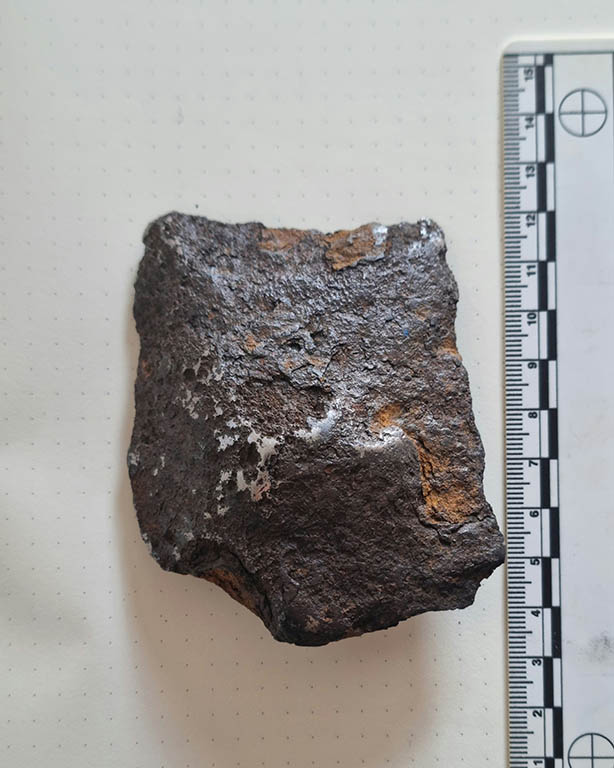
Some parts of the hill were peppered with this kind of shrapnel. The photo below is of a big piece (aqbout 9 cm) I found. The sides of this fragment are still as sharp as a Stanley knife.

The World War Two remains are part of the wider collectiion of heritage and archaeology remains listed in the third Cilfái book Cilfái: History and Heritage Features on Kilvey Hill Swansea.

No matter how old they are or how rusty they look, bombs will still explode and kill.

Above: Bomb shrapnel from bombs dropped on Swansea in 1940.