Cilfái: Historical Geography on Kilvey Hill, Swansea ISBN 978-1-7393533-0-8

This has now been reissued as a 2025 Second Edition with some updates, minor amendments and some new illustrations. I’ve also updated the copyright and EU product compliance details.

This study has been heavily reliant on past teaching notes and lessons learned from students’ questions and discussions over many years. I am indebted to all of them. Grateful thanks to the staff of West Glamorgan Archives Service and the archivists at the British Geological Survey in Keyworth who allowed me to spend time with William Logan’s original notebooks. The help of experts such as Dr John Alban and Gerald Gabb has always been beyond value and they have helped me as a sounding board and unlocking further fields of expertise which ave been so valuable. The contributions and discussions with my oldest friend John Andrew on geology and the rocks of Townhill and Kilvey have been particularly inspiring. John passed away in August 2024 and I miss his help and support terribly.
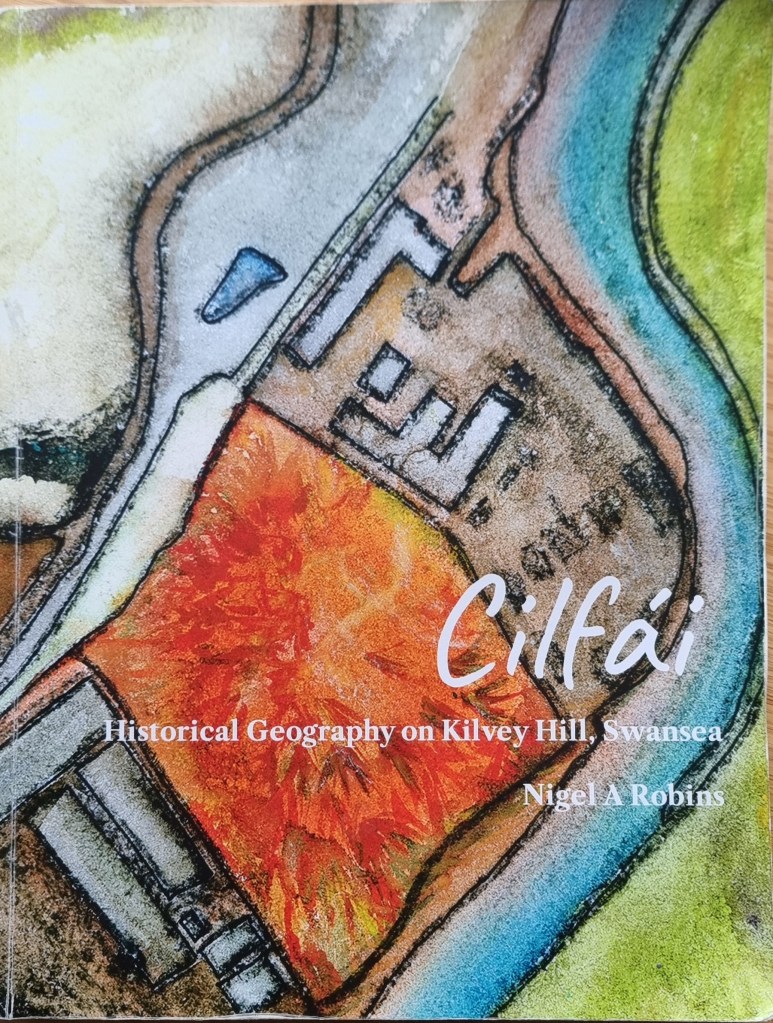
The cover of Cilfái was part of a painting of White Rock I did a while ago, mainly to show the extent of the Cae Morfa Carw waste tip (the orange land). The Tawe is on the right, and the original long workhouse of White Rock is at the top.


I must also thank the staff and colleagues at Coed Cadw/Woodland Trust who, unwittingly perhaps, spurred me on to re-explore Kilvey some thirty years after I last surveyed the land in the late 1980s. All the modern mapping was completed using the open-source QGIS application which has become a central tool as a landscape historian over the past ten years. Finally, I must mention the help and support of Kilvey Woodland Volunteers. Without the passion and commitment of the volunteer body over many years, I doubt that Kilvey would be the special place it has become. As I write this, Kilvey is under more threats from the local council and developers, and I hope this little book records a few milestones in the ongoing Kilvey story rather than an ending.


The first edition of Cilfái was remarkably successful. The aim was to fill a gap in knowledge about the Hill in the constant challenge to take care of it in the face of threats of irreversible destruction from tourist developments and an uncaring local authority. There are now many more local environmental and residents groups aware of the current value of the land and the potential loss Swansea faces if the destruction begins. This book was the first of the Cilfái trilogy, the second book covered Woodland Management and Climate Change, and the third book covered the heritage features on the hill. This book was rushed into print to address claims from the Local Authority that there was ‘not much up there’. Since 2023, I’ve taken hundreds of people on walks to view the biodiversity, history, and heritage of Cilfái, and I’ve packed out numerous community centres and halls to talk about the history. Hundreds of people have been converted to the value of the landscape we may lose.

Above: A coal adit on Kilvey was left to regenerate after about 40 years of peace. Swansea Council may be seeking to destroy this land, which they consider ‘worthless’.

Coal in Swansea

Swansea’s history would have been totally different witthout it. Coal is now part of Britain’s past history although across the planet coal use is now larger than at any time in the past. Led by China and Australia, coal burning will exceed 8.7 billion tonnes this year resulting in the climate change we now experience.

Swansea has a unique place in the history of coal. Kilvey Hill and Townhill were both places where early geologists first learned about the relationships of coal seams and sandstones that eventually led to understanding the coal resources across the whole of the Glamorgan coalfield. Engineers like Edward Martin, and geologists like Henry de la Beche and William Logan learned about coal by exploring the coal veins of Swansea.

I’ll be talking about the history of Swansea coal at a lecture for the Oysterrmouth Historical Association on Thursday 16 January at Tabernacle Church, Newton Road, at 7.30pm.

Above is a lump of Kilvey coal from the Swansea Rotten Vein above White Rock. You can see the layers of hard, glassy carbon and the duller layers of carbonised charcoal that made this coal incredibly polluting when burned in massive quantities in the Lower Swansea Valley.

My books: latest…

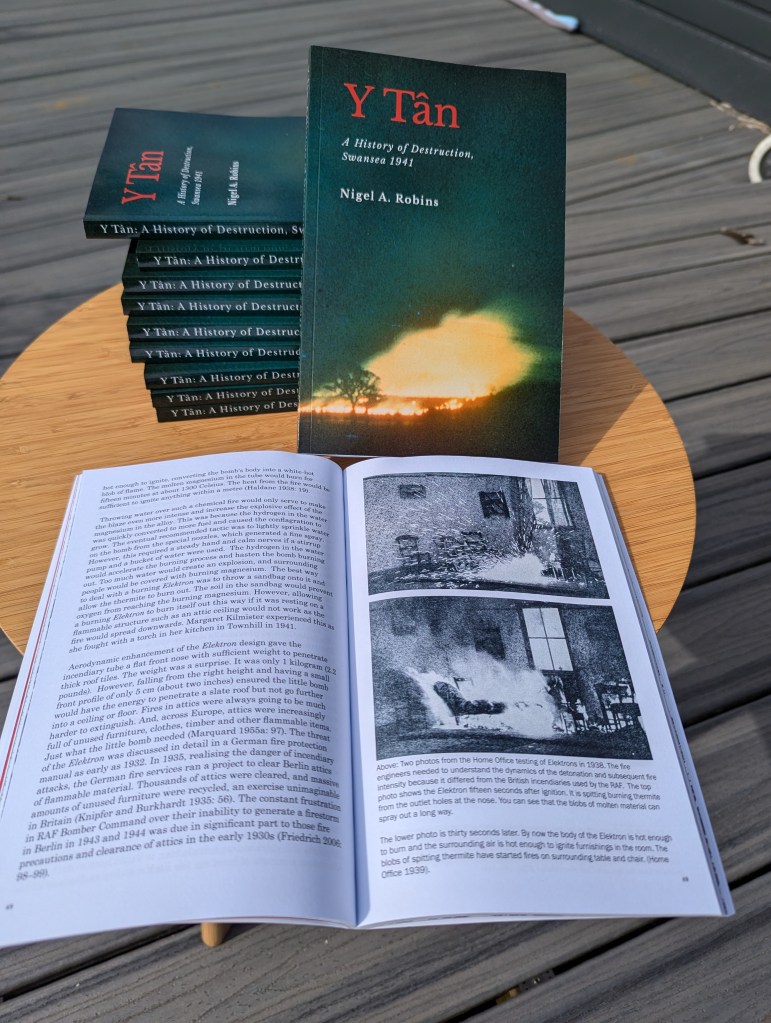
I’ve now got a stock of my latest book Y Tân.

Y Tân: A History of Destruction, Swansea 1941 is about my history of the Three Nights Blitz in February 1941. The town suffered appalling damage, and many argue it has never recovered. My grandfather died fighting the fires on the last night of the Blitz in Castle Street which was the site of a number of tragedies on that dreadful Friday.

In Y Tân I examine the situation in Swansea in the month before the attacks and look at the vulnerability of Swansea to German bombs and incendiaries. I examine the history of the weapon that destroyed the town and explain why Ben Evans was so vulnerable to fire. I examine the history of Castle Gardens and the reasons it became so dangerous. I also reconstruct the events of the three nights with eyewitness testimony from local people, war diaries and German air force sources. A chapter explains what happened to the piles of rubble in the town that eventually gave way to the redevelopments we see today—copiously illustrated with photos, maps and archive records from the author’s collections. Fully academically referenced.

Y Tân complements the groundbreaking examination of Luftwaffe intelligence maps and plans published earlier this year, Eye of the Eagle: Luftwaffe Intelligence and the South Wales Ports 1939-1941.

Y Tân is £16.99, easily available from the author, or you can buy it online here.

Also available from me or online:

Eye of the Eagle: Luftwaffe Intelligence and the South Wales Ports 1939-1941: A4 170 pages with over a hundred illustrations and map extracts.

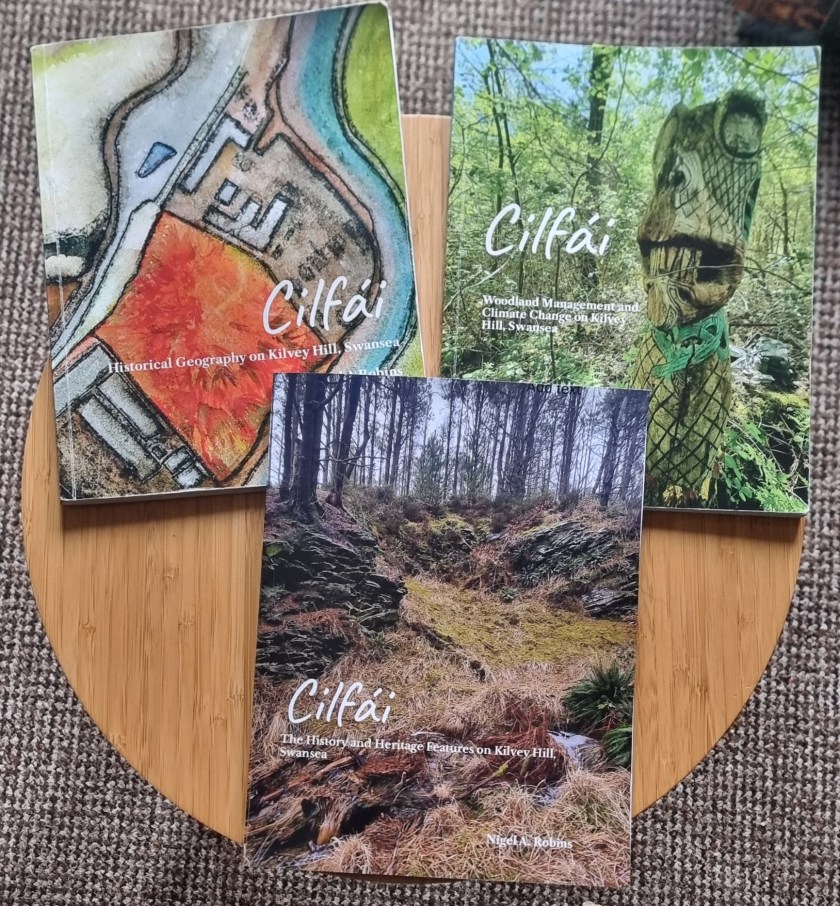
The Cilfái Trilogy

Cilfái: Historical Geography on Kilvey Hill, Swansea: £15.99, many colour illustrations and maps, 126 pages

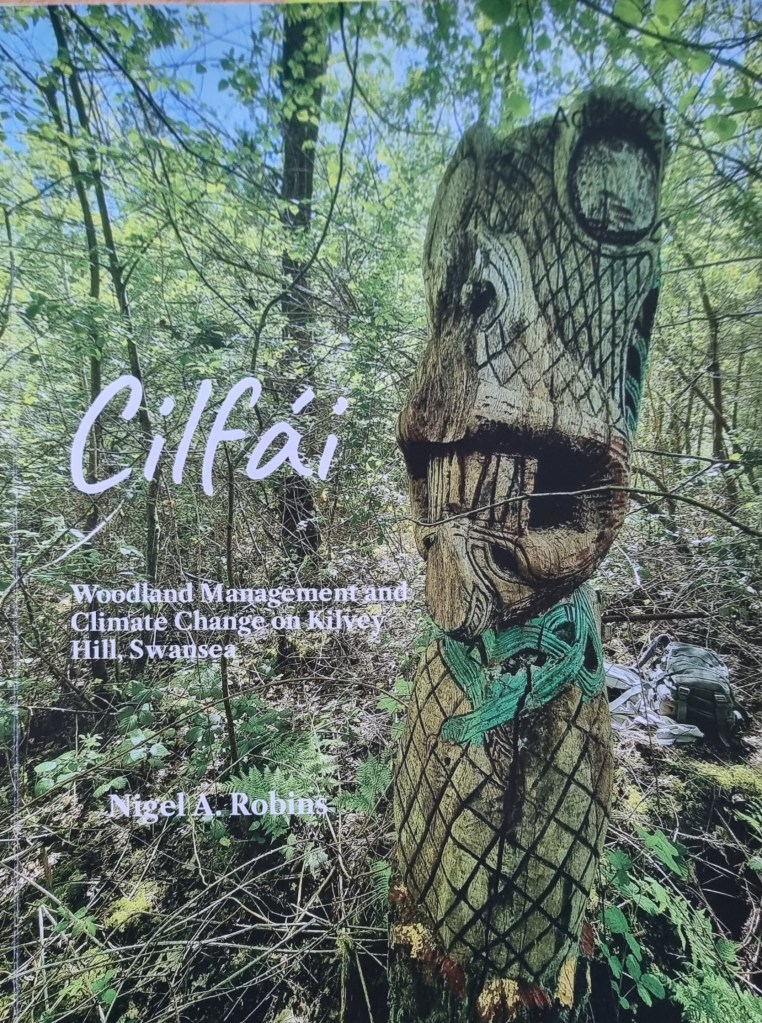
Cilfái: Woodland Management and Climate Change on Kilvey Hill, Swansea: £15.99, many colour illustrations and maps, 130 pages.

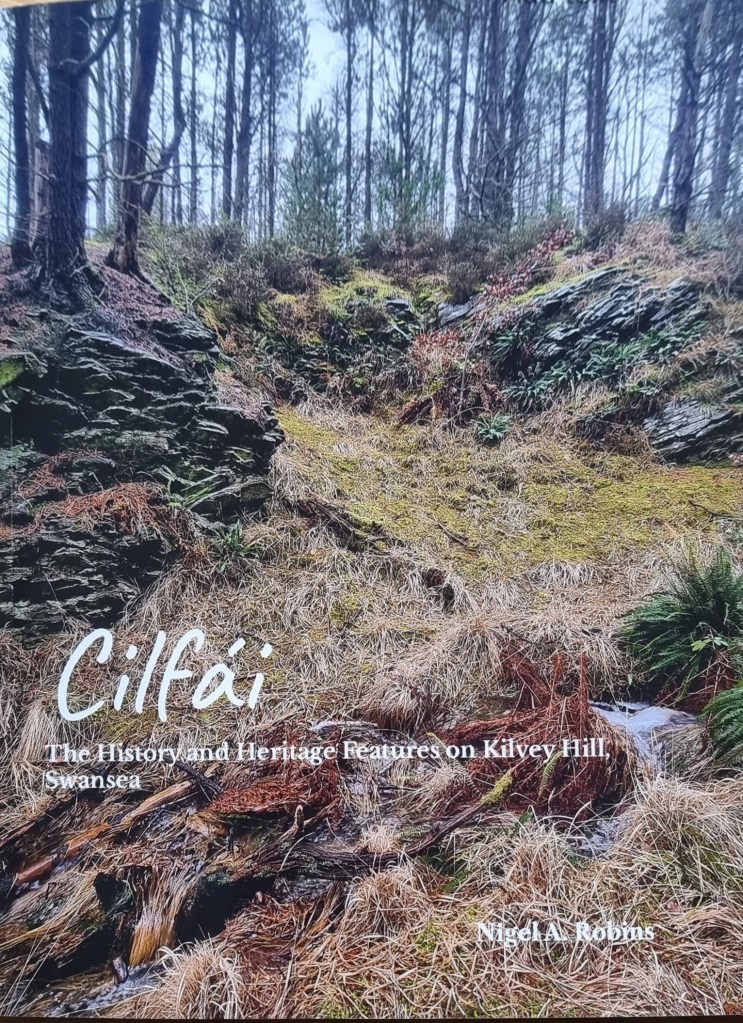
Cilfái: The History and Heritage Features on Kilvey Hill, Swansea: £14.99, many colour illustrations and maps, 98 pages.

Contact me via email at nyddfwch@gmail.com or message me. All payments are made easily with Paypal.

Or you can order from my bookshop at Nigel A Robins: Geographer – Books and Publications Spotlight | Lulu

Cilfái: Yi-Fu Tuan and a Sense of Place

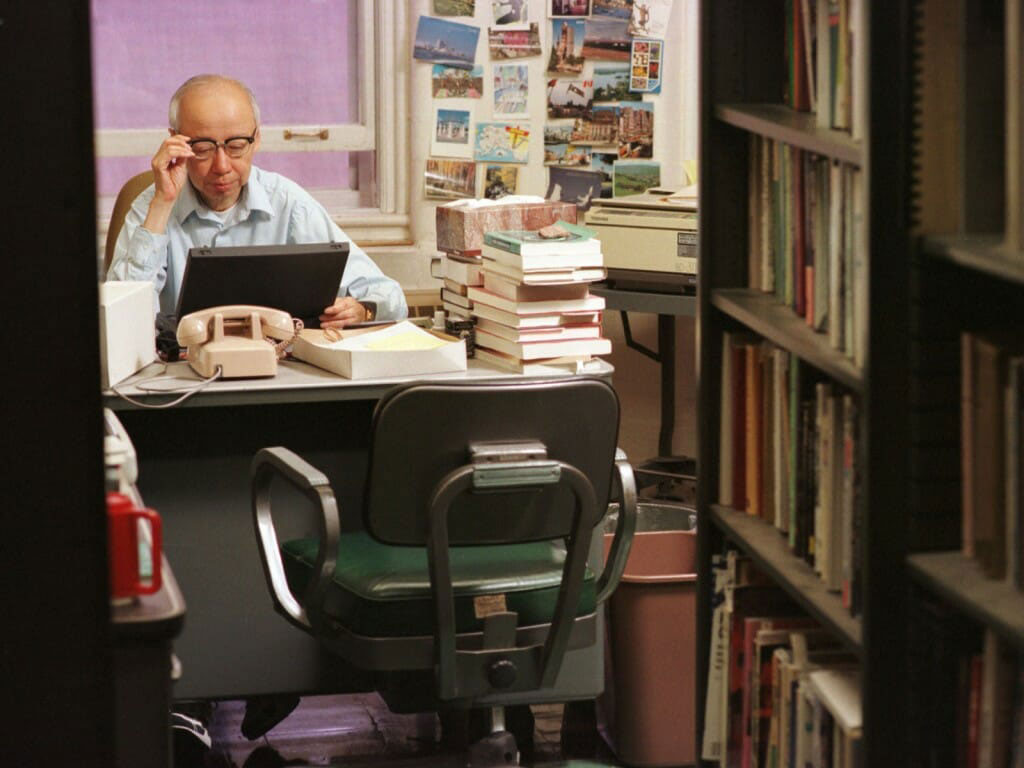
Yi-Fu Tuan was one of the most influential geographers of his generation. Tuan created the concept of ‘Topophilia’, a bond between people and a place or setting. In a landmark book, Tuan explored the many ways people bonded themselves to their environment (Tuan 1974). The intimacies of personal encounters with a space produce ‘a sense of place’. This is what Cilfái has. Equally, it is what many modern local authorities strive for and fail to achieve. Cilfái is a runaway success, whilst Castle Gardens is a runaway failure. Cilfái is a miracle of the natural environment, born out of the criminal pollution of the past whilst Castle Gardens, or the St David’s Centre, are poorly devised spatial concepts that have little bearing on the needs of the community and their spiritual life.

Yi-Fu Tuan in 1998.

Yi-Fu Tuan is one of the reasons I became a geographer. He had me at the line:

‘Awareness of the past is an important element in the love of place.’

(Tuan 1974: 1332)

The hill of Cilfái fits perfectly with Tuan’s idea that a ‘place’ or ‘space’ needs to be a natural unit with which people can readily identify. The hill has historical continuity and boundaries; it can be known personally in a way the wider city of Swansea can never be because it is too disparate and big. One of Swansea’s most famous history books is ‘The Story of Swansea’s Districts and Villages’.  That’s no accident; the author knew what he was talking about (Thomas 1969).

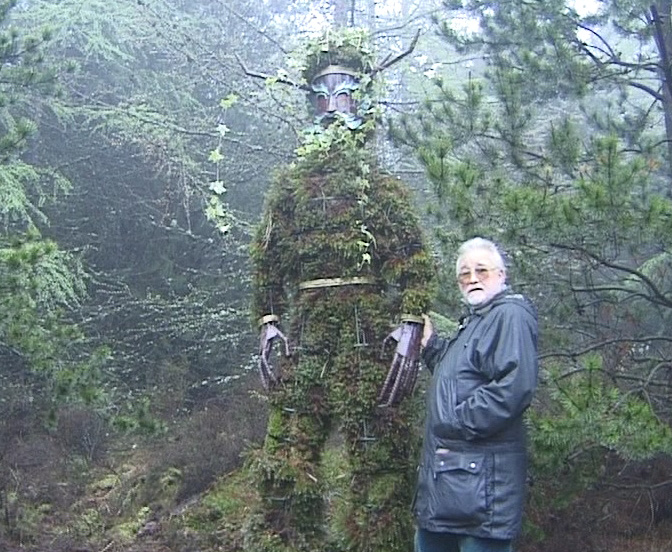
When Pete Thomas created Green Man, he had tuned in to the same emotion of recreating space and place on the hill.

I hope we get to keep it.

Thomas, Norman Lewis. 1969. The Story of Swansea’s Districts and Villages (Swansea: Qualprint)

Tuan, Yi Fu. 1974. Topophilia: A Study of Environmental Perception, Attitudes, and Values (New York: Columbia)

Cilfái and the Lower Swansea Valley: the essential books.

There are several crucial books on the history of Cilfái and the Lower Swansea Valley that serve as invaluable references. These are the books that form the foundation of your understanding. Without them, comprehending the reasons behind certain actions, inactions, and unresolved issues can be a daunting task. As with any large organisation, Swansea Council grapples with a lack of corporate memory and knowledge, particularly concerning the valley. In fact, some of the current issues with disputed ownership and title of the hill stem from the lack of historical knowledge and records among younger or less-experienced staff.

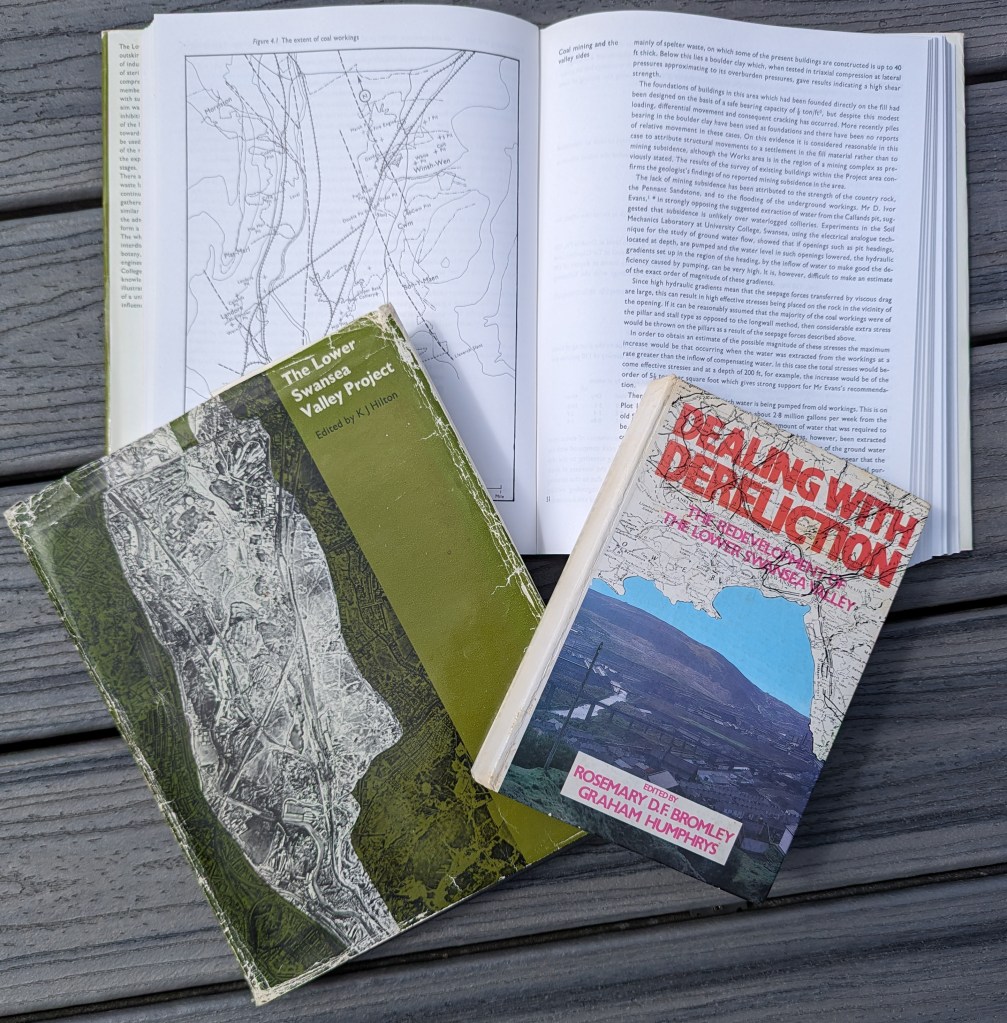
Perhaps the most famous book is the Lower Swansea Valley Project (Hilton 1967)This is the handbook summarising the scope and delivery of the Lower Swansea Valley Project. For decades, it has been a standard reference for environmental and ecological history. I used this book extensively to research the first Cilfái volume. The LSV Project remains a milestone in the history of government, local authority, and academic teamwork, and the work results have benefitted Valley residents immensely.

The Hilton volume documents, in thirteen chapters, the history, drainage, engineering, transportation, and social aspects of the LSV and the challenges involved in delivering change.

The second milestone book for the history of Cilfái and the Valley is Dealing with Dereliction. (Bromley and Humphrys 1979)This book came out over a decade after the Hilton volume and chronicles the challenges and changes the Project brought about. It is a wonderful example of a project closure report covering the benefits delivered and remaining issues. In my civil service days, I used it to illustrate how to manage the lifecycle of a large government programme or project.

Last but certainly not least, I’ve selected the City Archives Office booklet from 1991 describing some of the Archives Office holdings covering the LSV Project (Alban 1991). The cover notes were written by Dr J.R. Alban, who many will know as one of Swansea’s most significant historians. Dr Alban, who was our City Archivist at the time, wrote many such booklets. If you can get to see a copy, this is the quickest way to understand some of the archived records of Cilfái and the surrounding area.

You will find all these books easy to consult in Swansea Library and the West Glamorgan Archive Service on the big bookshelf!

Alban, J.R. 1991. ‘Rebuilding a Future: The Reclamation of the Lower Swansea Valley Exhibition Catalogue’ (Swansea City Council)

Bromley, Rosemary D. F., and Graham Humphrys (eds.). 1979. Dealing with Dereliction: The Redevelopment of the Lower Swansea Valley (Swansea: University College of Swansea)

Hilton, K. J. (ed.). 1967. The Lower Swansea Valley Project (London: Longmans)

Cilfái: The Importance of our History.

Who owns history?

Last Saturday, I talked about the history of Cilfái as part of our National Local History Month celebrations.

I had a packed room in the Central Library, not to see me… but to listen to the topic. Concern over losing our history and heritage is mounting as more threats from local Council plans get closer. I knew many of the audience, some of my old colleagues, heritage and environmental workers, and my past history teachers. There were a lot of local people as well who made an effort to come and sit in a warm teaching room on one of the hottest days of the year.

The combined years of experience in the room were amazing. People who had worked on the hill researched and cared for it, and a newer generation is taking on the challenge of future care. There was an unbroken chain of partnerships and friendships dating back to the pioneer historians Clarence Seyler and George Grant Francis.

The talk and the questions session afterwards led me to reflect on the history I was talking about. Much of the past fifty years of Cilfái history is not documented and runs a significant risk of being ‘reinterpreted’ by an unmindful local authority and a foreign tourism company. That risk of deliberate amnesia was one of the reasons I wrote the Cilfái volumes.

But who ‘owns’ the history? It is always an important question. In 1891, Oscar Wilde penned an often-quoted phrase, ‘The one duty we owe to history is to re-write it.’ Although Wilde was likely thinking more of fine art criticism, the statement holds up in modern times with the revision of colonialism and racism prominently featured in research and popular histories. I’m part of that process as I talk of the environmental pollution and ecocide that accompanied the explosion of industrialisation and exploitation in the Swansea Valley.

As good as the Wilde observation is, I felt I was always led by this statement from George Santayana in 1905…’ Those who cannot remember the past are condemned to repeat it.’ I suppose the ‘remembering’ or ‘forgetting’ can be both wilful and accidental. In the past month, I have had conversations with senior Council officers over Cilfái, where officials were adamant that records and land titles were entirely in order concerning the hill (and officially stating that was the case) whilst not checking anything about the truth and validity of those statements. The main reason behind their indolence was an intention to wilfully ignore the hill’s history. After my pushback, the senior planning officer had to retract those silly statements. The worst part of the episode was the inherent untruths and misrepresentation of vague facts advanced by Council employees who may be qualified but are rarely experienced. The injured parties are us as the public.

In books and talks about the history of Cilfái, I have tried to open ownership of our history to the broader public to combat the apparent desire of some to shut down debate, consultation, and knowledge. It is also important to remember that some of the most vocal Facebook warriors in unquestioning support for foreign tourism company plans have never been on the hill.

Above: Coal mine workings on Cilfái after 40 years of uninterrupted recovery. The Council and the foreign tourism company want us to believe this is worthless and they can do better. Really?

Cilfái: Copper Smoke

I write about the copper smoke in Chapter Four of Cilfái: Historical Geography on Kilvey Hill, Swansea.

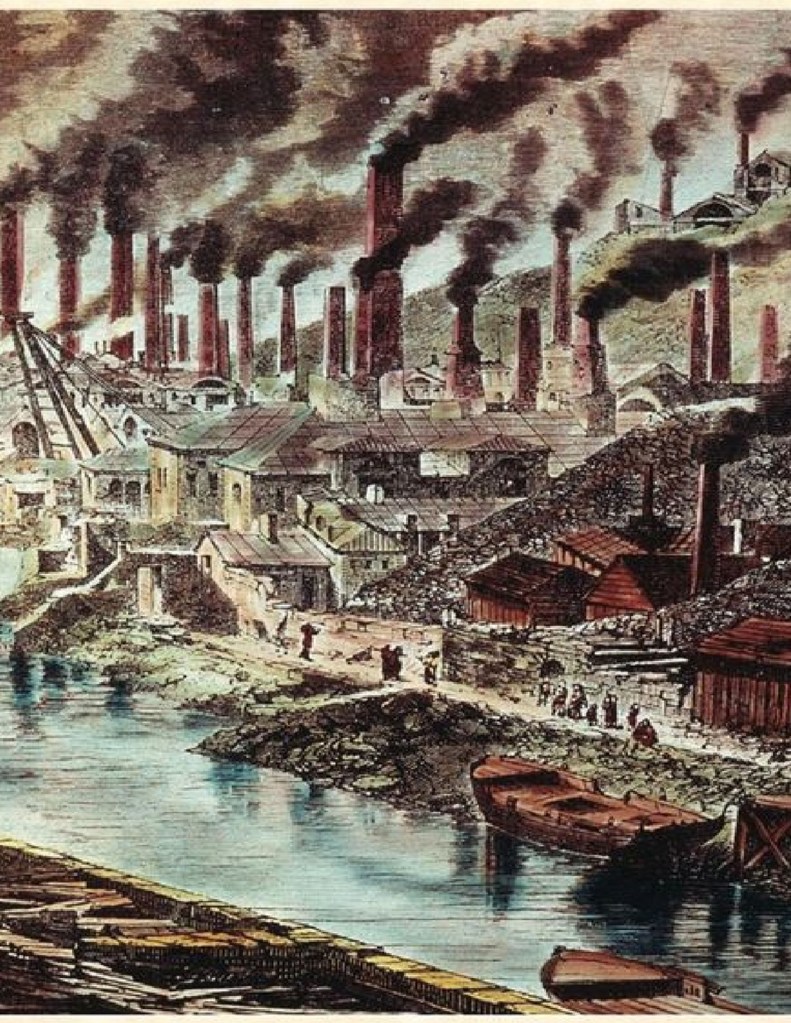
The copper smoke from White Rock was horrendous. Black, acrid, greasy and opaque. It killed everything it touched. The chemical composition of the Cornish copper ore meant that once burnt with Kilvey’s bituminous coal, released vast quantities of sulphur dioxide, hydreogen fluoride, sulphrous and sulphuric acids. in the 1840s, the Vivian’s Hafod Works were releasing 188 tons of Sulphuric Acid daily into the Swansea Valley.

Above: An extract from a rare coloured version of an image commonly used to show the forest of chimneys at White Rock in the 1860s The toe of the Cae Morfa Carw slag tip is left of centre and the mass of chimneys of Middle Bank is to the left. The drawing was commissioned by the French travel journal ‘Le Tour du Monde ‘ and the artist was Jean-Baptiste Henri Durand-Brager (Le Tour du Monde) 1865) (Author’s collection).

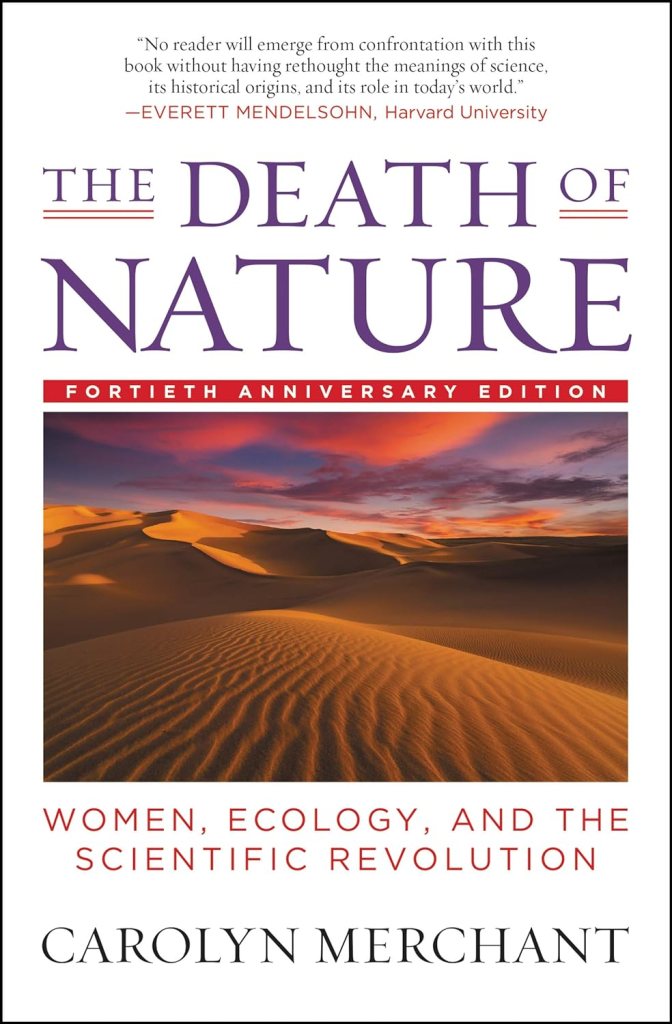
Cilfái, The Death of Nature, and Carolyn Merchant

When I wrote the first Cilfái book, on the history of the hill, my views were strongly coloured by the work of American ecofeminist Carolyn Merchant. Merchant has many talents, but one of her earliest books was titled ‘The Death of Nature’ (The Death of Nature: Women, Ecology and the Scientific Revolution )A strong title, and I can recall being quite challenged by it when I first read it in the early 1980s. Merchant is a formidable historian of science and her book explored the importance of gender in early writing on nature. Her grasp on European industrial history was superb and her interpretation of how the understanding of nature changed in the Industrial Revolution from an organic or female conception through to the mechanistic model of coalfields and resources.

Alongside this, the destruction of people’s rights and freedoms throughout the medieval period by greedy landlords had a profound impact on the perception of land and property. The medieval economy of Cilfái was based on organic and renewable energy sources (wood, water, and wind), the emerging capitalist economy of the Mansel family was based on coal and metals which transformed the nature of the hill. The changes on Cilfái over the past few centuries are confirmation of Merchant’s theories.

In one of her most famous statements…

The female earth was central to organic cosmology that was undermined by the Scientific Revolution and the rise of a market-oriented culture … for sixteenth-century Europeans the root metaphor binding together the self, society and the cosmos was that of an organism … organismic theory emphasized interdependence among the parts of the human body, subordination of individual to communal purposes in family, community, and state, and vital life permeate the cosmos to the lowliest stone

Ancient Woodland in Swansea

We don’t have any ancient woodland on Cilfái. The last of it was killed off in the 1750s by industrial pollution. The coal industry on the hill probably removed most of the bigger trees before that as coal mining consumed massive quantities of timber. Both Cilfái and Townhill were cleared of their natural woodland by the 1300s (Robins 1990: 4–8).

1970 marked the new beginning of woodland on the Cilfái woodland site. We know that the Scots and Monterey pines on the western side were planted alongside efforts by the Forestry Commission to reestablish forestry on the upper slopes of the west side (Robins 2023a: 62–77, 2023b: 55–58).

Although the landscape of ancient woodland has disappeared, Swansea does have some incredible surviving old trees in Singleton Park and Penllergaer (Penllergare) Country Park. The trees in Singleton survived being part of farmland in the 1600s and were incorporated into the estate of the Vivian family in the 1800s (Morris 1995: 5–26).

The Penllergaer Country Park has some incredible survivors who survived the devastation of the coal mining period between 1500 and 1790 and became incorporated into the private parklands of the Dillwyn Llewelyn family. I wrote about some of the trees in Swansea History Journal a while back (Robins 2021).

The trees of Cilfái are special because we know how old they are and what they have gone through to survive today. The trees of Nyddfwch are special because they are far older but have also survived the ravages of industrialisation and human interference.

Morris, Bernard. 1995. The Houses of Singleton: A Swansea Landscape and Its History (Swansea: West Glamorgan Archive Service)

Robins, Nigel A. 1990. The Enclosure of Townhill: An Illustrated Guide (Swansea: City of Swansea)

———. 2021. ‘The Landscape History of Nyddfwch (Penlle’rgaer)’, Minerva: The Swansea History Journal, 29: 121–34

———. 2023a. Cilfái: Historical Geography on Kilvey Hill, Swansea (Swansea: Nyddfwch)

———. 2023b. Cilfái: Woodland Management and Climate Change on Kilvey Hill, Swansea (Swansea: Nyddfwch)

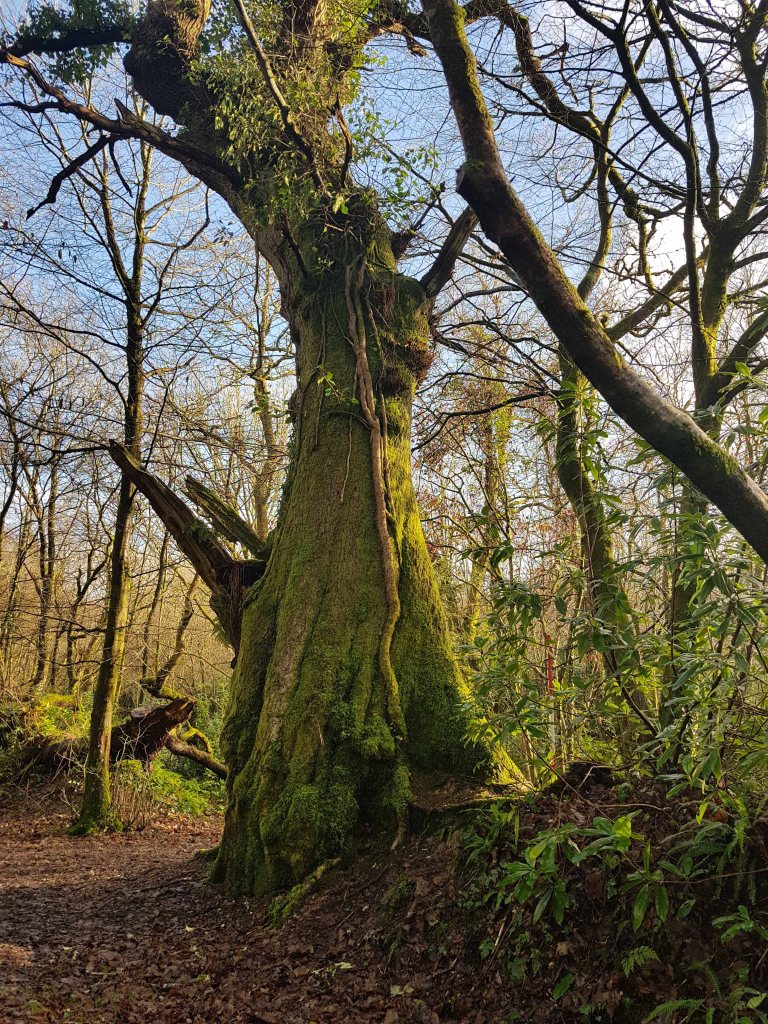
Below: The Nyddfwch oak in the Llan Valley. Originally planted as a marker tree on a hedge guarding the Llan meadows.

Microhistory on Cilfái

These days we are often in a situation where we are forced to rely on the opinions of staff in various organisations to tell us what ‘history’ or ‘ecology’ or ‘biodiversity’ are. In and around Swansea, we have Cadw to judge what is ‘significant’ for heritage, an Archaeological Trust to tell us what is important under the ground, and a host of private companies employed by building developers to tell us what plants and animals are important. Unfortunately all these organisations can be flawed when it comes to understanding what matters to local communities. It is a deeply unsatisfactory situation. You’d expect local politicians to be more in tune with their communities, after all they were elected to do just that. However, the strong whipping of Swansea Labour Councillors over the Cilfái developments shows how impotent local politics actually is in the face of corporate ambitions.

Communities always change and their interests and viewpoints can also evolve. The toppling of the statue in Bristol shows what can happen when frustration with politics boils over. Closer to home, the issues with the General Picton memorials are an interesting response from the cultural sector who sometimes have strong impulses to react to changing community values.

The identification of heritage and cultural features on Cilfái is clearly inconvenient to politicians and tourism developers. The neat packages of the Hafod-Morfa tourist attraction are predictable, grant-friendly, and a big hit with local builders. Not so much the ‘informal’ heritage of Cilfái. The hill is packed with history above and below ground but that won’t matter to Councillors. Features with the unfortunate characteristic of ‘being in the way’ will be dug up, destroyed or removed. It is ironic that a tourism firm from New Zealand (a country that is barely 100 years old) is leading the destruction of our heritage, much older than that little country.

What tends to get lost first are the little things, the things that people enjoy. They often get thrown away because we as residents are told they aren’t significant by the organisations that ironically are there to serve us.

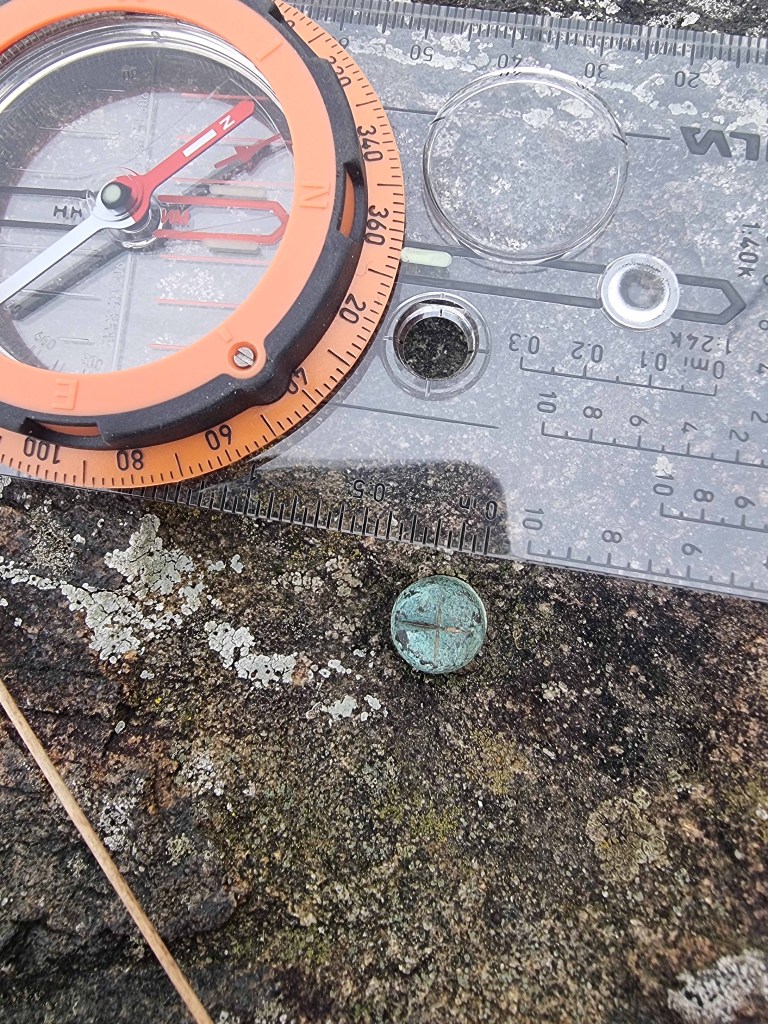
Here’s one that will probably be brushed away by a careless Skyline bulldozer. A little copper nail hammered into a rock in the danger zone. It was probably put there by William Logan as part of the early exploration of coal seams on the hill in the 1820s. I found his notebooks that told me about it. It remains as a little memorial to all the hard work and industry from pioneers in the past. The story is covered in Cilfái: History and Geography and Cilfái: Heritage Features