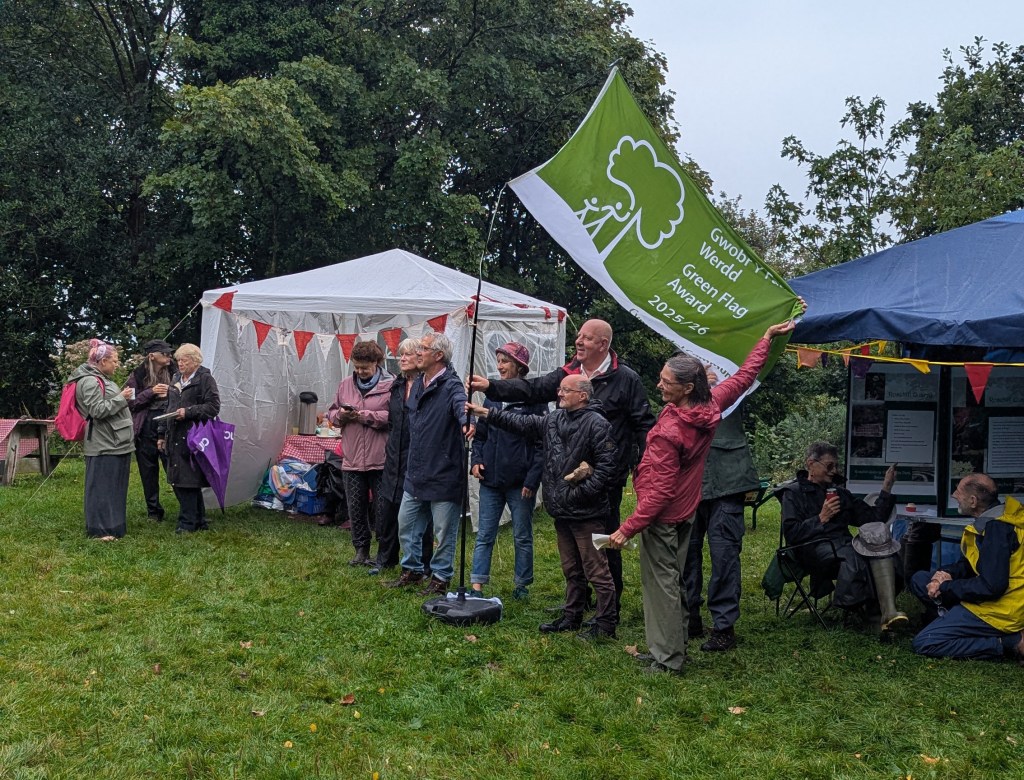
It was good to see the Fortieth Anniversary of the Rosehill Quarry park this afternoon. I remember it being set up as the place was a biodiversity hotspot on the hill long before it was transformed by the Rosehill Quarry Group. I can remember it wasn’t a completely popular thing to do in the early 1980s, as increasing access to an area known for trouble was not universally welcomed. Four decades later, it looks like it was always there.
Above: Rosehill’s recent Green Flag at the Fortieth Anniversary of the Group on Sunday 7 September 2025.
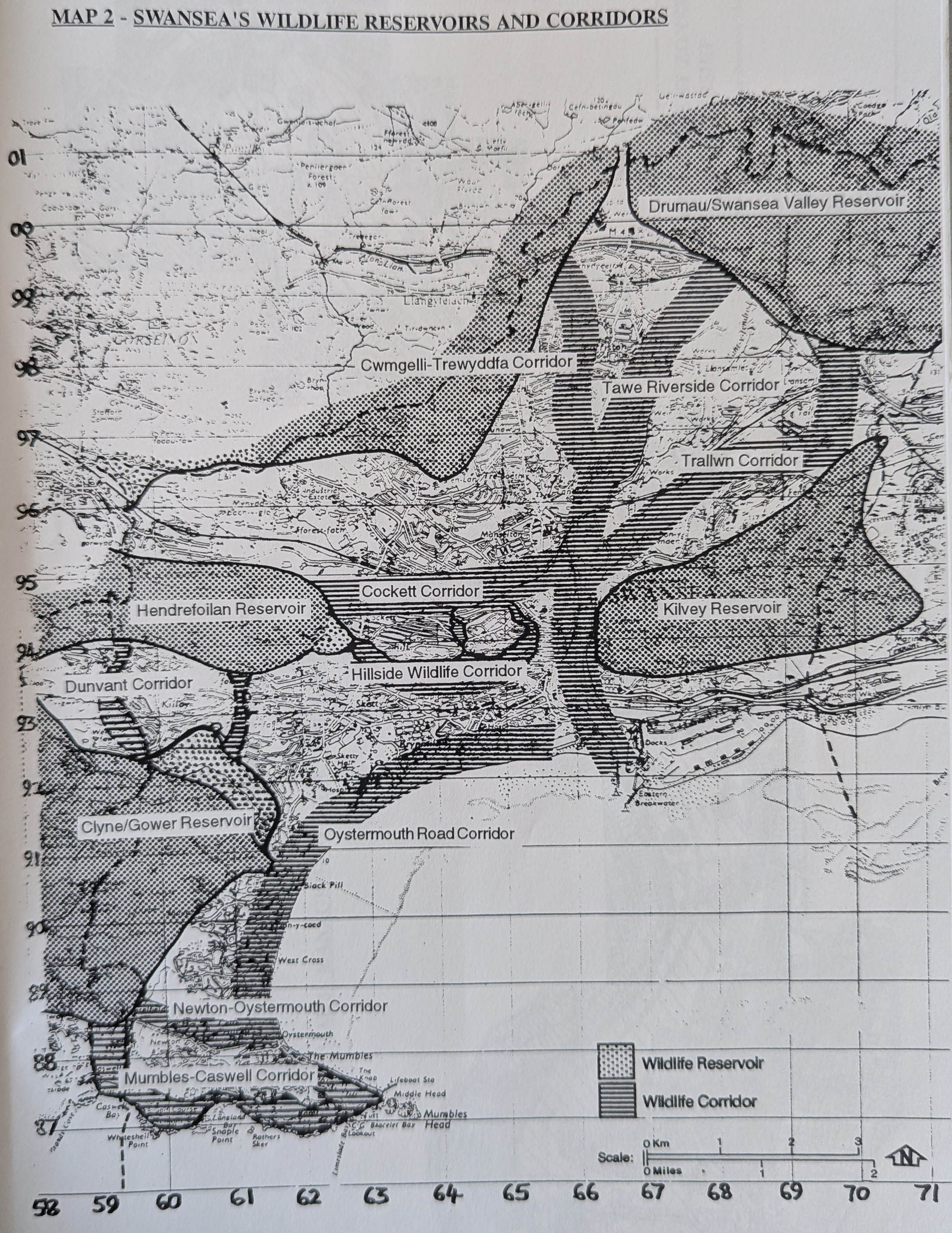
I remember writing the notes for a publicity pamphlet some years later when the City Council rebranded the area as the ‘Hillside Wildlife Corridor’ as part of the 1990 landmark Strategy for Greening the City. In those days, Swansea was zoned into a series of wildlife corridors and wildlife reservoirs. With bitter irony for what is about to happen, Kilvey was recognised as a wildlife reservoir.
It was particularly good to see Councillor D. H Hopkins say a few words about Rosehill, as he was central to the setting up of the Wildlife Corridor in the 1990s. He was far too modest about his role, and for me at least, he brought a welcome sense of continuity as if to confirm the long commitment to creating and maintaining the green space. For my part, I often gave little history talks about the area to the Group in the early days, always tempted by the fabulous cakes that Margaret Burdett would bring to the meetings.
Above: The 1990s understanding of wildlife corridors and reservoirs. This work originated in the 1999 ‘Greening the City’ discussions. Swansea is remarkably fortunate in having so many formal and informal green spaces. Political agendas and constrained funding mean that the security of many of them is always precarious.
I think it is also the tenth year the site has been awarded a Green Flag. On Kilvey, we had our first Green Flag this year.
Rosehill has always had unfailing political support from the Council (both City and its successor County Council). The area has transformed into a green jewel for plants and wildlife, and both the Council and the new crop of volunteers have done a fantastic job. One day, I hope Kilvey will get such good political support.
Among about thirty people there, I only recognised one face. A new generation of people has taken over, which made me feel rather old.
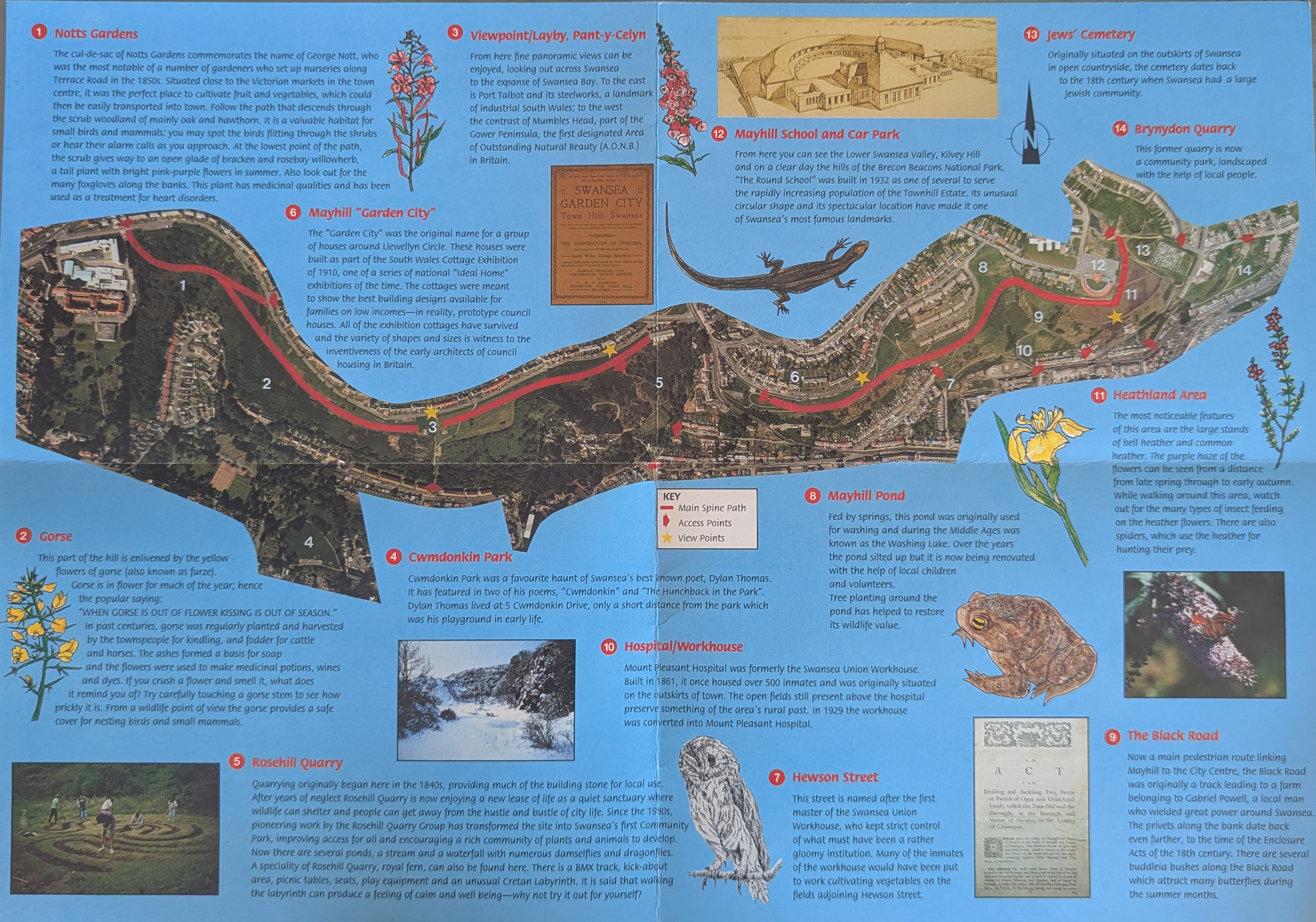
Above: The 1990s leaflet for Rosehill, and the Townhill Wildlife Corridor (1994). These were derived from my notes from the research project for the Enclosure of Townhill book. My suggestion was that the original hedgerow banks were replanted with hawthorn, as they would provide texture and contrast with the rest of the plantings for future generations. The Planning Department never took the time to understand me. (Matthew 7.6).
I’m just about to begin a data refresh of our local traditional orchard database. My original work was in 2012 as a contribution to the England and Wales survey that collected a massive amount of data about surviving orchards. For ~Swansea and Gower, that original data is now outdated and in need of revision. This is particularly significant for the Gower National Landscape (formerly the AONB).
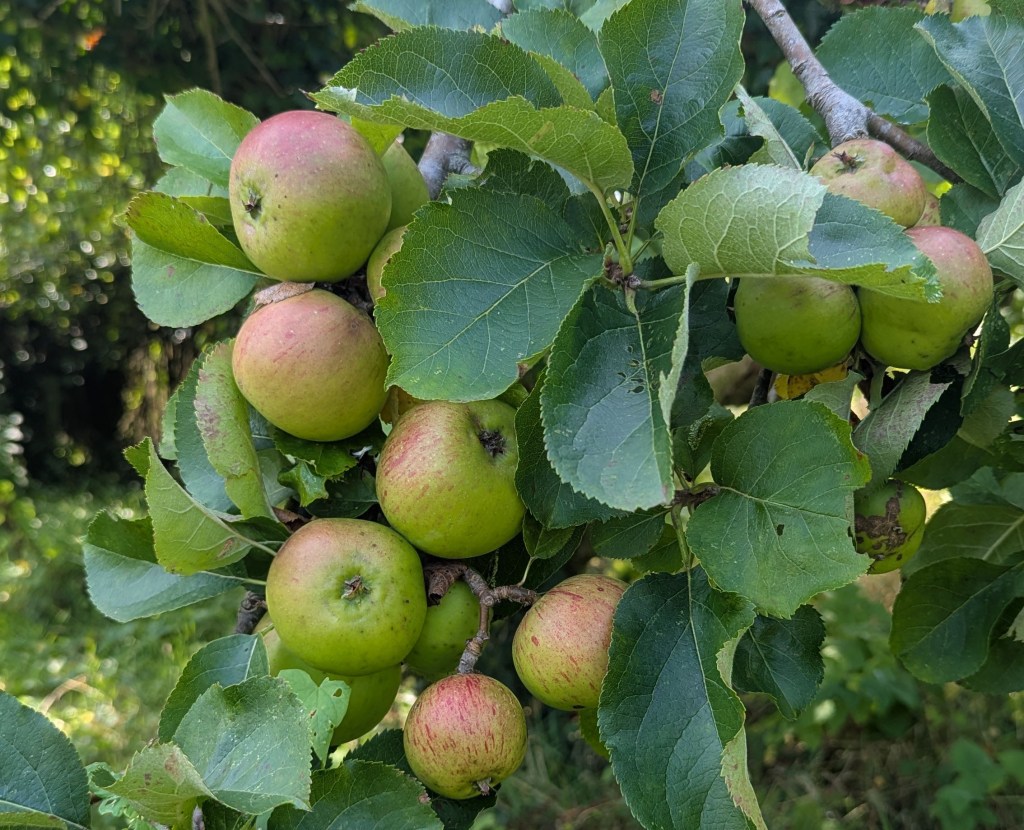
Above: A culinary apple crop from a tree that is over a century old in Swansea, August 2025.
Back in 2012, it was a hot summer, and I remember walking North Gower roads and lanes, ground-truthing previously identified potential survivals from satellite photos. It will be interesting to see what has changed. Originally, the oldest trees I saw in my surveys were culinary or cooking varieties, as in previous centuries, most apples were cooked in various forms in cakes, puddings, pies, pasties, and even soups. I saw dessert varieties start to appear as transport links to bigger markets became easier. The orchards of Northern Gower seem to have their origins in the arrival of the railway, allowing trouble-free transport to Llanelli and Swansea.
Although some academics have suggested that it is very rare to see apple trees older than a hundred years, I felt this may need correction, as I have seen some trees that, because of their location and size, are older than assumed. Much of Glamorgan’s apple industry was irreversibly damaged by massive imports of cheap Canadian apples via Cardiff and Swansea in the 1920s. The industry never recovered. In more recent decades, I see younger trees of dessert apples as people want to plant something easily consumed, and the recipes and practices of handling cooking apples have fallen out of fashion.
Equally, a new generation of consumers equate apples to cider, and I’d expect to see some ambitious investment in recently planted trees for juicing and cider. However, the data I collect will confirm the picture.
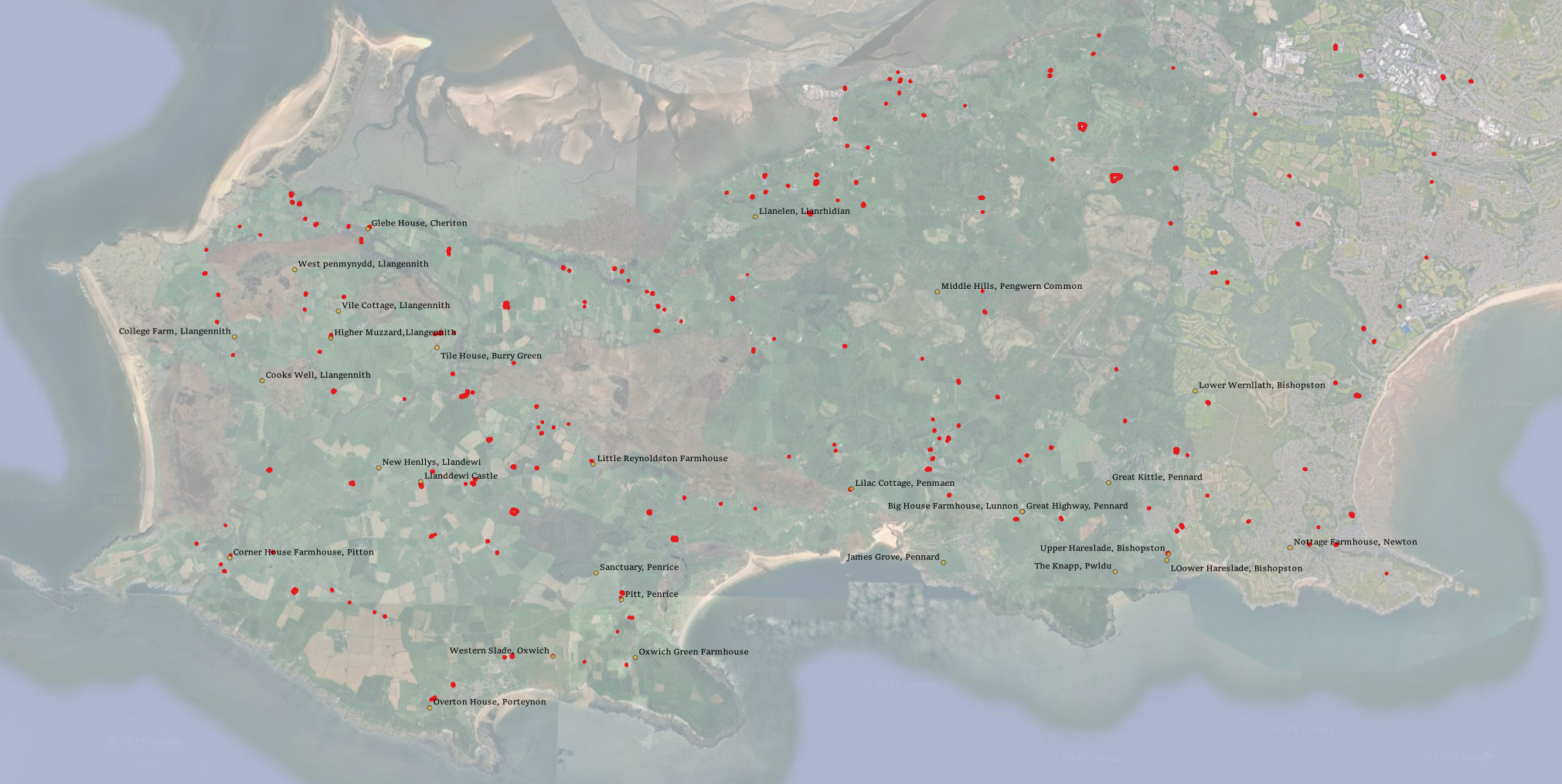
Above: Gower orchards from the 2012 data. This is mixed with historical house data. There may possibly be a loose correlation between the two, although much altered by subsequent property development. Something to investigate!
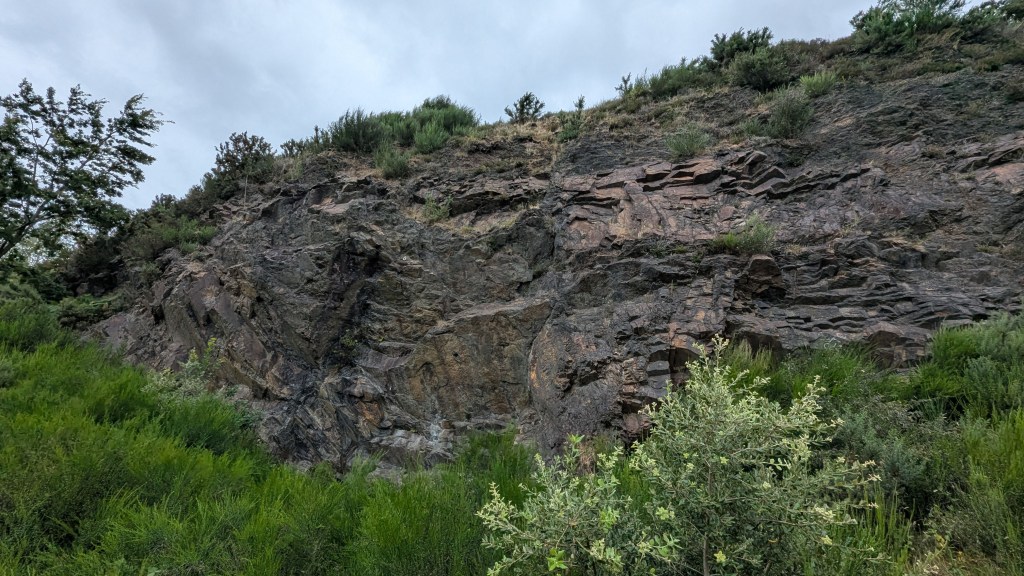
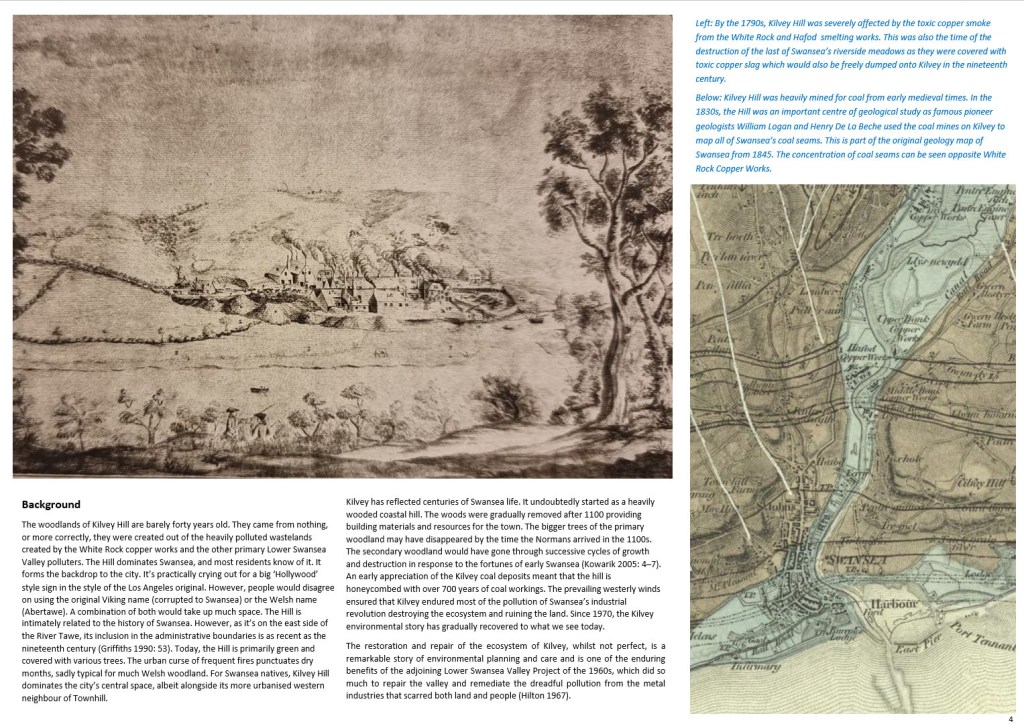
In researching the geology of Kilvey Hill, several issues quickly come to light.
The first is how little geology is actually being taught or even followed as a hobby any more. This is quite remarkable given the massive part Swansea’s geology has played in the history of the town. Swansea’s underlying coal resources were a massive factor in the development and growth of the eighteenth-century town. Without coal, there would have been no copper smelting, and Swansea would probably have remained the ‘Brighton of Wales’ (Boorman 1986). All the more remarkable when you consider that geology was an immensely popular subject for study in Swansea from the 1830s, and a century later, a large part of the University College of Swansea (Owen 1973; 1974). The geology of Kilvey became a training ground for William Logan when he taught himself about Swansea coal and rocks in the 1830s. Some of this will be a central theme in my guided walks for UNESCO Geodiversity Day in October.
The rocks of Kilvey contain a mass of plant and animal traces from the past. Understanding these past ecosystems and biodiversity allowed us to understand and exploit the coal reserves of under Swansea and the wider South Wales Coalfield. These rocks overlie the Tormynydd Coal Vein on the seaward side of the hill above Port Tennant.
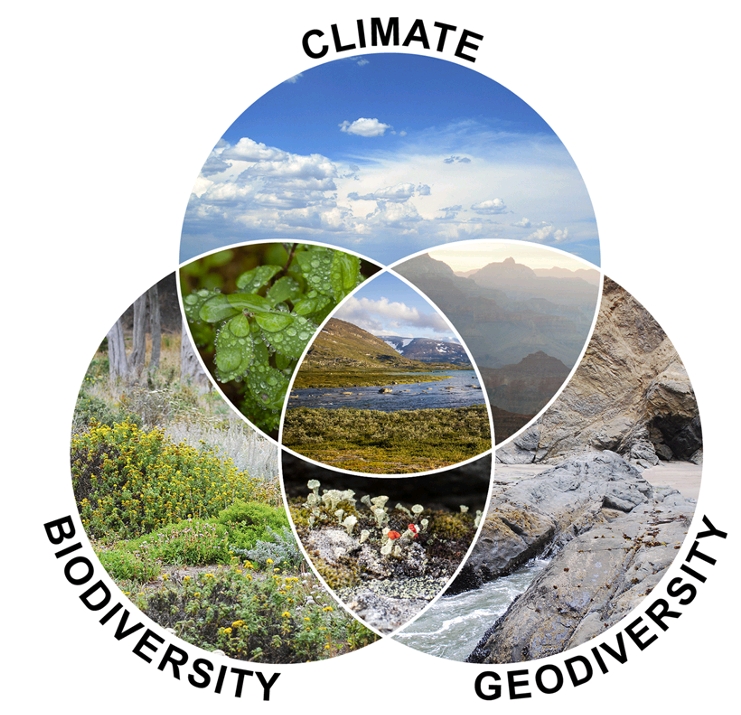
Although people are now fully aware of the importance of biodiversity to our lives, less is appreciated about the non-living side of the equation — the Geodiversity of the underlying rocks and soils. Geodiversity is the foundation of the ecological life on the hill. The underlying soils, waste tips, streams, and geological features all influence the recovery of life after the cataclysmic pollution that killed everything on the hill in the nineteenth century.
The links between Geodiversity, Biodiversity, and Climate. Human activity has fundamentally altered the relationship between all three elements. (from an original in Tukiainen et al. 2023).
Biodiversity, Geodiversity and Climate are all interlinked to give us the environment we live within, or are responsible for (Tukiainen, Toivanen, and Maliniemi 2023). Kilvey’s ecosystem was destroyed by industry, coal mines destroyed the water table, and the recovery process has been long and uncertain, but in some places spectacular. It remains a tragedy that some of the recovered green areas of the hill will shortly be destroyed again by the local Council.
Boorman, David. 1986. The Brighton of Wales: Swansea as a Fashionable Seaside Resort, c.1780-1830 (Swansea Little Theatre Company)
Owen, T.R. 1973. Geology Explained in South Wales (David & Charles)
—— (ed.). 1974. The Upper Palaeozoic and Post-Palaeozoic Rocks of Wales (University of Wales Press)
Tukiainen, Helena, Maija Toivanen, and Tuija Maliniemi. 2023. ‘Geodiversity and Biodiversity’, in Visages of Geodiversity and Geoheritage, Special Publications, 530 (Geological Society of London), pp. 31–47
Tuesday, 29 July 2025, saw the arrival of contractors on the Hill to begin implementation of the Reptile Mitigation Strategy. The firm brought some mowing equipment, heras fencing and robotic sentries to the summit. The Reptile Mitigation Strategy is comprehensive, although I don’t accept the supporting survey information on the presence/absence of reptiles in the area. I think the original reptile survey was hastily completed (if it actually happened at all).
The job is big and probably lucrative for someone. The protocol as described in the Mitigation Strategy is adequate for the site, and captured reptiles are to be released on the hill in safer areas.
Above: My survey of the cleared areas on Saturday, 2 August 2025. They are pretty big areas. The red circles are the first three refugia to be built on the verges of the construction site.
The Kilvey bombed landscape is unique in Wales, although bombs were dropped across the Welsh ports between 1940 and 1943, ther survival of any traces is rare. Several shrapnel-scarred buildings remain in Swansea, and a similar situation exists in other European towns and cities. What is unique in Wales is the survival of a landscape with craters that has been allowed to recover or develop naturally.
A look at the biodiversity contribution of the World War Two bomb craters on Cilfái.
I’ll be leading a couple of walks up the top of the hill soon. This year, I’m intent on looking at biodiversity and heritage. The bomb-damaged landscape of Kilvey Hill is now 84 years old, and a lot of it has survived or avoided being bulldozed, as often happens. Ironically, the heritage landscape of the Hill may soon be destroyed by Swansea Council as part of their Skyline tourism obsession.
The Kilvey bombed landscape is unique in Wales, although bombs were dropped across the Welsh ports between 1940 and 1943, the survival of any traces is rare. Several shrapnel-scarred buildings remain in Swansea, and a similar situation exists in other European towns and cities. What is unique in Wales is the survival of a landscape with craters that has been allowed to recover or develop naturally.
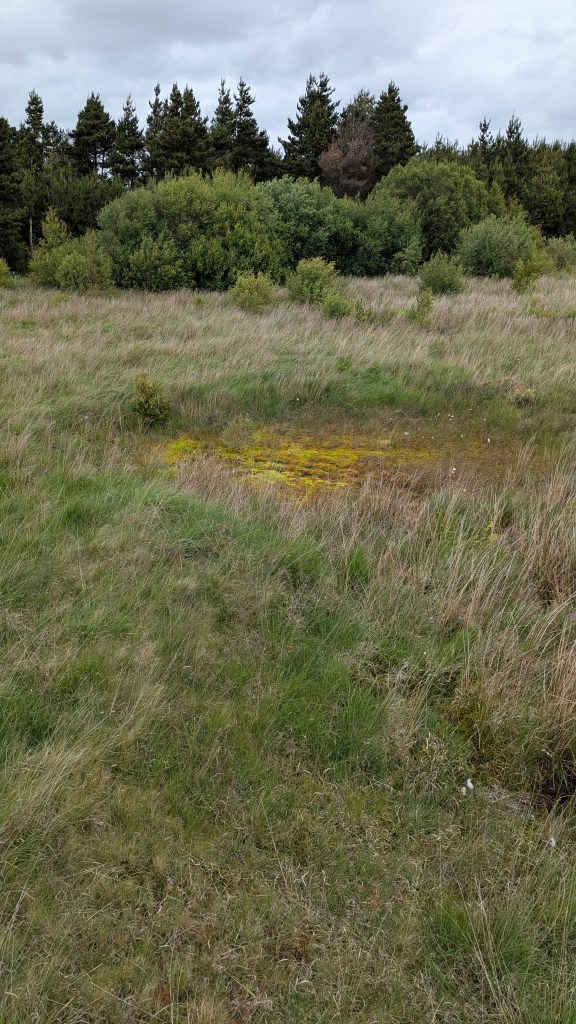
Many of you will know of my interest in bombsite botany via my lectures and articles, and one of the chapters in my book on the Three-Nights’ Blitz. Although formed in horrible acts of violence, the Kilvey bomb craters have been transformed by nature into essential wildlife refugia. Some hold small ponds, others are havens of warmer temperatures and protection from the wind, or even fire. The combustion of chemical explosives would have made the craters poisonous after their creation, and of course, the land is peppered with bomb fragments, which have become part of the archaeology of the hill. Nearly a century later, the craters have taken on a new role as centres of plant and wildlife.
I’ll explore this incredible mix of heritage and ecology on a couple of walks. I’ll advertise via Eventbrite, and I’ll let you know here as well.
Above: One of the Kilvey bomb craters with a small mire. June 2025.
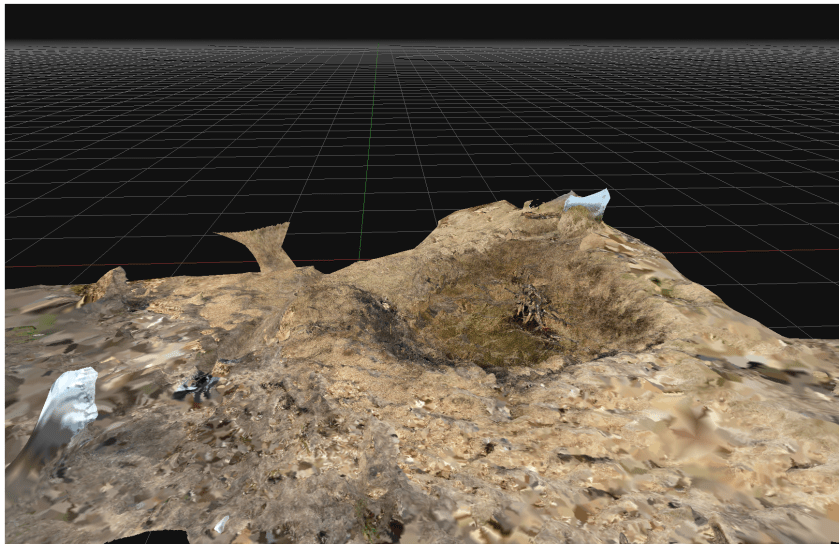
A photo-generated 3D model of one of the Kilvey bomb craters, March 2025.
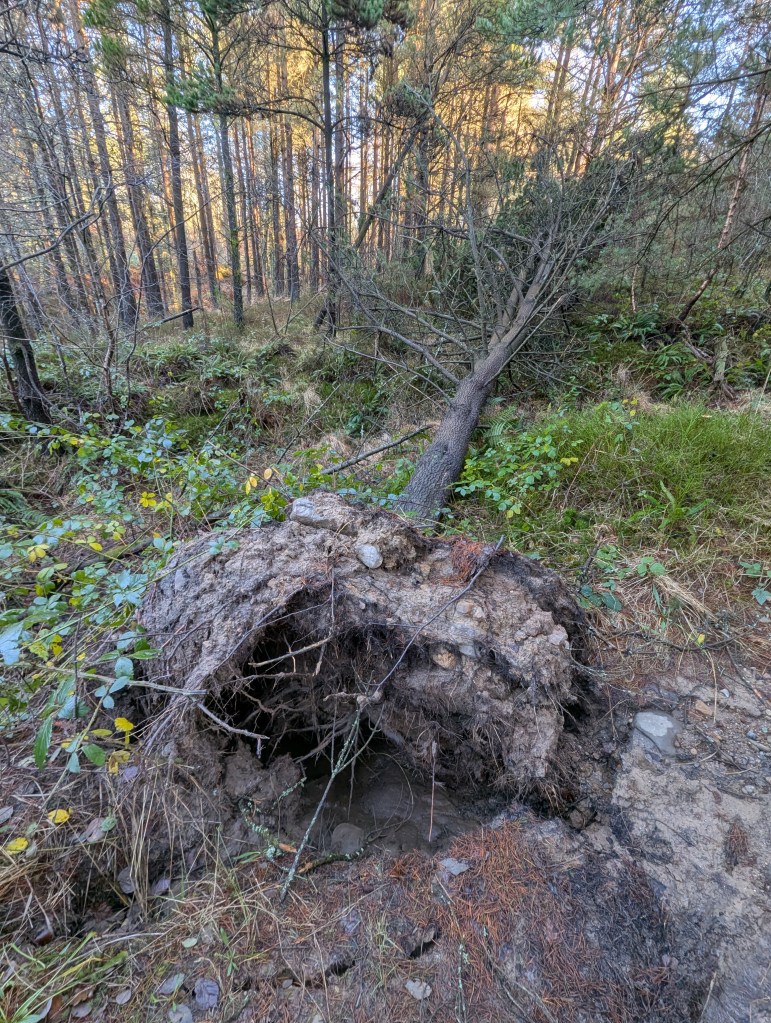
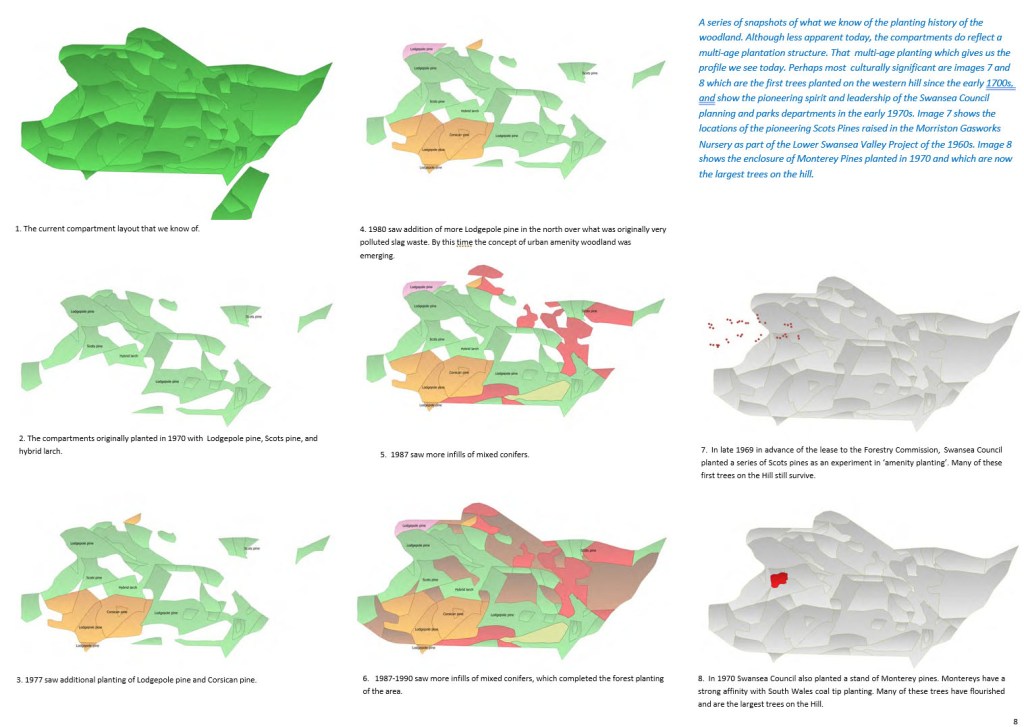
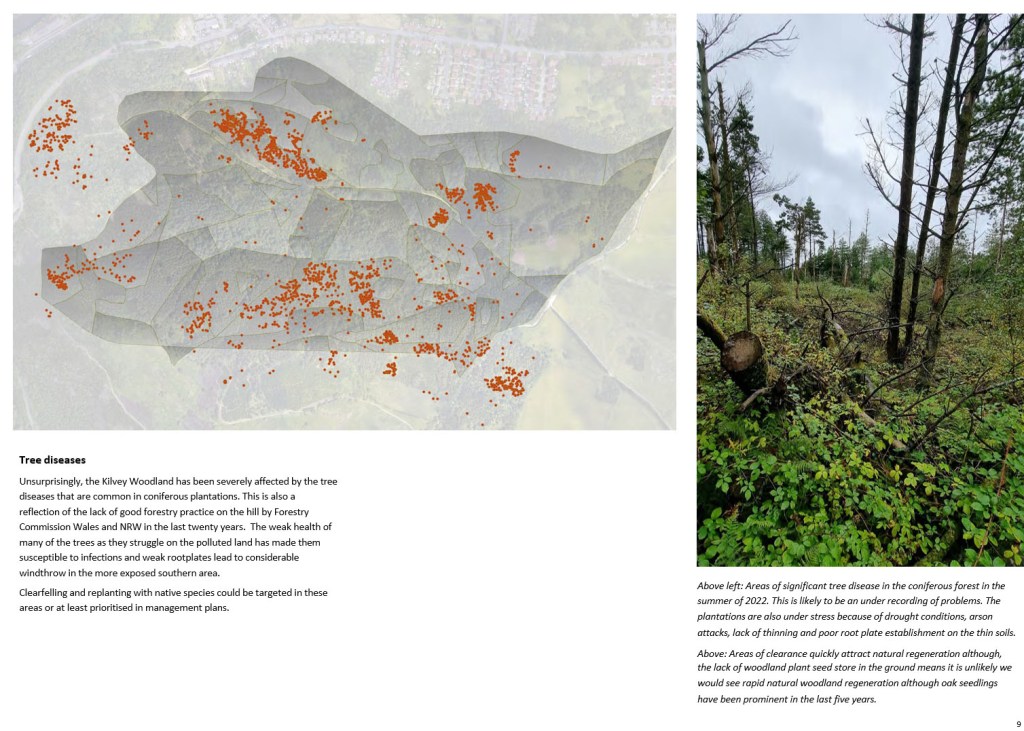
Kilvey Hill experiences frequent storms and high winds, which are a major threat to woodlands and any buildings or structures. The risk of wind damage and windthrow is expected to increase with climate change, with more frequent storms, wind speed, winter rainfall, and faster tree growth.
The projected increase in our winter rainfall is likely to increase wind risk, as rooting depth and root anchorage are both reduced in waterlogged soils. An increase in tree growth rate due to warmer temperatures is possible in areas where moisture availability is not limiting, this could increase wind risk with stands reaching a critical height earlier.
The presence of the TV and phone masts on the hill means that we know a lot about the wind speeds and weather on the hill. However, getting hold of the data is sometimes hard as it can be regarded as a ‘secret’. Anybody who walks the hill will know the signs of wind damage and constant high winds, which are now increasingly common around the year, no longer just the winter months.
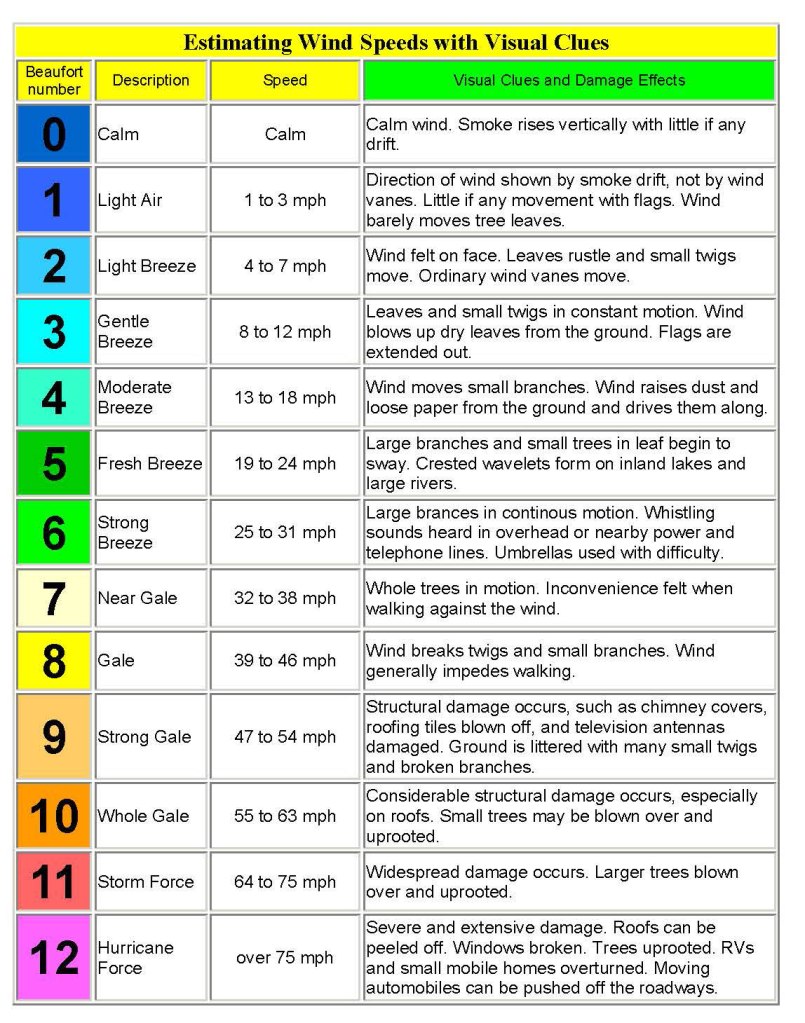
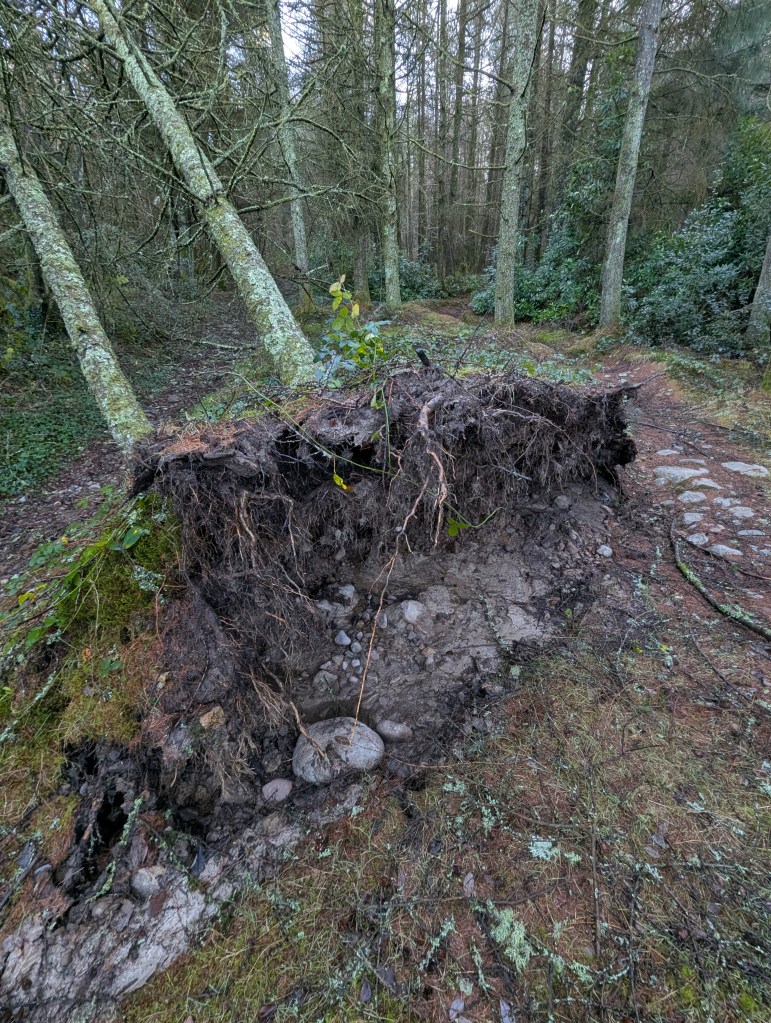
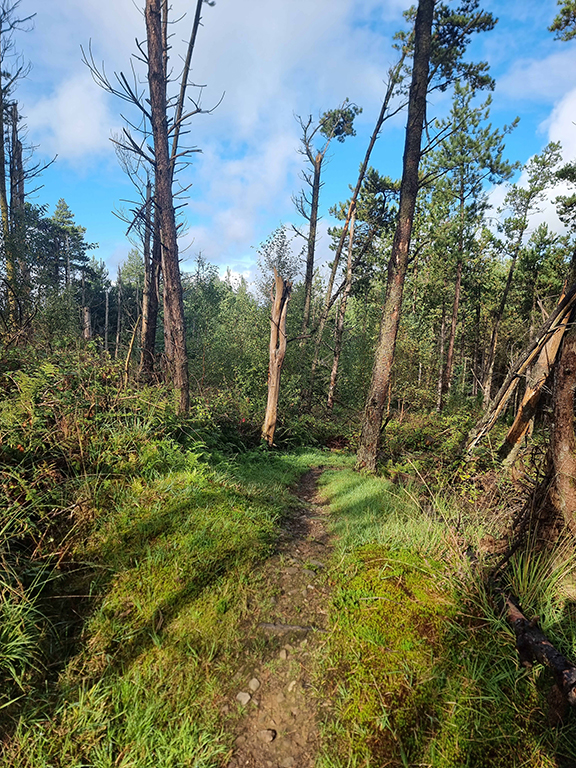
We can use the table below to assess wind speeds and damage based on the evidence we see after the storm is over. This table is based on expert fieldwork from the US Forest Service and is used all over the world. Look at the damage in the photos here and see where it is on this list…
It doesn’t matter what your viewpoints are on who or what causes climate change. The evidence is out there, and the question is how to interpret it and design for the future. It might, for instance, be an incredibly risky act for Swansea Council to risk millions of pounds (of money they apparently don’t have) on supporting a risky tourism venture on a Welsh coastal hill that is increasingly exposed to dangerous windspeeds and disruptive weather.
Those who walk the hill regularly know of the health and safety responsibility of taking walkers out on Kilvey in deteriorating or unsettled weather. We never take the risk. Would a profit-centred tourist firm be equally responsible? Would you get in cable cars and zip wires in the bad weather? Equally, how many days a year is Kilvey safe for adventure tourism? I’m not sure, but I can be confident that climate change means that the number of days of safe weather is declining as the climate changes.
Storm damage above White Rock works in January 2025.
Above wind and wildfire damage in the ‘Skyline Zone’ 2023.
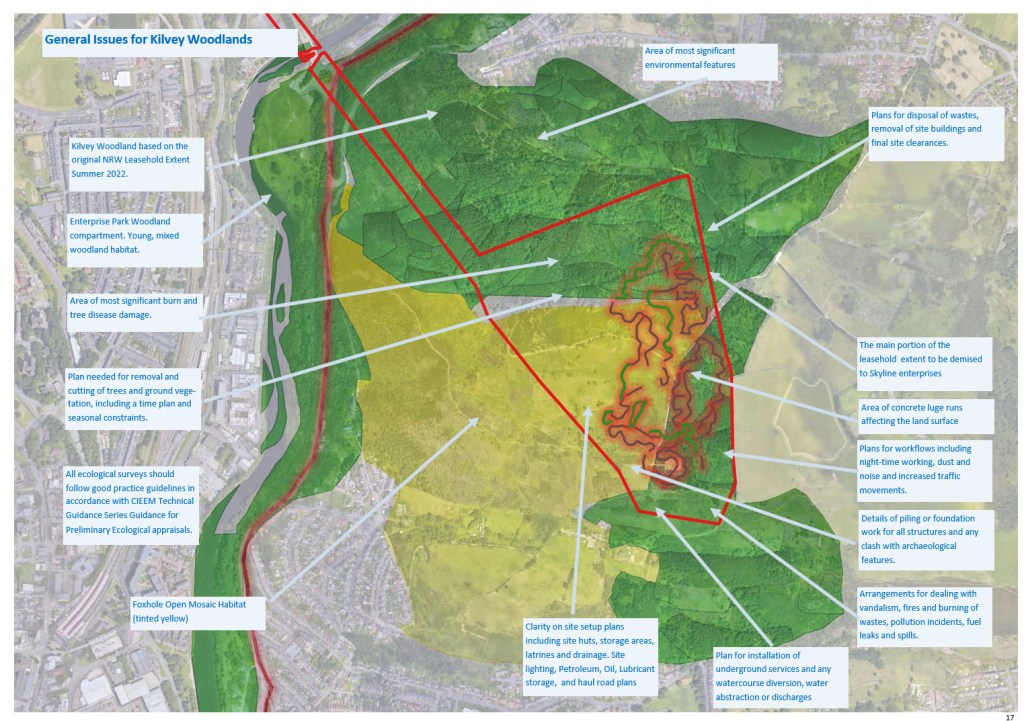
In December 2022, several senior councillors and council planning staff met in the Swansea Environment Centre with a group of concerned local people about the proposed Skyline developments on Kilvey Hill. The meeting had been prompted by the leak of information concerning a clandestine operation by Council staff to assemble a portfolio of landholdings on Kilvey Hill, which was to be leased to the Skyline investment company. Some of the land was not owned by the Council, and the authority had made strenuous efforts to obtain the land, not least because key parts of the Skyline development were planned to be built on the top of the Hill. The Council presented a series of rather mendacious arguments and ‘mistruths’ describing why they think they should acquire the land for no charge.
The meeting kickstarted a series of legal events about the unowned land and the broader picture of how the Council were dealing with the entire hill. Controversies over legal entitlement and determining a 999-year lease originally made to the Forestry Commission in 1970 abounded. The legal melee was made even worse by revelations that the hill was a designated quiet area, that there had been inconsistencies in how open access land and footpaths were being managed and a further deterioration in relationships between the Labour Council and local residents. If indeed, such a thing was possible.
The Council Leader(Robert Stewart) promised to ‘share as much as we know’ about the scheme. However, it turned out that he didn’t actually know too much, although he was obviously unwilling (and unable) to share what he did know about dealings inside the Welsh Government, an unfathomable business plan, and millions of pounds of public money being donated to a private-sector tourism venture.
I thought the meeting went as well as could be expected. Which is to say it didn’t go too well. How could it have when the questions (the good, bad, and ridiculous) were batted away with a flourish of ‘it’s too early for that’ or ‘we don’t know yet’. As the atmosphere deteriorated, Stewart descended into the understandable tactic of making stuff up, such as saying a council ecologist had been appointed, all pathways had been comprehensively mapped, and Ecological Impact Analysis had been completed, and a gradual awareness among the audience that this wasn’t a proposal in its early stages, but a carefully planned campaign of several years since local tourism consultant Terence Stevens had come up with the idea. Perhaps Terry got the idea when he became an officer of ‘Skyline Luge Sheffield Limited in 2018.
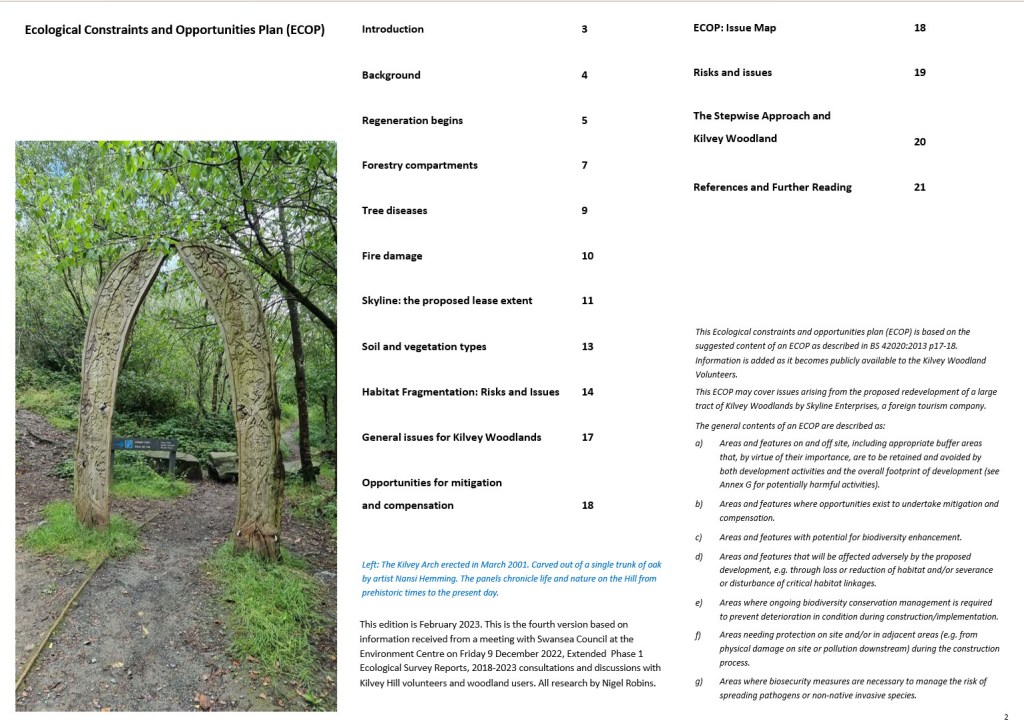
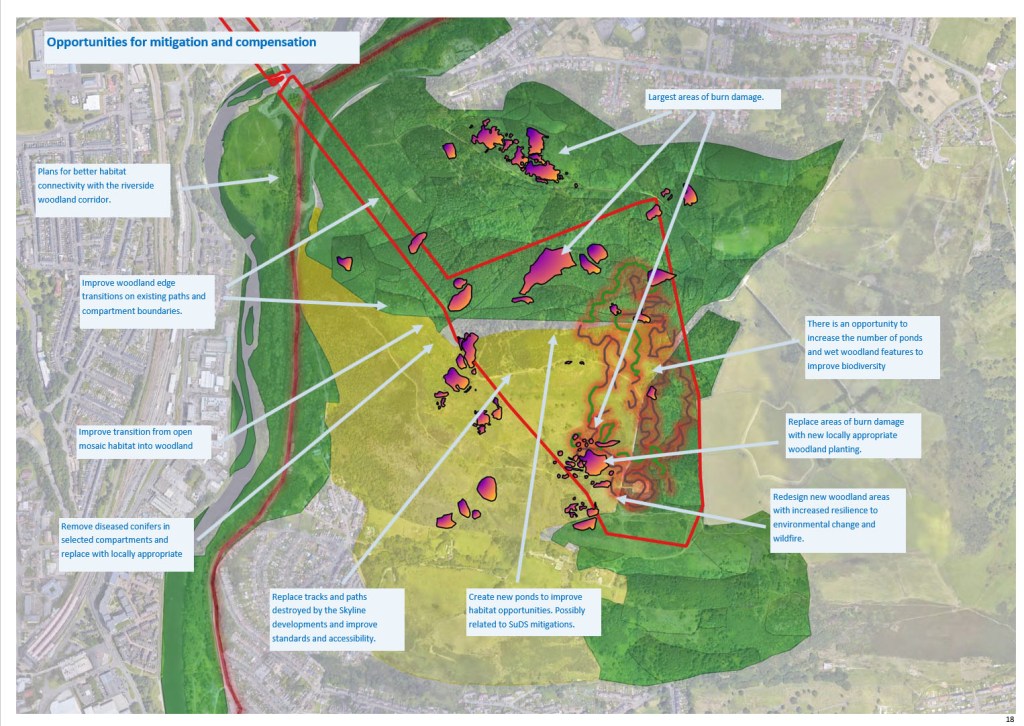
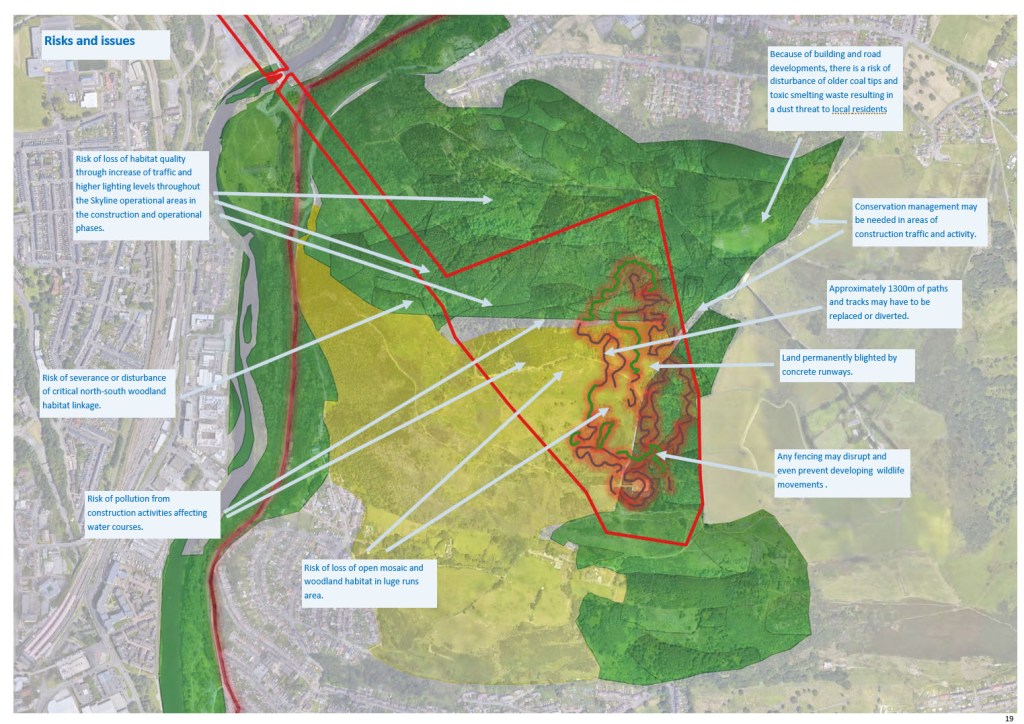
To try to fill the information gap, I created my own Ecological Constraints and Opportunites Plan (ECOP), something I used to do when I worked for the Civil Service. I was trained to follow the common standard BS42020 in structuring a document that brought together the essentials of a building plan that affected the environment.
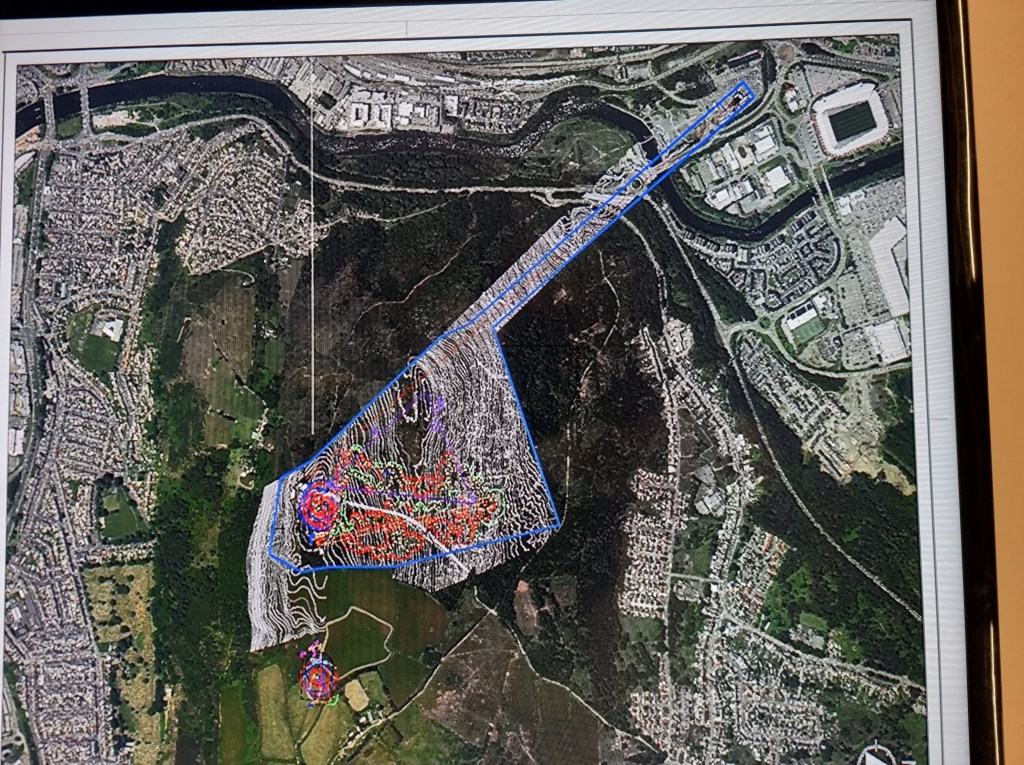
I took a photo of one of the slides on the PowerPoint shown to the meeting on the TV screen they had there. I used that as the basis for investigating the land.
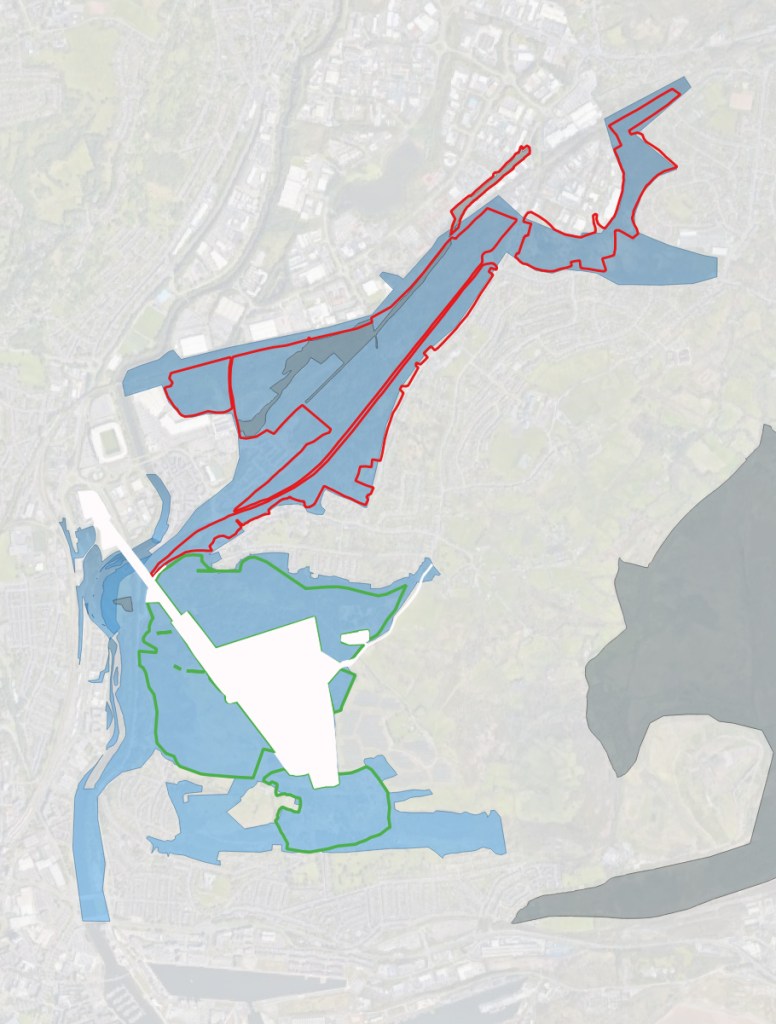
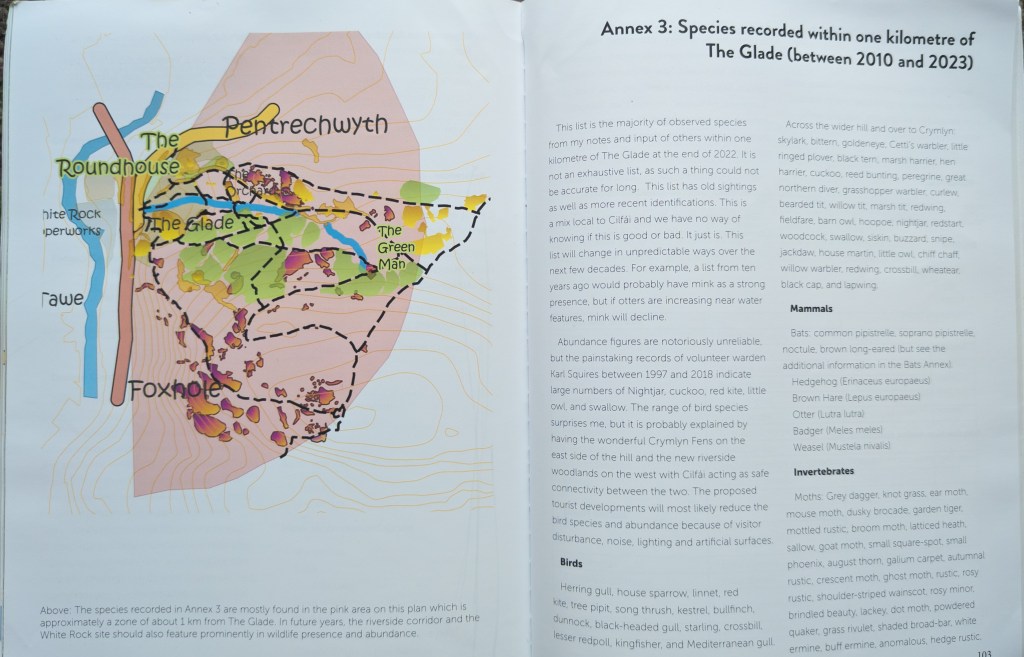
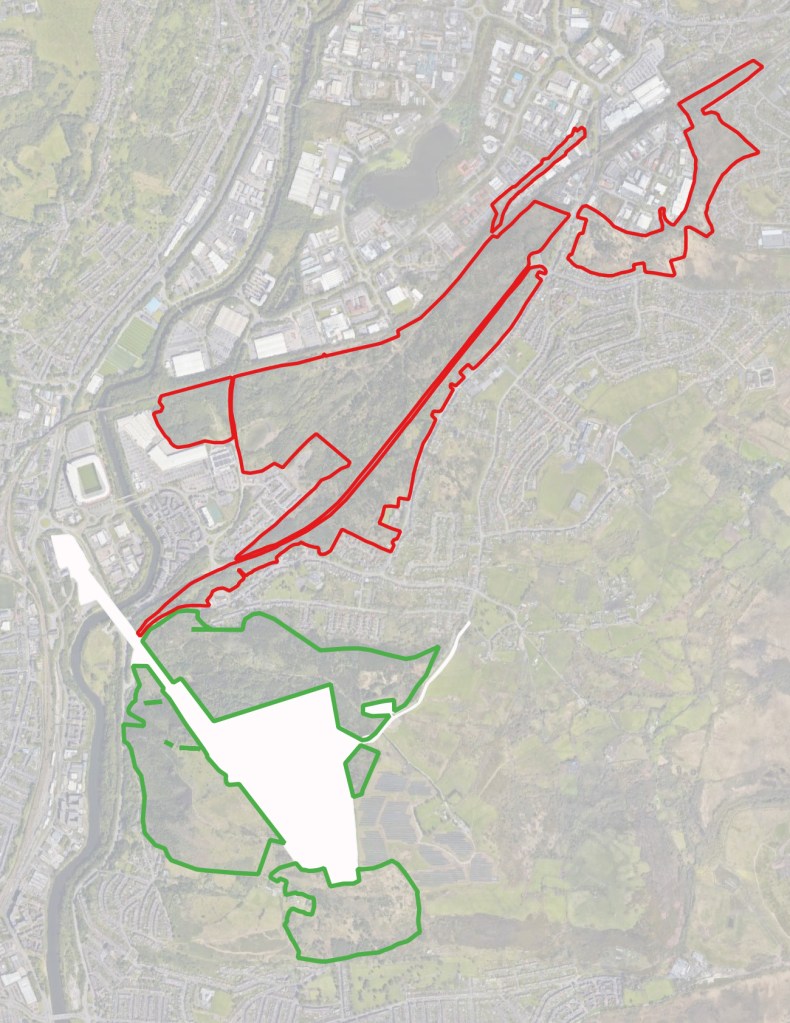
Above: The original picture of the Skyline extent shown to the Environment Centre meeting in December 2022. )
I built up an ECOP over four versions one each month (Jan -April 2023), each building on information I could interpret, but all versions were incomplete. I remember having several aggressive emails from Council staff as I asked for information. I could never work out if they were upset with me for asking or Rob Stewart for giving out vague or misleading information. We’ll never know.
Eventually the ECOP turned into the Cilfái Trilogy of books which have formed a solid basis of information on history, woodland management and heritage for me to teacvh the landscape history of the hill.
As is my habit, I posted the last (fossilised) version of the ECOP on my Academia page. What amazes me is the massive number of downloads of this document (including USA and various African countries) and local authorities. So, I guess my structure is being used as a template elsewhere. Which is great.
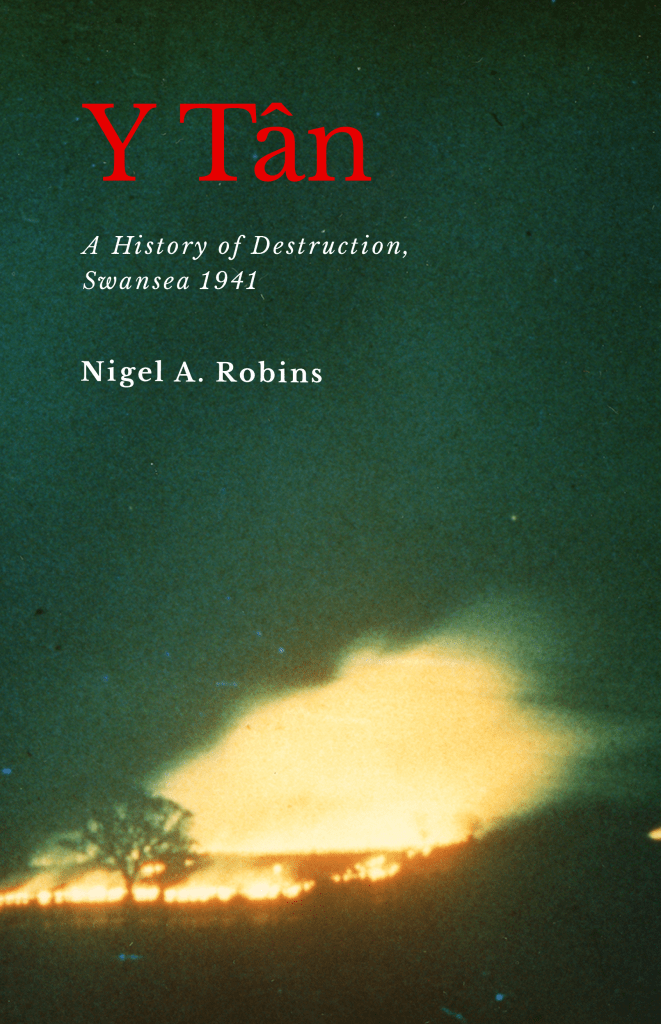
This has now been reprinted as a 2025 Second Edition with some updates. I’ve also updated the copyright for AI constraints and EU product compliance details.
The first edition was an incredible success and I’d like to thank everyone who attended the illustrated talks and came on the blitz tours in 2024. I’ll be doing more walks and talks in 2025.
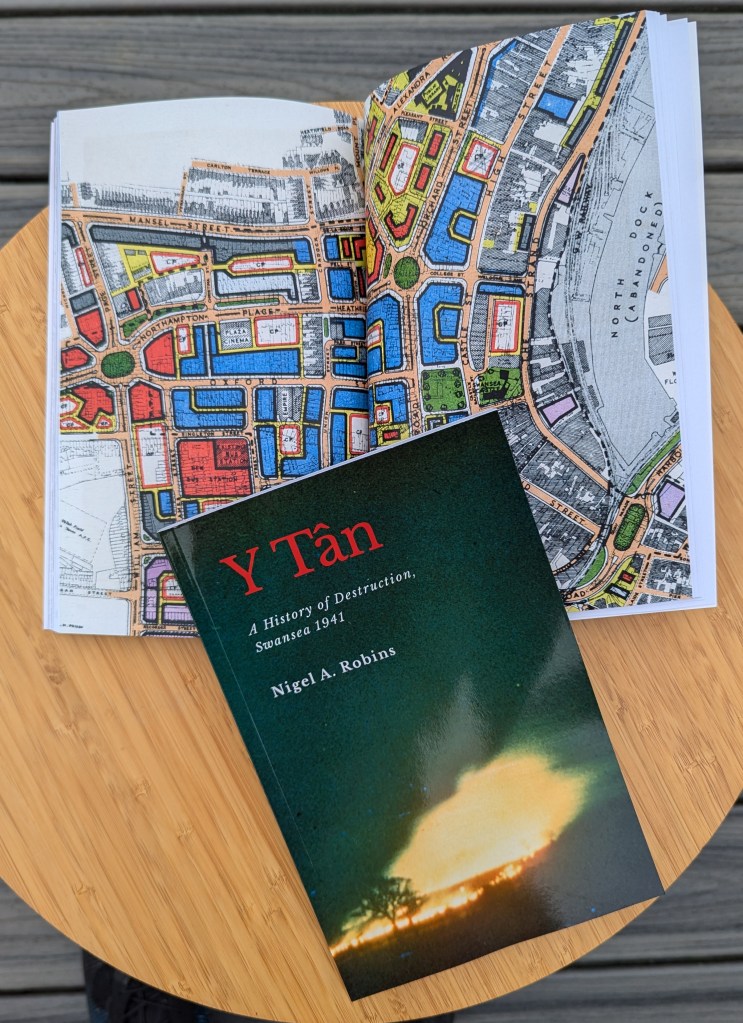
This book started with me trying to make sense of a part of my family’s history, so in many ways it is a work of years. I grew up as a child of the inner city of Swansea, a point that came home to me when I eventually realised that both my mother’s and father’s families lost relatives in the bombing.
The story of the loss of Jack Bowers was something I grew up with but the true significance didn’t really hit me until I became a parent myself and I lost the older members of the family. I heard stories of the war from Florence and Ethel (my grandmothers), but they were never overly keen to talk about those years. I’m grateful for the things they shared with me.
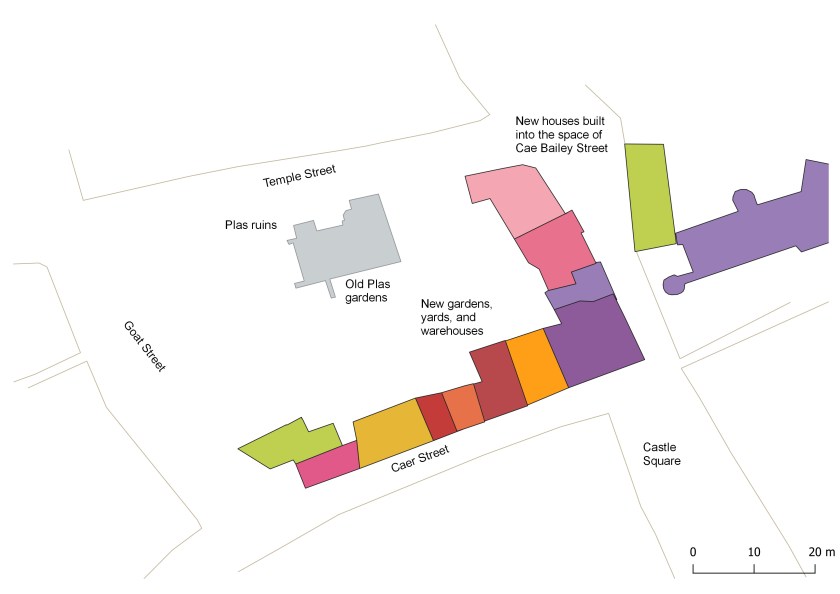
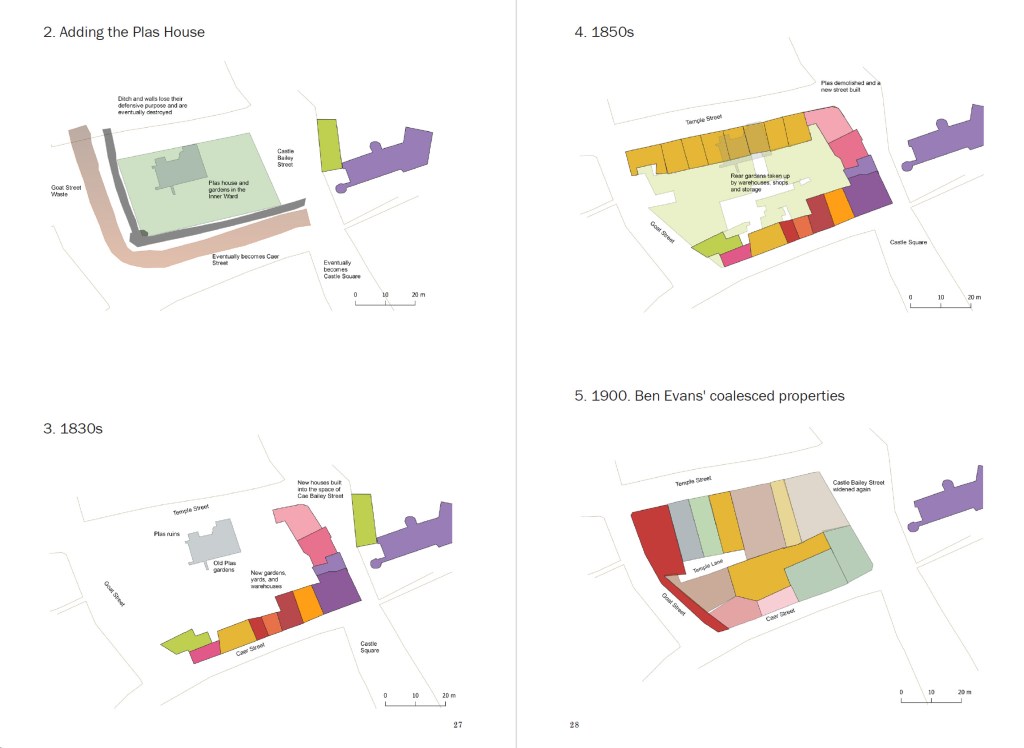
The history of the town centre, later known as Castle Gardens, is central to understanding how Swansea was destroyed.
I am so grateful to my friend Dr John Alban for his expert knowledge of the period and the many discussions we have had over the years. John’s generosity and support has been significant for so many of us as Swansea historians. I gained a deeper understanding of fire whilst working on the restoration of the Palace of Westminster (which has a unique relationship with fire itself), and I learned much from working with fire engineers on the Parliament restoration, although none of my colleagues realised I was busy applying what I was learning to the destruction of Swansea in the blitz. My lifelong friend John Andrew was particularly supportive and our long conversations so productive.
I was very privileged to be able to talk with Tony Kilmister about the courageous exploits of his mother and father, who were central to the Teilo Crescent tragedy. The Royal Engineers Association were incredibly helpful and friendly and I remember with great affection spending evenings in the Drill Hall listening to the old soldiers’ stories that put faces and personalities into the painful history of the time.
Also the wonderful support of my wife Alison who does so much to inspire and improve my writing and provide background knowledge on so many things.
This has now been reissued as a 2025 Second Edition with some updates, minor amendments and some new illustrations. I’ve also updated the copyright and EU product compliance details.
This study has been heavily reliant on past teaching notes and lessons learned from students’ questions and discussions over many years. I am indebted to all of them. Grateful thanks to the staff of West Glamorgan Archives Service and the archivists at the British Geological Survey in Keyworth who allowed me to spend time with William Logan’s original notebooks. The help of experts such as Dr John Alban and Gerald Gabb has always been beyond value and they have helped me as a sounding board and unlocking further fields of expertise which ave been so valuable. The contributions and discussions with my oldest friend John Andrew on geology and the rocks of Townhill and Kilvey have been particularly inspiring. John passed away in August 2024 and I miss his help and support terribly.
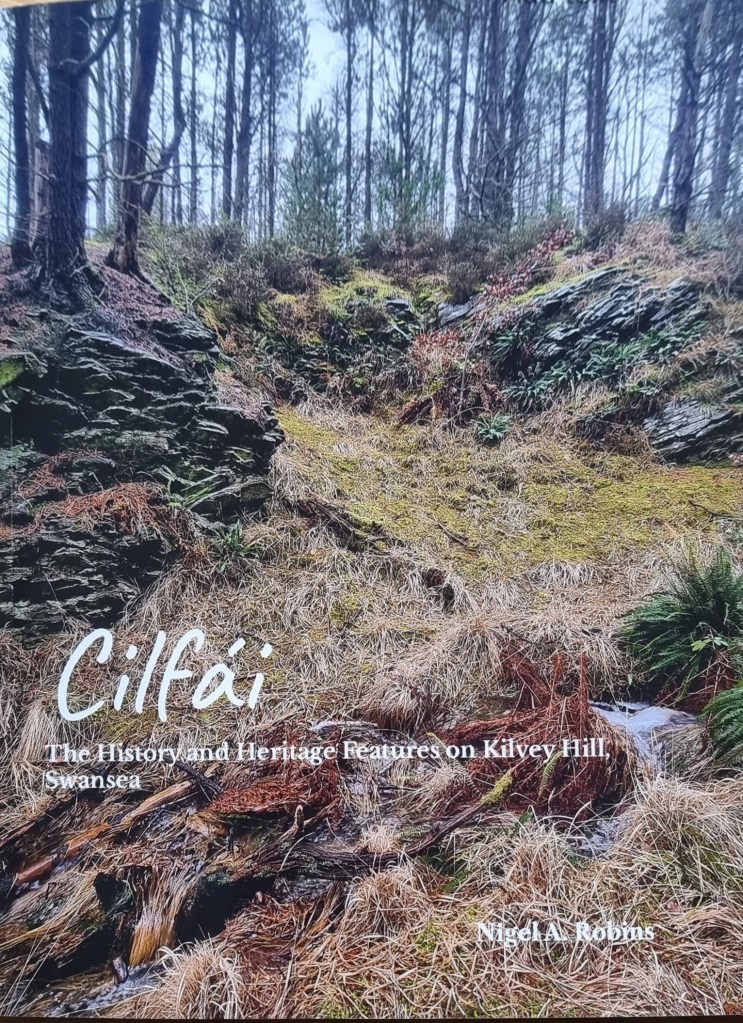
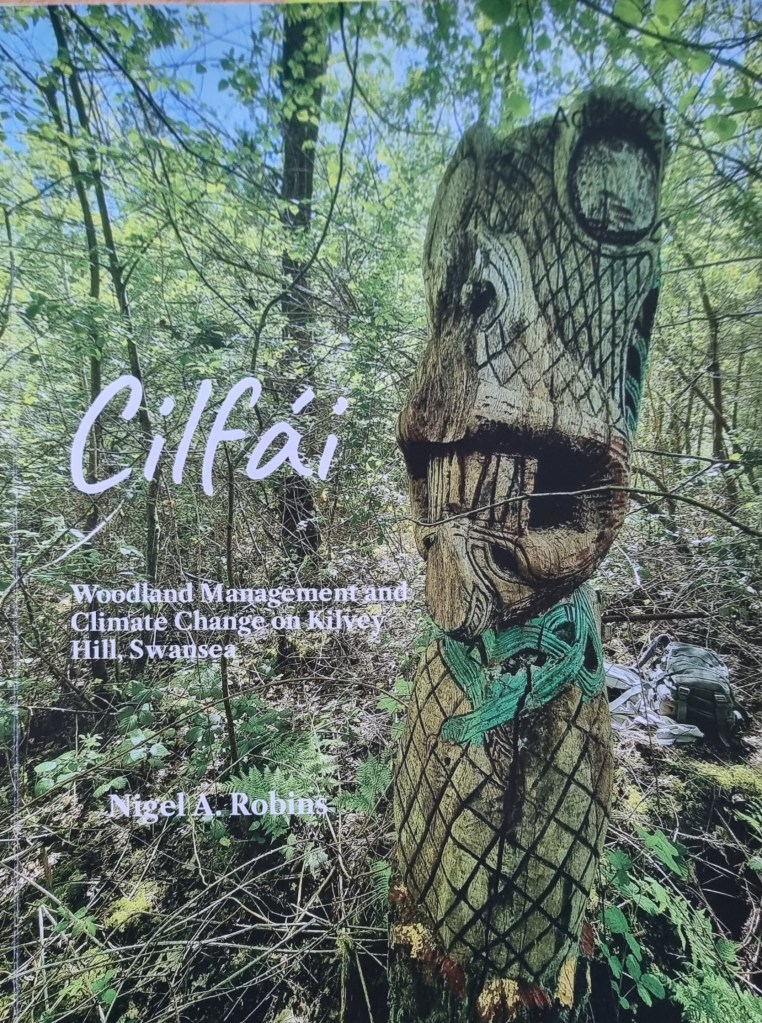
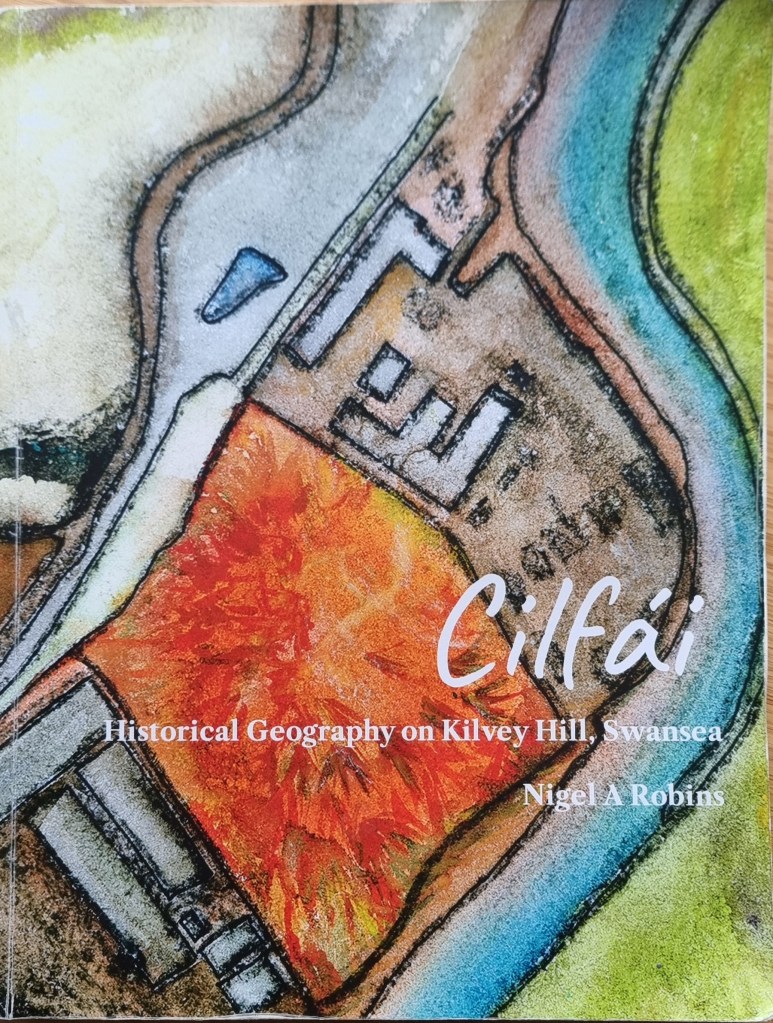
The cover of Cilfái was part of a painting of White Rock I did a while ago, mainly to show the extent of the Cae Morfa Carw waste tip (the orange land). The Tawe is on the right, and the original long workhouse of White Rock is at the top.
I must also thank the staff and colleagues at Coed Cadw/Woodland Trust who, unwittingly perhaps, spurred me on to re-explore Kilvey some thirty years after I last surveyed the land in the late 1980s. All the modern mapping was completed using the open-source QGIS application which has become a central tool as a landscape historian over the past ten years. Finally, I must mention the help and support of Kilvey Woodland Volunteers. Without the passion and commitment of the volunteer body over many years, I doubt that Kilvey would be the special place it has become. As I write this, Kilvey is under more threats from the local council and developers, and I hope this little book records a few milestones in the ongoing Kilvey story rather than an ending.
The first edition of Cilfái was remarkably successful. The aim was to fill a gap in knowledge about the Hill in the constant challenge to take care of it in the face of threats of irreversible destruction from tourist developments and an uncaring local authority. There are now many more local environmental and residents groups aware of the current value of the land and the potential loss Swansea faces if the destruction begins. This book was the first of the Cilfái trilogy, the second book covered Woodland Management and Climate Change, and the third book covered the heritage features on the hill. This book was rushed into print to address claims from the Local Authority that there was ‘not much up there’. Since 2023, I’ve taken hundreds of people on walks to view the biodiversity, history, and heritage of Cilfái, and I’ve packed out numerous community centres and halls to talk about the history. Hundreds of people have been converted to the value of the landscape we may lose.
Above: A coal adit on Kilvey was left to regenerate after about 40 years of peace. Swansea Council may be seeking to destroy this land, which they consider ‘worthless’.
It is a clever bit of policy from Welsh Labour and throws a bit of recognition and identity branding the way of some struggling woodland sites. Creating a Welsh ‘network’, however fragmented, can only be a good idea.
The pre-medieval road to Nyddfwch in the Penllergare Valley Woods in 2018.
Above: The Penllergare woodlands are a complex mix of ancient woodland, garden planting, invasive non-natives and coal mining archaeology. An incredibly rich mix of history and environmment.
The valley woodlands thoroughly deserve inclusion in the National Forest list. I spent nearly ten wonderful years surveying and researching the landscape and woodlands until I felt compelled to leave in the face of the ugly politics and personalities that run the charity. Some of the staff and volunteers I worked with were some of the finest people I ever experienced in conservation circles, although all have been hounded out by the organisation, which is such a shame.
The original mission of the lottery-funded project was to recreate the nineteenth-century estate gardens of the Llewelyn family. It was centred on making something of the remaining walled garden and the paths and planting of the Llewelyns, a wonderful collection of exotic trees, native (1800s) planting, and a collection of Rhododendrons. The premise was ambitious in the early 2000s, and many of us were surprised that it got funding, as we knew the concept was challenging because of climate change and the lack of surviving substantive features. I think the charity running the place is now pressing for more money to keep the place going. Some of you who came to my Environment Centre lectures may remember I compared the limited effectiveness of money invested in Penllergare with the far better return on investment of money spent on Cilfái.
Above: The Nyddfwch Oak in Penllergare.
The wider area of woodland contains significant ancient trees, 1950s Forestry Commission planting and a spectacular collection of unusual and exotic tree species (the remnants of the nineteenth-century garden). Much is made of the links to the Llewelyn family, although they abandoned the site for a nicer house elsewhere. I imagine the family’s estate managers will be unhappy at this latest National Forest status as they were hell-bent on selling for housing; the land is on a short lease for the charity.
Above: Ancient tree stumps from the Penllergare valley. The area was cleared for timber in the 1940s although many trees and ther carcasses survive providing an excellent reservoir of dead wood. At one time the management wanted to sell the wood for firewood LOL.
The history of the nineteenth century is only of limited significance. Far more interesting is the history of the valley in the early 1700s, when it was devastated by coal mining. So, the land is a good example of early Welsh industrialisation and the recovery after that, when the coal was worked out in the 1790s. The ancient trees are an incredible survival from the coal mining devastation of the 1700s and were probably rejected for harvesting as timber because of their shape. I prepared a draft book on the woodlands a few years ago, and now may be the time to turn it into a real entity.
I used to take many groups into the woods to explore the woodland, let me know if you’re interested and I’ll put together a walk.
Above: My original manuscript. Maybe I’ll make it real.