Rosehill Quarry Group, Swansea. Forty years of environmental activism

It was good to see the Fortieth Anniversary of the Rosehill Quarry park this afternoon. I remember it being set up as the place was a biodiversity hotspot on the hill long before it was transformed by the Rosehill Quarry  Group. I can remember it wasn’t a completely popular thing to do in the early 1980s, as increasing access to an area known for trouble was not universally welcomed. Four decades later, it looks like it was always there.

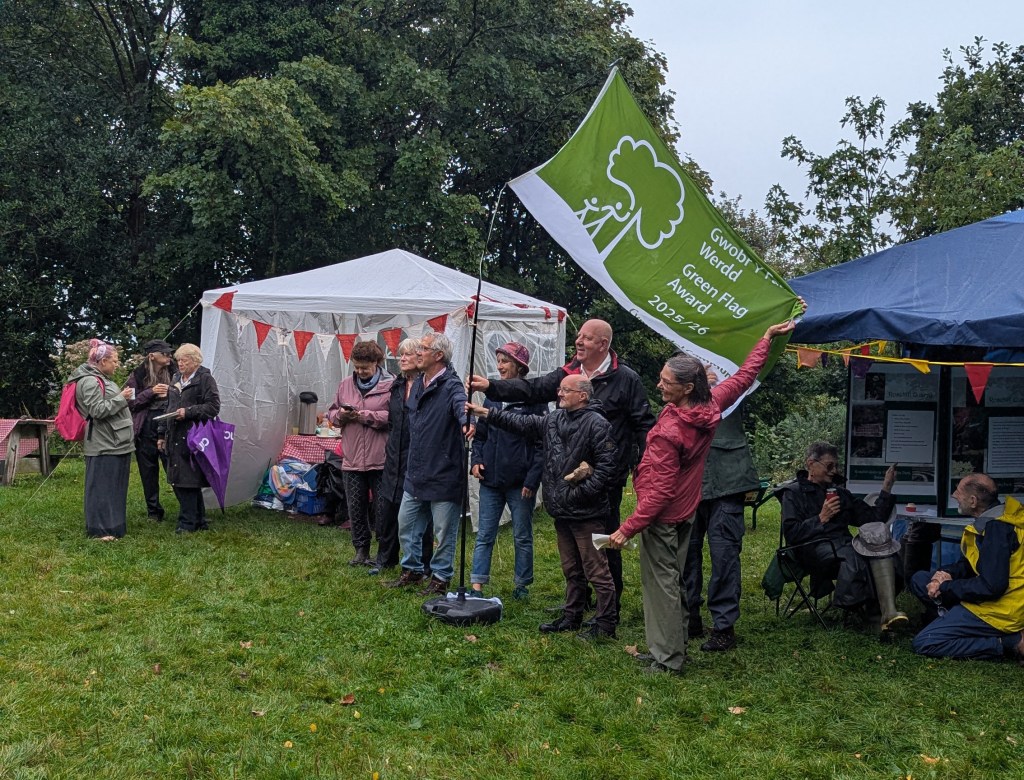
Above: Rosehill’s recent Green Flag at the Fortieth Anniversary of the Group on Sunday 7 September 2025.

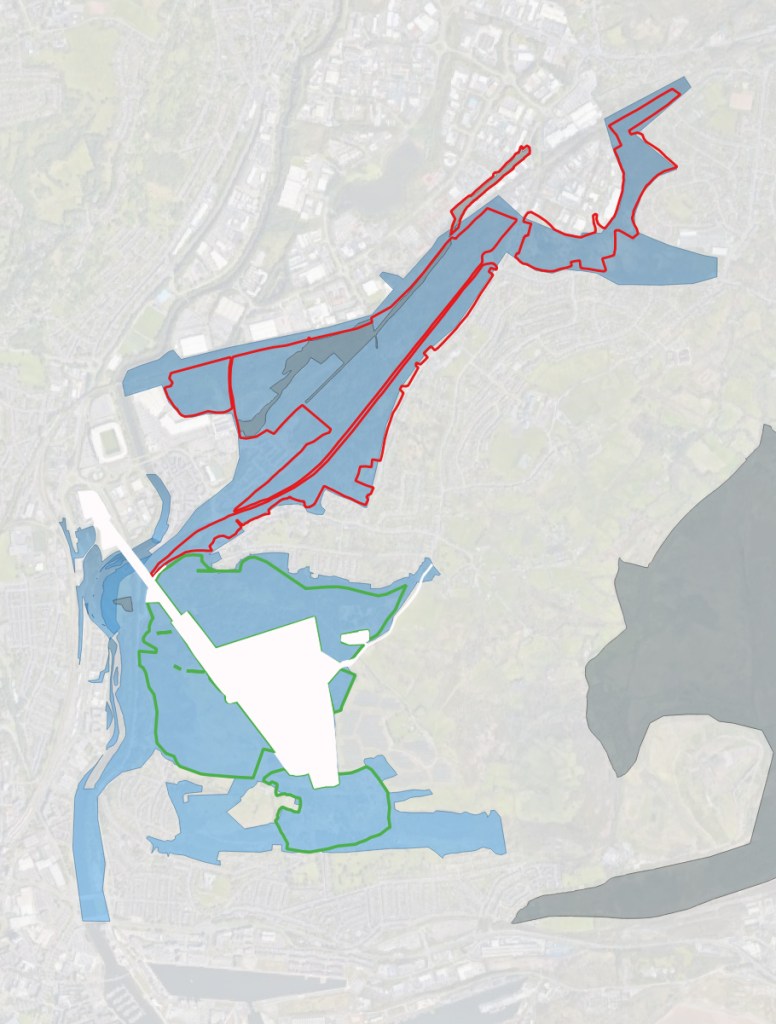
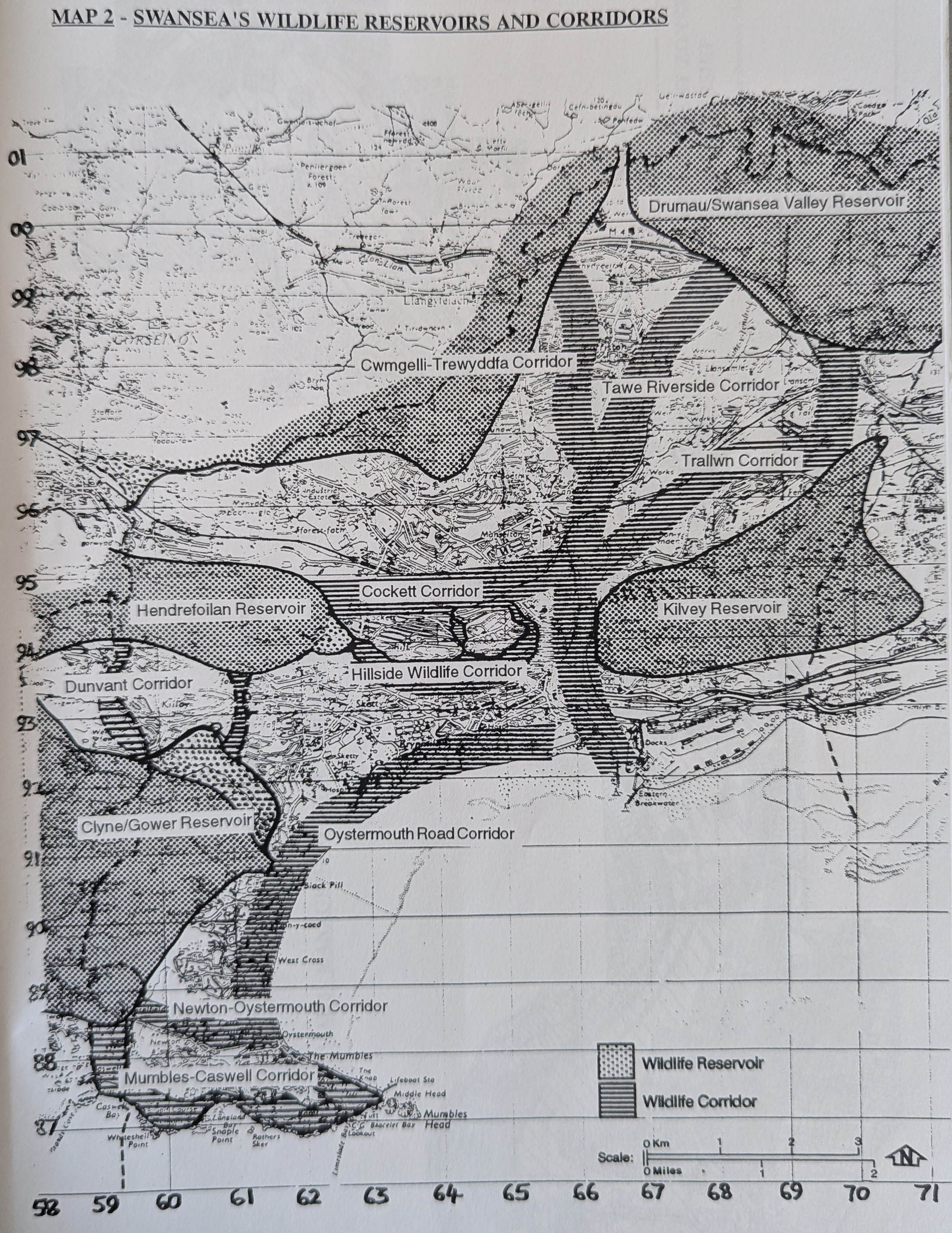
I remember writing the notes for a publicity pamphlet some years later when the City Council rebranded the area as the ‘Hillside Wildlife Corridor’  as part of the 1990 landmark Strategy for Greening the City. In those days, Swansea was zoned into a series of wildlife corridors and wildlife reservoirs. With bitter irony for what is about to happen, Kilvey was recognised as a wildlife reservoir.

It was particularly good to see Councillor D. H Hopkins say a few words about Rosehill, as he was central to the setting up of the Wildlife Corridor in the 1990s. He was far too modest about his role, and for me at least,  he brought a welcome sense of continuity as if to confirm the long commitment to creating and maintaining the green space. For my part, I often gave little history talks about the area to the Group in the early days, always tempted by the fabulous cakes that Margaret Burdett would bring to the meetings.

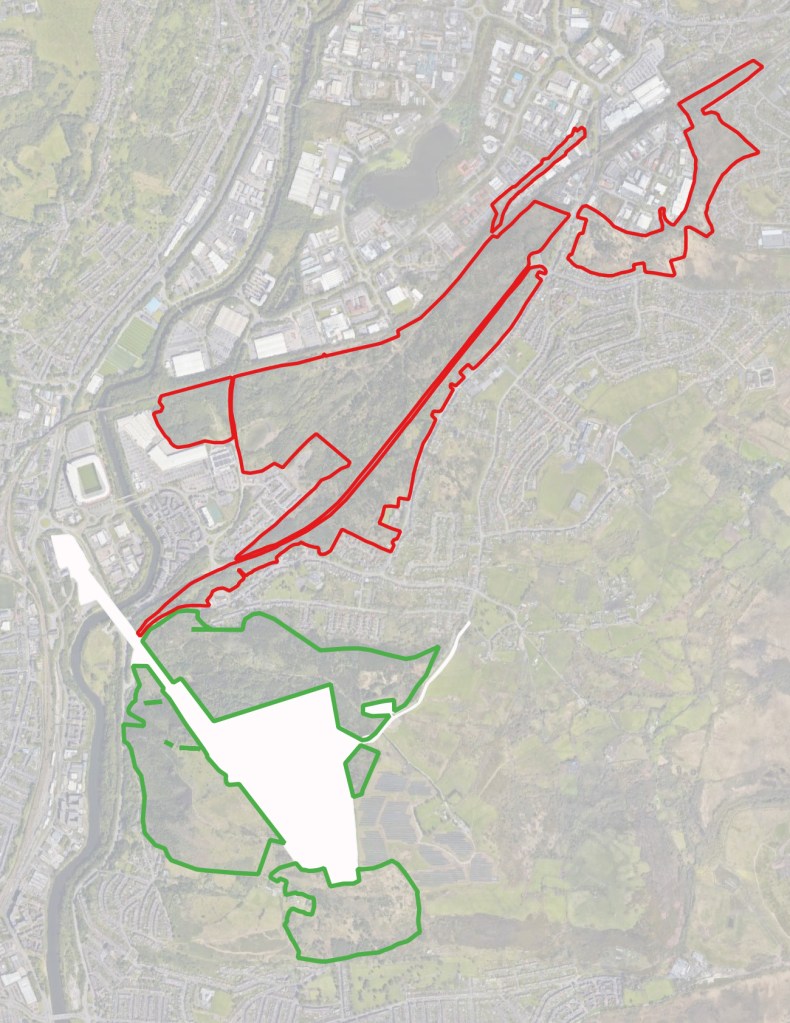
Above: The 1990s understanding of wildlife corridors and reservoirs. This work originated in the 1999 ‘Greening the City’ discussions. Swansea is remarkably fortunate in having so many formal and informal green spaces. Political agendas and constrained funding mean that the security of many of them is always precarious.

I think it is also the tenth year the site has been awarded a Green Flag. On Kilvey, we had our first Green Flag this year.

Rosehill has always had unfailing political support from the Council (both City and its successor County Council). The area has transformed into a green jewel for plants and wildlife, and both the Council and the new crop of volunteers have done a fantastic job. One day, I hope Kilvey will get such good political support.

Among about thirty people there, I only recognised one face. A new generation of people has taken over, which made me feel rather old.

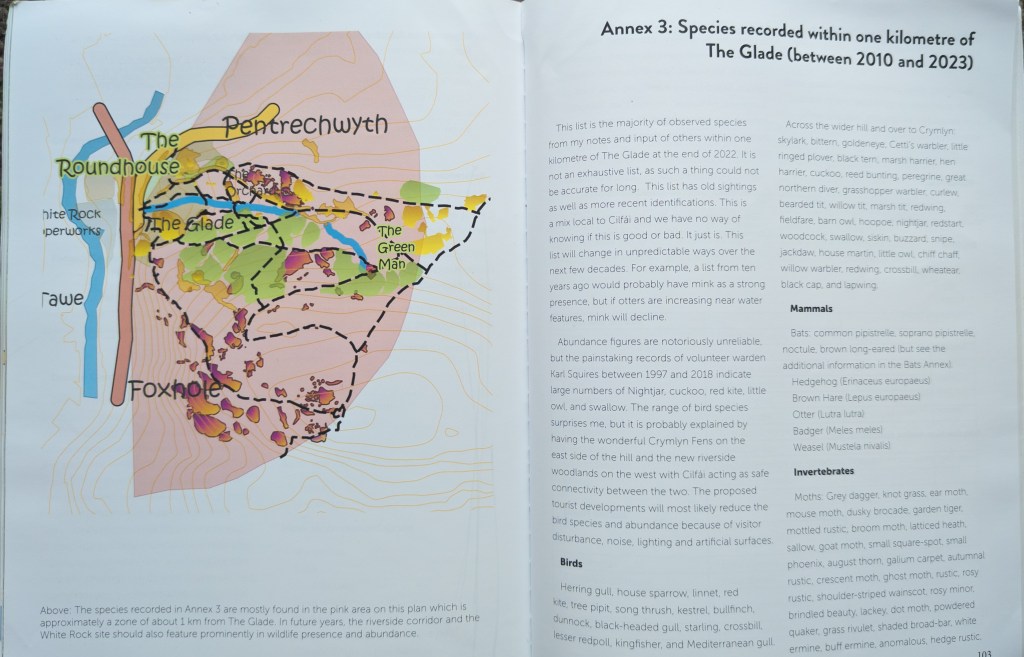
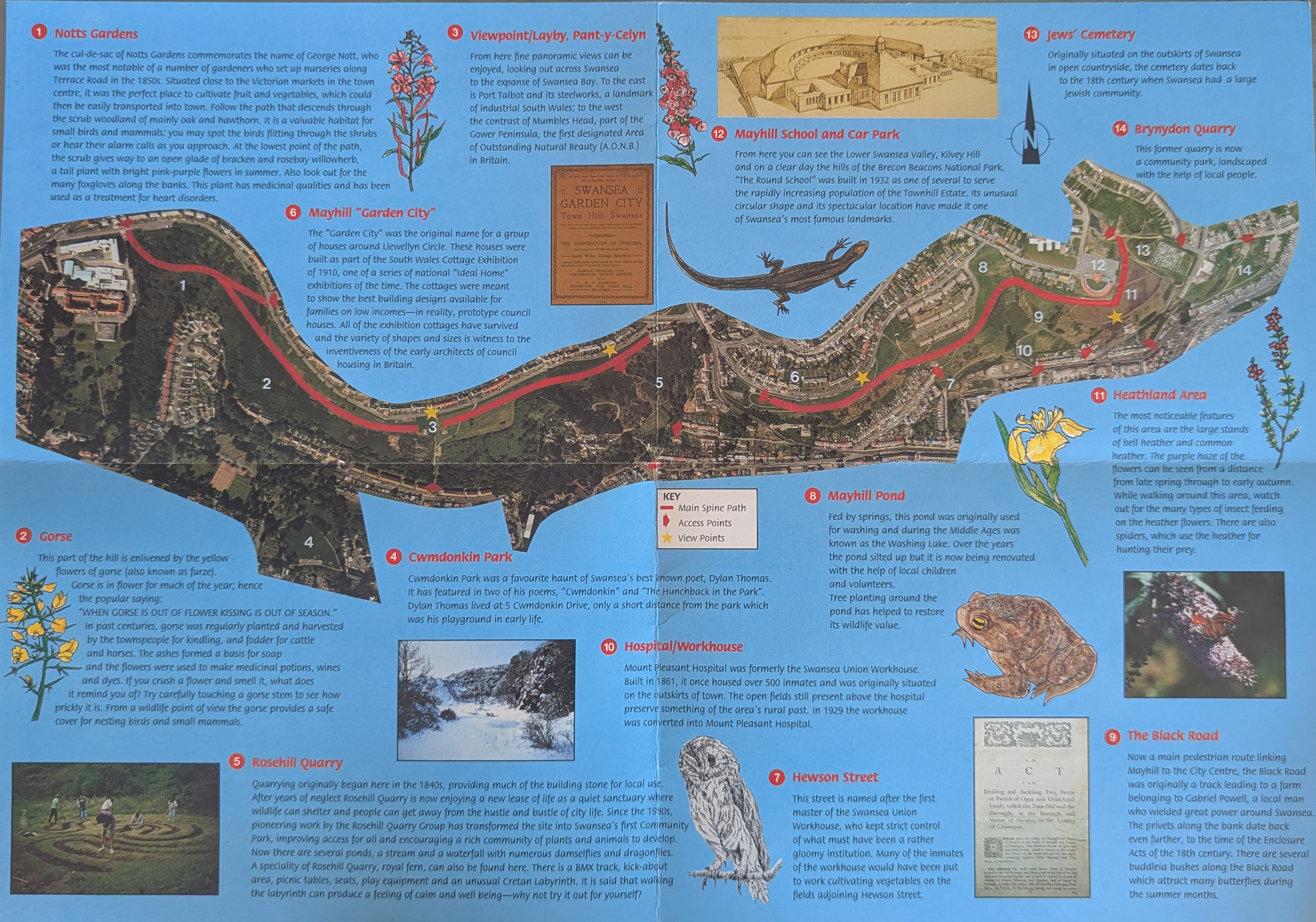
Above: The 1990s leaflet for Rosehill, and the Townhill Wildlife Corridor (1994). These were derived from my notes from the research project for the Enclosure of Townhill book. My suggestion was that the original hedgerow banks were replanted with hawthorn, as they would provide texture and contrast with the rest of the plantings for future generations. The Planning Department never took the time to understand me. (Matthew 7.6).

Swansea History and Our Geoheritage

Geoheritage is now becoming a broader term for our geographical and geological features that have significant scientific, educational, cultural, or aesthetic value. Swansea has an important place in the history of geological exploration and the development of the Welsh coal industry.

People who have participated in my many guided walks on Kilvey will already be aware of the value of the Kilvey Geoheritage sites and the contribution they make to the Biodiversity and Geodiversity of Swansea.

Globally, October is a month of celebrating and recognising the importance of the rocks and landscape underneath our feet. Swansea has more than most towns to be mindful of, as it is built on over a thousand years of coal mining history.

Geoheritage is now becoming a broader term for our geographical and geological features that have significant scientific, educational, cultural, or aesthetic value. Swansea has an important place in the history of geological exploration and the development of the Welsh coal industry.

People who have participated in my many guided walks on Kilvey will already be aware of the value of the Kilvey Geoheritage sites and the contribution they make to the Biodiversity and Geodiversity of Swansea.

Globally, October is a month of celebrating and recognising the importance of the rocks and landscape underneath our feet. Swansea has more than most towns to be mindful of, as it is built on over a thousand years of coal mining history.

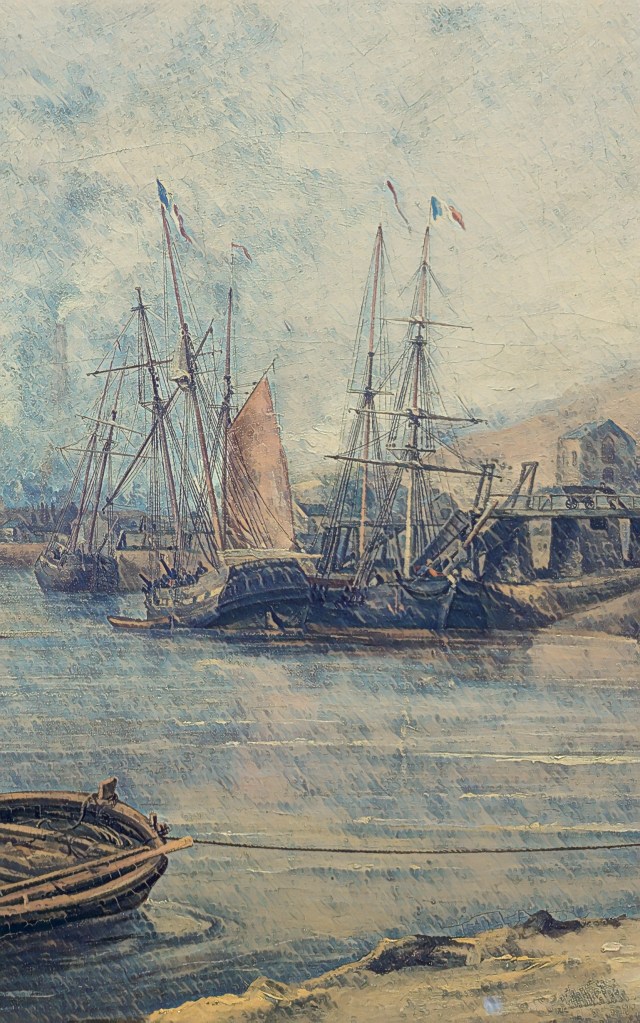
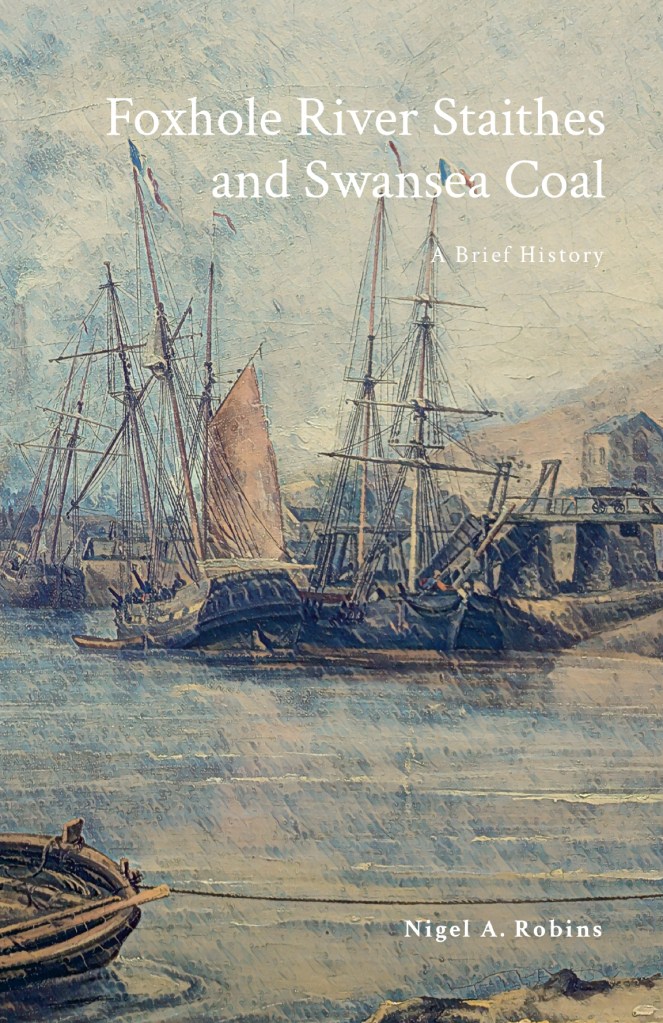
Above: Foxhole Coal Staithes in the 1840s.

Following on from my recent book on Foxhole and the history of Swansea Coal, I’ll be giving a few guided walks and talks on broader aspects of Swansea’s incredible Geoheritage and Geodiversity.

On 4 October, I’ll be talking about the history of Swansea coal and the special place Foxhole on Kilvey has in the history of Welsh coal mining. My talk will be at Swansea Museum as part of the RISW and the Historical Association’s History Day 2025. I’ll also have copies of the Foxhole history book at a discounted price.

On 6 October, as part of UNESCO’s # InternationalGeodiversityDay, I’ll be leading a walk around the geological features of Kilvey Hill and explaining the unique place in Swansea’s history that Kilvey holds. The geological features of Kilvey have long been regarded as obscured or destroyed, but many have survived against all odds. Come with me and walk the land that was explored by Geology’s most famous local coal pioneers, William Logan and Henry De la Beche. Tickets will be available shortly. I’ll advertise them via Facebook and Eventbrite.

On 8 October, I’ll be at the Friends of Penllergare monthly meeting at Llewellyn Hall in Penllergaer. I’ll be talking about ‘Penllergare, Henry De la Beche, and early Geology in Swansea’. Lewis Weston Dillwyn was often at the centre of scientific and cultural events in Swansea. He was particularly prominent in the recognition of Swansea as a centre of research in the emerging science of Geology and the first understanding of the South Wales coalfields.

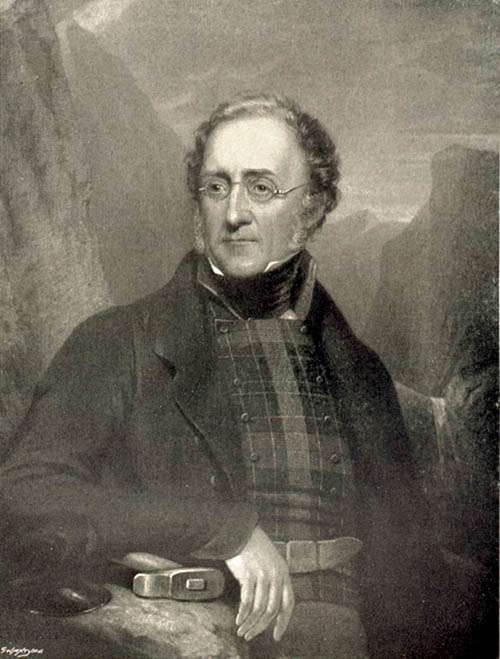
Above: Henry De la Beche. Pioneer geologist.

I’ll be doing a few more walks and talks throughout the month, and I’ll post here to let people know. If you want to know more contact mew for details.

I’ll also have my bookshop of all my current books in print at the History and Heritage Fair at the National Waterfront Museum on 27 September 2025.

Heritage Data Requirements

Nigel A Robins (2022) Heritage digital asset management data requirements. Zenodo. doi:10.5281/zenodo.6912783. https://zenodo.org/records/6912783

This is my work list for the Heritage Data Requirements Strategy for the Palace of Westminster Restoration and Repair. This is an outline of the work, most of which was completed. This evolved into a fairly detailed Heritage AIM, although the final execution of any plan was never completed.

This script provided the basis for several other projects that were perhaps more successful, or at least easier to work alongside.

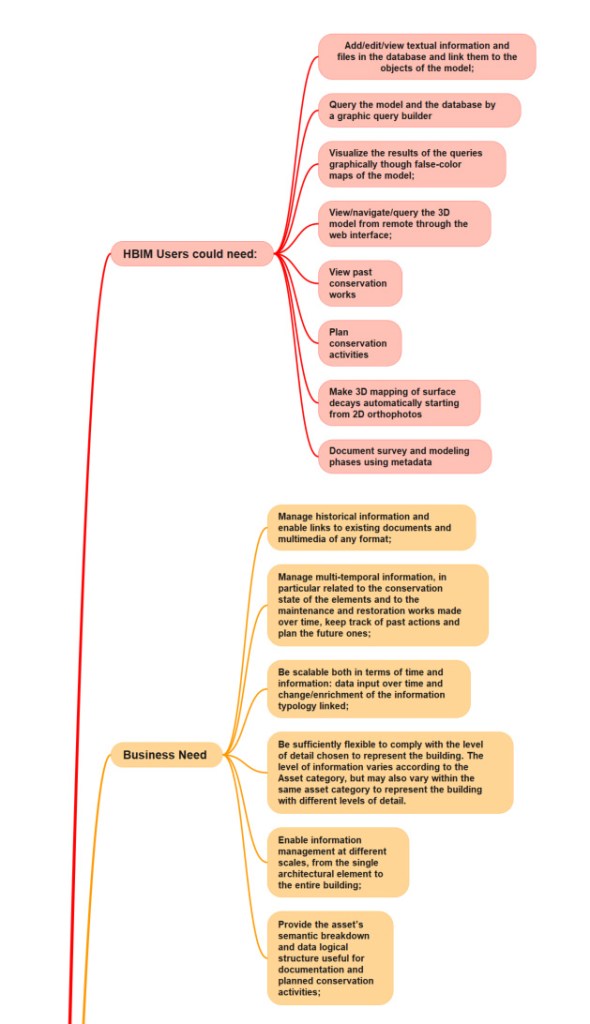
Analysing the ‘as-is’ situation, via intensive and sometimes exacting canvassing and fieldwork, highlighted many problems with current cataloguing standards and the extent of deployment of systems and staff capabilities (the current minimum inventory standard of core information for Axiell Emu). All very difficult challenges. The original data fields (Data fields on the card box system) were too focused on legacy data and staff skills from earlier decades. The recognition of what HBIM users could need (HBIM Users could need, Business Need) was difficult for conservation staff who were worried about job security.

After the BA fieldwork, some alternative schemes were mooted (New Scheme?). A certain amount of tension emerged between current users of Spectrum 5.0 and the IT managers (who knew very little about Heritage CMS). A decomposition of Spectrum 5.0 was essential to highlight exactly where issues with data security and staff attitudes were likely to clash. At this point, I thought it advisable to introduce BIM elements (Semantic Information Levels). This was an attempt to establish consensus on what was needed. IT staff were poorly grounded in the realities of building conservation and found it challenging to understand concepts such as Levels of Detail, including discussions of scale.

Above: Extract of Heritage Data Needs. Click for full document.

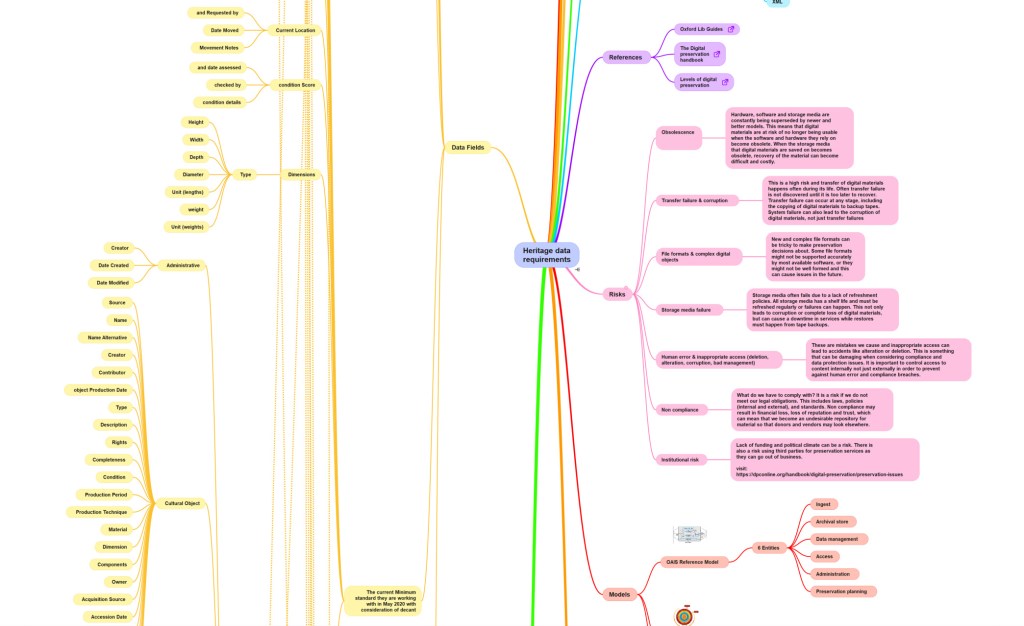
Continued canvassing and fieldwork led to identification of a pick list of data fields (Data Fields). Decomposition of data fields resulted in a scratch list of risks (Risks) which proved pleasingly accurate when I was able to discuss with other institutions and organisations.

Above: The initial risks which were subsequently enlarged into a risk register. Click for the full document.

Metadata proved a challenge as agreeing a helpful starter list was remarkably difficult. Again, much of this was due to a lack of experience amongst IT staff who remained blissfully unaware of FISH (https://heritage-standards.org.uk/) or Getty AAT.

Finally, Use Cases were completed (Potential Use Cases). The initial work was via a set of personas, again some of these concepts were novel to staff and great care had to be taken to introduce concepts gradually. The detailed use cases were assembled using conventional requirements gathering and design definition processes (via BABOK sec. 7 etc.).

Above: Extract from Heritage Data click for the full document.

John Hardman and Co., Birmingham metalworkers and problems of conservation

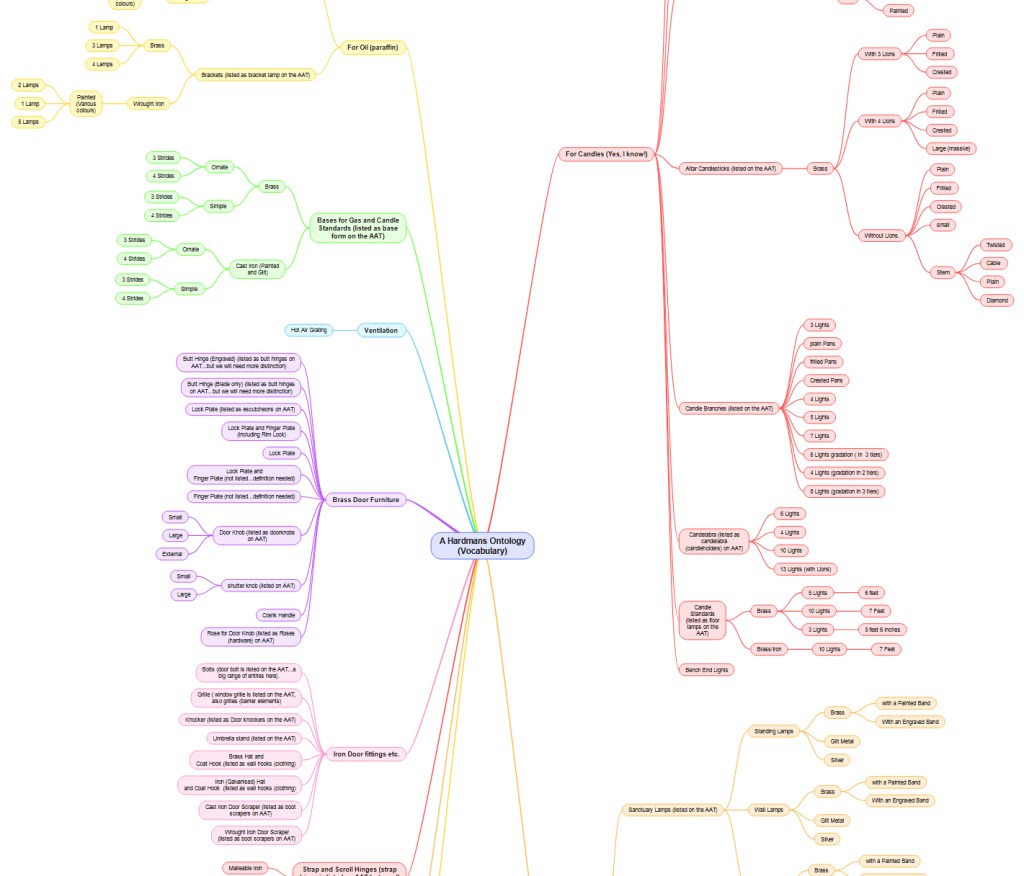
I needed to produce an ontology-based version of the ornamental metalwork output of John Hardman (https://www.gracesguide.co.uk/John_Hardman_and_Co). This originated from work in the various furniture collections of the Palace of Westminster. The Palace has large quantities of ornamental metalwork, particularly candle holders of various kinds, which were popular in the nineteenth century. Particular types of metalwork are frequently at greater risk. Whilst most can agree on the conservation case for a Hardman candle branch from the 1860s, fewer understand the extreme risk posed to classic door furniture from modern facilities management or unsympathetic cleaning regimes using abrasive chemicals. The catalogues used in the Palace were old, incomplete or had not been regularly updated or maintained through a series of digital systems. The risk to objects is large, as a comprehensive catalogue entry is often the first line of defence against damage or loss. This ontology was an attempt to communicate the scope of essential information that needed to be linked and understood for future systems.

I needed to produce an ontology-based version of the ornamental metalwork output of John Hardman (https://www.gracesguide.co.uk/John_Hardman_and_Co). This originated from work in the various furniture collections of the Palace of Westminster. The Palace has large quantities of ornamental metalwork, particularly candle holders of various kinds, which were popular in the nineteenth century. Particular types of metalwork are frequently at greater risk. Whilst most can agree on the conservation case for a Hardman candle branch from the 1860s, fewer understand the extreme risk posed to classic door furniture from modern facilities management or unsympathetic cleaning regimes using abrasive chemicals. The catalogues used in the Palace were old, incomplete or had not been regularly updated or maintained through a series of digital systems. The risk to objects is large, as a comprehensive catalogue entry is often the first line of defence against damage or loss. This ontology was an attempt to communicate the scope of essential information that needed to be linked and understood for future systems.

In the 1830s, a collaboration with Augustus Pugin considerably enhanced Hardman’s output, and the Palace of Westminster has many examples of the finest Hardman output at all scales and sizes. Although I do find Hardman metalwork and fire furniture in many other large buildings.

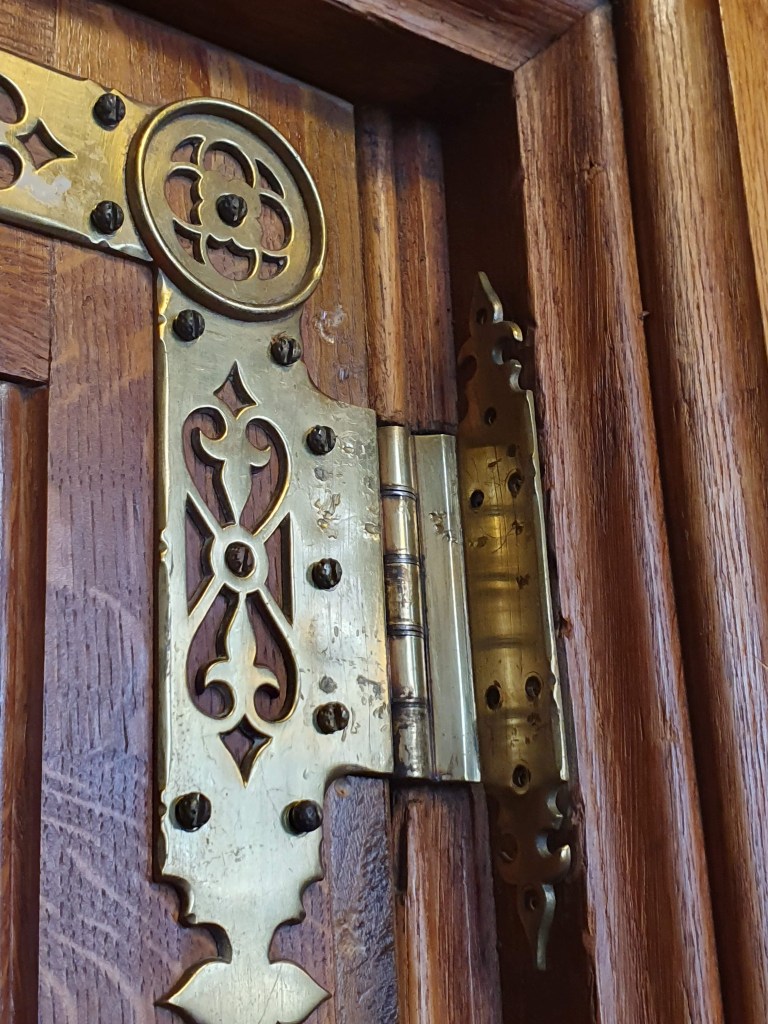
Above: Gouge marks from inappropriate screwdrivers on irreplaceable Hardman door plates. A good quality HBIM approach will save money, prevent damage, and preserve furniture by providing essential information and guidance to the correct level of detail for maintenance staff.

Some large public buildings will have complex collections of ornamental metalwork, and most of this is not recognised nor its significance recorded. Items at greatest risk include door furniture, which is often exposed to damage and loss by restorers and maintenance staff who remain unaware of the significance. A good example is the use of caustic cleaning chemicals on brass door furniture, resulting in the erosion and destruction of the original finish. Another common issue is the use of the wrong size screwdrivers, resulting in broken screws that were handmade in the nineteenth century and are now irreplaceable. There is also a need to recognise the wide scope of lighting products for candles and gas available to architects and designers in Victorian Britain, many of which were installed in significant public buildings.

Whilst many items are recognised within the Getty Art and Architecture Thesaurus AAT  (https://www.getty.edu/research/tools/vocabularies/aat/), there are several omissions, and I found that the  AAT is not representative of the wide range of British artistic output in the second half of the nineteenth century.

Above: When a lock plate is removed for whatever reason, the staff frequently break the screws, making it impossible to replace the door furniture and leaving the door looking like this in a significant public-facing corridor. A good-quality HBIM catalogue will reduce the likelihood of this kind of damage, by providing the essential care information at the point of need.

This approach involves relating actual examples of Hardman items in British buildings to the various catalogues released by the company.  Items were identified from various catalogues, museum listings, informal cleaning records, and property registers, and most were confirmed by fieldwork to confirm the physical presence (or, in some cases, survival) of the item.

Alongside the fieldwork in several house collections and the Palace of Westminster, I found the Hardman Collection at Birmingham Library of particular use, particularly the Metal Sales Ledgers and their delivery books.

Nigel A Robins. (2022). John Hardman (1880s) and Co. data and product ontology (Version 1). Zenodo. https://doi.org/10.5281/zenodo.6912960

Above an extract from my original Hardmans ontology. https://doi.org/10.5281/zenodo.6912960

Values, Significance, Attributes, and Authenticity: Leveraging the best of IUCN Guidance

I was particularly struck by a recent opinion piece in The Lancet Planet Health on the links between human health and wellbeing and diverse nature.2 It’s an approach that remains at the centre of my use of Kilvey/Cilfái as a landscape for teaching. Early on, I could see that an overemphasis on biodiversity to the exclusion of other aspects of the environment would inevitably lead to a partial appreciation of the landscape.

Subscribe to continue reading

Subscribe to get access to the rest of this post and other subscriber-only content.

A new orchard survey for Swansea and Gower

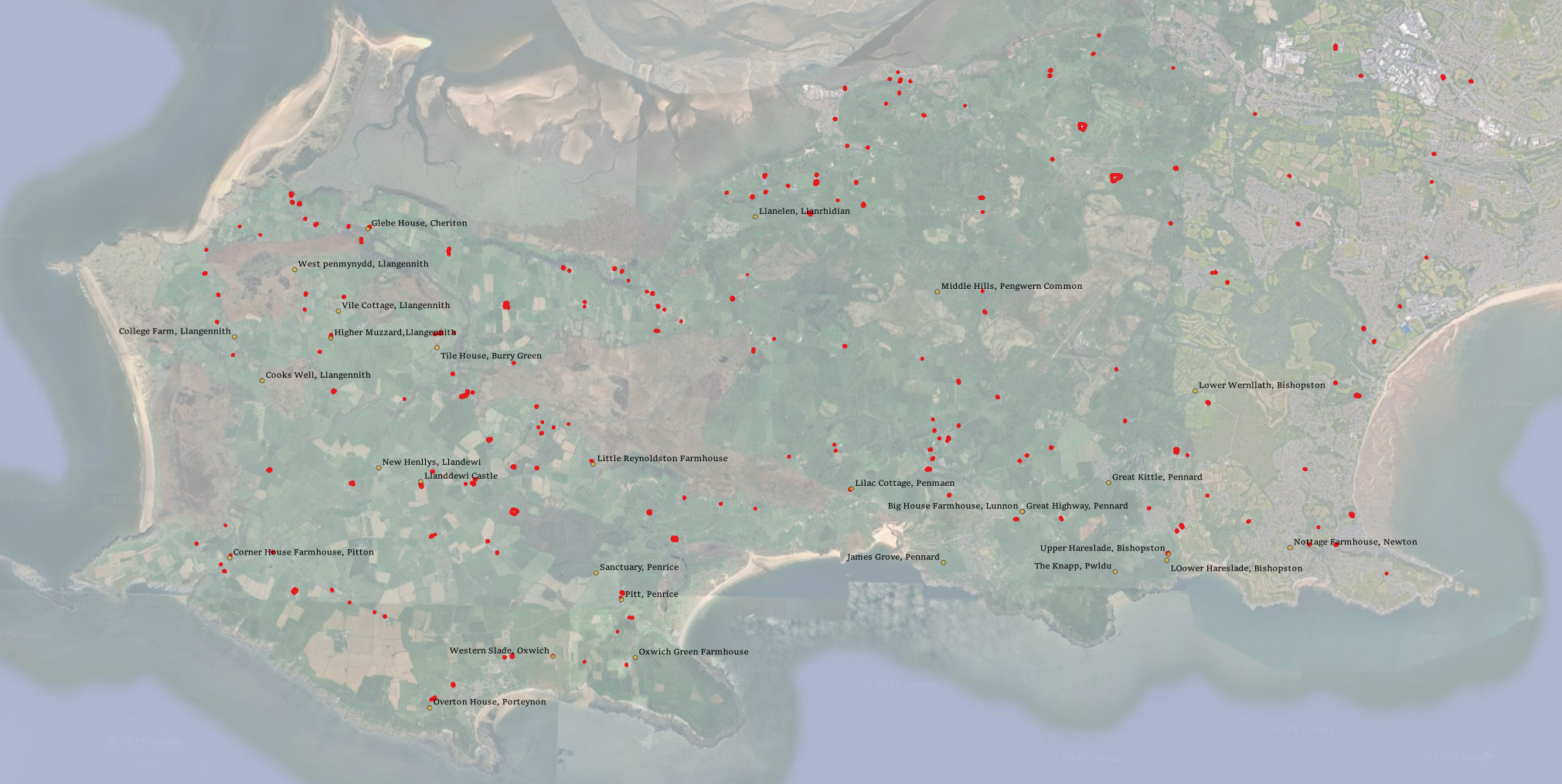
I’m just about to begin a data refresh of our local traditional orchard database. My original work was in 2012 as a contribution to the England and Wales survey that collected a massive amount of data about surviving orchards. For ~Swansea and Gower,  that original data is now outdated and in need of revision. This is particularly significant for the Gower National Landscape (formerly the AONB).

I’m just about to begin a data refresh of our local traditional orchard database. My original work was in 2012 as a contribution to the England and Wales survey that collected a massive amount of data about surviving orchards. For ~Swansea and Gower,  that original data is now outdated and in need of revision. This is particularly significant for the Gower National Landscape (formerly the AONB).

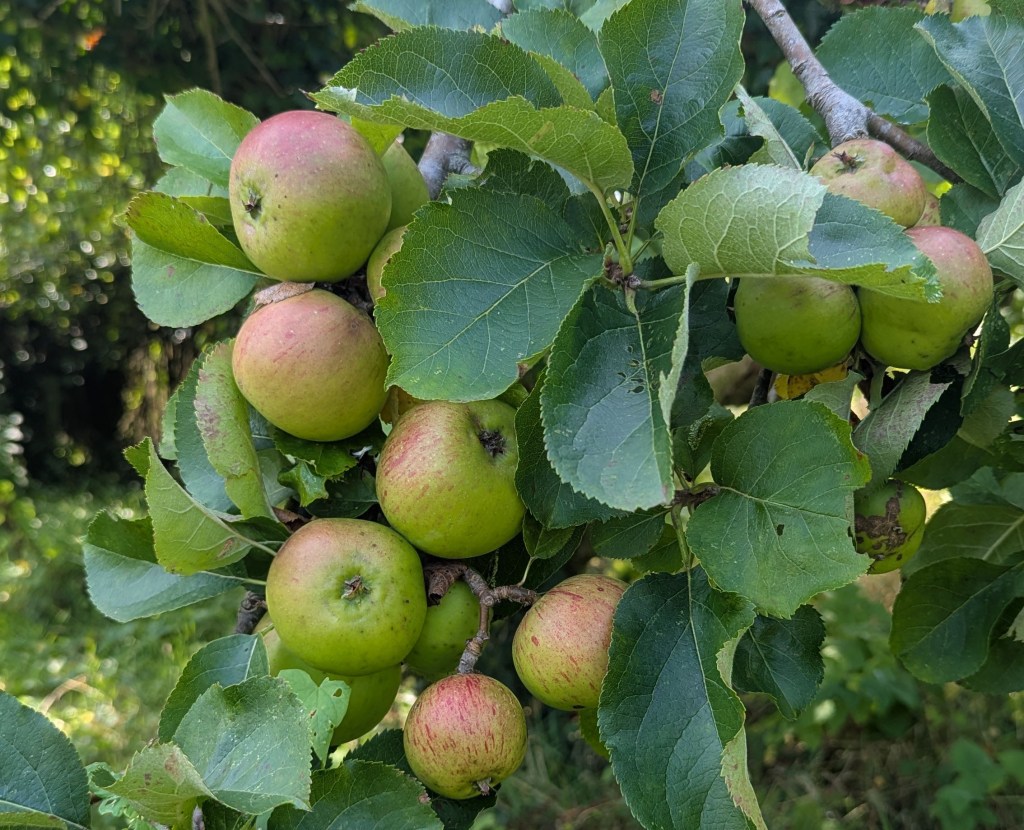
Above: A culinary apple crop from a tree that is over a century old in Swansea, August 2025.

Back in 2012, it was a hot summer, and I remember walking North Gower roads and lanes, ground-truthing previously identified potential survivals from satellite photos. It will be interesting to see what has changed. Originally, the oldest trees I saw in my surveys were culinary or cooking varieties, as in previous centuries, most apples were cooked in various forms in cakes, puddings, pies, pasties, and even soups. I saw dessert varieties start to appear as transport links to bigger markets became easier. The orchards of Northern Gower seem to have their origins in the arrival of the railway, allowing trouble-free transport to Llanelli and Swansea.

Although some academics have suggested that it is very rare to see apple trees older than a hundred years, I felt this may need correction, as I have seen some trees that, because of their location and size, are older than assumed. Much of Glamorgan’s apple industry was irreversibly damaged by massive imports of cheap Canadian apples via Cardiff and Swansea in the 1920s. The industry never recovered. In more recent decades, I see younger trees of dessert apples as people want to plant something easily consumed, and the recipes and practices of handling cooking apples have fallen out of fashion.

Equally, a new generation of consumers equate apples to cider, and I’d expect to see some ambitious investment in recently planted trees for juicing and cider.  However, the data I collect will confirm the picture.

Above: Gower orchards from the 2012 data. This is mixed with historical house data. There may possibly be a loose correlation between the two, although much altered by subsequent property development. Something to investigate!

Geodiversity and Geoheritage: Building a Case Study for Cilfái

In the autumn of 2022, the local Council announced their plans to remodel the ancient Kilvey Hill landscape for a new tourism development, which would destroy the traces of thousands of years of human habitation and endeavour. The impending destruction led me to do what I could to record the history, ecology, biodiversity and Geoheritage of what is a significantly under-recorded landscape with considerable potential for education, well-being and climate change management.

Documenting the history and biodiversity was relatively straightforward, albeit a challenge to perceptions regarding a large area of land that many people see but few have experienced and even fewer understand. I remember one comment from the local authority about ‘there is nothing up there’.  A comment I later understood as a self-serving phrase to make the destruction and loss more comfortable for planning permissions.

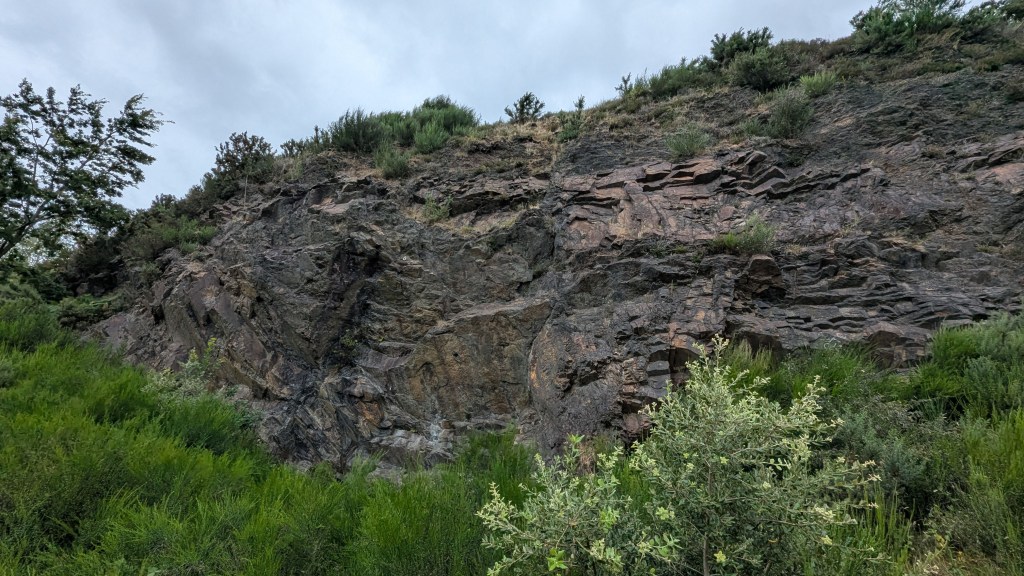
Above: The thinly bedded sandstones of sandstone on Kilvey are part of a broad range of types of structure on Kilvey, along with massive beds heavily used for building stone and the bituminous coal seams that were so important to early Medieval Swansea.

I suppose my perceptions were different, having had the advantage of a geological education at school and undergraduate level, including a hectic month of field mapping coastal regions of the Isle of Wight back in the day. I hadn’t appreciated how much of that had stuck with me until I needed to explore the Geodiversity of the Hill through documents, fieldwork and the wonderful archive of the British Geological Survey.

The fact that the natural heritage of any country includes its geological heritage is now slipping away from us. The wonderful naturalists’ clubs of the early twentieth century, such as the Swansea Scientific and Field Naturalists’ Society, were a broad church to all aspects of nature, including geology.  But they have disappeared in the swing towards wildlife rather than general nature conservation, which has permanently obfuscated much of our wonderful Welsh geological heritage. The process accelerated as Naturalists’ Societies changed their names to Wildlife Trusts.

The collapse of geology as a subject deemed worthy of learning and the dissolution of the geological part of the National Museum for Wales have meant that describing the significance of geological sites has become challenging, as basic literacy in the nature of rocks and the landscape is in freefall.

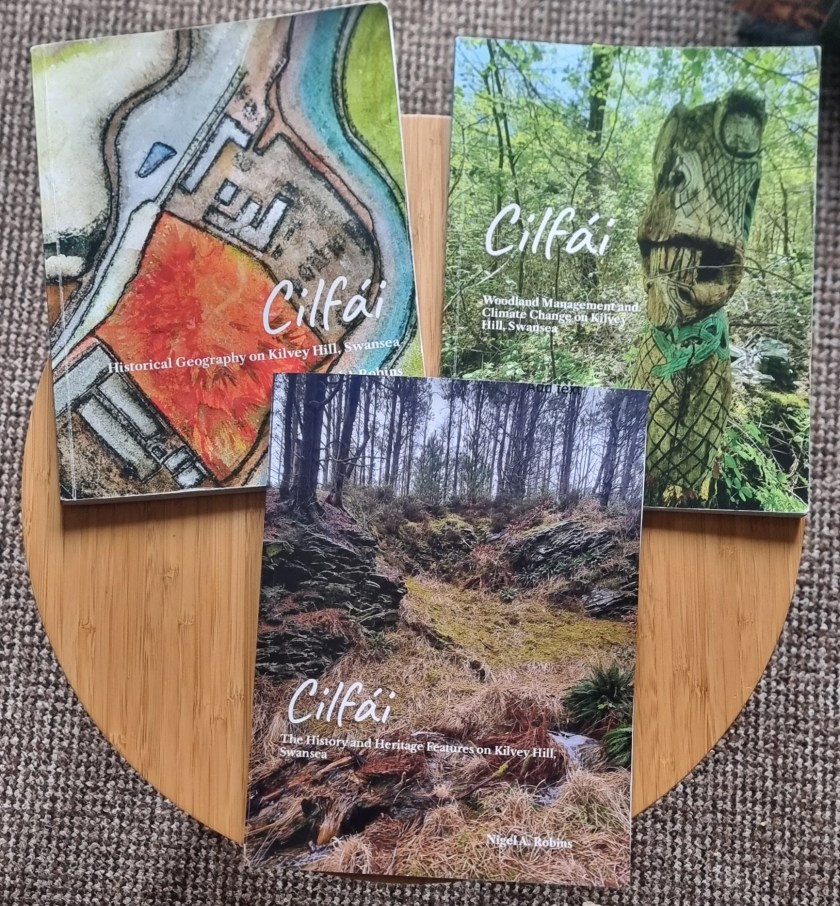
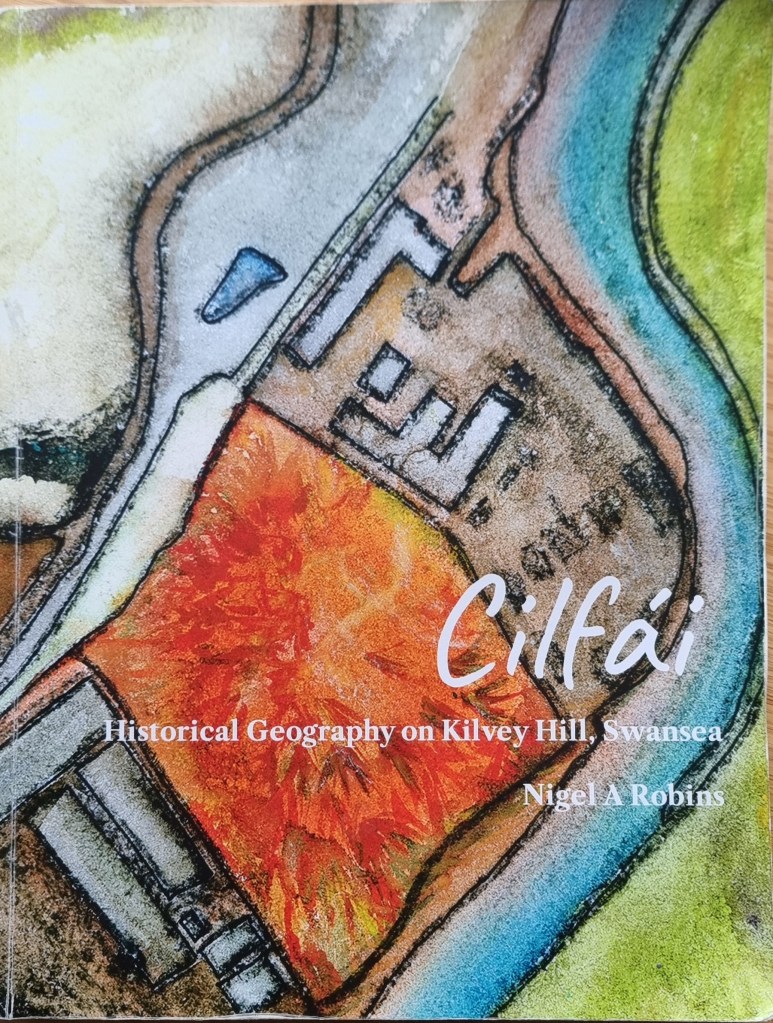
Geoheritage and Geodiversity featured strongly in my first book on the history of Cilfái, not least because it was good history as well as good geology (Robins 2023a). I sought to highlight the significance to local heritage of the geology by separating ecology, biodiversity and climate change into the second Cilfái book (Robins 2023b). However, I felt my treatment of Geoheritage in the first book was not enough. I included a more substantial piece on Swansea’s coal history in my book on the Swansea Foxhole Coal Staithes, but the rich history of William Logan, Hendry de La Beche and Aubrey Strahan clearly deserves more (Robins 2025).

‘Every outcrop has the potential to be great’ (Clary, Pyle, and Andrews 2024) was an opening line to a recent special publication from the Geological Society. It’s a great opening line, and it sets a very positive note for a lively discussion on Geoheritage on a landscape scale. It’s a sentiment that is less positively upheld in Wales where our process of listing or recording sites of geological interest is haphazard and starved of interest and funds.

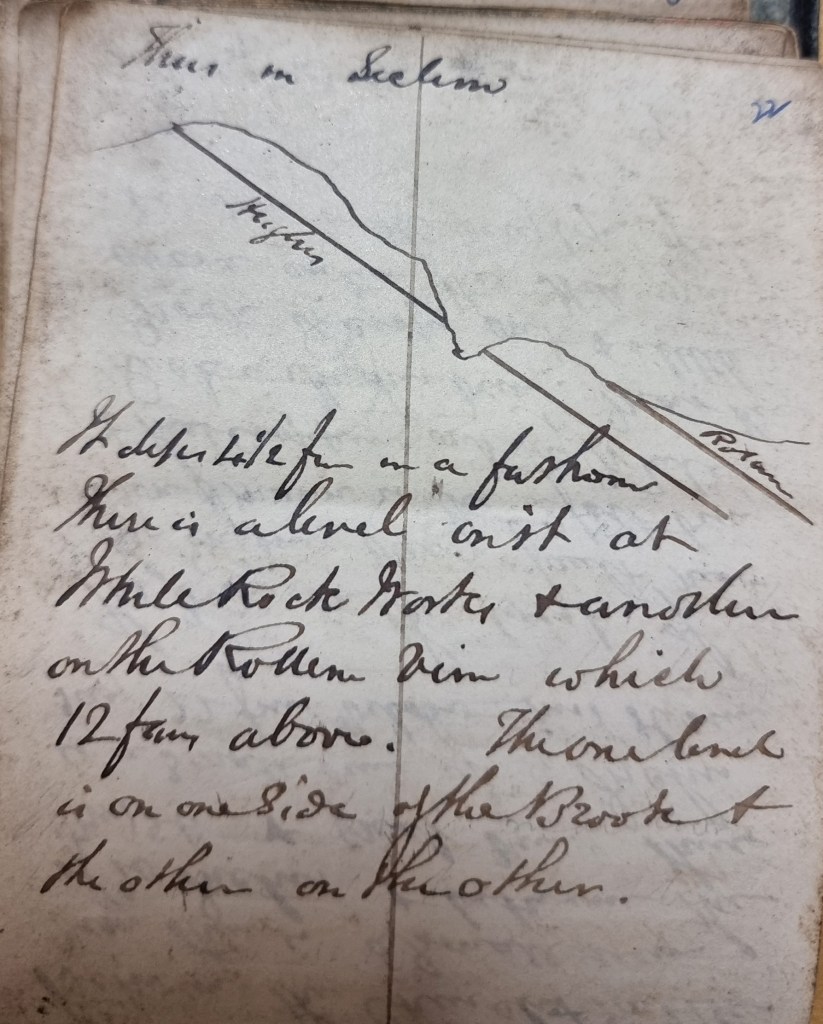
Above: An extract from one of William Logan’s many notebooks from the 1830s. Logan made regular visits to the outcrops above White Rock as he sought to understand stratigraphy and dip of the beds for coal exploration.

Nevertheless, the listing of a Kilvey site visit on the coming UNESCO International Geodiversity Day is a good opportunity to explore and reassess local Geoheritage. In preparing information for the International Geodiversity Day, I was particularly struck by a recent article linking Geoheritage and Cultural Heritage (Pijet-Migón and Migón 2022). The authors have introduced a model of themes at the Geoheritage-Cultural Heritage ‘interface’. It’s a very useful summary of what to explore or be aware of when revisiting geological sites. It helps move forward from traditional geological guides and texts (Owen 1973), which, although very useful, need to be modernised and broader in scope and engagement for a new generation.

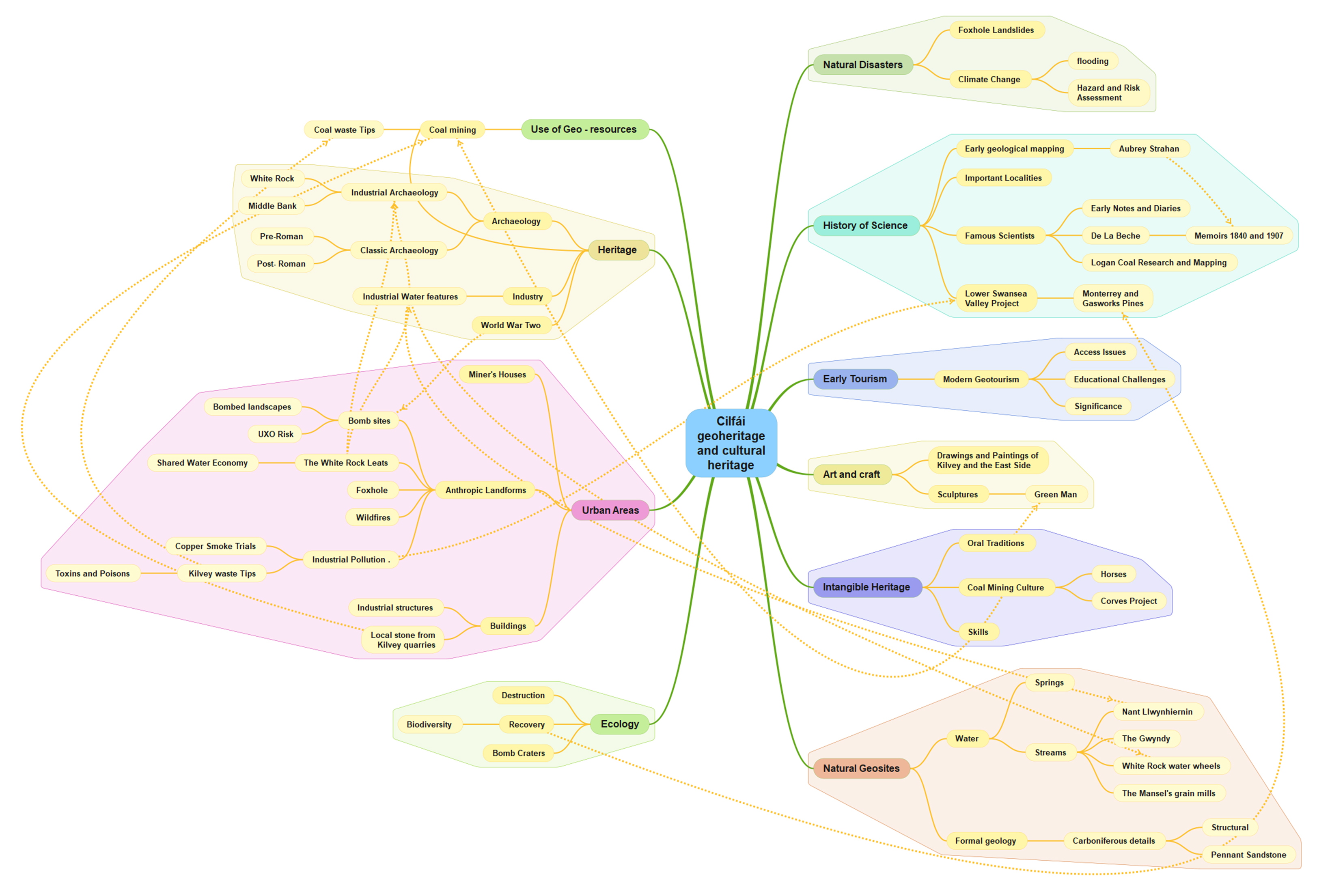
Although the Pijet-Migón model doesn’t fit everything, for example, it can be broadened to explore the link between Biodiversity and Geodiversity, it is very useful. Here’s the Cilfái Geoheritage Landscape filtered through an amended model:

Clary, Renee M., Eric J. Pyle, and William Andrews. 2024. ‘Encompassing Geoheritage’s Multiple Voices, Multiple Venues and Multi-Disciplinarity’, Geology’s Significant Sites and Their Contributions to Geoheritage, no. Special Publication 543, pp. 1–7, doi:10.1144/SP543-2024-34

Owen, T.R. 1973. Geology Explained in South Wales (David & Charles)

Pijet-Migón, Edyta, and Piotr Migón. 2022. ‘Geoheritage and Cultural Heritage – A Review of Recurrent and Interlinked Themes’, Geosciences, 12.98, doi:10.3390/geosciences12020098

Robins, Nigel A. 2023a. Cilfái: Historical Geography on Kilvey Hill, Swansea (Nyddfwch)

——. 2023b. Cilfái: Woodland Management and Climate Change on Kilvey Hill, Swansea (Nyddfwch)

——. 2025. Foxhole River Staithes and Swansea Coal (Nyddfwch)

Geodiversity, Biodiversity and human health and wellbeing

In researching the geology of Kilvey Hill, several issues quickly come to light.

The first is how little geology is actually being taught or even followed as a hobby any more. This is quite remarkable given the massive part Swansea’s geology has played in the history of the town. Swansea’s underlying coal resources were a massive factor in the development and growth of the eighteenth-century town. Without coal, there would have been no copper smelting, and Swansea would probably have remained the ‘Brighton of Wales’ (Boorman 1986). All the more remarkable when you consider that geology was an immensely popular subject for study in Swansea from the 1830s, and a century later, a large part of the University College of Swansea (Owen 1973; 1974). The geology of Kilvey became a training ground for William Logan when he taught himself about Swansea coal and rocks in the 1830s. Some of this will be a central theme in my guided walks for UNESCO Geodiversity Day in October.

The rocks of Kilvey contain a mass of plant and animal traces from the past. Understanding these past ecosystems and biodiversity allowed us to understand and exploit the coal reserves of under Swansea and the wider South Wales Coalfield. These rocks overlie the Tormynydd Coal Vein on the seaward side of the hill above Port Tennant.

Although people are now fully aware of the importance of biodiversity to our lives, less is appreciated about the non-living side of the equation — the Geodiversity of the underlying rocks and soils. Geodiversity is the foundation of the ecological life on the hill. The underlying soils, waste tips, streams, and geological features all influence the recovery of life after the cataclysmic pollution that killed everything on the hill in the nineteenth century.

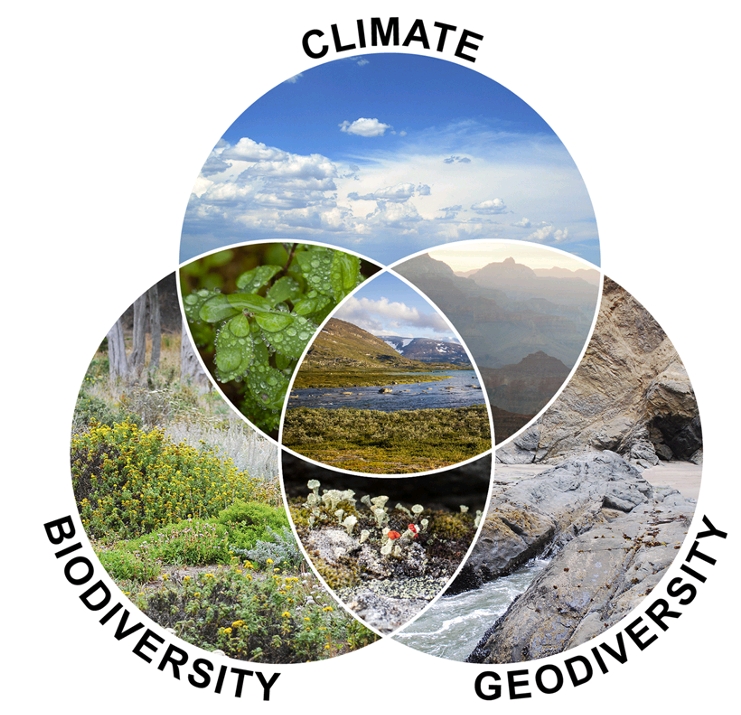
The links between Geodiversity, Biodiversity, and Climate. Human activity has fundamentally altered the relationship between all three elements. (from an original in Tukiainen et al. 2023).

Biodiversity, Geodiversity and Climate are all interlinked to give us the environment we live within, or are responsible for (Tukiainen, Toivanen, and Maliniemi 2023). Kilvey’s ecosystem was destroyed by industry, coal mines destroyed the water table, and the recovery process has been long and uncertain, but in some places spectacular. It remains a tragedy that some of the recovered green areas of the hill will shortly be destroyed again by the local Council.

Boorman, David. 1986. The Brighton of Wales: Swansea as a Fashionable Seaside Resort, c.1780-1830 (Swansea Little Theatre Company)

Owen, T.R. 1973. Geology Explained in South Wales (David & Charles)

—— (ed.). 1974. The Upper Palaeozoic and Post-Palaeozoic Rocks of Wales (University of Wales Press)

Tukiainen, Helena, Maija Toivanen, and Tuija Maliniemi. 2023. ‘Geodiversity and Biodiversity’, in Visages of Geodiversity and Geoheritage, Special Publications, 530 (Geological Society of London), pp. 31–47

The Reptile Mitigation begins

Tuesday, 29 July 2025, saw the arrival of contractors on the Hill to begin implementation of the Reptile Mitigation Strategy. The firm brought some mowing equipment, heras fencing and robotic sentries to the summit. The Reptile Mitigation Strategy is comprehensive, although I don’t accept the supporting survey information on the presence/absence of reptiles in the area. I think the original reptile survey was hastily completed (if it actually happened at all).

The job is big and probably lucrative for someone. The protocol as described in the Mitigation Strategy is adequate for the site, and captured reptiles are to be released on the hill in safer areas.

Above: My survey of the cleared areas on Saturday, 2 August 2025. They are pretty big areas. The red circles are the first three refugia to be built on the verges of the construction site.

Geodiversity and Cilfái

The theme for this year’s International Geodiversity Day, to be held on Monday 6th October 2025, will be ‘One Earth, Many Stories’. International Geodiversity Day was proclaimed by UNESCO in 2021, following a grassroots campaign by geoscience organisations around the world. Geodiversity is all around us, and includes the parts of nature that aren’t alive, like minerals, fossils, soils, and landscapes.

Geodiversity Day is a worldwide celebration to bring people together in promoting the many aspects of geodiversity, and its importance to society. This year’s theme is a chance for people to connect with geodiversity. Every landscape, every stone, and every fossil has a story to tell. Our planet is a record of history that dates back more than 4 billion years; one that can teach us about the origins of our natural environment and where we, as animals, came from.

As people, communities, and governments implement the Sustainable Development Goals, geodiversity provides a record of earth history that can help us prepare and respond to threats such as climate change. ‘One Earth, Many Stories’ encourages all of us to discover examples of geodiversity; in our landscape, in museums, in historic buildings; and delve deeper into the multitude of stories contained within planet Earth. It is hoped that geoscience groups around the world will organise events to make the stories of their local geodiversity more widely known.

As part of International Geodiversity Day, I’ll be leading a walk around the geological and historical treasures of Kilvey in Swansea. Kilvey played a central role in the pioneering work to understand the South Wales coalfield. The hill was the training ground of one of Geology’s most notable pioneers, William Logan, who was the first to map the Swansea coal veins and understand the arrangements of the coal beds and how they related to the surrounding Pennant Sandstone.

The hill has an incredible set of survivals from the early coal mining historry of Wales. The original coal face that Logan analysed and explored still survives, along with several medieval coal adits. There are also several fascinating sandstone rock exposures rich in plant remains, which gave the early coal prospectors of two thousand years ago the first clues that coal was present in these rocks.

Coal mining on Kilvey is a 1500-year-old industry and central to the history of Swansea.

Above: An early geology map of Swansea with ‘Kilvay’ in the middle covered in coal mines.
Above: A drawing of coal showing the intricate plant structures that can survive in our local bituminous coal. This drawing is from the original Memoir of Henry De la Beche (1841).

If you are interested in the history of Swansea coal, take a look at my recent bnook on the coal history of Foxhole on Kilvey